The worst Palestinian olive harvest in collective memory
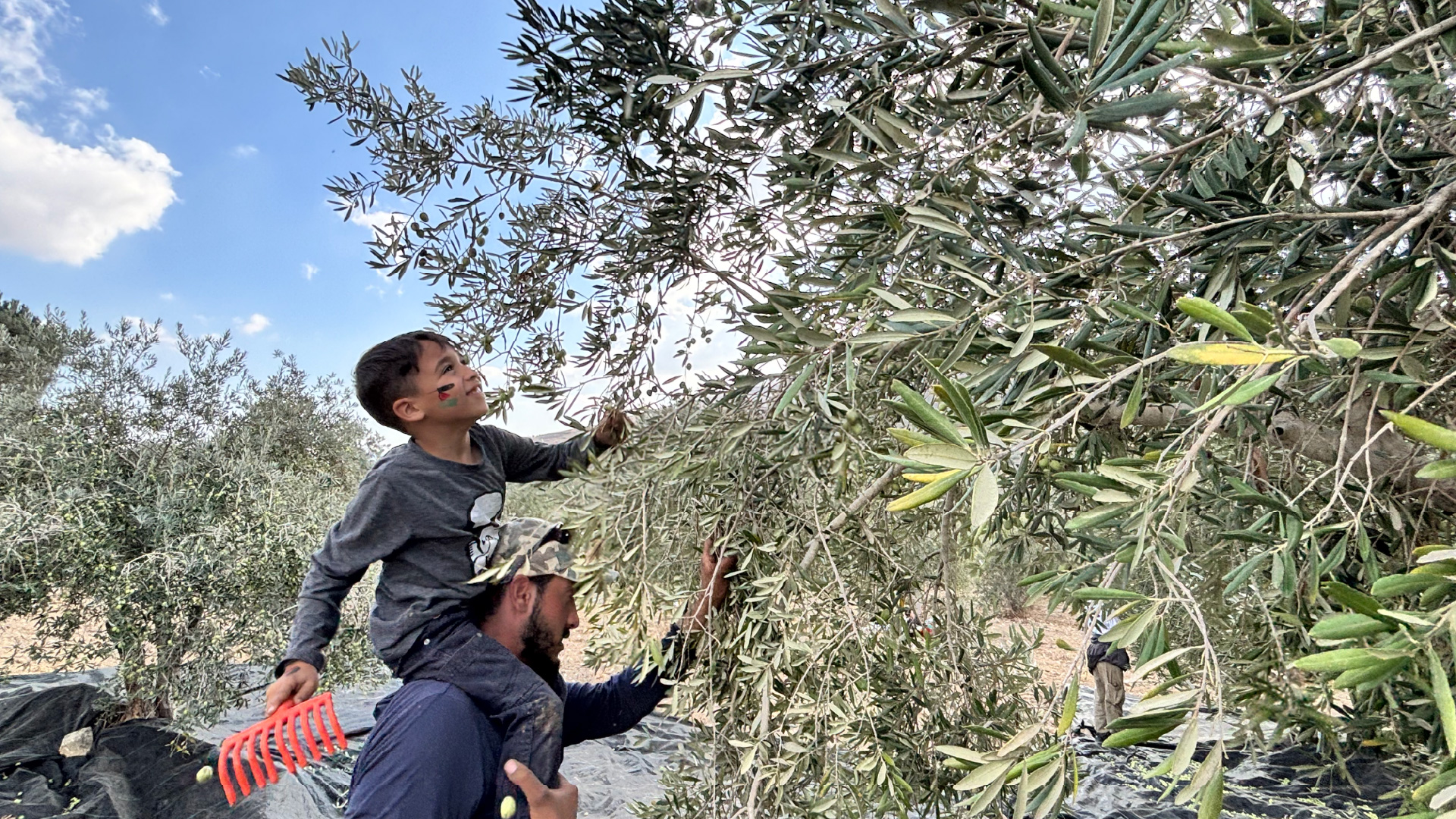
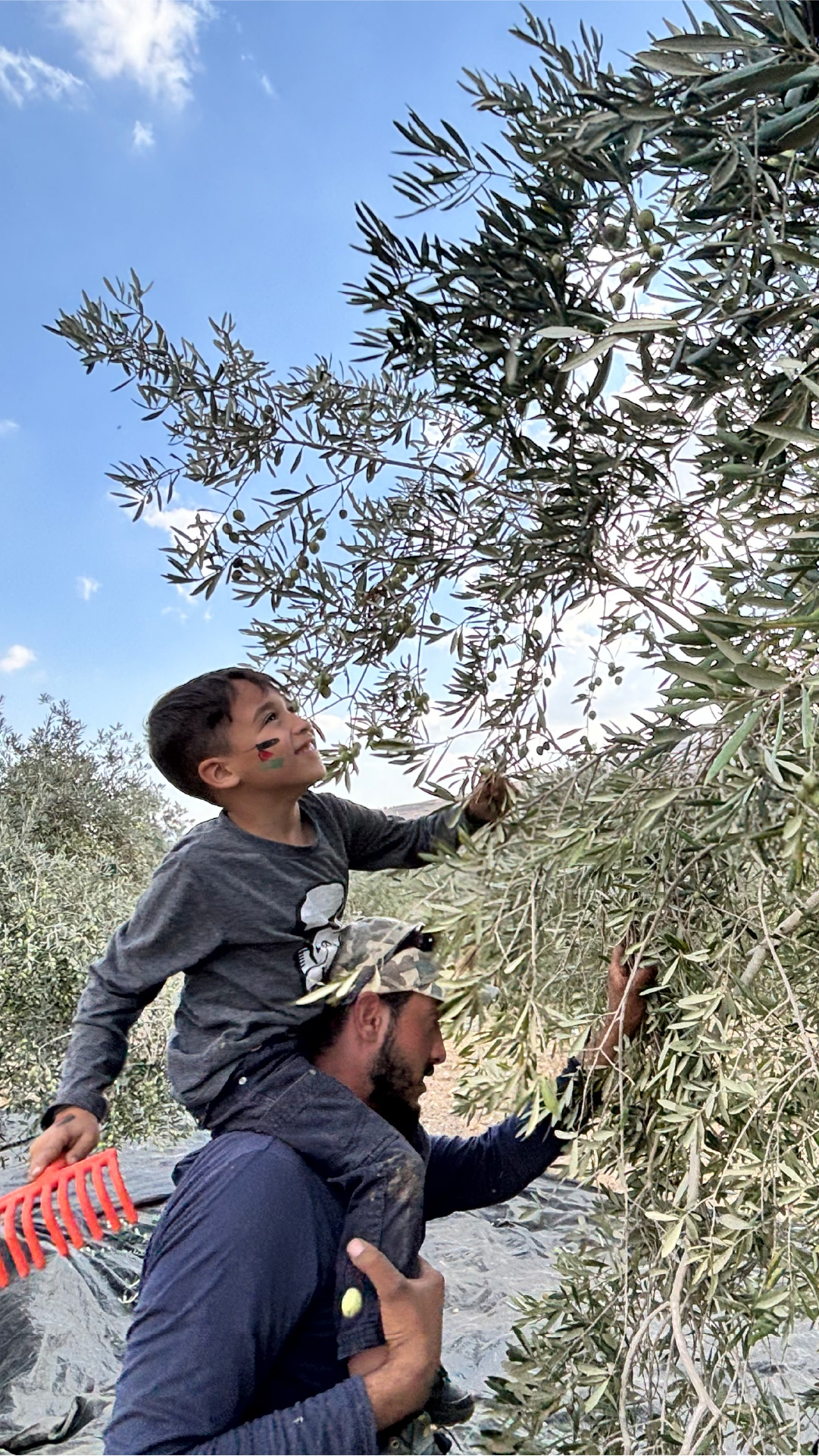
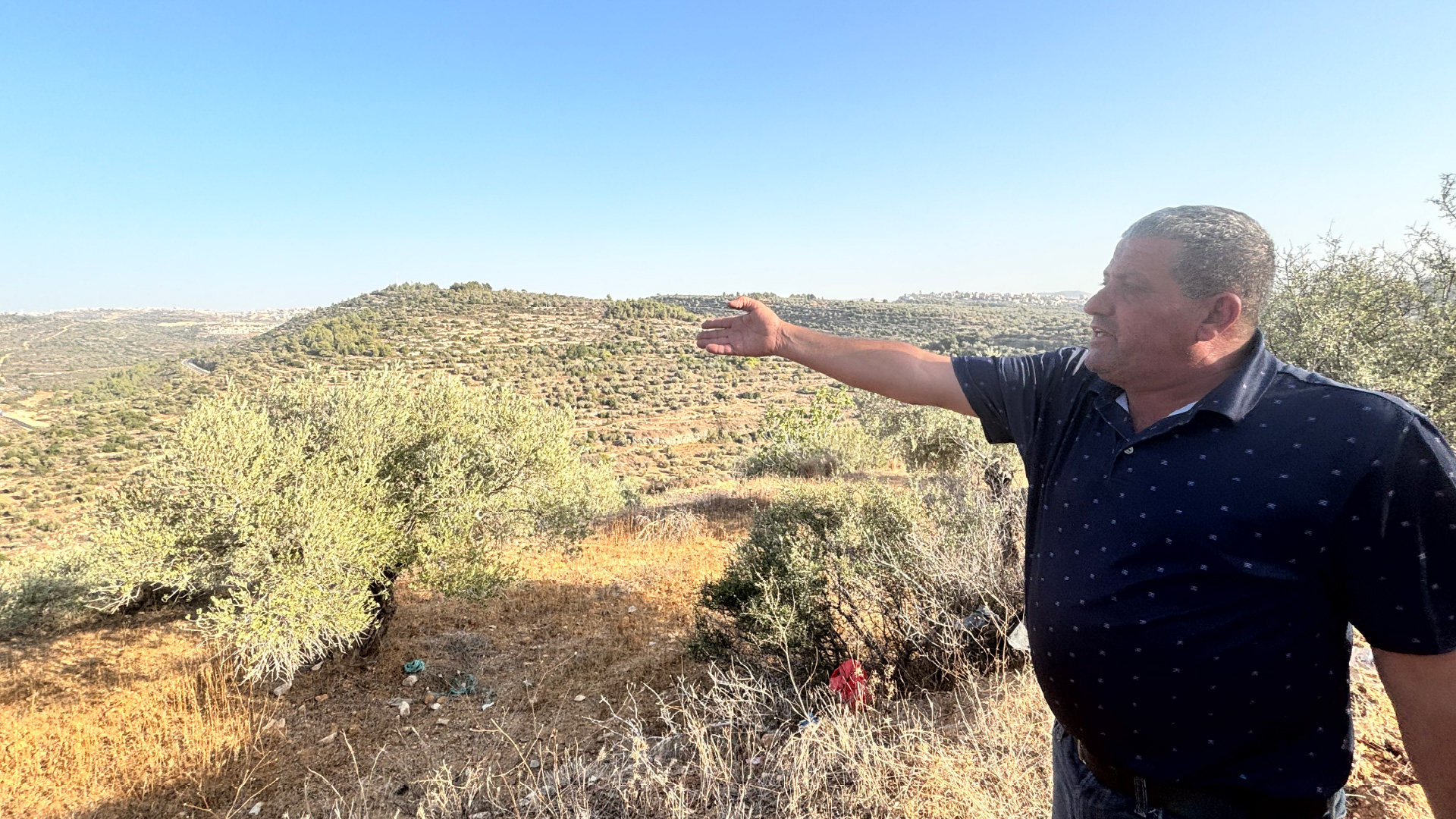
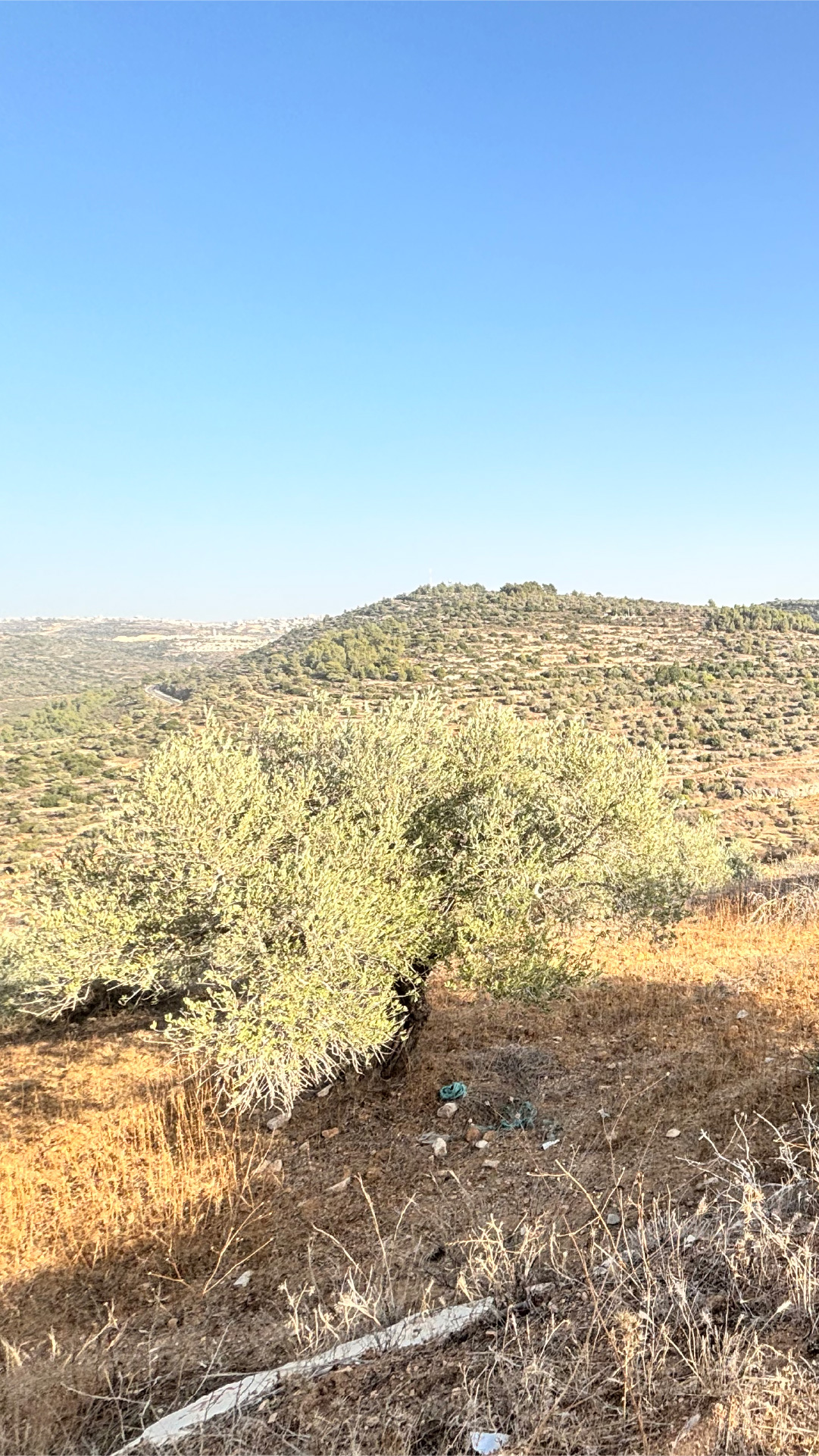
Deir Ammar, occupied West Bank - The Othman family sat looking out from their homes at the valley where they’ve picked olives for generations.
Ali Badaha, 60, and his cousins Ismail, 59, and Izzat Othman, 72, recalled chasing each other in those groves decades ago, singing and having picnics while their families harvested the ancestral olive trees.
At night, they and others in the hillside village waited their turn to press their olives at the village oil press among their neighbours, drinking tea and sharing stories.
But this year, for the first time in their lives, the family’s trees and their shrunken olives, long unpruned, have gone unpicked. There’s no singing this year. No picnics or kids playing tag through the groves.
![Shrunken olives from the Othman family's trees [Al Jazeera]](/wp-content/uploads/2025/12/INTERACTIVE-Small-olives-in-Deir-Ammar-1764685552.jpg?w=770&quality=80)
Rather, the expansive Othman-Badaha clan, their children and grandchildren, sit around a table outside their homes on a late October evening, overlooking family groves they cannot reach due to threats from armed Israeli settlers and constantly renewed 24-hour Israeli closed military zone orders.
Earlier that day, Yousef Dar al-Musa, 67, sat in his family compound, his face and stomach bruised and his arm bandaged after being attacked by Israeli settlers when he went out to his lands. Settlers beat him with the butts of their rifles in his fields, where he owns more than 450 olive trees.
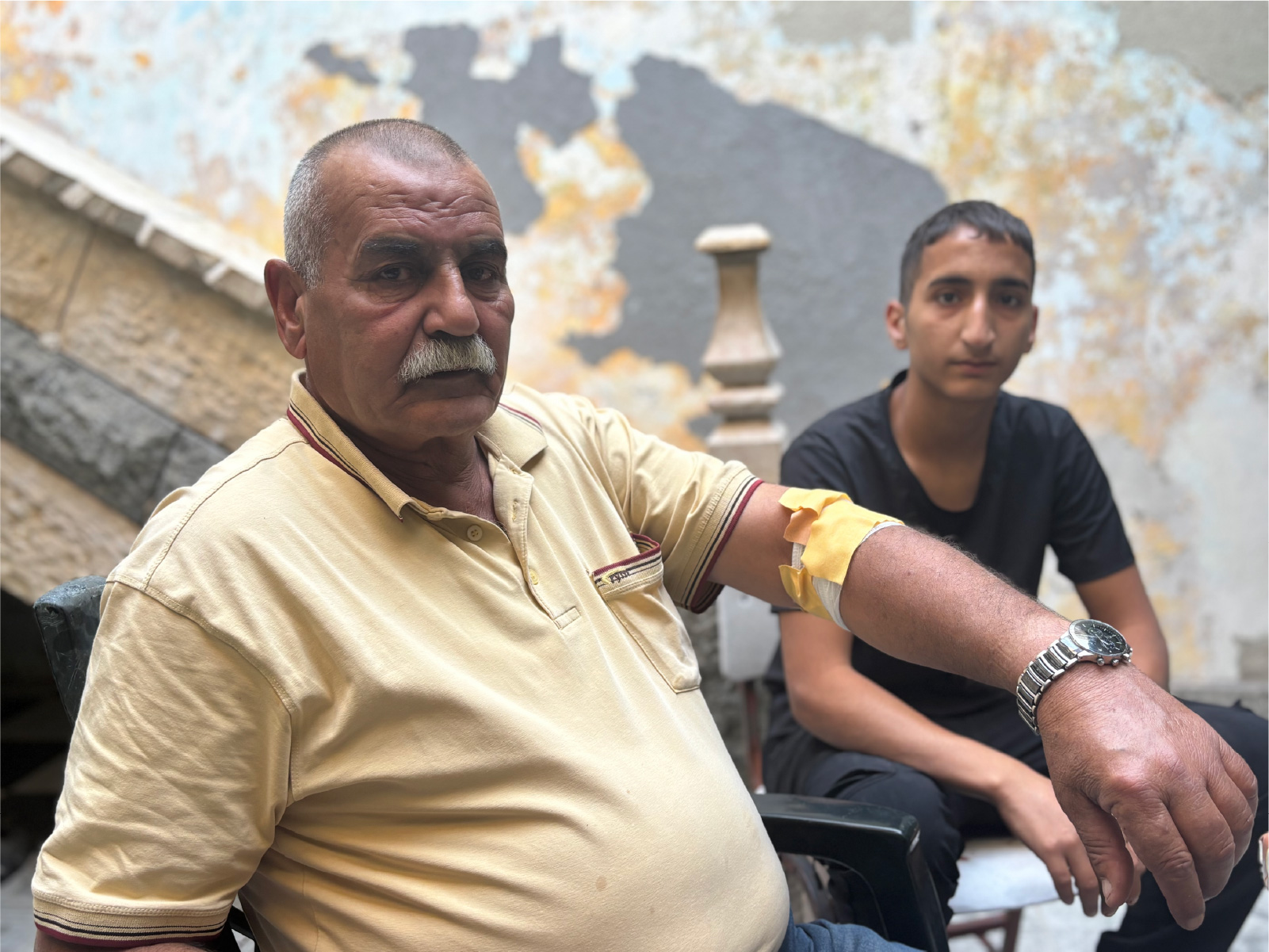
“I'm not allowed to leave my house? I'm not allowed to go to the land?” he said indignantly.
“I inherited that land from my father, my grandfather, my great-grandfather … And who are you, man? Where did you come from?”
For months, Yousef was attacked by settlers when trying to access his land, where he grows figs, tomatoes, grapes, barley, eggplants, lentils, almonds and cucumbers.
His family’s most valuable source of income is normally selling olive oil to markets in Ramallah. But this year, he has no olive oil.
“The earth is our life, from our ancestors, going back 10,000 years,” Yousef said through wheezy coughs and a thick fellahi [farmer's] accent.
“Without the harvest, I will die. Really, I will die.”
‘The settlers took it all’
Israel occupied the West Bank in 1967, impacting Palestinian agrarian life by imposing progressively harsher military restrictions and continuing its theft of Palestinian land to construct and expand illegal Israeli settlements and outposts.
Land was taken from Deir Ammar to build the illegal settlement of Neria in 1991, across the valley from the Othmans’ homes. The village lost more land as the settlement expanded.
Several years ago, a settler outpost was built on the ridge extending west of Neria.
On his cousin Ismail’s terrace, Izzat Othman pointed to lights flashing from the outpost. “I have 38 acres there. [The settlers] took it, and I can't even walk there,” he said. “They tore all my trees down.”
Pointing to more lights on the other side of the valley, Izzat moved his finger west: “That land is also mine,” he said, gesturing to his cousins beside him one at a time.
“And that’s [my cousin’s], and his, and his - all the way down to Ein Ayyoub,” he said.
“The settlers took it.”
Locals say Israeli settlers have managed to seize approximately 7,000 dunums (700 hectares or 1,730 acres) of land around the village homes over time - aided by the Israeli military.
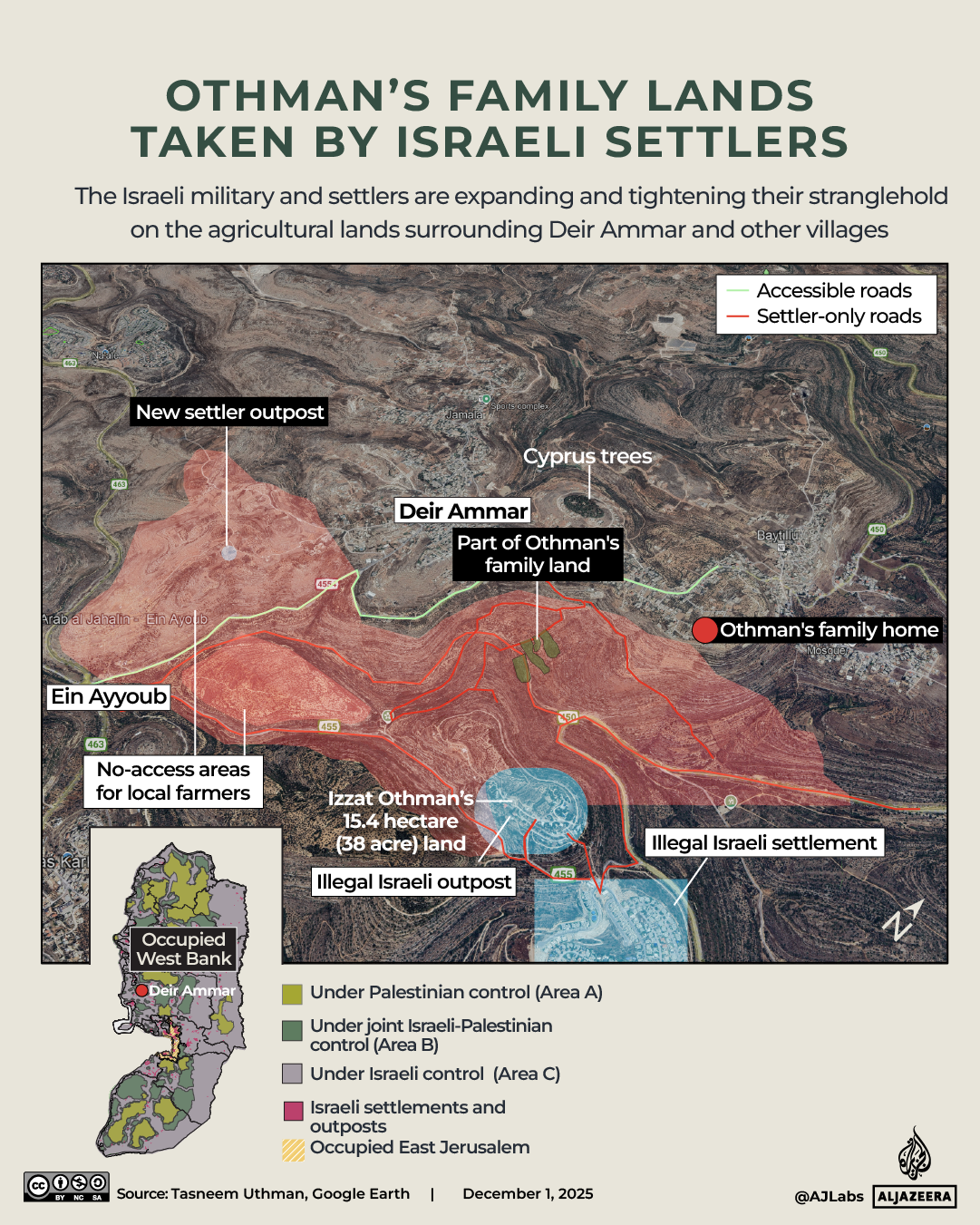
Ali, Ismail and two of Ismail’s brothers inherited land in the valley that has been largely carved up by two roads for settlers only - one built seven years ago, and another six months ago.
With greater losses of their land and incentivised by higher wages, the family and others in the village were pushed to seek employment as manual labourers in Israel.
But then Israel cancelled the permits for West Bank Palestinians to enter and work there two years ago, as it launched its genocidal war on Gaza.
The Othmans were left with nothing but farming to fall back on.
Yet, restrictions on village farmland increased until this year, when the entire valley and all the fields surrounding Deir Ammar were effectively declared off-limits by the Israeli military.
By villagers’ estimates, about 80 percent of the olive trees around Deir Ammar have gone unpicked; only the trees within the village were reachable.
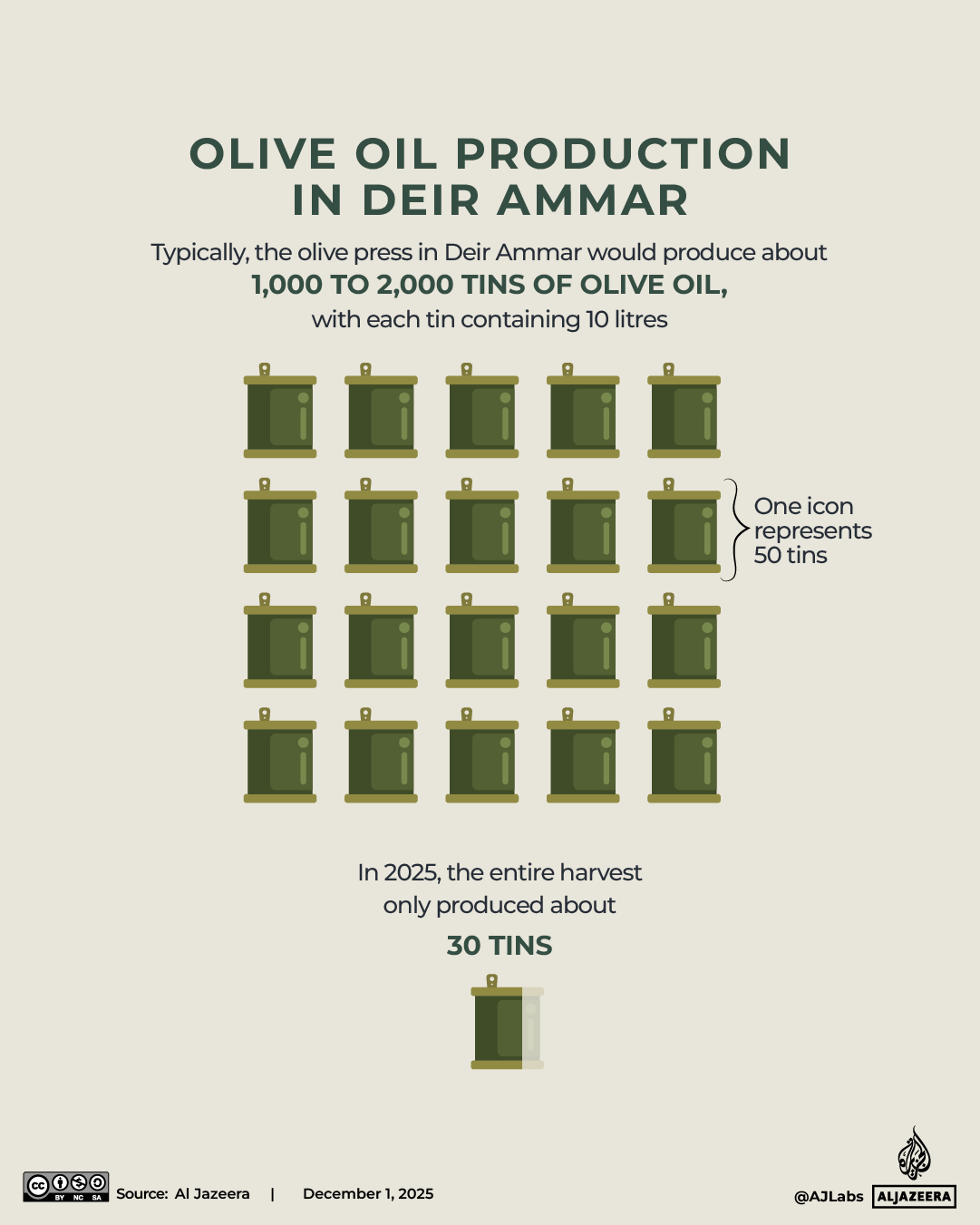
In October and November, the olive press in Deir Ammar normally runs 24/7, producing 1,000 to 2,000 tins of olive oil, with each tin holding 10 litres (2.6 gallons), according to workers there.
But this year, on a weekday afternoon in the peak of the season, the press was empty, the machines silent. The entire village’s harvest only produced about 30 tins.
The olive harvest season has effectively been cancelled in Deir Ammar.
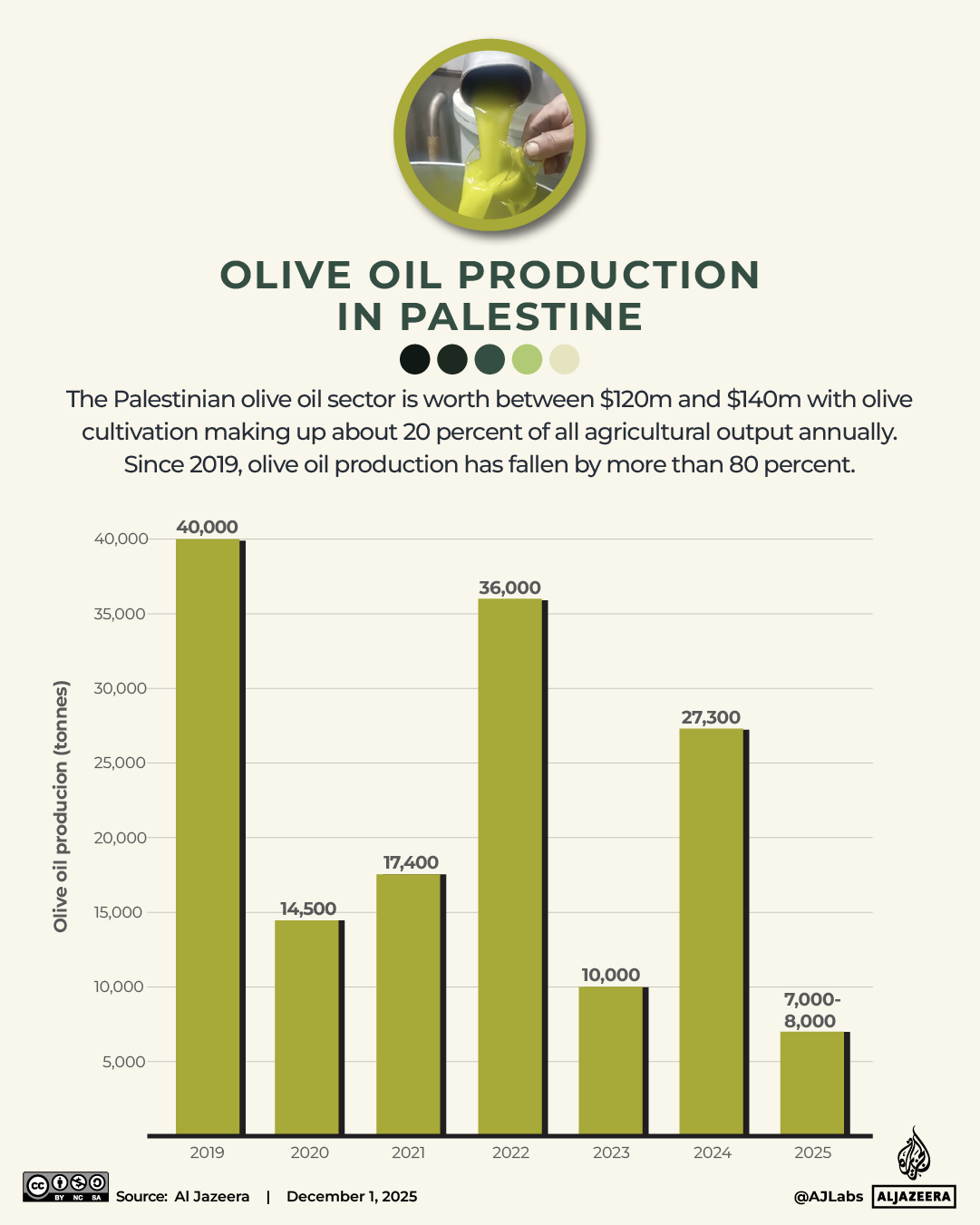
According to Ismat Quzmar, economic researcher and the external relations officer of the Palestine Economic Policy Research Institute (MAS) in Ramallah, the total value of the Palestinian olive oil sector is $120m to $140m.
Olive cultivation comprises about 20 percent of Palestine’s total agricultural output, a relatively small portion of total economic output that plays an outsized role for rural families.
‘Everywhere you go, they find you'
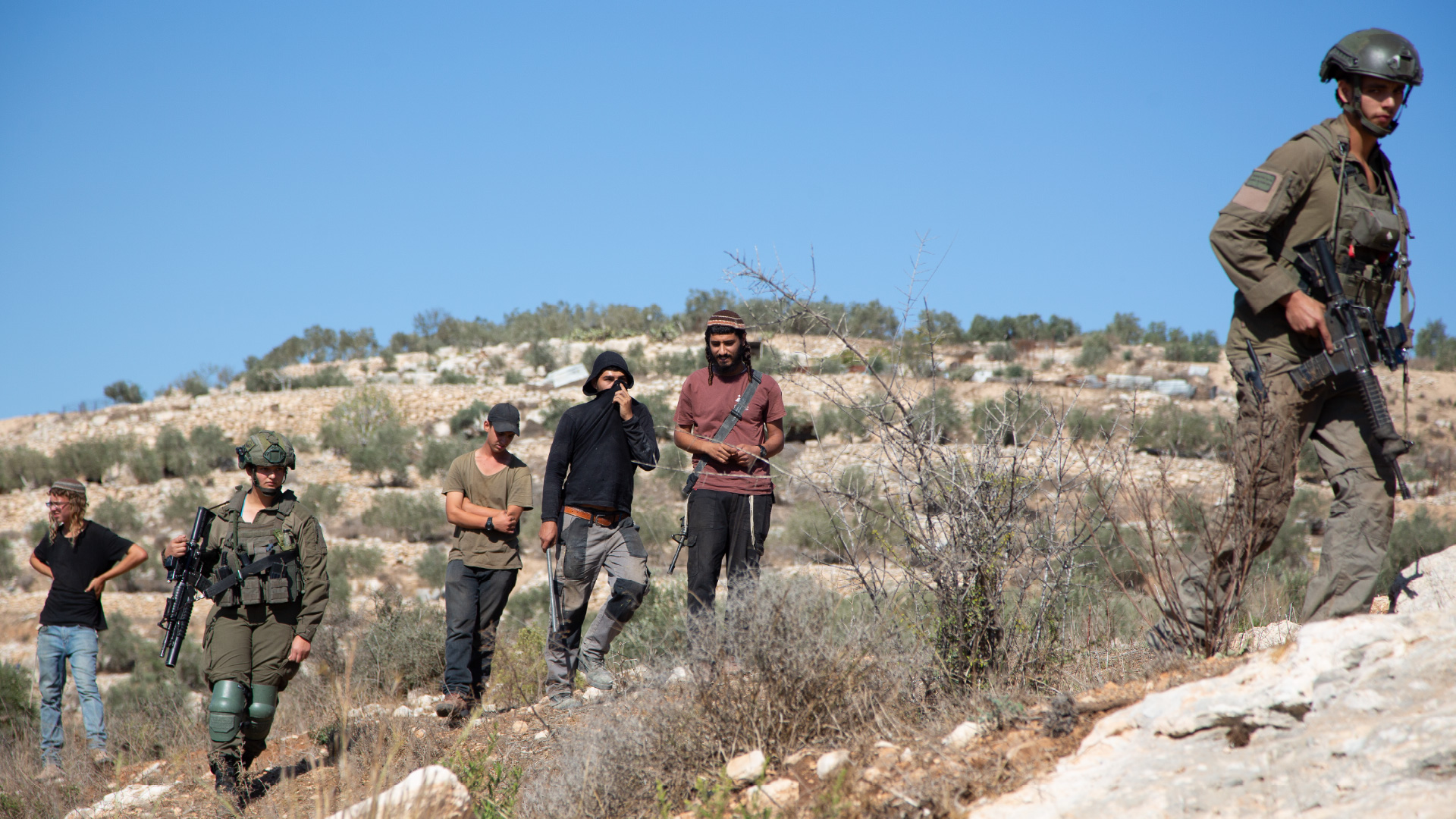
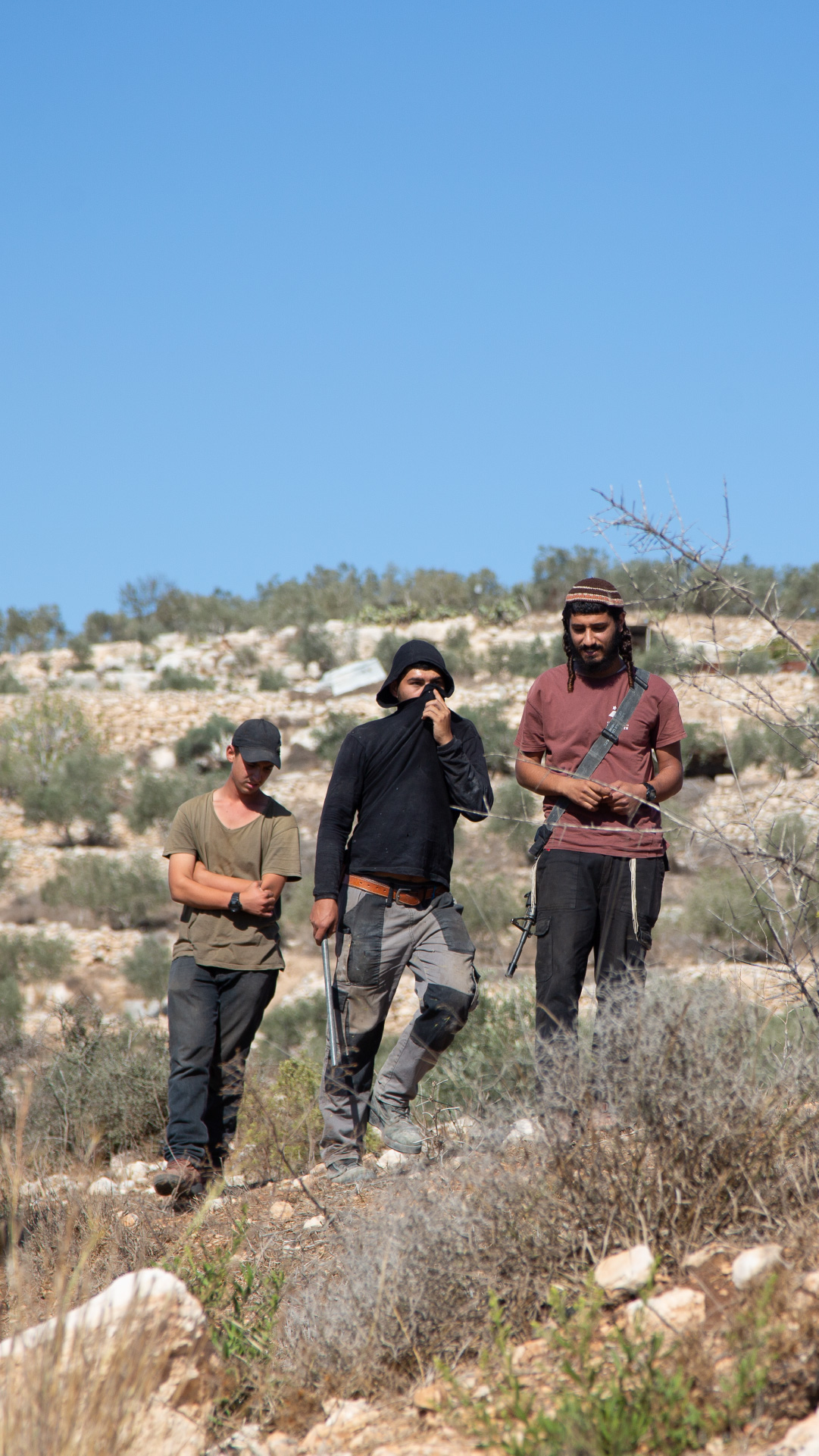
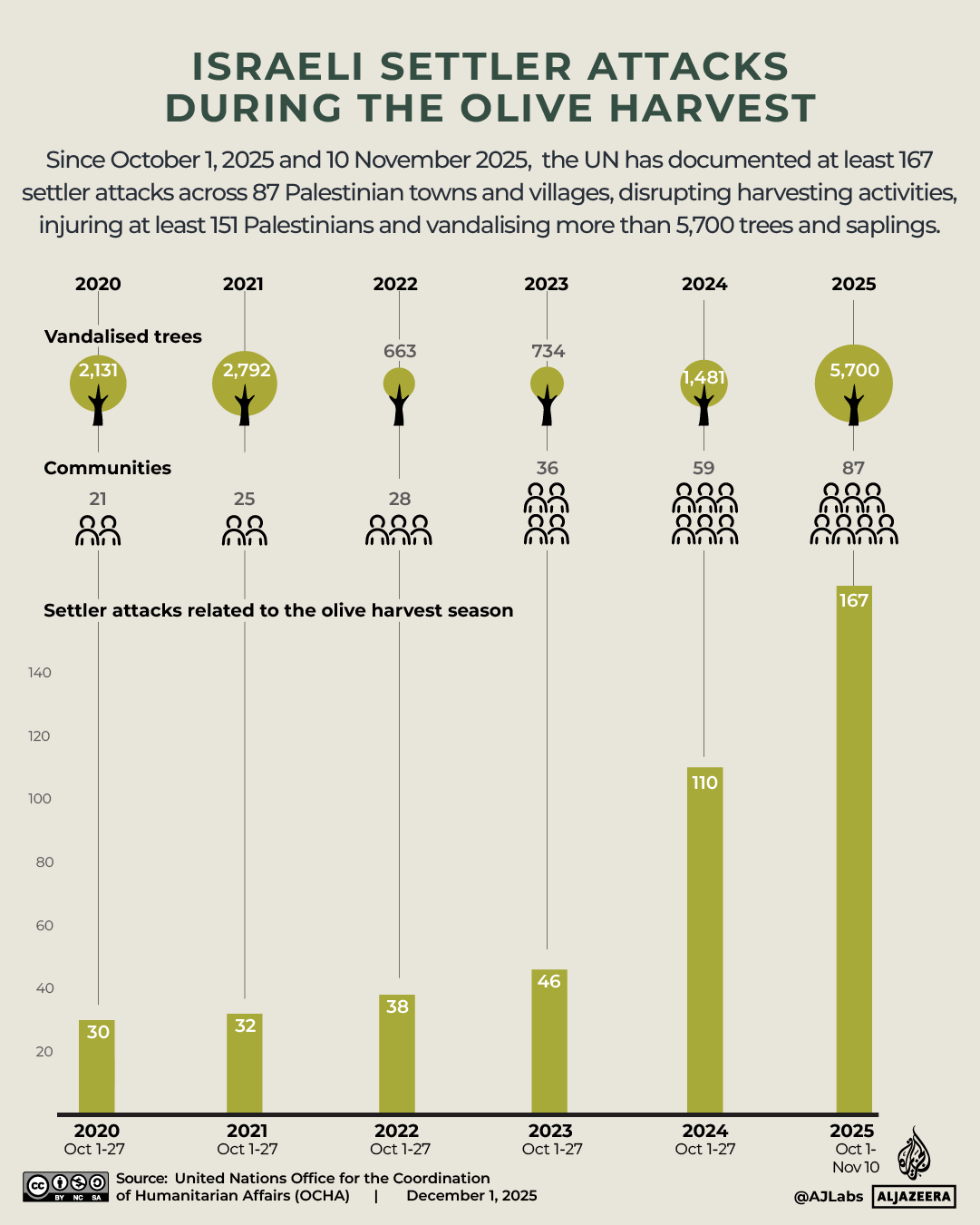
Between October 1 and November 10, the United Nations Office for the Coordination of Humanitarian Affairs documented 167 olive harvest-related settler attacks resulting in casualties or property damage, which locals note is likely a significant undercount.
OCHA also notes the number of affected communities, 87, has doubled since 2023, mostly due to the expansion of settler outposts and infrastructure into new areas of the occupied West Bank.
Moustafa Badaha, 48, owns a small house among these olive groves on the other side of Deir Ammar from the Othmans.
In July, yet another settler outpost was erected just south of Moustafa’s property. Moustafa has since filmed settlers breaking his fence, damaging property, and stealing farm equipment.
Settlers from this outpost also started attacking Ein Ayyoub, a Bedouin community of 130 people south of the village, forcing them out, eventually by military orders, which made the area a “closed military zone”.
According to Deir Ammar’s mayor, Ali Abu al-Kaak Badaha, 65, settlers have been attacking villagers trying to reach their farms in eastern and southern Deir Ammar for years.
This year, he added, the villagers have been completely cut off, and now the settlers, supported by Israeli soldiers, have started attacking villagers on the western side of the village, where Moustafa’s property is.
Having scared the Deir Ammar villagers off, settlers from this outpost make a point of releasing their cows to feed on the village groves west of the village.
The Israeli settlers also steal from the farms, said the mayor, taking olives, tarps and plastic sheeting used in the harvest.
“This year, everywhere you go for the olive harvest, the settlers find you,” Izzat said. “And they attack you.”
There’s a pattern to how the settlers stop the harvest, according to Kai Jack, a field coordinator for the Rabbis for Human Rights (RHR) organisation, which accompanies Palestinian farmers as a protective presence.
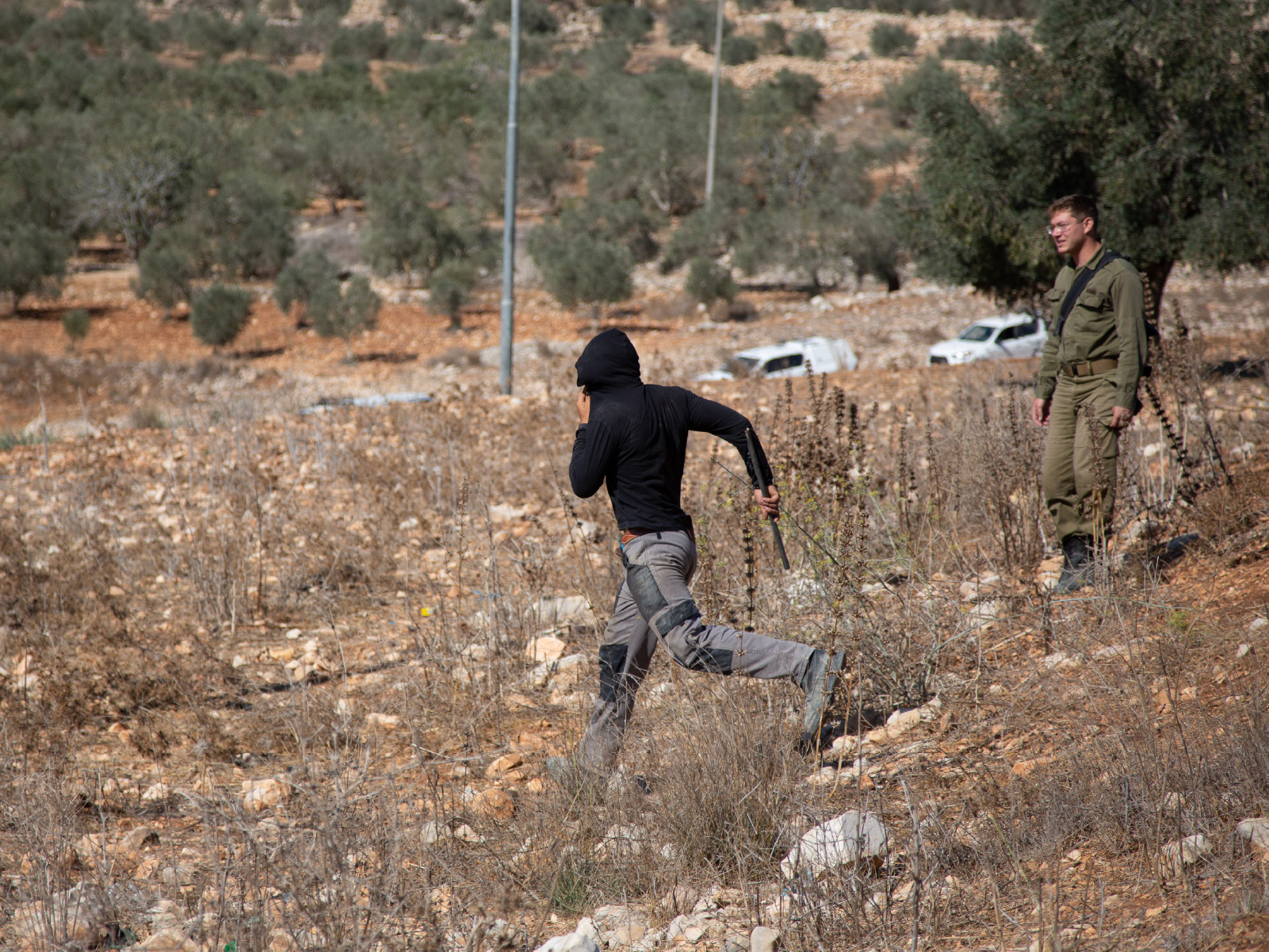
“It's just obvious that they're working together.”
Jack, along with about 50 other solidarity activists from RHR and Standing Together, had accompanied some Deir Ammar villagers on October 16 to pick olives on the west side, near Moustafa’s property.
Within five minutes of arriving and starting to pick, two female Israeli soldiers arrived, telling the group the area was a closed military zone and they had to leave.
The soldiers did not have official orders, so the olive picking continued.
Fifteen minutes later, more Israelis arrived - some were in military uniforms, some were masked, and others were in partial military fatigues, with “no clear separation between the settlers and the soldiers”, Jack said.
A closed military zone order was soon delivered, and some of the armed settlers began chasing villagers, throwing rocks at them, the soldiers taking their time to stop them.
In the groves, settlers attacked families with clubs and rifles, including Yousef Dar al-Musa, who was injured and spoke to Al Jazeera days later in his family compound.
‘Military zone orders’
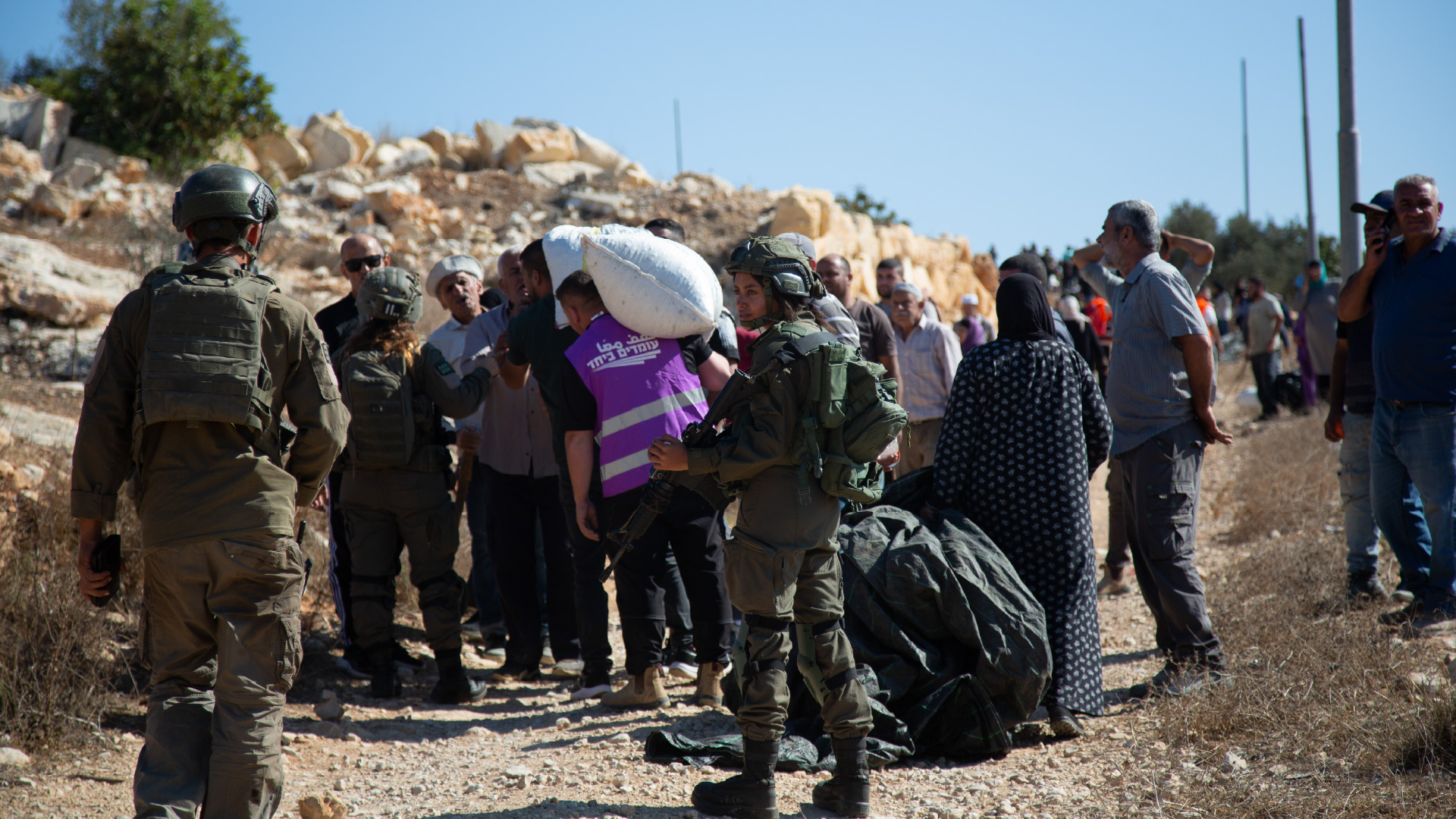
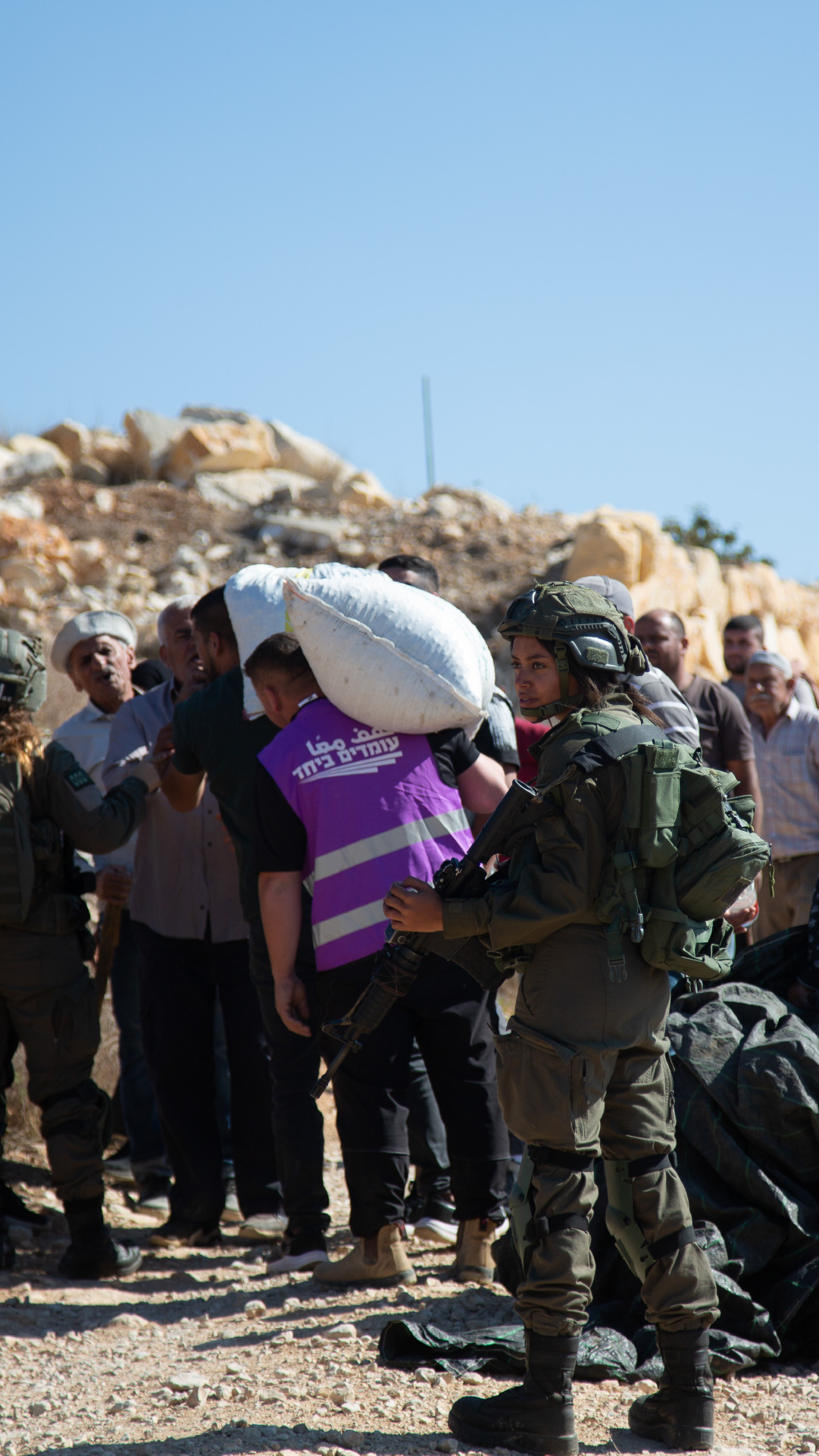
Never has the Israeli army used closed military zone orders as widely as they have this olive harvest, Quzmar, Jack, and others told Al Jazeera.
Several organisations, including RHR and Human Rights Defenders, are petitioning the Israeli Supreme Court, accusing the army of misusing closed military zone orders for political instead of security purposes, including to impede the Palestinian olive harvest.
Closed military zones orders imply they are issued for security concerns, but villagers describe arriving at their groves only to be presented with orders just for their specific harvesting areas.
These orders are often for up to 12 or 24 hours, and sometimes retroactive, something soldiers sometimes use as an excuse to confiscate any olives the villagers harvested between the ostensible time the order began and the time the soldiers arrived.
This year, the Israeli army began sending these orders digitally to soldiers on site, speeding up the process of removing Palestinians from their lands.
According to the Applied Research Institute in Jerusalem, this year, 25,000 dunams (2,500 hectares or 6,177 acres) of olive groves were announced as closed military zones in the occupied West Bank.
Locals and volunteers told Al Jazeera of trying to convince soldiers to let them harvest, in which soldiers often say they would have let them if they had secured proper army coordination, which Israeli authorities increasingly require in recent years in Area C, the part of the occupied West Bank under full Israeli control.
But, Jack said: “This year, there's no one to coordinate with.
“And there are no security concerns, as long as you keep the settlers away. Which they don’t.”
He went on to describe encountering a group of Israeli settlers while out supporting villagers from Husan, west of Bethlehem, at the beginning of the olive harvest.
“[The settlers] went up to us and said, ‘What are you doing?’” Jack said, adding that he told the settlers in Hebrew that they were there to pick olives.
The excited settlers responded: “Oh, you’re stealing them!” - evidently eager to join.
For once, the settlers were left disappointed.
‘By God, there is not a shekel’
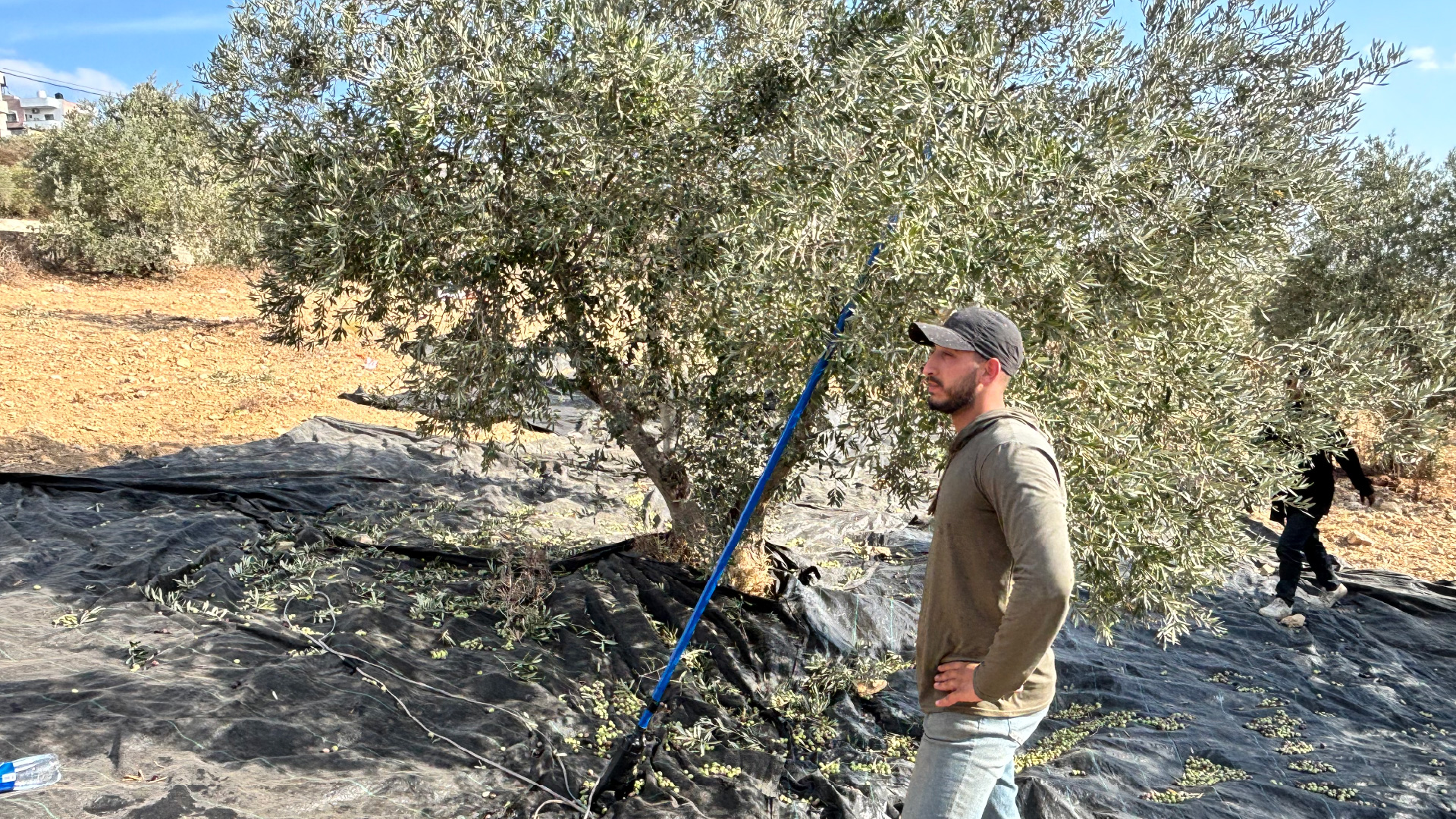
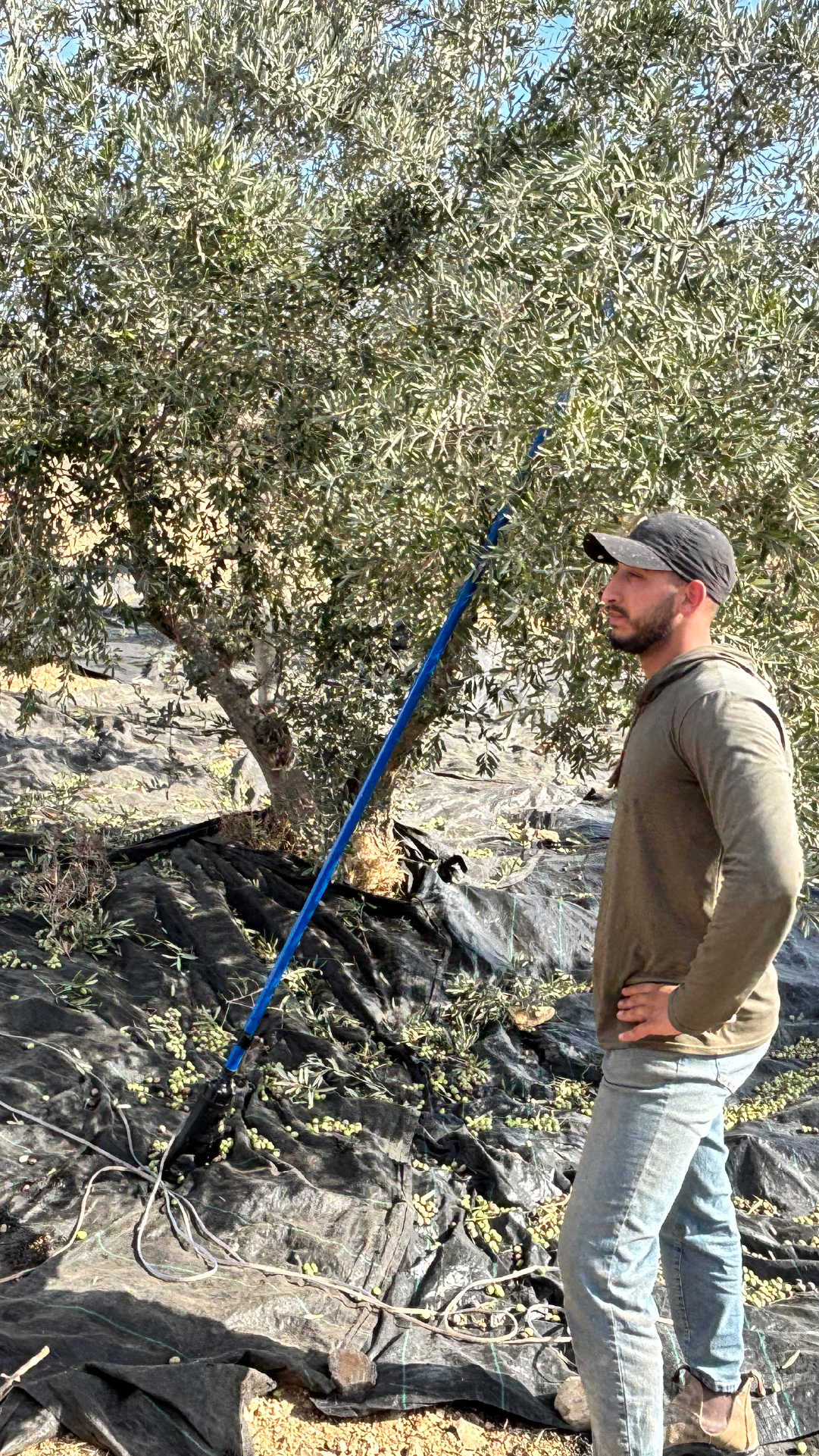
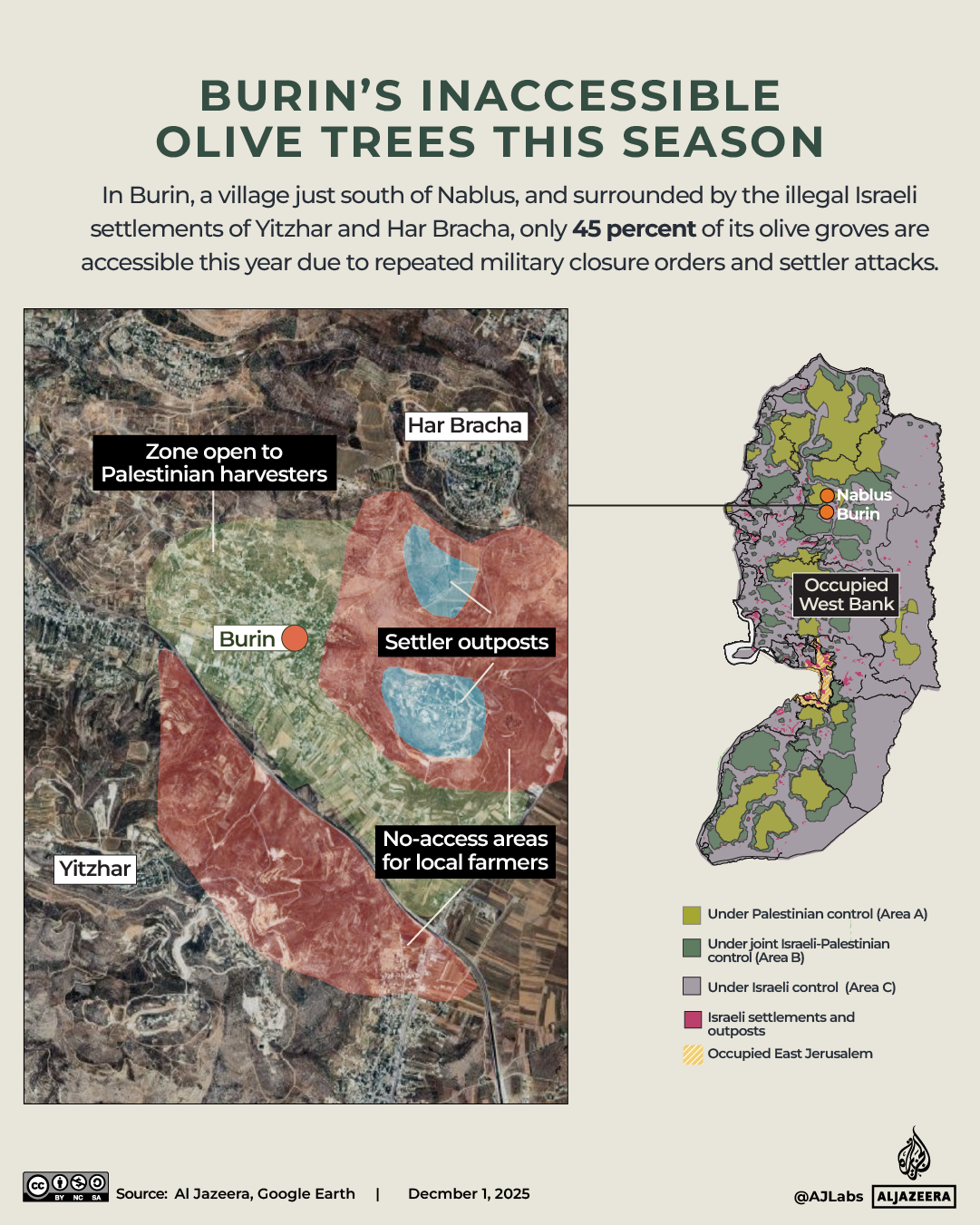
Ghassan Najjar lives in Burin, about 66km (41 miles) northeast of Deir Ammar, surrounded by violent Israeli settlements such as Yitzhar and Har Bracha and the Givat Ronen outpost.
About half of Burin’s groves are inaccessible this year due to settler violence and repeated declarations of closed military zones, said Ghassan, who is an activist and agricultural cooperative leader.
Sometimes, he said, soldiers gave him supposed closed military zone orders with incorrect dates and locations, even once being given a map that would supposedly allow Palestinians inside a nearby Israeli settlement.
The villagers have done what they can, Ghassan said, pointing proudly to small acts of resistance.
“When the soldier comes, you run away, and even if they catch you, so what? They can beat you, arrest you. You can die. Everyone can die. But why [do] I need to die without my dignity?” said Ghassan.
His family hasn’t been able to access their trees to the southwest since 2022 because of the illegal Israeli settlement of Yitzhar, which perches on a mountainside on the other side of Highway 60.
It got worse in late October, he said, after two separate incidents in which 32 foreign activists and then two Jewish Americans accompanying harvesting locals near Burin were detained and deported; the entire village was then put under closed military zone orders, renewed every 24 hours.
But on that day in late October, the Castro family was managing a semblance of the festive olive harvesting atmosphere in a small grove belonging to their friends.
The grove was close to a main village road, relatively insulated from settler invasions, allowing Laith Castro, 26, the oldest son in his family, to be out with some of his brothers, his widowed mother, and his young niece and nephew.
Laith’s seven-year-old nephew, Ghaith, spent much of the afternoon either diving onto the olive-filled tarps or jumping in the air from full sacks and trees, throwing olives at his uncles and grandmother, and giggling.
On the slope of a nearby hill was the illegal settlement outpost of Givat Ronen, whose settlers have been attacking people, often supported by Israeli soldiers.
Laith and the family own about eight dunums (0.8 hectares or 2 acres) of olive groves in the hill on the other side of Highway 60 near Yitzhar, but he could only reach less than half of that, meaning he could only produce 60kg (132lbs) of olive oil, whereby he used to be able to produce 240kg (529lbs).
He also used to own 50 sheep, but since the war on Gaza started two years ago, settlers have prevented him from grazing them, forcing him to pay for fodder and sell some sheep in desperation.
“By God, there is not a shekel,” said Laith with a mournful smile as he operated an olive harvesting machine.
Mid-harvest, the Castros spotted settlers approaching villagers’ olive trees a few hundred metres away, carrying tarps and proceeding to steal the olives left on the trees.
All the Castros could do was watch.
The worst ‘shelatouni’ harvest ever
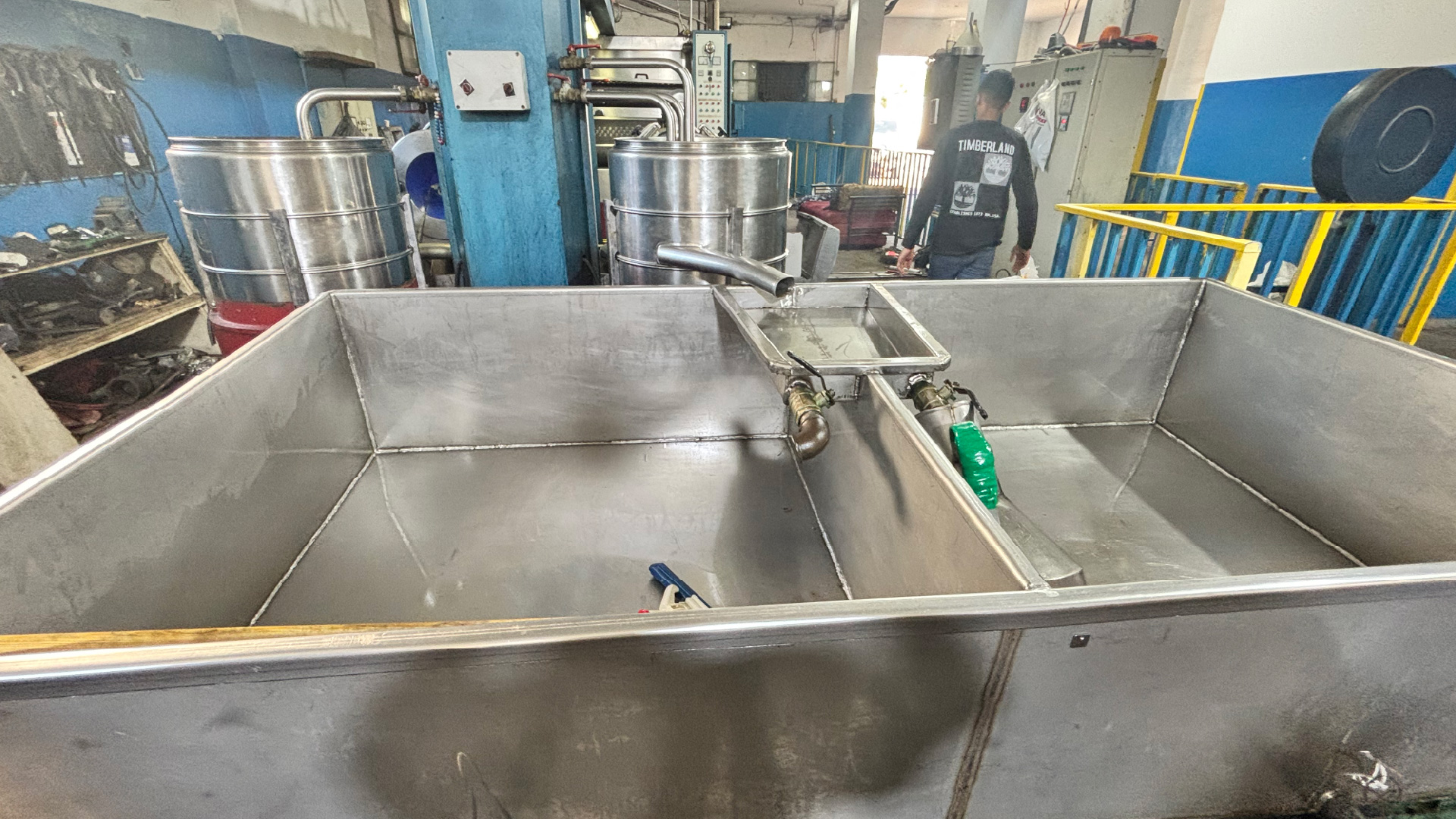
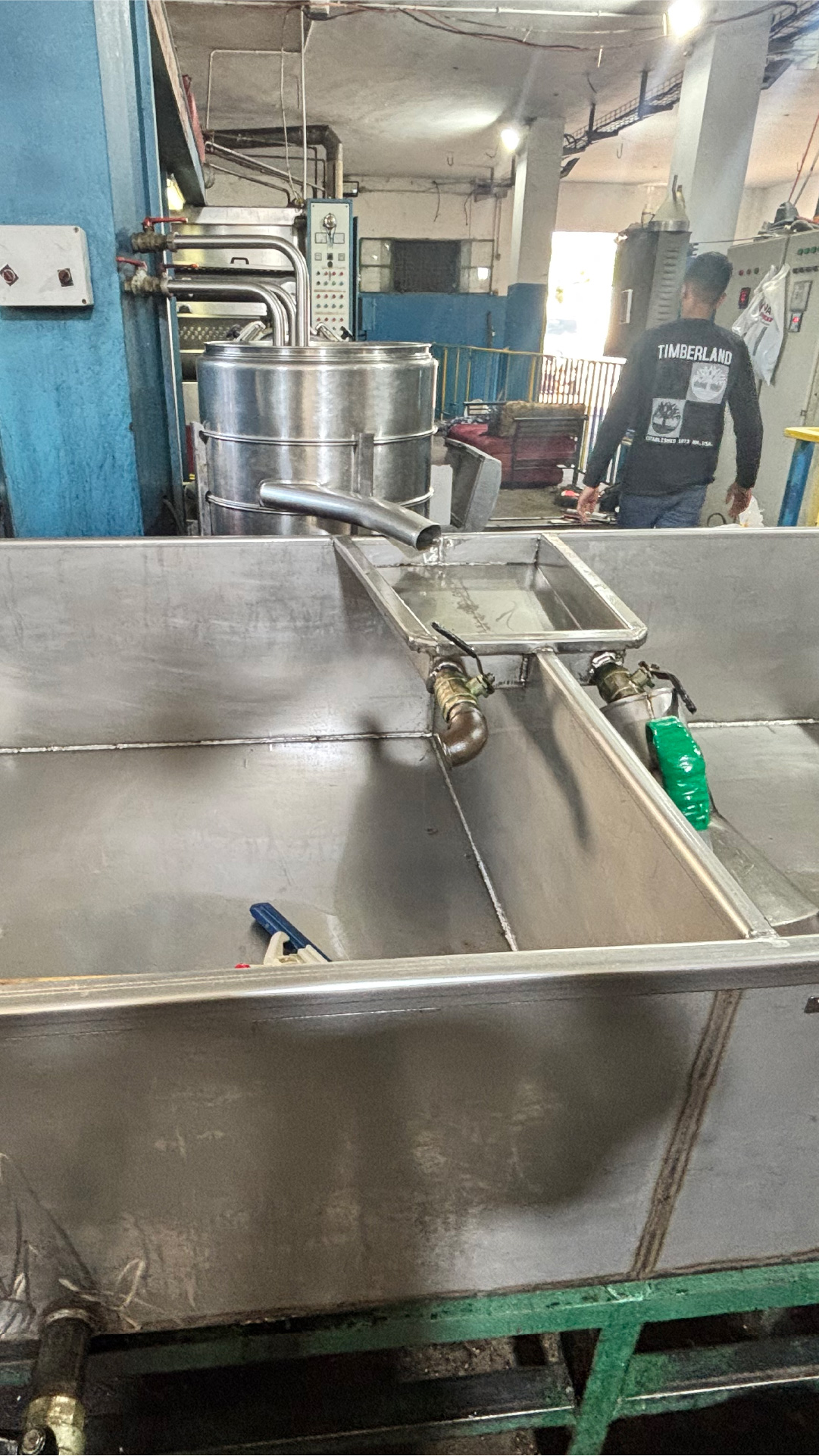
This year’s olive harvest was already going to be poor, with severely limited rainfall, but the military prohibitions and settler attacks made it even worse.
According to Quzmar from MAS, Palestinian villagers call a good harvest a “diamond harvest”, while a bad harvest is known as a ”shelatouni harvest”.
A diamond harvest in Palestine will see between 30,000 and 40,000 tonnes of olive oil produced, he said. A shelatouni, however, will see between 10,000 and 15,000 tonnes.
Palestinians believe that a shelatouni is followed by a diamond, but “for three seasons it's been a dire situation”, Quzmar said.
He added that early estimates say this year is on track to produce only 7,000 or 8,000 tonnes of olive oil - about a quarter of last season’s 27,300-tonne yield and a third of the annual average of 22,500 tonnes.
“I’m 72 years old,” said Izzat Othman. “This year’s harvest is the worst I’ve seen in my life.”
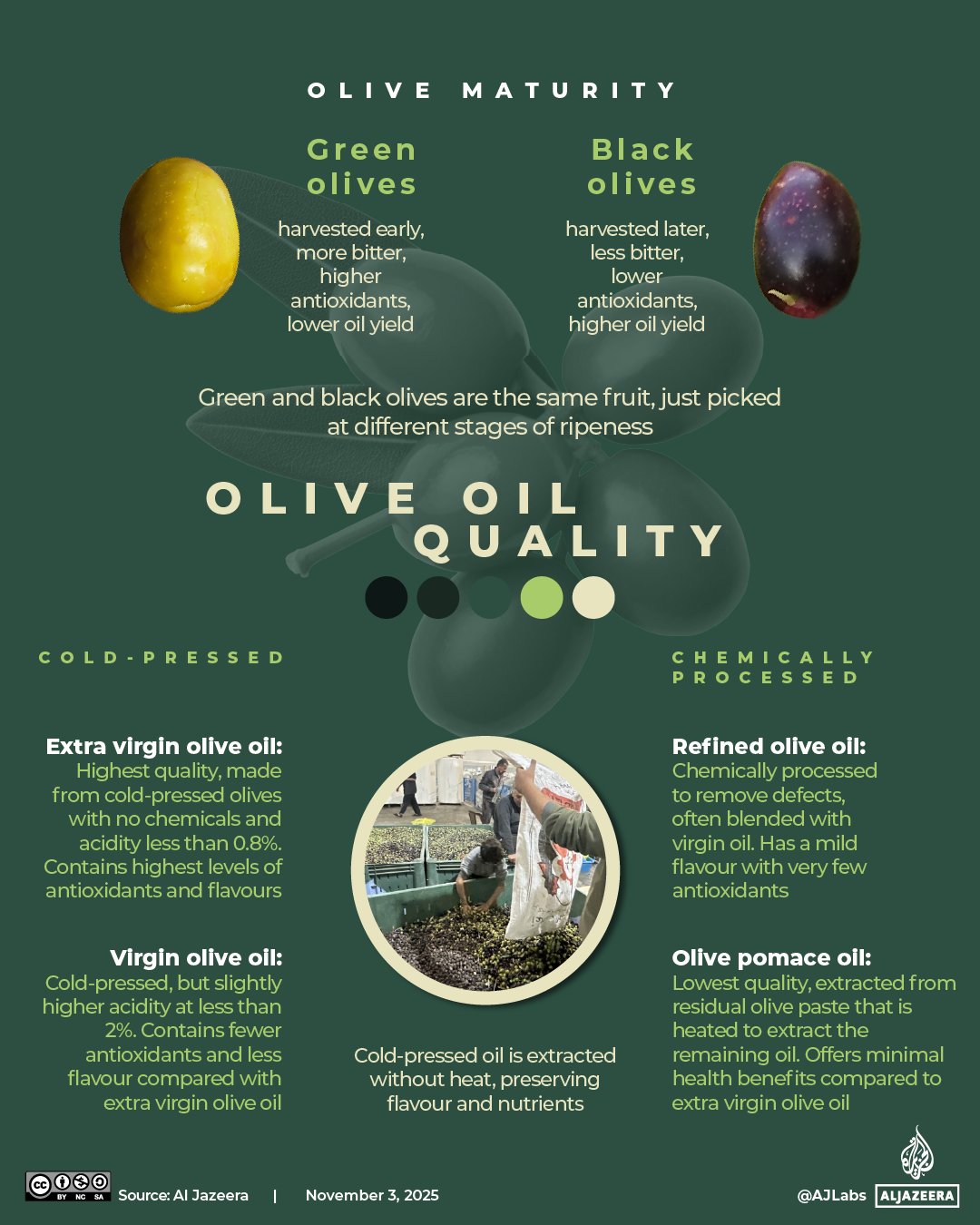
Some families are harvesting so few olives that rather than going to the olive press each day, they wait days to accumulate enough olives to bring to the press, a delay that increases the acidity of the olives and diminishes the quality of the oil, according to Quzmar.
In fruitful years, three Othman brothers managed to produce 80 tins - approximately 800 litres - of oil.
Unable to access nearly all their drought-stricken groves, the family hasn’t managed a complete tin of olive oil this year. Rather than selling the oil, they distributed what little they had within their family.
“I doubt there will be much exports of olive oil this year,” said Quzmar. “Not only because of [expected] Israeli restrictions on exports, but I think the production this year will not be enough to cover the local market needs.”
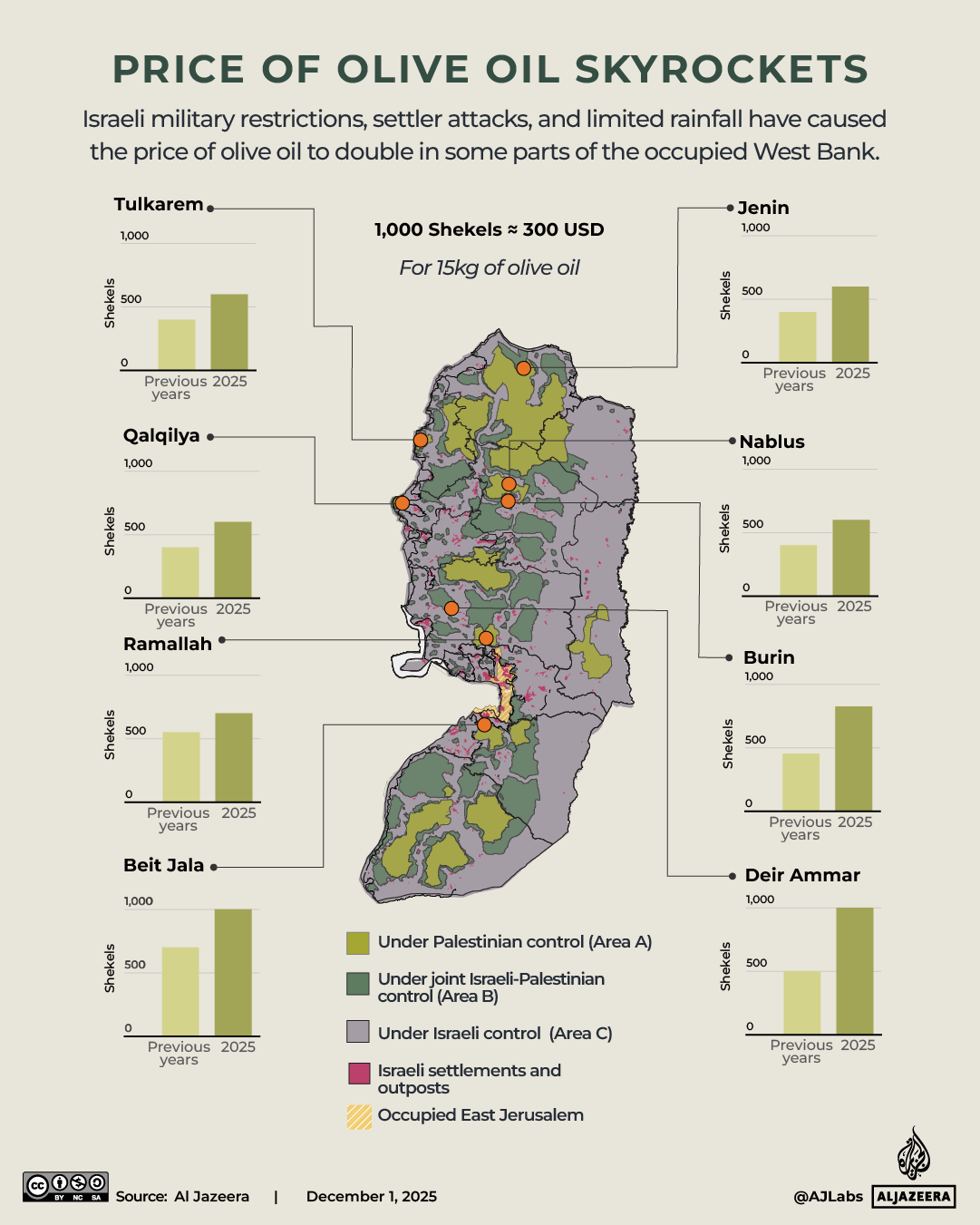
Shockingly low output this year has sent prices for olive oil, the bedrock of the Palestinian diet - skyrocketing. The Othmans, for instance, say they typically consume olives and olive oil for every meal.
“I can tell you … for the first time, I watch how much oil is poured over whatever we eat,” said Quzmar.
“You can live without olive oil, but you will be less Palestinian,” he declared. “A Palestinian family without olive oil is much less happy. The quality of life decreases.”
Not once during this olive harvest has the entire Othman family managed to come out to harvest together, a pattern seen across villages in the West Bank. The Tanatra family from the nearby village of Umm Safa also say they couldn’t harvest this year.
Quzmar worries the suppression of the annual olive harvest is fraying the fabric of Palestinian society.
“The two Muslim Eids and the olive harvest are the three main pillars of social cohesion in Palestine,” explained Quzmar. “These are the three occasions where family disputes are solved - or ignored - because you have to come together as a unit.
“No matter if you and your brother did not talk to each other for the whole year - it's the olive season, we have to work on the same olive tree.”
‘My life feels empty’
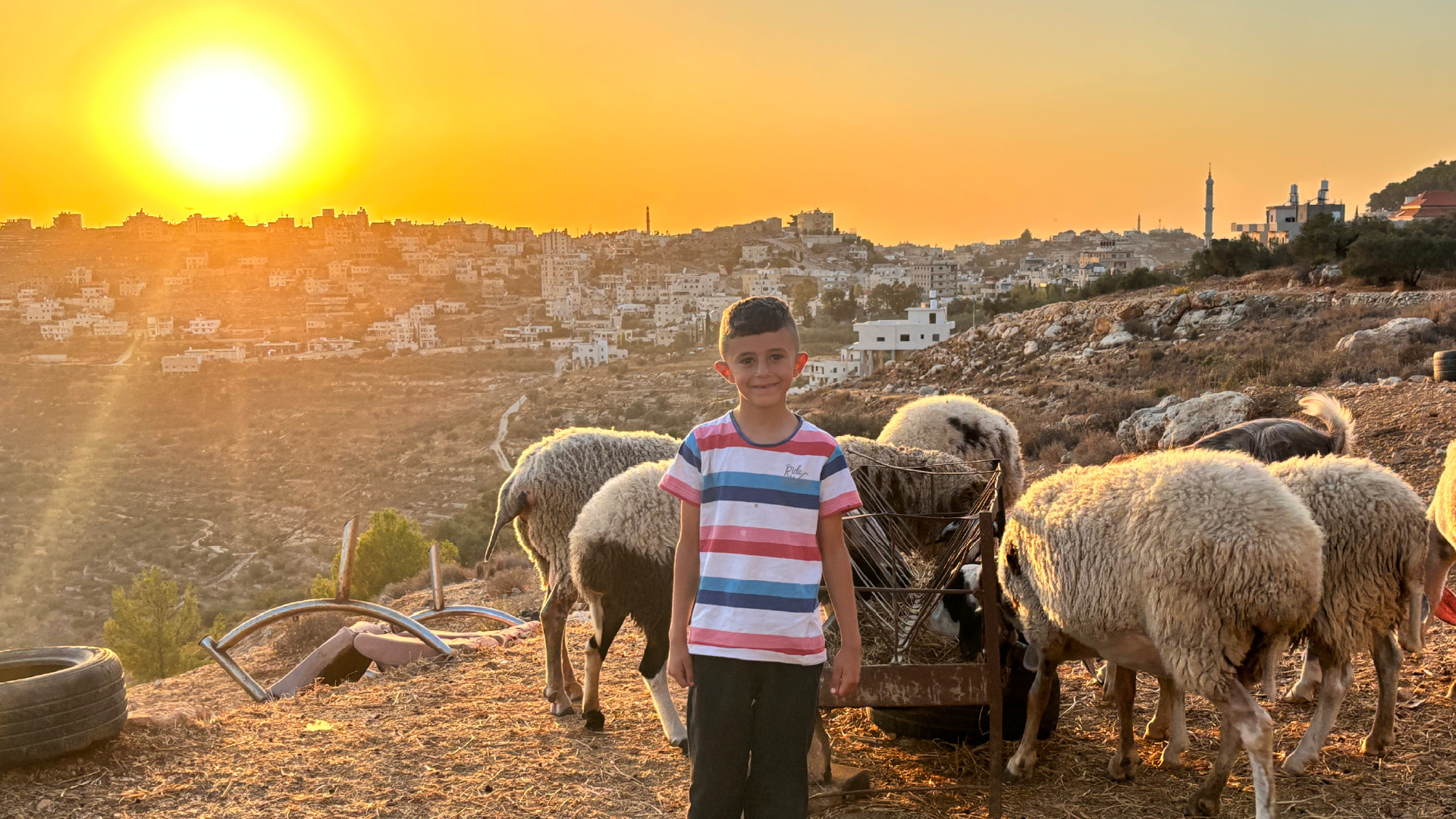
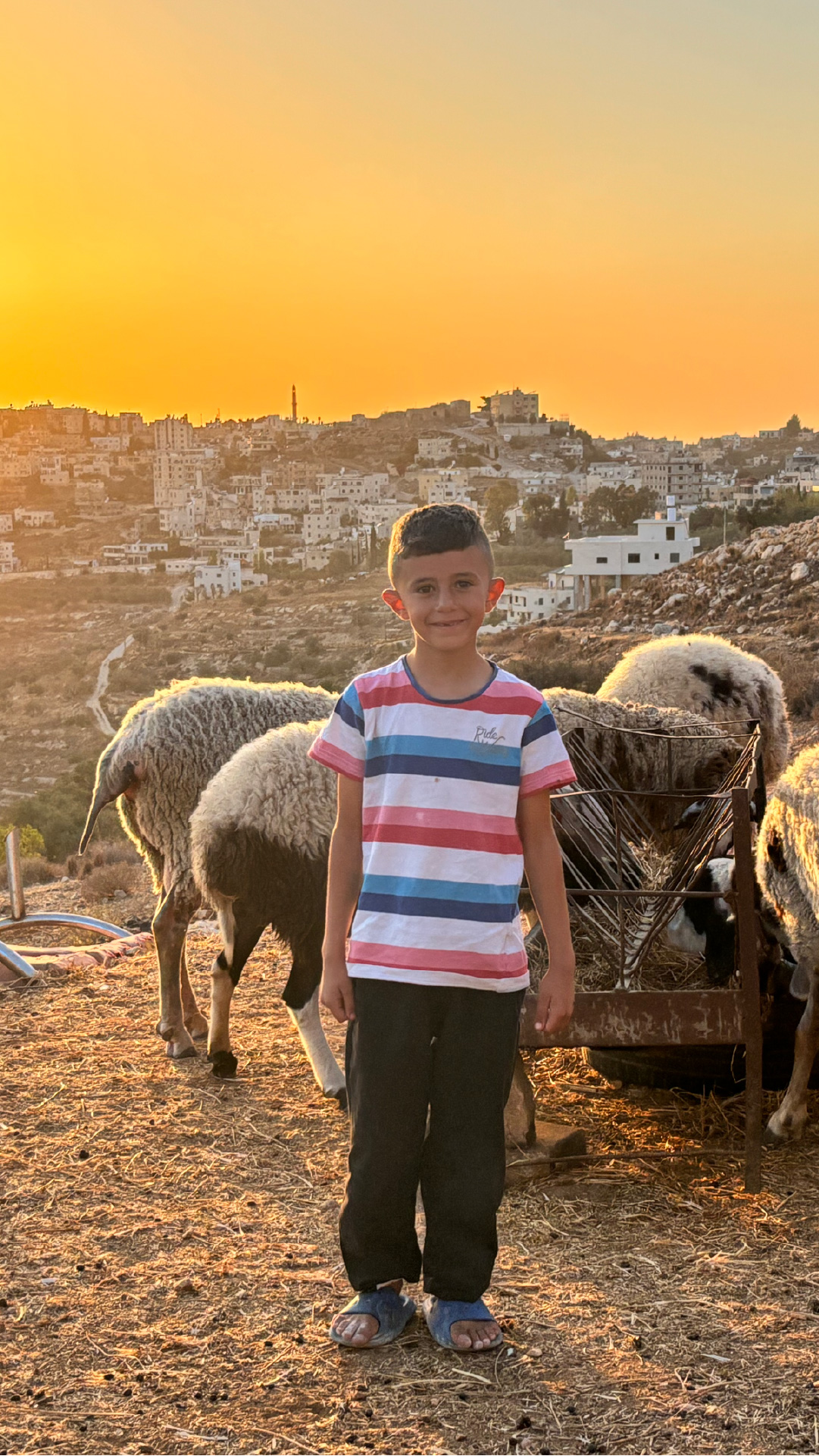
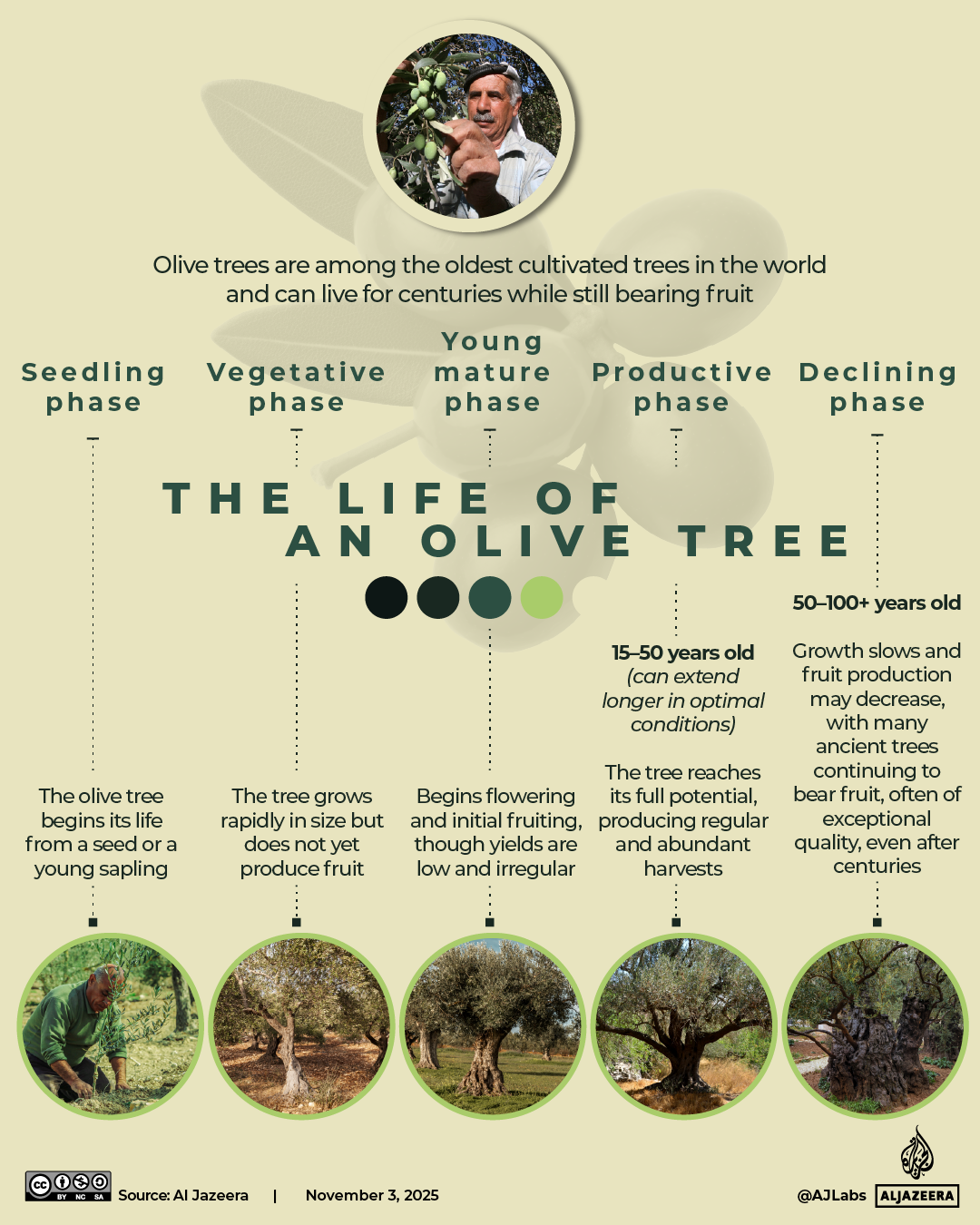
The Othmans cannot properly maintain their olive trees between seasons, which includes pruning, clearing the land to prevent fires, and giving the trees natural fertilisers from their sheep.
Israeli soldiers and settlers also prevent them from grazing their sheep in their surrounding land, they said.
“If Palestinian farmers are not able to reach their fields one year after another, the trees will die,” said Quzmar. “If you can't pick them, you can't take care of them, you can't prune the trees, you can't fertilise them, in a few years … it will be easier for settlers to come and take the land.”
The Othmans’ desperation is building as their livelihood vanishes and their trees fall into disrepair. As they look yearningly at land they can’t harvest, the only movement in the valley below is settlers’ cars driving through where trees once stood.
“All our lives are spent cultivating the earth,” Ali Badaha’s wife Kifah, 57, says softly with a wistful smile on her face as she looks out at the valley. “Yes ... our life is the land.
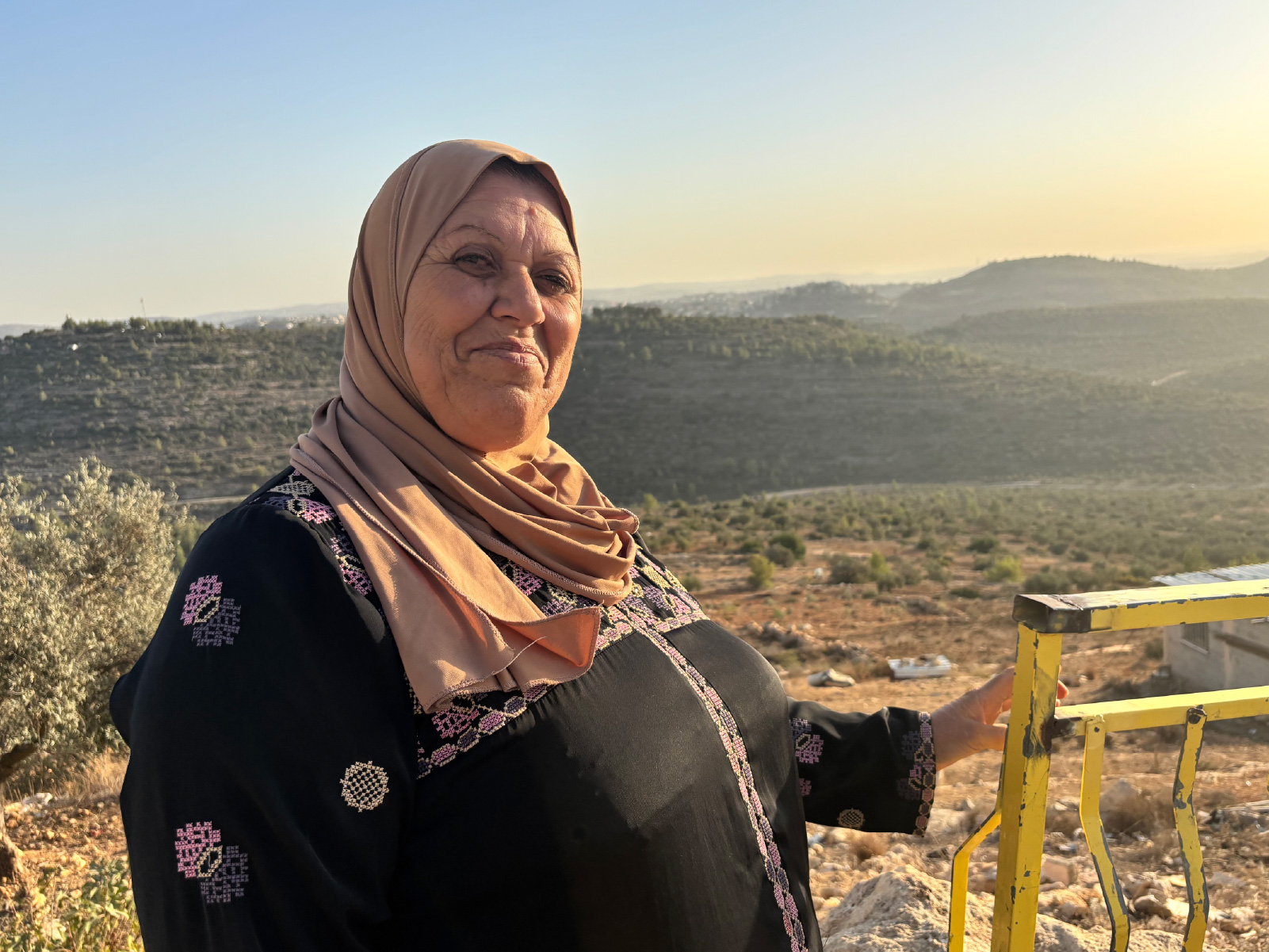
“But now, I just feel sadness looking at the land,” she said. “I feel like crying. My life feels empty.”
She recounted how she and Ali tried to access their groves in the valley in mid-October.
When they reached Israeli army roadblocks - tyres filled with stones - Ali tried to speak with the soldiers, pleading to let them pass to reach their groves. Meanwhile, Kifah began moving the tyres to the side.
When she moved the third tyre, however, a small explosive hidden there went off, knocking her back and causing her to faint.
“That’s what happens when we try to pick our olives,” she said mournfully.
Deprived of his fields, Ali came to his cousin Ismail’s terrace one morning and slumped into a chair, silently drinking tea and looking at the unpicked trees.
Ismail looked on at his young nephews sitting quietly beside them on the family terrace. “What is a Palestinian without olives? What is a fellah [farmer] without his land?” he mused.
“Nothing. Nothing. The land is our past, our present, our future.”
