Qatar slams ‘political blackmail’ as Israel hinders Gaza’s Rafah crossing
Humanitarian groups say Israeli restrictions continue to hamper aid deliveries, a clear violation of ceasefire.
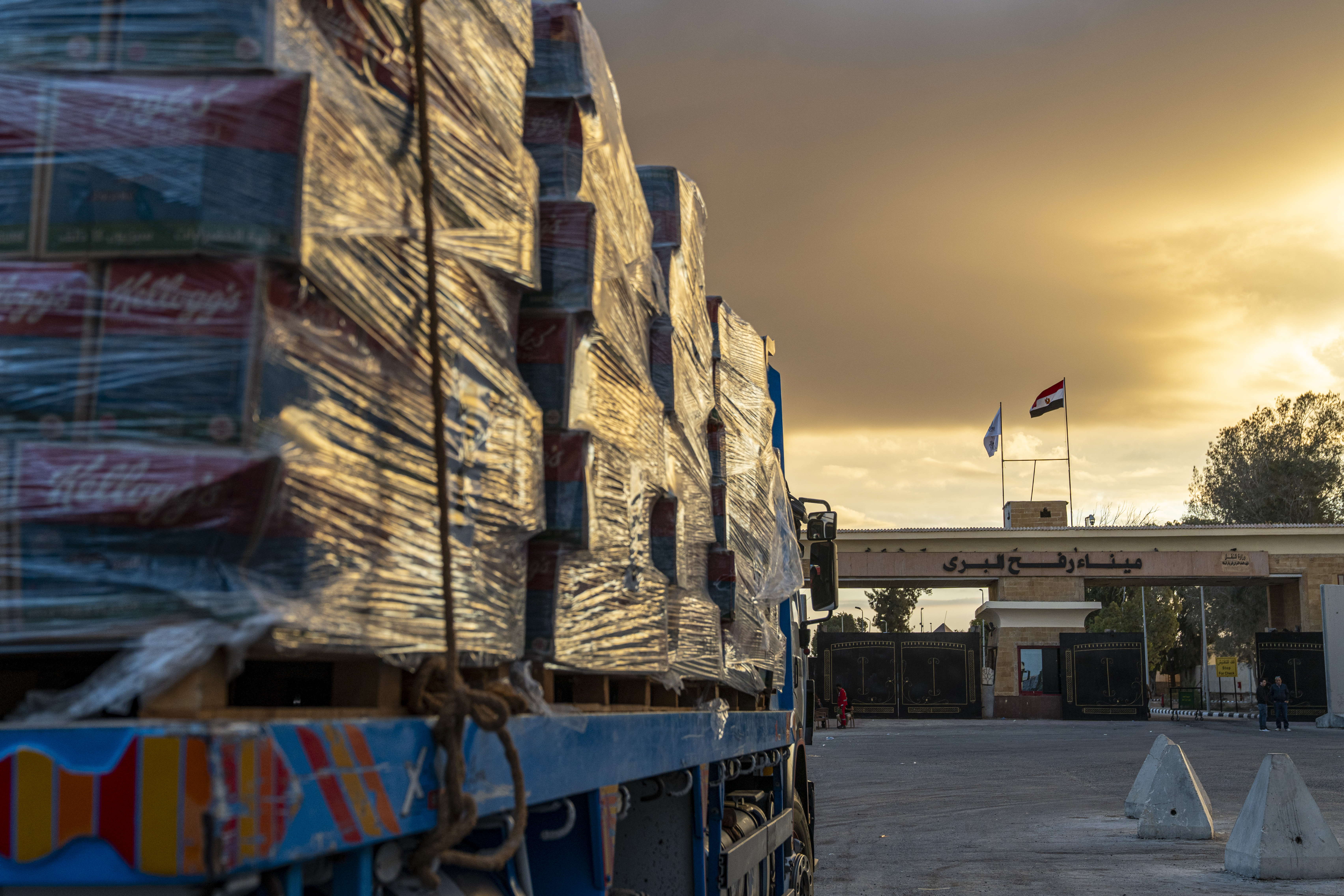
Gaza waits as reports suggest Rafah crossing may reopen

The Qatari Ministry of Foreign Affairs says Doha is engaged with mediators to reopen the Rafah crossing into besieged Gaza and deliver aid while Israel creates roadblocks.
Communications are ongoing, Foreign Ministry spokesman Majed al-Ansari said at a news conference on Tuesday, although more details were not immediately available.
“We are working with mediator[s] to ensure we reach the second phase of Gaza ceasefire. We demanded that humanitarian aid is not used as a political blackmail,” al-Ansari said.
He added that there are a number of “complications” that require effort from all parties to resolve.
This comes amid Israeli reports that Israel and the United States may consider refraining from reopening the crucial crossing on the border with Egypt until the body of the last Israeli held in Gaza is discovered and handed over to Israel.
Reopening the Rafah crossing was a condition of the first phase of the ceasefire that went into effect on October 10. But it has remained closed as humanitarian groups say Israeli restrictions continue to hamper aid deliveries, a clear violation of the agreement.
The crossing had long been Gaza’s only connection to the outside world until the Israeli military occupied the Palestinian side in May 2024.
The latest rumour of a potential reopening came on Thursday when the Israeli public broadcaster Kan reported that Israeli authorities were preparing to reopen the crossing in “both directions” following pressure from US President Donald Trump.
A two-way reopening would mark a shift from an earlier Israeli policy that stated the crossing would open “exclusively for the exit of residents from the Gaza Strip to Egypt”. The policy drew condemnation from regional governments, including Egypt and Qatar as officials warned against the ethnic cleansing of Gaza.
Hope and trepidation over potential reopening
Although many Palestinians expressed relief at the thought of the Rafah crossing reopening for medical treatment and education, others fear it will indeed be used to ferry Palestinians permanently out of Gaza under the guise of fulfilling the ceasefire.
Tasnim Jaras, a student in Gaza City, told Al Jazeera that it was her “dream that the crossing opens so we can continue our education”.
Moaeen al-Jarousha, who was wounded in the war, said he needed to leave Gaza to receive medical treatment abroad. “I need immediate medical intervention. I live in very difficult conditions,” he said.
Al Jazeera’s Hani Mahmoud, reporting from Gaza City, said many families see Rafah as “an opportunity to reunite with family members who have been separated for too long”.
“But hope here is never simple,” he added. “People here have heard about these announcements numerous times, and many recall how quickly it shut again.”
Although Palestinians hope the crossing will allow for movement both in and out of Gaza, “we know the Israeli military is pushing for Rafah to be just a one-way exit,” Mahmoud said.
Israel, meanwhile, has kept up its bombardment of Gaza in violation of the ceasefire. On Monday, Israeli forces bombed a tent where displaced Palestinians were sheltering, killing a five-year-old girl and her uncle, officials said. Four other people, including children, were wounded.
The killings brought the number of Palestinians killed by Israeli forces since the truce came into effect to at least 422, according to Gaza health authorities.
