At least 5 die in Gaza collapsed buildings, more deaths from extreme cold
Civil defence warns of catastrophic repercussions from the storm for Palestinians, who lack adequate shelter, as Israel continues to block aid, critical supplies in violation of truce.
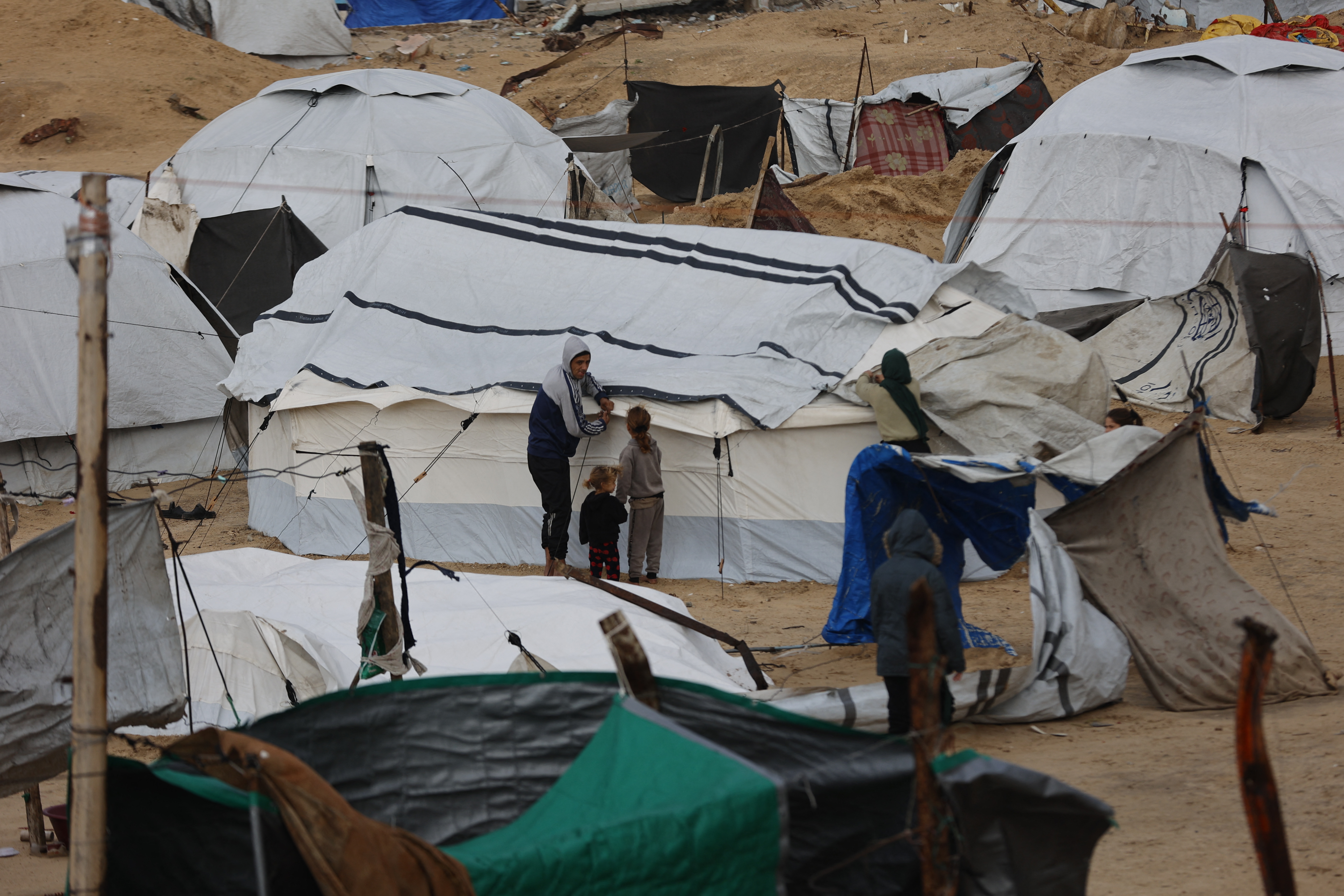

At least five Palestinian people have been killed in Gaza as a fierce winter storm toppled buildings damaged by Israeli attacks in its genocidal war on the territory, local health officials said.
Dangerous living conditions persist in Gaza after more than two years of devastating Israeli bombardment and aid shortfalls. A ceasefire has been in effect since October 10. But aid groups say that Palestinians broadly lack the shelter necessary to withstand frequent winter storms.
Recommended Stories
list of 4 items- list 1 of 4Fourth Palestinian baby freezes to death in Gaza since November
- list 2 of 4Israeli quadcopter kills three in Gaza’s Khan Younis; police chief slain
- list 3 of 4Gaza’s children study in tents as gunfire rages by Israel’s ‘yellow line’
- list 4 of 4‘Alive or dead?’: Gaza families trapped in information void about relatives
The people who died in Tuesday’s stormy conditions include two women, a girl and a man, according to al-Shifa Hospital, Gaza City’s largest, which received their bodies.
There were also reports of several other deaths of children and the elderly due to the cold weather.
The Gaza Health Ministry said on Tuesday that a one-year-old boy died of hypothermia overnight.
Two other children had died on Monday night due to the freezing conditions and inadequate shelter, Al Jazeera Arabic reported.
Meanwhile, Israel’s military said it exchanged fire on Tuesday with six people spotted near its troops deployed in southern Gaza, killing at least two of them in western Rafah.
Tents blown away, damaged
On Tuesday, hundreds of tents and makeshift shelters were also blown away or heavily damaged, the UN humanitarian office reported.
Three members of the same family — 72-year-old Mohamed Hamouda, his 15-year-old granddaughter and his daughter-in-law — were killed when an 8-metre (26-foot) high wall collapsed onto their tent in a coastal area along the Mediterranean shore of Gaza City, al-Shifa Hospital said. At least five others were injured.
Their relatives on Tuesday began removing the rubble that had buried their loved ones and rebuilding the tent shelters for survivors.
“The world has allowed us to witness death in all its forms,” Bassel Hamouda told the Associated Press after the funeral. “It’s true the bombing may have temporarily stopped, but we have witnessed every conceivable cause of death in the world in the Gaza Strip.”
A second woman was killed when a wall fell on her tent in the western part of the city, Shifa Hospital said.
Civil defence spokesperson Mahmoud Basal warned of catastrophic repercussions from the storm for Gaza’s population, the majority of whom have been left without adequate shelter as a result of Israel’s war and its ongoing restrictions on goods entering the territory.
The majority of Palestinians in Gaza live in makeshift tents since their homes were reduced to rubble during the war. When storms strike the territory, Palestinian rescue workers warn people against seeking shelter inside damaged buildings for fears of collapse. Aid groups say not enough shelter materials are entering Gaza during the truce.
The UN and its humanitarian partners have been distributing tents, tarps, blankets and clothes as well as nutrition and hygiene items across Gaza, the UN Office for the Coordination of Humanitarian Affairs said.
But Israel continues to block desperately needed humanitarian aid and critical supplies for shelters from entering the besieged Gaza Strip in violation of a ceasefire that began on October 10.
In a statement, Hamas said it was regrettable that the international community was failing to provide relief to Gaza, saying the rising death toll and spread of illness showed the territory was “experiencing the most horrific form of genocide”.
Surge of hospital patients
A civil defence spokesperson said hospitals across the territory were also observing an influx of patients, particularly children, with cold-related illnesses, and the organisation had received hundreds of calls for support due to extreme cold.
He said shelters had been damaged by the storm and were no longer fit for use, while other tents were being blown away completely by strong winds in western Gaza City.
Amjad Shawa, director of the Palestinian NGO Network in Gaza, told Al Jazeera that the situation was the worst it had been since the winter storms began.
He said about 10,000 families on Gaza’s coast were exposed to danger and further displacement as a result of the storm.
Shawa said Israel’s restrictions on goods entering the Strip were preventing access to much-needed shelter and medical supplies and hampering the work of aid organisations, endangering Gaza’s hard-hit population.
Gaza City Mayor Yahya al-Sarraj told Al Jazeera that Palestinians in the Strip were trapped in “tragic” circumstances, sheltering in inadequate tents and shelters, many of which were at risk of collapse, with insufficient supplies of medicine to treat those who are ill or wounded.
He called on the international community to pressure Israel to allow aid into the territory so Palestinians would be able to rebuild their homes.
The low-pressure system is expected to bring cold temperatures to Gaza until at least Tuesday evening, forecasters said.
‘Man-made humanitarian catastrophe’
At a briefing on Tuesday, a spokesperson for the Qatari Ministry of Foreign Affairs condemned the “man-made humanitarian catastrophe” in Gaza and said Israel should allow aid into the enclave.
Majed al-Ansari said that Qatar is working with mediators to push for the transition to the second phase of the Gaza agreement, noting that the complexities on the table at this moment necessitate progress towards implementing this phase.
Al-Ansari stressed in his statements the need to avoid linking the agreement in Gaza with the opening of the Rafah crossing or the entry of humanitarian aid without conditions, adding that every day that passes without aid entering Gaza means more victims.
He also stated that there are no specific timetables regarding Gaza, noting that Qatari contacts are ongoing and daily to push the agreement forward, and he asked Israel to answer the question: “Why is the implementation of the Gaza agreement being delayed?”
As the death toll from the storm rose in Gaza, UNICEF said dozens of children have been killed since the start of the ceasefire three months ago.
“More than 100 children have been killed in Gaza since the ceasefire of early October. That’s roughly a girl or a boy killed here every day during a ceasefire,” UNICEF spokesperson James Elder, told reporters.
He said the children had been killed in air strikes, drone strikes, tank shelling and by live ammunition.
“We’ve now gone to six children who died of hypothermia just in this winter,” he added.
