How Donald Trump launched a push to amass government data in 2025
Proponents say compiling personal information in a single database is more efficient. But critics fear risks to privacy.


On the very first day of his second term, United States President Donald Trump signed an executive order creating the Department of Government Efficiency (DOGE), a government panel tasked with rooting out waste, fraud and abuse.
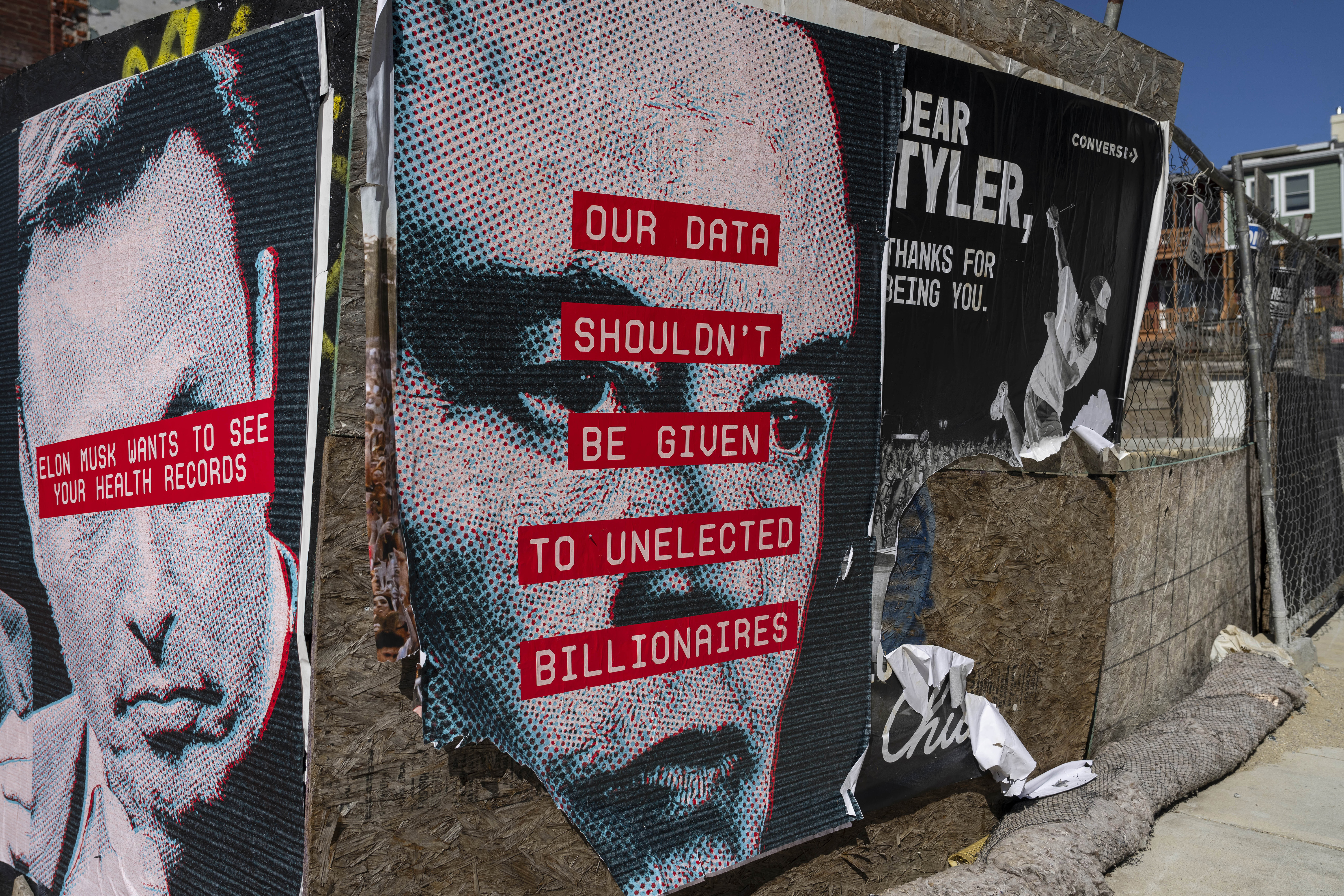
But as part of that effort, Trump made an announcement that alarmed privacy advocates.
His administration would be seeking "full and prompt access to all unclassified agency records, software systems and IT [information technology] systems" from across the spectrum of government agencies.
That announcement was the start of a series of sweeping steps Trump took in 2025 to push for the mass consolidation of federal data.
But civil rights advocates and legal scholars fear that Trump has accelerated a worrisome trend, one that pits the individual right to privacy against government expediency.
“Once you build a system that connects every database about an individual across federal and state governments, it's incredibly hard to unwind that system,” said Cody Venzke, who serves as senior policy counsel at the American Civil Liberties Union (ACLU).
Venzke advises on issues of surveillance and technology. He warns that once such a data cluster is fully created, it could be wielded by both Democrats and Republicans for political aims.
"It is there for future presidents of either party to use as police," Venzke said. Already, he added, government data is being weaponised against activists and undocumented immigrants.

A troubling trend
Advocates argue there is a reason why government agencies in the US are limited in how they can distribute data, even among themselves.
Adam Schwartz, the privacy litigation director at the nonprofit Electronic Frontier Foundation, points to World War II as an example of data sharing gone wrong.
The war pitted the US against Japan, and in 1942, the US government controversially decided to round up and imprison nearly 120,000 Japanese Americans and immigrants of Japanese descent.
It was an act the US Supreme Court later deemed unconstitutional. But it was made possible through data sharing across agencies: The military had requested individual household data about Japanese Americans from the US Census Bureau.
Another inflection point came in the 1970s, during the Richard Nixon presidency.
Nixon had undertaken a streamlining project to consolidate government programmes. But in 1972, the Watergate scandal exposed Nixon's campaign to collect and leverage data about his political rivals.
Revelations emerged that Nixon had unlawfully used information from the Internal Revenue Service (IRS) and other agencies to instigate investigations into his perceived enemies.
That scandal prompted a bipartisan push in Congress to pass one of the most significant safeguards against the dissemination of government data: the Privacy Act of 1974.
"If we have learned anything in this last year of Watergate, it is that there must be limits upon what the government can know about each of its citizens," the late Senator Sam Ervin said at the time.
The Privacy Act limits government agencies from sharing information. Save for a handful of exceptions, agencies are barred from disclosing personally identifying information for purposes unrelated to the agency's routine work.


A 'great leap forward'
But Schwartz told Al Jazeera that the trend towards government data consolidation has continued in the decades since, under both Democratic leaders and Republicans.
“Surveillance is bipartisan, unfortunately,” he said.
With Trump's second term, however, the process hit warp speed. Schwartz argues that the Trump administration’s actions violate laws like the Privacy Act, marking a “dangerous” shift away from Nixon-era protections.
“The number-one problem with the federal government in the last year when it comes to surveillance is the demolition of the Watergate-era safeguards that were intended to keep databases separated,” he said.
Schwartz noted that Trump's consolidation efforts have been coupled with a lack of transparency about how the new, integrated data systems are being used.
"Just as the current administration has done a great leap forward on surveillance and invading privacy, so it also has been a less transparent government in terms of the public understanding what it is doing," Schwartz said.
Already, on March 20, Trump signed an executive order that called on government agencies to take "all necessary steps" for the dissolution of what he called "data silos".
Shortly afterwards, in April, US Immigration and Customs Enforcement (ICE) inked a deal with the IRS to exchange personal information, including the names and addresses of taxpayers.
The memo was seen as an effort to turn private taxpayer data into a tool to carry out Trump's goal of deporting immigrants.
A federal court in November paused the agencies' data-sharing agreement. But other efforts continue.
In June, the Supreme Court ruled in favour of giving DOGE access to sensitive Social Security data. And just this month, the Trump administration pressured states to share information about the recipients of food assistance, or else face a loss of funding.
While immigrants appear to be one of the main targets of the data consolidation project, Venzke said that Americans of all stripes should not be surprised if their personal information is weaponised down the line.
“There is no reason that it will be limited to undocumented people. They are taking a system that’s traditionally limited to non-citizens and vastly expanding it to include all sorts of information on US citizens,” Venzke said.
“That was unthinkable just five years ago, but we're seeing it happen now, and consequently, its potential abuses are widespread.”


Relieving administrative burdens
Information consolidation continues to have strong supporters, though.
The Data Foundation, a nonprofit based in Washington, DC, was among the groups that applauded Trump's order in March to eliminate government "data silos".
"When agencies break down silos responsibly within the framework of ethical governance, conscious design, and a learning culture, they can make better decisions, reduce costs, and deliver measurable improvements in people's lives," founder Nick Hart said in a statement.
The group's communications director JB Wogan told Al Jazeera that better data sharing could reduce the “administrative burden” for those receiving benefits and those tasked with distributing them.
“The idea of data sharing across agencies and programmes is one that has historically been a non-partisan concept,” Wogan said.
Still, his organisation has repeatedly emphasised that information sharing must be done within existing legal frameworks in order to "build and maintain public trust in government data stewardship".
It has also voiced concern over recent incidents where sensitive data stockpiles may have been compromised by cyberattacks.

A corporate gold mine?
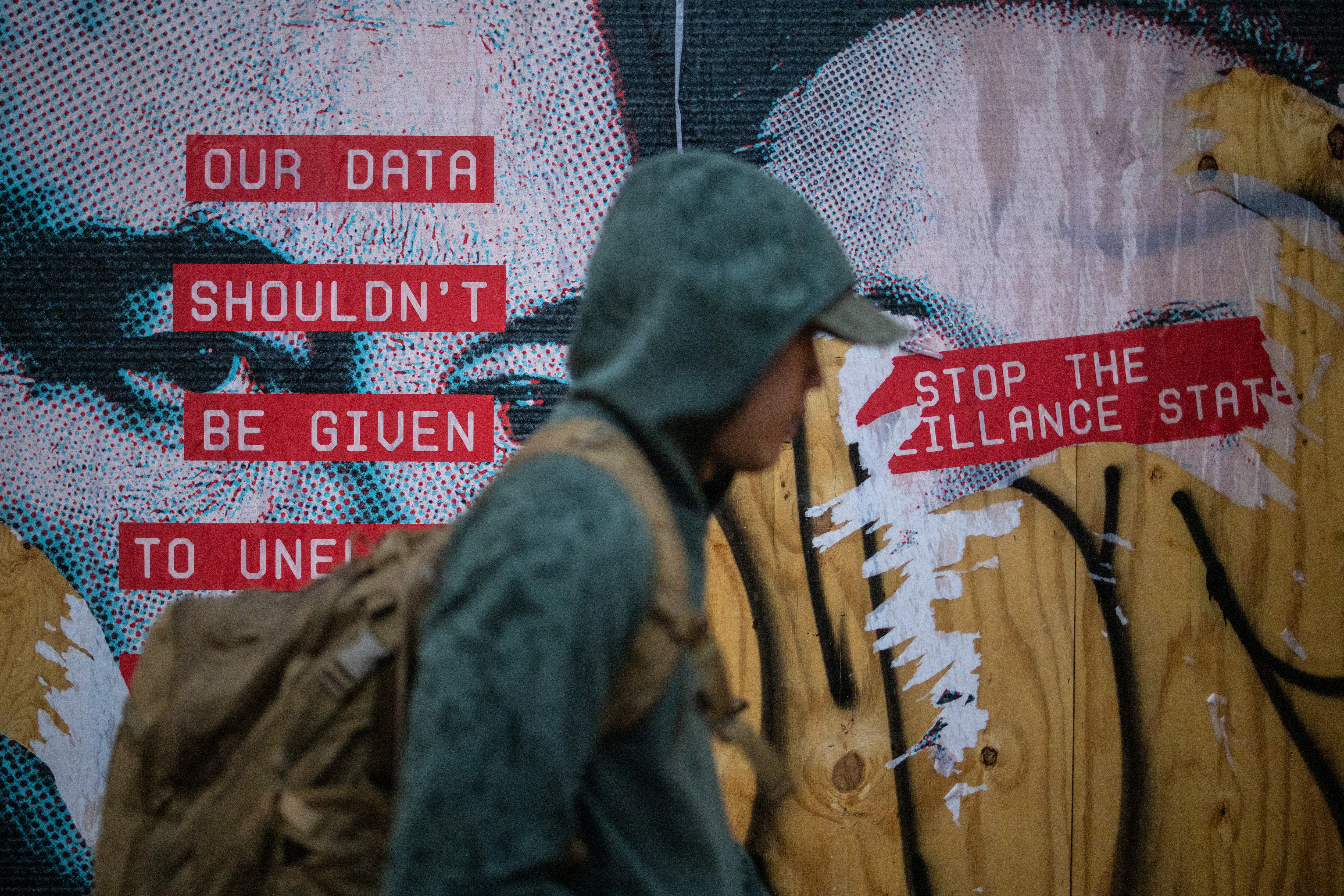
Other risks come from the voluntary transfer of government data to private enterprises.
Victoria Baranetsky, the general counsel for the Center for Investigative Reporting, a nonprofit newsroom, pointed out that the barrier between the US government and prominent businesses has grown increasingly porous.
Earlier this year, for instance, the Trump administration struck a contract with the data-mining firm Palantir to compile government information for immigration enforcement operations.
Palantir's access to information from sources like the IRS and DOGE spurred fears that the government was creating dossiers on every single US resident. Even former Palantir employees denounced the famously secretive company for having "abandoned its founding ideals".
Baranetsky, whose job involves petitioning for government transparency, said those kinds of public-private relationships underscore the risk that sensitive information could be monetised.
After all, a wealth of untapped data exists within the federal government, protected by privacy laws.
“One of the greatest custodians of data that hasn't been fully mined is the United States government,” Baranetsky said. “Data is valuable when it is visible to few."
But as the task of data consolidation falls into corporate hands, Baranetsky warns there is another equally concerning issue to weigh: Government files may become increasingly inaccessible to journalists and the general public.
Private companies are not subject to the same transparency laws and privacy mandates as the federal government is.
By "disappearing any distinction between government and private actors", Baranetsky said the Trump administration is "making it even more complicated to get access to this information".
Data consolidation, she explained, is "used essentially as a sword and a shield”: a means of both advancing and concealing government actions.
The trend leaves experts like the ACLU's Venzke fearful that safeguards like the Privacy Act are eroding.
As the Trump administration pursues an ever-wider data consolidation effort, Venzke anticipates the dangers will grow, too. "The threats of misuse, abuse or cybersecurity breaches are that much more magnified."
