US F-35 jet parts reached China by mistake
Australia and the US investigate how F-35 parts were sent to Hong Kong amid concerns over sensitive military technology.
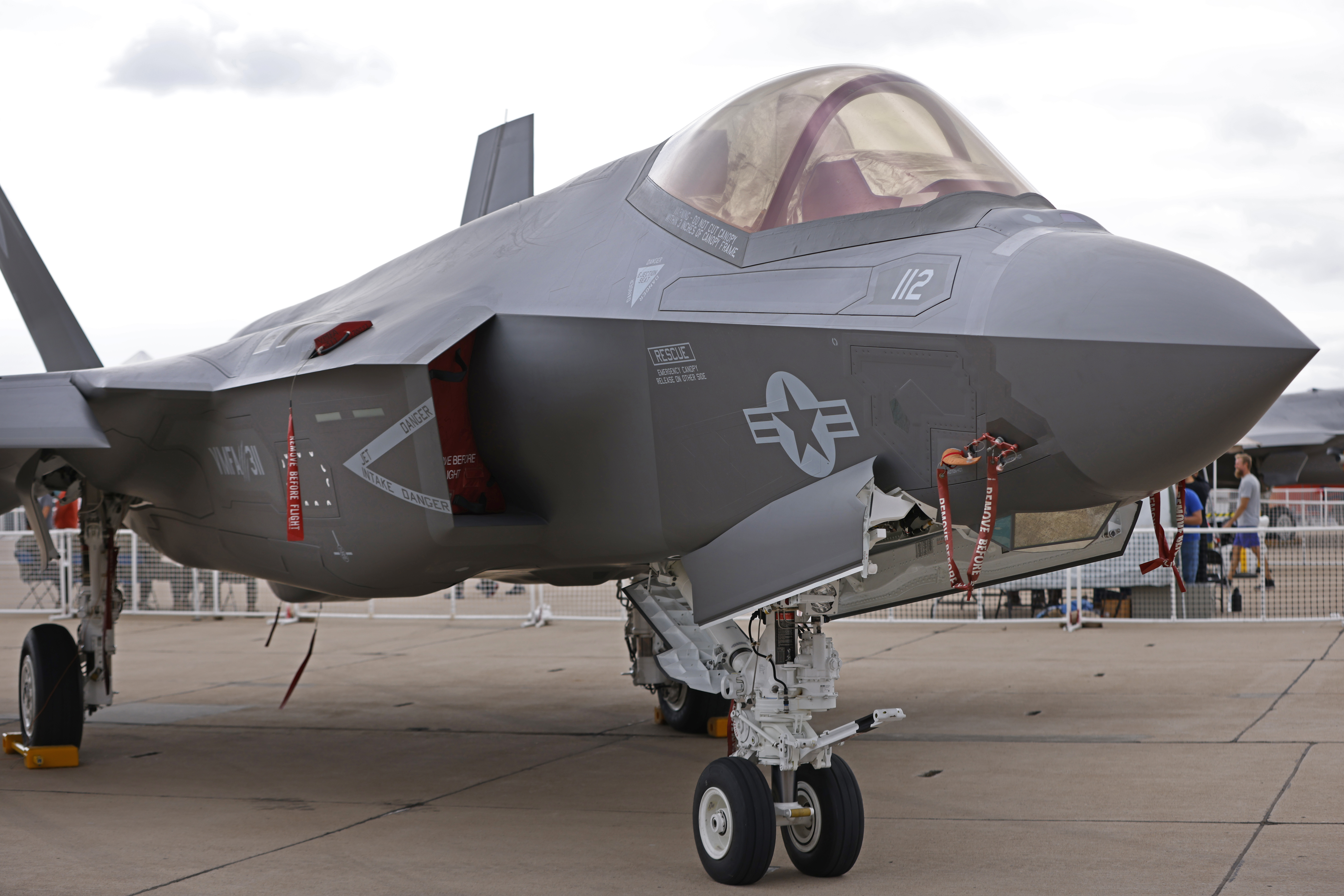
The United States is investigating reports that parts of its advanced F-35 stealth jet programme were diverted to Hong Kong while being shipped from Australia to the US.
The incident in late September has prompted questions over whether China may have gained access to components of one of Washington’s most sophisticated weapons systems.
Recommended Stories
list of 2 items- list 1 of 2US military says F-35B jet fighter crashes in California, pilot safe
- list 2 of 2Trump administration approves sale of F-35 jets to Saudi Arabia
There has been no suggestion so far from US or Australian authorities that Beijing deliberately diverted the shipment or accessed the technology. Bloomberg has reported that the shipment ended up in Hong Kong because a postal service officer missed an email advising against sending the plane parts to Chinese territory.
Australia’s Defence Minister Richard Marles has said the components involved were not “sensitive”. China’s Ministry of Foreign Affairs says it was not aware of the incident.
So, what happened and how serious was the incident?
What do we know?
US media outlet Politico first reported that a consignment of F-35 components, including a cockpit canopy designed with radar-deflecting technology and a weapons-bay door, was unexpectedly rerouted to Hong Kong after leaving Australia.
The Pentagon’s F-35 Joint Programme Office said it was aware of “a shipment issue” involving components from the fighter jet and was working with US authorities and industry partners to recover them.
“We are actively working with US authorities and industry partners to retrieve these components, investigate the incident and place safeguards to avoid a future occurrence,” the office said.
Marles confirmed the incident and revealed that Australia was helping the US and Lockheed Martin, the F-35’s main contractor, to investigate what happened. “We are examining very much everything that has occurred at the Australian end,” he said. “Ultimately, though, this is an issue which is going to be managed by the United States and by Lockheed in terms of what has occurred.”
Australia has 72 F-35s and is one of seven countries outside the US that share a global pool of spare parts. A warehouse at Williamtown, north of Sydney, serves as an Asia Pacific hub supporting the warplanes.
Why was the shipment diverted to Hong Kong?
Neither the Pentagon nor Australian authorities have publicly explained why the shipment went to Hong Kong, and there is no evidence showing that China was responsible for its diversion.
But Bloomberg has reported that the shipment reached Hong Kong because an email sent by a freight forwarding firm was missed by an employee at postal service firm UPS. The email had advised against routing the shipment via any of a series of countries blacklisted by the US for transit of sensitive technologies.
While Lockheed Martin manages the global spare-parts programme, two sources told the AFP news agency that the programme itself is controlled by the US military. Australian defence officials have previously said Canberra does not control or direct the export of F-35 components from the Williamtown warehouse.
Alex Gatopoulos, Al Jazeera’s defence editor, said the international nature of the programme makes its logistics somewhat complex.
“The F-35 programme, while American, is supplied by subcontractors from 11 countries. Thirteen countries, apart from the US, fly the F-35, so the logistics network supplying each air force is vast,” he said.
Lockheed Martin Australia declined to discuss specific shipping procedures for security reasons but said every shipment is handled with “utmost diligence” and in accordance with US regulations.
How serious is this?
The incident is serious enough to warrant a Pentagon investigation to try to recover the components.
However, Australian Defence Minister Marles played down the security implications of the incident. “We’re not talking about sensitive equipment here or sensitive parts,” he said.
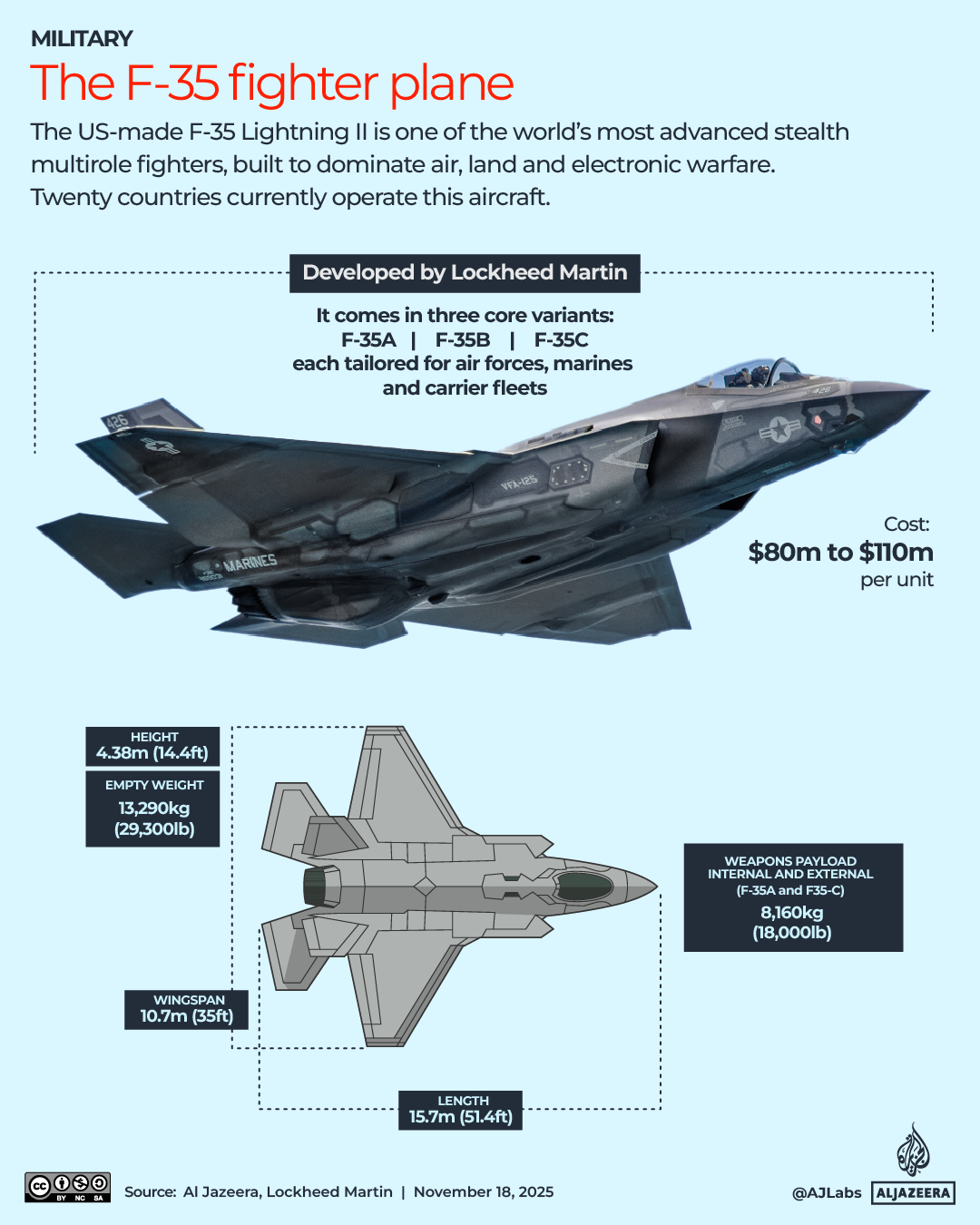
The concern stems from the F-35’s status as a fifth-generation stealth fighter incorporating stealth coatings, advanced radar, sensors and networking capabilities. More than 1,200 have been built, with 19 countries placing orders, according to the US Congressional Research Service.
China has also previously been accused of seeking information about the programme. A US Defense Science Board report released in 2013 alleged Chinese cyberattacks had accessed information from several Pentagon programmes, including the Joint Strike Fighter programme.
For years, US officials have warned about what they describe as an espionage threat from the Chinese state, while prosecutors have brought criminal cases against intelligence operatives from Beijing accused of stealing classified government material and proprietary commercial data, including via unlawful cyber-intrusions.
In January, a former US Navy sailor received a prison term of more than 16 years after being found guilty of selling technical and operational manuals for vessels and naval systems to an intelligence officer acting on behalf of China.
However, Al Jazeera’s Gatopoulos cautioned against assuming that possession of individual components would provide Beijing with any major technological advantages.
“While China has a reputation for intense industrial espionage, its own stealth fighter jet programme is advanced, with sixth-generation prototypes coming online,” he said. “It’s debatable how much actual information China would glean from smaller, nonessential parts from an F-35.”
