WHO and Africa CDC unveil $518m Ebola plan as DRC, Uganda death tolls rise
The DR Congo’s health ministry reported 71 new cases of the rare Bundibugyo strain in just 24 hours.
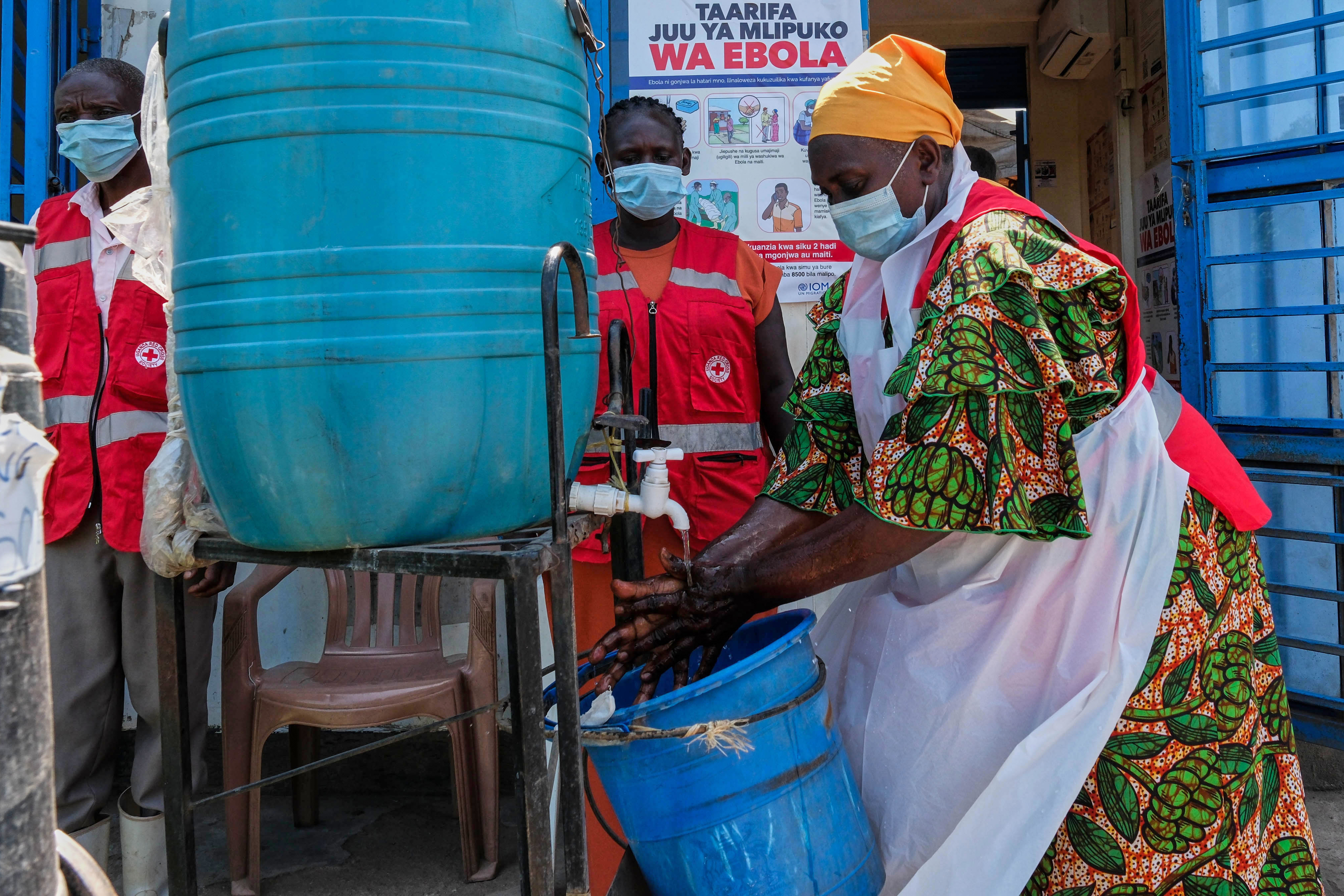
The World Health Organization (WHO) and the African Union’s health agency have announced a $518m plan to combat the deadly Ebola outbreak in conflict-ridden Democratic Republic of the Congo (DRC) and neighbouring Uganda.
WHO chief Tedros Adhanom Ghebreyesus said on Friday that the plan, in collaboration with the Africa Centres for Disease Control and Prevention (Africa CDC), will run from June to November. It will cover emergency coordination, surveillance, testing, infection prevention, clinical care and community engagement.
Recommended Stories
list of 3 items- list 1 of 3DRC suggests behind-closed-doors World Cup warm-up to offset Ebola threat
- list 2 of 3The Ebola outbreak the world isn’t paying attention to
- list 3 of 3Protesters use ‘Ebola coffin’ to rally against US quarantine centre
The initiative comes as authorities race to contain the deadly virus, first declared in the DRC on May 15. It has since infected at least 452 people there, causing 82 deaths.
In its latest situation report, the DRC’s health ministry warned of “rapid and continuous community transmission”, with the latest 71 cases confirmed in just a 24-hour period.
The outbreak has also spread to Uganda, where authorities announced three more cases on Friday, increasing the total to 19, with two deaths.
The latest outbreak involves the rare Bundibugyo strain of the Ebola virus, which is believed to have been spreading under the radar for some time.
‘Stop the outbreak where it is’
Speaking at a media conference, Tedros expressed optimism that the WHO-Africa CDC health plan would bring the outbreak “under control”.
“The objective is straightforward: we need to stop the outbreak where it is, support countries that are responding today, and ensure that neighbouring countries are ready to detect and act quickly if cases appear,” said Tedros.
“This is a practical plan,” he continued. “It sets out what we need to do now, together, to contain the current outbreak and reduce the risk of further spread.”
The current outbreak is bigger than the two previously recorded outbreaks of the Bundibugyo strain, in 2007 and 2012, according to the Africa CDC.
And without robust public health responses, the current outbreak could become one of the largest ever Ebola crises ever documented, rivalling the 2014-2016 epidemic in West Africa, warned officials with the United States’ Centers for Disease Control and Prevention (CDC) on Friday.
While three vaccines are being researched and are set to be fast-tracked for trials, there is no approved vaccine for it yet.
Frustration has been growing in nearby Kenya, where, despite having never recorded the disease, the United States is setting up an Ebola quarantine station for US citizens.
Hundreds took to the streets of Nanyuki town, close to Laikipia Air Base on Monday and Tuesday and rallied in front of the planned centre. Americans who contract Ebola while overseas will be sent there rather than being allowed back home. At least two people were killed, and one person was injured when the demonstration turned violent on Monday.
Kenya’s President William Ruto has defended the base as crucial for the country’s health partnership with the US.
