Trump says Israel and Lebanon agree to temporary ceasefire
Lebanese Prime Minister Nawaf Salam welcomes Donald Trump’s announcement of 10-day truce that takes effect on Thursday.
Israel and Lebanon have agreed to a 10-day ceasefire, United States President Donald Trump says.
The truce will take effect at 5pm US East Coast time (21:00 GMT) on Thursday, Trump wrote on social media after speaking to Israeli Prime Minister Benjamin Netanyahu and Lebanese President Joseph Aoun.
Recommended Stories
list of 3 items- list 1 of 3Why the Iran war did not go according to US plans
- list 2 of 3Pentagon chief Hegseth warns Iran blockade to last ‘as long as takes’
- list 3 of 3Jet fuel shortage: Why Iran war could ground flights in Europe
“These two Leaders have agreed that in order to achieve PEACE between their Countries, they will formally begin a 10 Day CEASEFIRE at 5 P.M. EST,” Trump wrote on Truth Social.
Lebanese Prime Minister Nawaf Salam welcomed the announcement in a post on X, describing the ceasefire as “a central Lebanese demand we have pursued since the first day of the war” and the primary goal of Tuesday’s meeting between Lebanese and Israeli officials in the US.
Netanyahu confirmed he had agreed to the truce, which presented his country with an opportunity for a “historic deal” with Beirut.
Lebanon was drawn into the US-Israeli war on Iran on March 2 when Hezbollah, the Iran-aligned Lebanese armed group, fired rockets at Israel in response to the killing of Iranian Supreme Leader Ali Khamenei, who was killed on February 28 in an Israeli strike on the opening day of the US-Israel war on Iran.
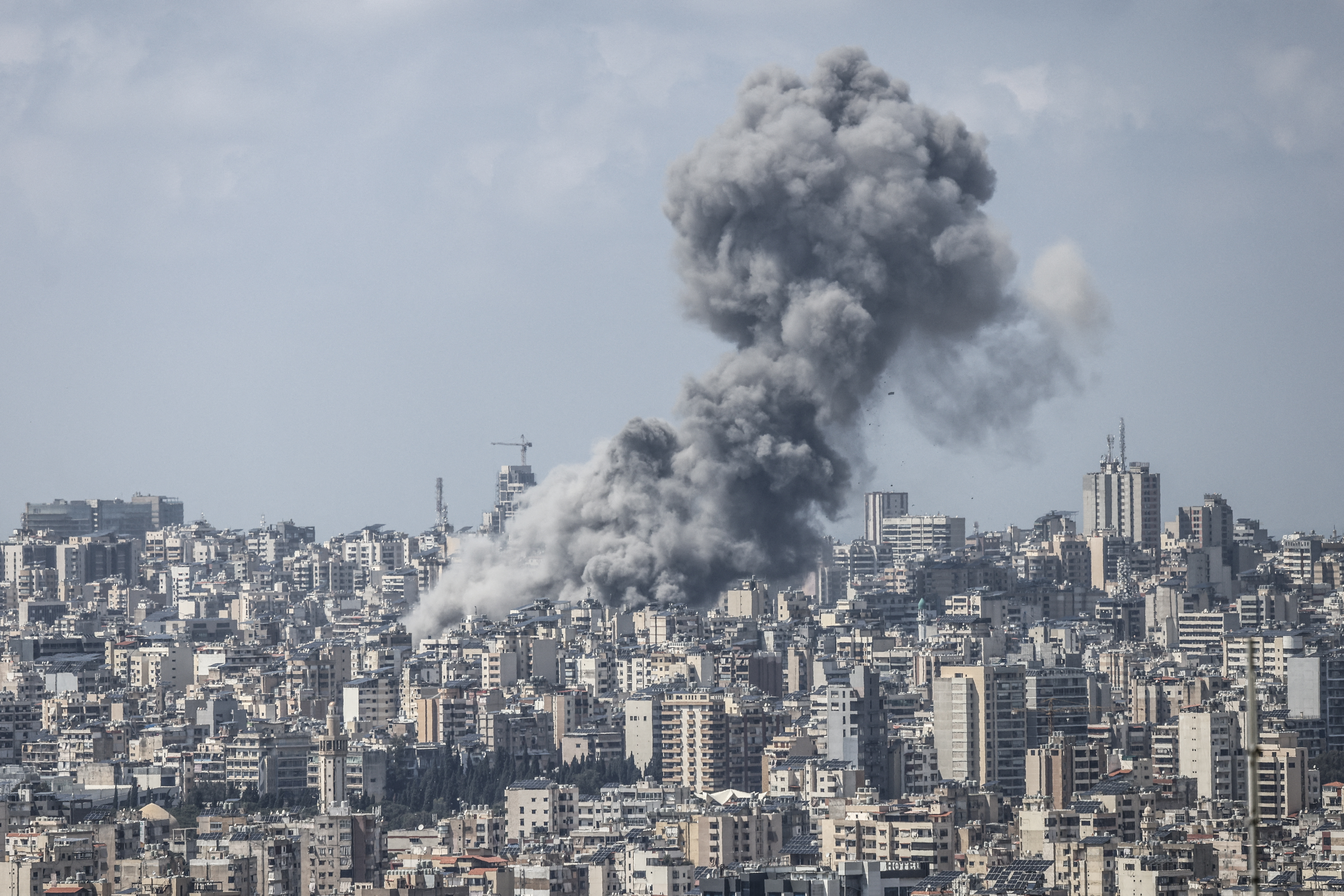
Israeli forces responded with a ferocious campaign that has since killed more than 2,196 people in Lebanon and wounded thousands more. Israel has also issued forced evacuation orders covering roughly 15 percent of Lebanese territory.
Israel continues strikes
Hezbollah lawmaker Ibrahim al-Moussawi told AFP on Thursday that the group would respect the US-brokered ceasefire if Israeli attacks on its fighters fully stopped.
The US State Department said that Israel would retain the right under the agreement to carry out strikes in Lebanon in self defence “at any time”.
It added that the ceasefire could be extended by mutual consent.
Netanyahu said that Israeli forces would remain in Lebanon within an “extensive” security zone and that he wanted Hezbollah “dismantled” as part of a future agreement with Lebanon.
Trump later said the Lebanese government would begin working with Hezbollah to achieve that goal.
The Lebanese Ministry of Public Health said strikes killed nine people across the southern district of Tyre over the past two days, including a paramedic.
At least eight people were killed and 33 others wounded in an Israeli strike on the town of Ghaziyeh in the Zahrani area of southern Lebanon on Thursday, Lebanon’s state news agency NNA reported.
Salam also offered prayers for those killed and expressed hope that the more than one million people forced from their homes by Israel’s campaign would be able to return “as soon as possible”.
Trump said he would invite Netanyahu and Aoun to direct talks, saying both sides wanted to resolve their differences and he believed “that will happen quickly”.
He also said he had directed US Vice President JD Vance, Secretary of State Marco Rubio and the chairman of the Joint Chiefs of Staff, Dan Caine, to work towards a lasting settlement.
The ceasefire follows an intense week of diplomacy.
On Tuesday, Lebanese and Israeli envoys met in Washington, DC, in their countries’ first direct diplomatic contact in decades. The talks were hosted by Rubio.
Both sides described the talks as positive, although Aoun refused to speak directly with Netanyahu, a government official familiar with the matter told The Associated Press news agency, adding that Washington “understands Lebanon’s position”.
Trump had sought to get both leaders on the phone together, Al Jazeera’s chief US correspondent, Alan Fisher, reported from the White House, but the Lebanese side declined to do so before any ceasefire was put in place.
Fisher said the ceasefire in Lebanon was a demand from Iran, which had communicated that it wanted a deal and could have agreed to one, but that the fighting there needed to stop first.
“If putting a little bit of pressure on the Lebanese and the Israelis brings that to fruition, Donald Trump saw the opportunity here and thought he would absolutely do that.”
Fisher said this ceasefire could open the opportunity for a broader agreement involving Iran.
A two-week US-Iran ceasefire – which the US and Israel said does not cover Lebanon – is due to expire on Wednesday, but a new round of negotiations is expected to be held in Pakistan.
Iran had made securing a Lebanon ceasefire a firm demand before any potential talks, and Tehran’s parliament speaker said halting the fighting there was “just as important” as ending the war with the US.
