Madagascar cyclone death toll hits 40, 16,000 displaced; Mozambique braces
Gezani is forecast to return to cyclone status when it strikes southern Mozambique on Friday evening.
At least 40 people have been killed and more than 16,000 others displaced after Cyclone Gezani slammed into Madagascar’s second-largest city earlier this week, as Mozambique braced for the storm’s arrival.
Madagascar’s National Office for Risk and Disaster Management (BNGRC) said on Friday evening that it had recorded 40 deaths, while six people remained missing and at least 427 others were injured.
Recommended Stories
list of 3 items- list 1 of 3Heavy rains hamper recovery as death toll from floods in Asia exceeds 1,750
- list 2 of 3Natural disasters hit global economy for $220bn in 2025: Swiss Re
- list 3 of 3After the floods of 2025, can we keep 2026 above water?
More than 16,300 people were displaced as a result of the storm, the agency added.
Gezani made landfall on Tuesday at the Indian Ocean island nation’s eastern coastal city, Toamasina, bringing winds that reached 250km/h (155mph).
Madagascar’s new leader, Colonel Michael Randrianirina, has declared a national disaster and called for “international solidarity”, saying the cyclone had “ravaged up to 75 percent of Toamasina and surrounds”.
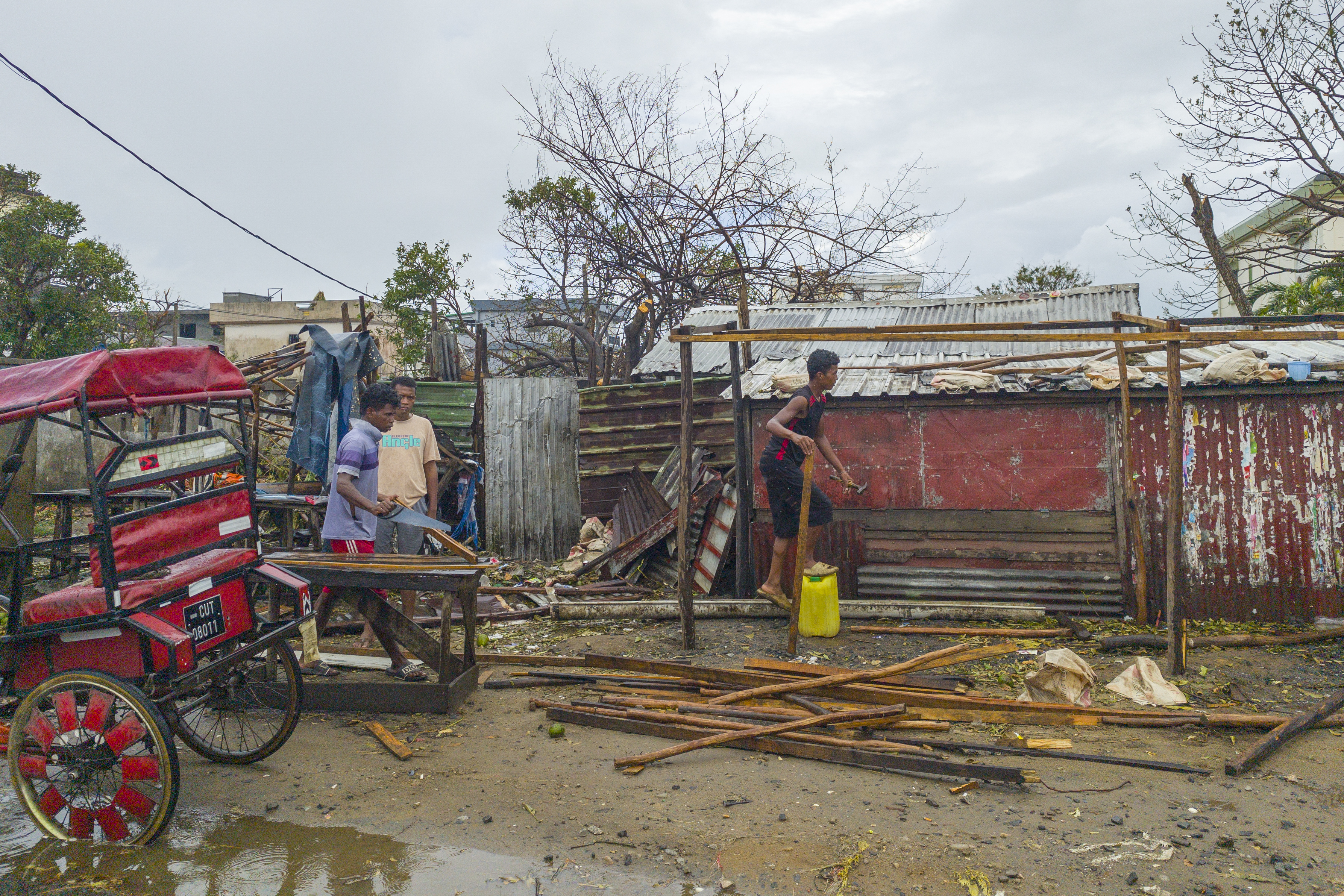
Images from the AFP news agency showed the battered city of 500,000 people littered with trees felled by strong winds and buildings with their roofs blown off. Residents dug through piles of debris, planks and corrugated metal to repair their makeshift homes.
Tania Goosens, Madagascar director of the United Nations World Food Programme, said “the scale of destruction is overwhelming” in Toamasina. “The authorities have reported that 80 percent of the city has been damaged,” she told reporters.
“The city is running on roughly 5 percent of electricity, and there is no water,” she said, adding that the WFP’s office and one warehouse “were also completely destroyed”.
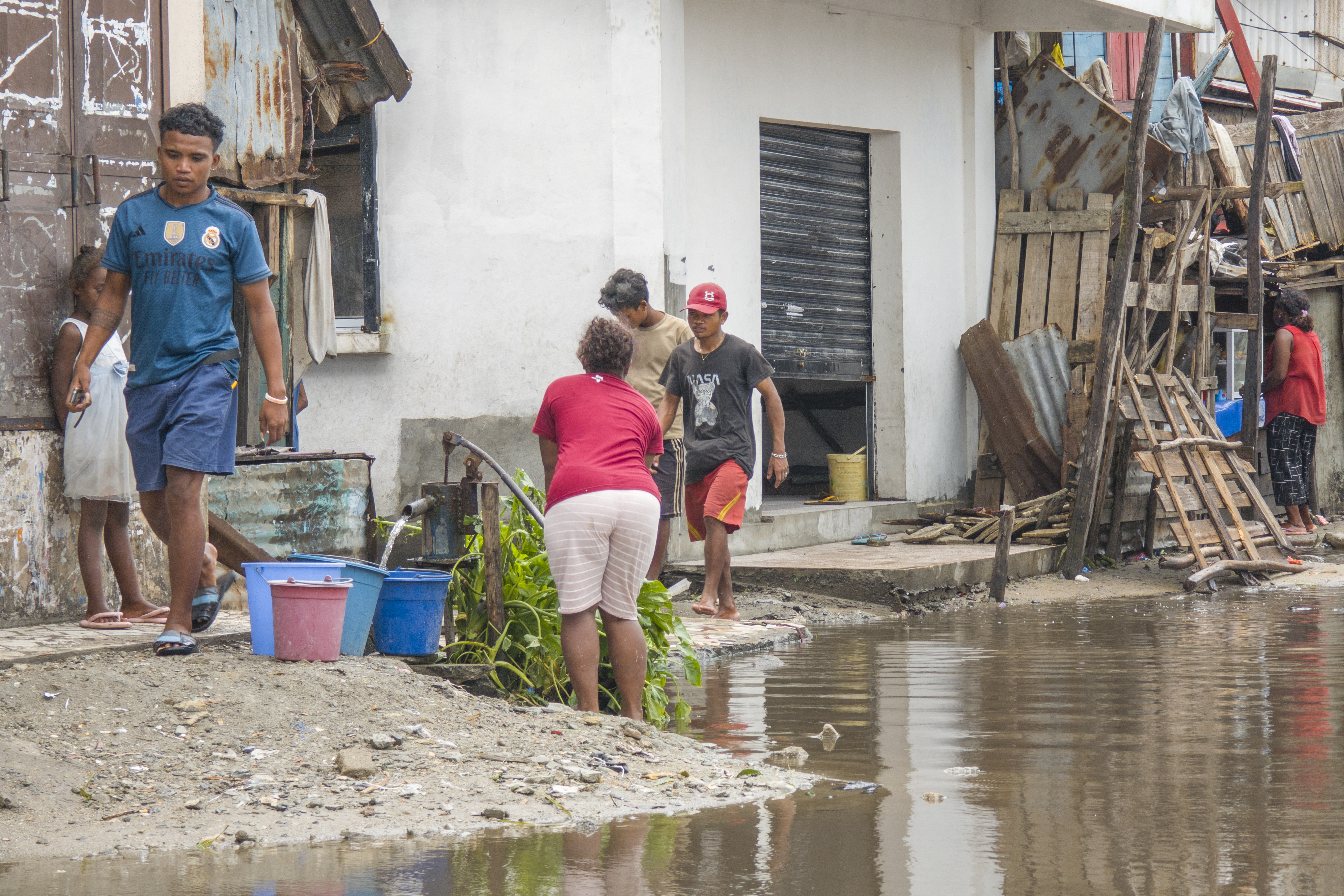
Across Madagascar, more than 18,000 homes were destroyed by the cyclone, according to the BNGRC, with at least 50,000 damaged or flooded.
Authorities say many of the deaths were caused by building collapses, as many give inadequate shelter from strong storms.
The main road linking the city to the capital, Antananarivo, was cut off in several places, “blocking humanitarian convoys”, the BNGRC said, while telecommunications were unstable.
The storm also caused major destruction in the Atsinanana region surrounding Toamasina, the disaster authority said, adding that assessments were still under way.
Meanwhile, France announced the dispatch of food aid and rescue teams from its Reunion Island, about 1,000km (600 miles) away. China also offered about $14.5m in aid, Madagascar’s presidency announced.
Mozambique issues warnings
The cyclone’s landfall was likely one of the strongest recorded in the region during the satellite era, rivalling Geralda in February 1994, it said. That storm killed at least 200 people and affected half a million more.
Gezani weakened after landfall, but continued to sweep across Madagascar as a tropical storm until late on Wednesday.
It was forecast to return to cyclone status as it reaches the Mozambique Channel, according to the Regional Specialized Meteorological Centre La Reunion (CMRS).
Mozambican authorities issued warnings on Thursday about the approaching storm, saying it could cause violent winds and rough seas of 10-metre (33-foot) waves, while urging people to leave the expected impact area.
Mozambique’s weather service said it expected Cyclone Gezani to pass close to the city of Inhambane any time from Friday afternoon, before moving back out into the Mozambique Channel.
People in Inhambane have been placing sandbags on their roofs to prevent them from being blown off by intense winds and barricading windows with sheets of corrugated iron.
Both Madagascar and Mozambique are vulnerable to destructive storms that blow in off the Indian Ocean. Just last month, the northwestern part of Madagascar was hit by Cyclone Fytia, which killed at least 14 people.
Mozambique has already faced devastating flooding from seasonal rainfall, with nearly 140 people killed since October 1, according to the country’s National Disasters Management Institute.
