Northern Ireland’s Sinn Fein faces police probe as protest tensions fester
Opposition unionists call for the prosecution of Sinn Fein lawmakers who participated in the protest.
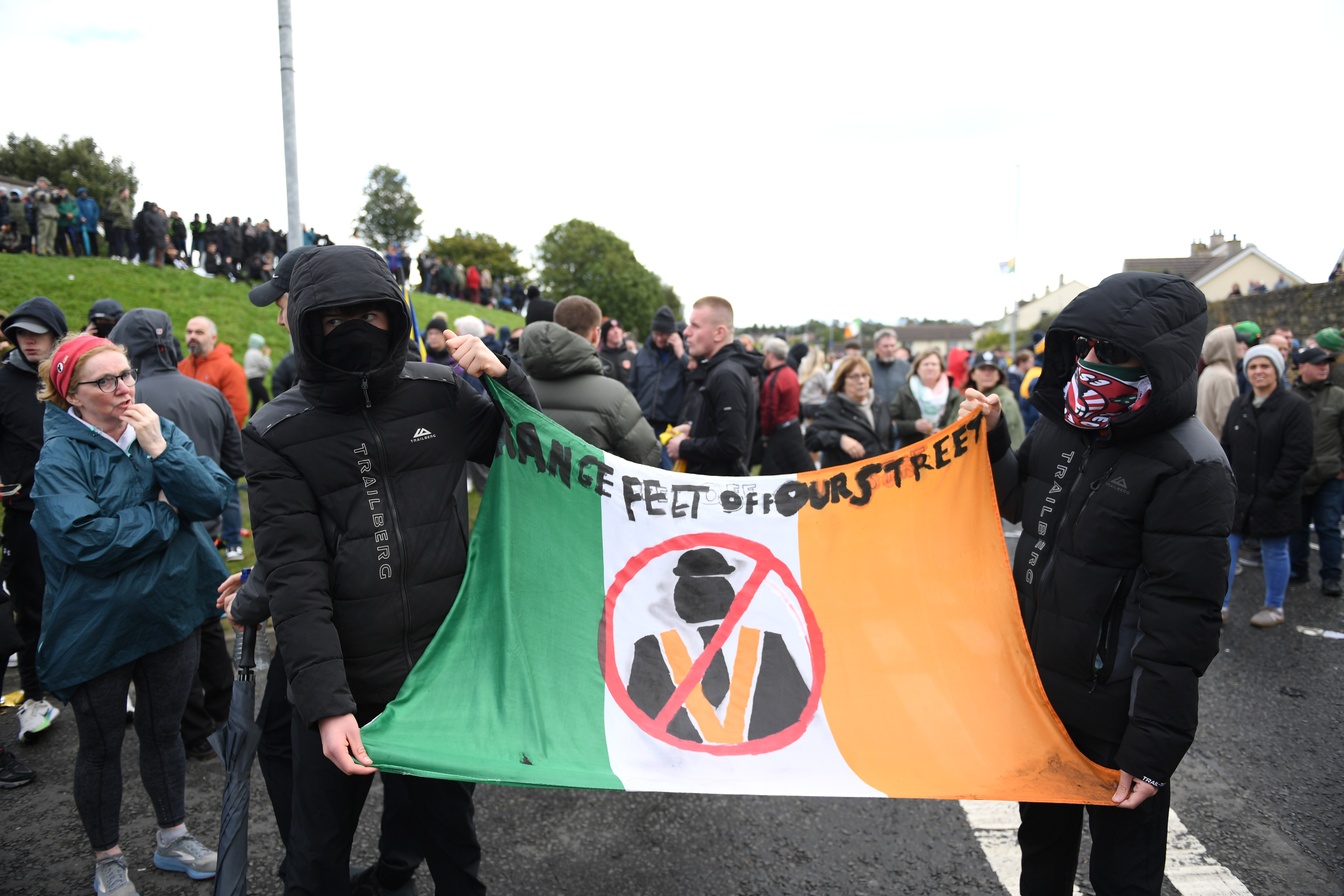
Northern Irish police have contacted representatives of Sinn Fein in an investigation into a protest that blocked a Protestant parade from marching through a Catholic area, the party said.
The Sinn Fein party leads Northern Ireland’s power-sharing government alongside its main pro-British rival, the Democratic Unionist Party (DUP), which has called for Sinn Fein lawmakers to be prosecuted.
Recommended Stories
list of 3 items- list 1 of 3What happened between Ireland and Israel in their Nations League match?
- list 2 of 3UEFA to investigate spitting incident at Ireland-Israel football match
- list 3 of 3Protests, debate follow death of Maricarmen, 87, Spain protest symbol
In a statement posted to Facebook on Thursday, Sinn Fein confirmed “that a number of its representatives and party members received correspondence” from police.
“Sinn Fein will continue to stand with the Garvaghy Road residents who should be allowed to live in peace and free from sectarian intimidation,” the party said in the statement.
It added they have “stood with residents of the Garvaghy Road for the last two weeks in the face of provocation and the threat of an unwanted Orange march through their community”.
March permitted
Northern Ireland’s High Court permitted the Protestant Orange Order to march on the Catholic Garvaghy Road for the first time in 28 years.
Police opened an investigation into what they called the unlawful protest of the march, and said people reasonably suspected of committing offences will receive letters for interviews.
Sinn Fein First Minister Michelle O’Neill and Sinn Fein President Mary Lou McDonald participated in the protests.
The DUP called for O’Neill and other lawmakers to be prosecuted.
“A political title is not a shield, and no one is above the law,” the party said in a statement on Thursday.
Before the Good Friday Agreement was signed, annual attempts by the Orange Order to march through the area triggered unrest across the British-run region until the route was banned in 1998.
The standoff has become a political crisis in Northern Ireland, affecting the region’s power-sharing government.
