‘We are stuck’: Young Ugandans want stability, opportunities on eve of vote
Tension as 81-year-old Yoweri Museveni seeks to extend his four-decade rule in a country where 70 percent of people are under age 35.
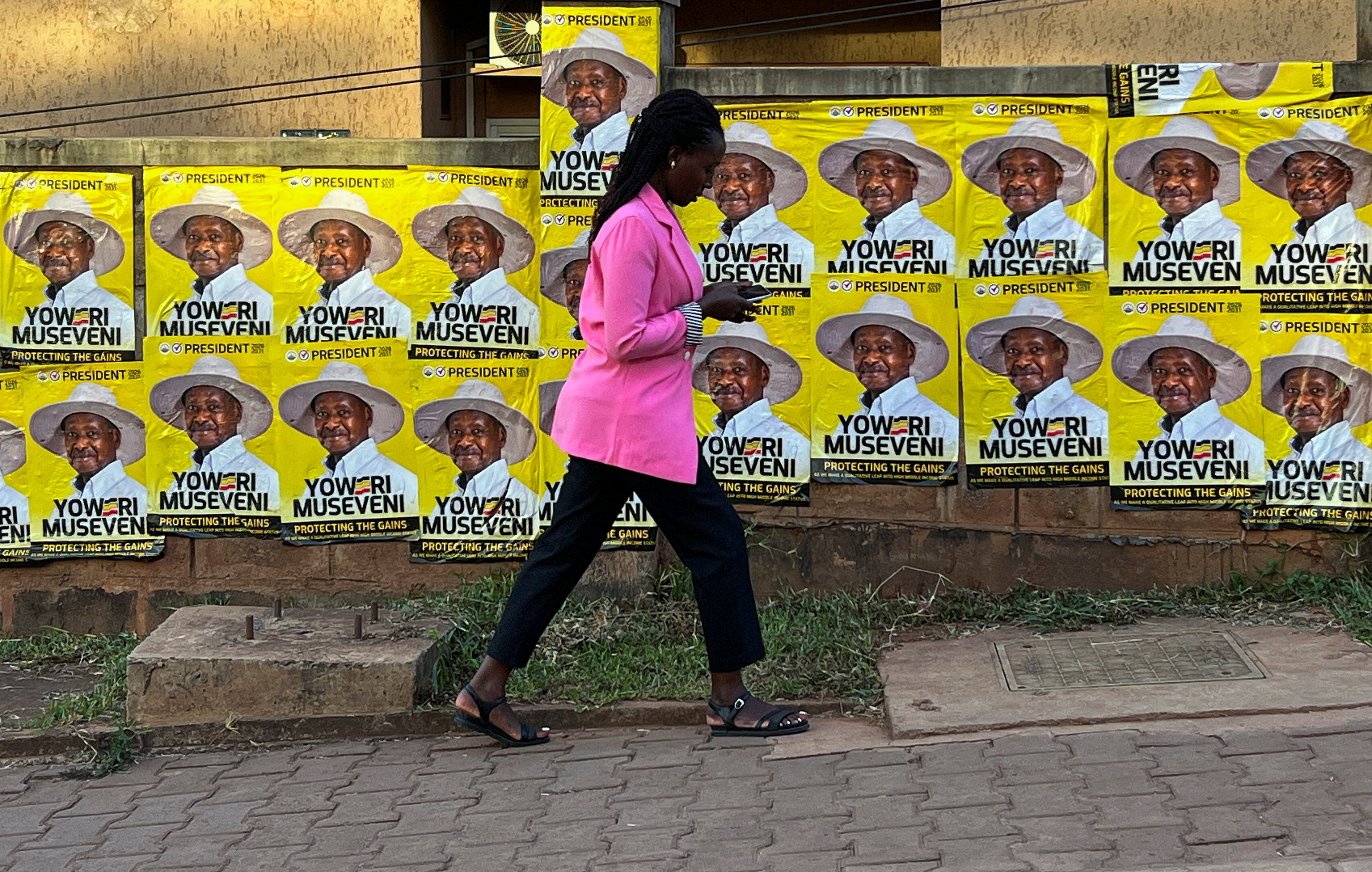

Kampala, Uganda – It’s the eve of Uganda’s highly contested presidential election, and the country is partially shut down.
The national communications authority has suspended public internet access, the sale and registration of new SIM cards, and outbound roaming services.
Recommended Stories
list of 3 items- list 1 of 3‘Protect the vote’: Bobi Wine, opposition brace for tense Uganda election
- list 2 of 3Uganda, Elections & the Internet
- list 3 of 3Uganda faces mounting calls to end internet blackout before elections
On the streets of the capital city, the move has triggered anger and frustration — especially among young people who rely heavily on the internet for work, communication, and opportunity.
Marvin Masole says he mostly uses WhatsApp to communicate and to do business.
The 27-year-old university graduate has tried repeatedly to find a job — and failed.
Frustrated, he is now looking for opportunities abroad.
“Many of us use WhatsApp. Without internet, we are stuck,” he tells Al Jazeera.
“There are people out there earning money online. I feel if we had a youthful president, he would not have authorised the shutdown. He is marginalising us.”
Masole is gathered with friends at a food stall in downtown Kampala. The group share a famous “Rolex” – a chapati rolled with egg – a popular street delicacy in Uganda.
The oldest person among them is 37 years old. Most are in their 20s.
This mirrors the national average – more than 70 percent of the country is under the age of 35.
But for decades, this youthfulness has not been reflected in the upper echelons of power.
For all their lives, Masole and his friends have known only one president — Yoweri Museveni, now 81, who is seeking a seventh term after nearly four decades in power.

Tension and uncertainty
More than 21.6 million voters have registered for Thursday’s election.
But for many young Ugandans, the disconnect between them and Museveni’s policies feels both generational and political. They are educated, digitally connected, and facing high unemployment — and many say their voices do not translate into power.
But for other young Ugandans, the generational divide between them and the president does not translate into an ideological one.
Scovia Tusabimana strongly supports the president and his policies. She believes his leadership has benefitted the country.
“I was five years old when Museveni came to power. I’m an orphan. I couldn’t afford school,” she tells Al Jazeera.
“The president introduced universal primary education. He has built roads and hospitals.”
When asked about the internet shutdown and reports of campaign violence against the opposition and its supporters in the run-up to the polls, she says: “I’m not happy with the way things have been going, but I believe there is a reason why.”
Masole says that in an ideal world, he would want to see a peaceful and harmonious transfer of power after the vote.
Yet Uganda has not experienced a peaceful handover since independence in 1962.
For years, elections in Uganda have been clouded by uncertainty and tension.
During the last polls in 2021, election-related violence and a crackdown by security forces left more than 50 people dead, according to rights groups.
Before and since then, Museveni’s government has been accused of fiercely cracking down on its critics.
In recent months, opposition politicians and activists have faced escalating harassment, including arbitrary arrests and detentions on what they describe as politically motivated charges.
Civil society organisations are also under growing pressure, facing tighter regulations and increased surveillance aimed at limiting their ability to influence and comment on the political process.
During campaigning for this year’s election, leading opposition candidate Bobi Wine also warned that the state plans to arrest him again.
This comes as political analysts and observers predict that Museveni is almost guaranteed to win another term – a victory his competitors will likely say was rigged.

‘I dream of a country with good hospitals’
Out on the streets of Kampala, many people say they want to vote — but worry about what comes after the ballot is cast.
Okiya Abdul, a former teacher, says he wants a peaceful outcome. But he insists that the will of the people must be respected.
Frustration and disillusionment run deep, particularly among first-time voters who are questioning whether the ballot can still deliver change.
Sam Muzaale owns the food stall in downtown Kampala.
A former security guard, he worked his way up selling Rolex chapatis. He now employs several people. And for the first time, he plans to vote.
“I dream of a country with good hospitals and enough medicine, schools with teachers, and lower taxes — because taxes keep going up,” he tells Al Jazeera.
Masole, still frustrated by the internet shutdown and lack of opportunities, says he is unsure what the coming days will bring.
“The president knows how to use the military and police to bring peace. He knows how to restore order. I think he will find a way to stabilise the situation,” he says.
“What I fear is what will be done to bring back that stability.”
It is a concern shared by many Ugandans — a desire for peace and harmony, alongside anxiety about the cost of maintaining it.
