Pakistan evacuates thousands as India releases water from swollen rivers
Rescue crews said they evacuated more than 14,000 people from Kasur and 89,000 from Bahawalnagar.

Pakistan floods aftermath: Destruction highlights impact of climate change
Pakistani officials have started evacuating tens of thousands of people after neighbouring India released water from overflowing dams and swollen rivers into low-lying border regions.
The move on Tuesday came a day after New Delhi alerted Islamabad about possible cross-border flooding, the first public diplomatic contact between the two countries since a four-day war in May.
Recommended Stories
list of 4 items- list 1 of 4One year floods, the next drought: Farmers battle Pakistan’s climate plight
- list 2 of 4Torrential monsoon rains in Pakistan kill over 20, including 10 in Karachi
- list 3 of 4Why is Pakistan flooding, and what is the solution?
- list 4 of 4Why has Pakistan launched a new rocket command after India conflict?
The latest flood alert and evacuation drive by Pakistan comes as heavy monsoon rains continue to batter both South Asian countries, with at least 800 people reported killed in Pakistan since late June.
Pakistan’s National Disaster Management Authority (NDMA) said it had issued an advance alert to officials in Punjab province about a surge in the Sutlej River and the risk of flooding, and that evacuations from various districts in the eastern parts of the province were under way.
In a statement, it said rescuers evacuated more than 14,000 people from Kasur, while about 89,000 were moved to safer ground from the city of Bahawalnagar, near the border with India.
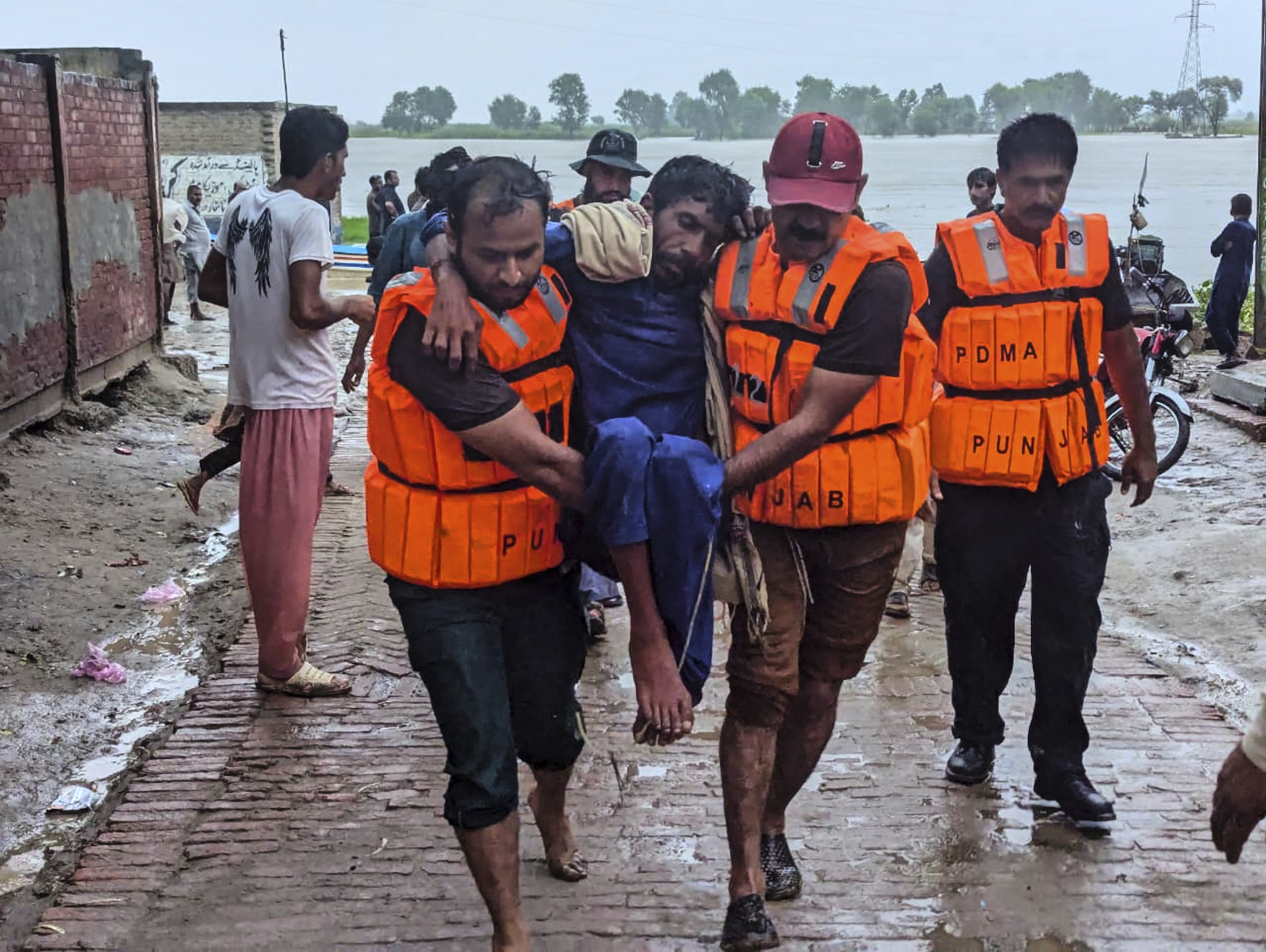
It also warned that heavy rainfall was forecast across several Indian states, which could swell rivers and streams flowing towards Pakistan, Pakistan’s Geo News TV channel reported.
The flood alert was conveyed to Pakistan through diplomatic channels rather than the Indus Waters Commission, the permanent mechanism created under the 1960 World Bank-brokered Indus Waters Treaty, which India walked out of after it blamed Pakistan for the April killing of 26 tourists in Indian-administered Kashmir.
The move and scaling down of diplomatic ties by India eventually set off missile strikes by both sides in May.
Pakistan, a country very susceptible to the effects of climate change, in recent months has witnessed multiple cloudburst floods and more than normal rainfall.
In the country’s northwest, many residents complained this month that they had received no warning before flash floods struck Buner district, killing more than 300 people.
Officials have said the devastation was caused by a sudden cloudburst, which could not have been predicted, and that many of the victims were living along natural water pathways.
