France’s top court annuls arrest warrant against Syria’s al-Assad
Court annuls an arrest warrant against Syria’s ex-president over deadly 2013 chemical attacks issued before his overthrow.
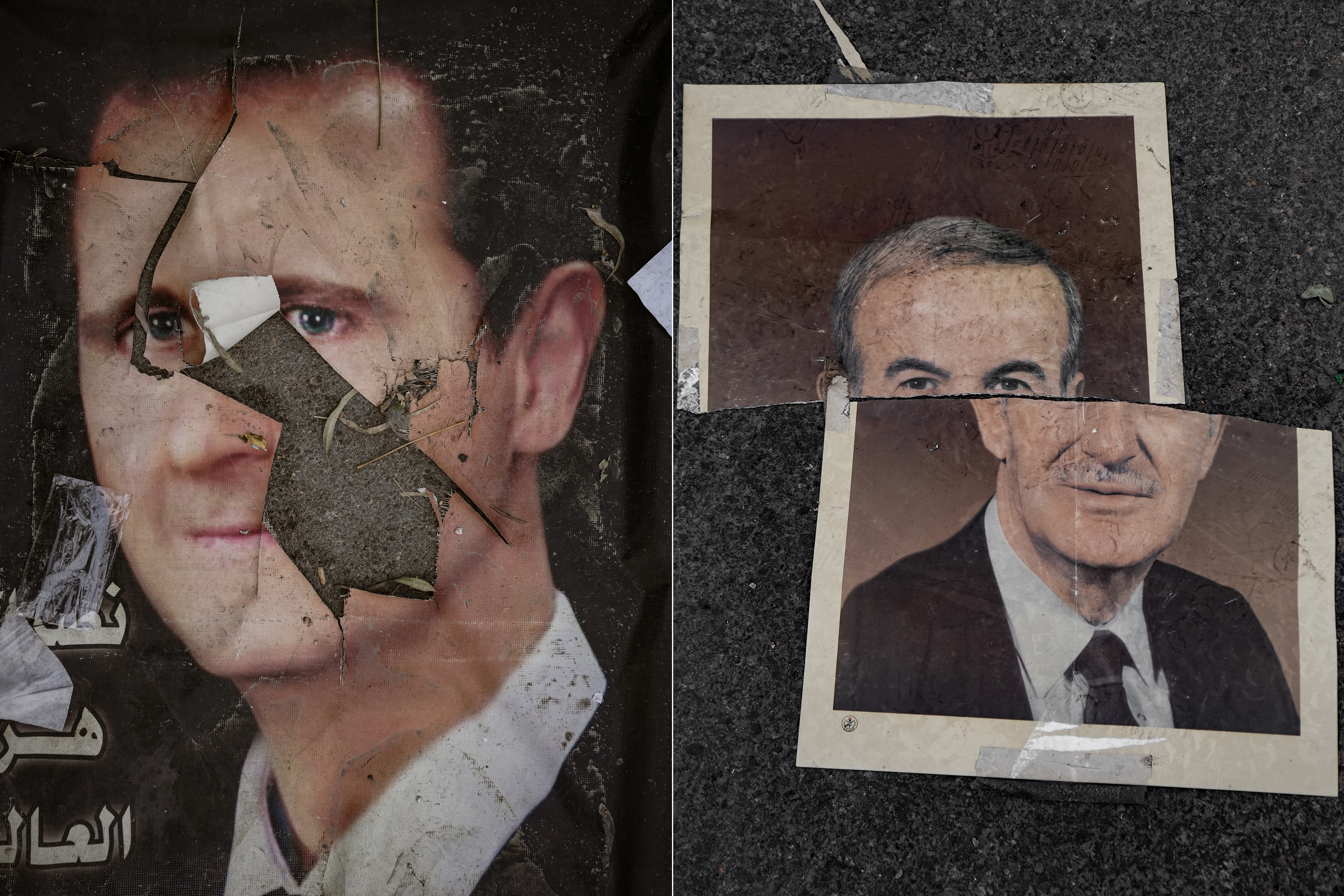
France’s Cour de Cassation, the country’s highest court, has ruled that an arrest warrant issued for former Syrian leader Bashar al-Assad over the use of chemical weapons in Ghouta in 2013 and Duma in 2018.was invalid.
The ruling on Friday annulled the request to strip state immunity from al-Assad, which was under consideration for the sheer brutal scale of evidence in accusations documented against him by Syrian activists and European prosecutors over his chemical attacks.
Recommended Stories
list of 4 items- list 1 of 4What happened in Syria? How did al-Assad fall?
- list 2 of 4Turkiye urges inclusivity, fair treatment of minorities in post-Assad Syria
- list 3 of 4UN urges patience as European countries suspend Syrian asylum decisions
- list 4 of 4Saudi Arabia pledges $2.9bn for Syria infrastructure, part of wider package
The court decided that there were no exceptions to presidential immunity, even for alleged war crimes and crimes against humanity.
But its presiding judge, Christophe Soulard, added that, as al-Assad was now no longer president after rebels in the country toppled him in December, “new arrest warrants can have been, or can be, issued against him” and as such the investigation into the case could continue.
A positive judgement could have paved the way for his trial in absentia over the chemical weapons attacks. Al-Assad now lives in exile in Russia, his chief backer during the civil war.
It could also set a precedent to allow the prosecution of other government leaders linked to atrocities, human rights activists and lawyers say.
Al-Assad has retained no lawyers for these charges and has denied that he was behind the chemical attacks.
The opposition has long rejected al-Assad’s denial, as his forces were the only side in the ruinous, nearly 14-year civil war to possess sarin.
Brutal crackdown
For more than 50 years, Syria was ruled by Hafez al-Assad and then his son, Bashar.
During the Arab Spring, rebellion broke out against their rule in 2011 across the country of 23 million, igniting a brutal civil war that killed more than half a million people, according to the Syrian Observatory for Human Rights (SOHR). Millions more fled to Lebanon, Jordan, Turkiye and Europe.
The al-Assad dynasty also fomented sectarian tensions to stay in power, a legacy driving renewed recent violence in Syria against minority groups, despite promises that the country’s new leaders will carve out a political future for Syria that includes and represents all its communities.
As the International Criminal Court (ICC) has issued arrest warrants for leaders accused of atrocities, such as Russia’s Vladimir Putin in Ukraine, Israel’s Benjamin Netanyahu in Gaza, and Rodrigo Duterte in the Philippines, the French judges’ ruling could empower the legal framework to prosecute not just deposed and exiled leaders but those currently in power.
The Syrian government denied in 2013 that it was behind the Ghouta attack, but the United States subsequently threatened military retaliation, then settled for a deal with Moscow for al-Assad to give up his chemical weapons stockpile, opening the way for Russia to wield huge influence in the war-torn nation.
Al-Assad survived more than a decade longer, aided militarily by Russia and Iranian-aligned groups, including Hezbollah, before being overthrown by rebel groups.
