Trump says US has launched large-scale attacks on ISIL in Syria
US Defense Secretary Pete Hegseth says attacks are ‘a declaration of vengeance’, and ‘lots’ of fighters have been killed.
US Strikes in Syria and Their Regional Impact
The United States military “hit the ISIS [ISIL] thugs in Syria”, President Donald Trump has said, a week after two US soldiers and an interpreter were killed in Syria’s Palmyra city.
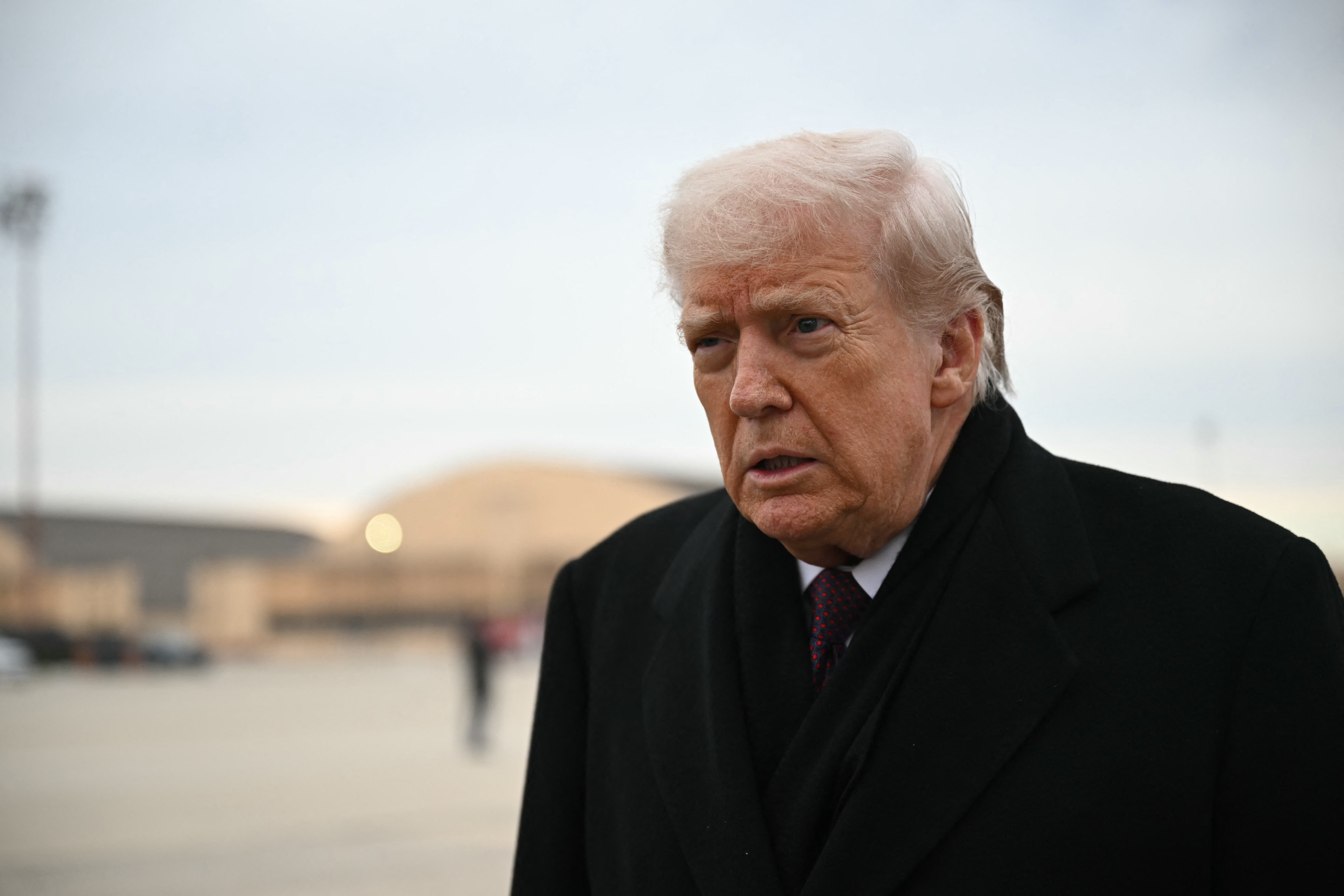
In a speech Friday evening in Rocky Mount, North Carolina, Trump said he “ordered a massive strike on the terrorists that killed our three great patriots last week”.
Recommended Stories
list of 4 items- list 1 of 4False spring: The end of Tunisia’s revolutionary hopes?
- list 2 of 4US Senate passes $901bn defence bill
- list 3 of 4The Arab Spring hasn’t ended, and Arab regimes know it
- list 4 of 4Which countries, besides Russia, have assets frozen by the EU?
“It was very successful. It was precision,” the president added. “We hit every site flawlessly and we are restoring peace through strength all over the world.”
Jordan’s air force also carried out strikes as part of the operation in southern Syria, the army confirmed Saturday.
Rami Abdel Rahman, head of the Syrian Observatory for Human Rights, told the AFP news agency that “at least five members” of ISIL were killed in eastern Syria’s Deir Az Zor province, including the leader of a cell responsible for drones in the area.
A Syrian security source told AFP that the US strikes targeted ISIL cells in Syria’s vast Badia desert including in Homs, Deir Az Zor and Raqqa provinces, and did not include ground operations.
Trump separately wrote on his Truth Social platform that Syria’s government, which was formed after the fall of the Bashar al-Assad regime in late 2024, was “fully in support” of the US military operation.
Syria’s Ministry of Foreign Affairs also repeated its commitment to combatting ISIL and said it “invites the United States and member states of the international coalition to support these efforts”.
“The Syrian Arab Republic reiterates its steadfast commitment to fighting ISIS and ensuring that it has no safe havens on Syrian territory, and will continue to intensify military operations against it wherever it poses a threat,” the ministry said in the statement shared on X early on Saturday.
US Secretary of Defense Pete Hegseth said earlier that US forces had targeted “ISIS fighters, infrastructure, and weapons sites”, adding that the attack was named Operation Hawkeye Strike.
“This is not the beginning of a war — it is a declaration of vengeance,” Hegseth said in a post on social media. “Today, we hunted and we killed our enemies. Lots of them. And we will continue.”
Al Jazeera’s Ayman Oghanna, reporting from Damascus, said the strikes hit central and northeastern parts of the country. Local sources in Palmyra and Raqqa told Al Jazeera they heard the sounds of fighter jets and huge explosions throughout the night.
One US official said the operation struck 70 targets holding ISIL infrastructure and weapons.
US deploys ‘fighter jets, attack helicopters, and artillery’
The US military’s Central Command (CENTCOM), which is responsible for operations in the Middle East, said it deployed “fighter jets, attack helicopters, and artillery” to launch “more than 100 precision munitions targeting known ISIS infrastructure and weapons sites”. It did not provide further details on the exact locations or casualties.
CENTCOM said that “the Jordanian Armed Forces also supported with fighter aircraft”, a claim that the army backed in the day following the strikes.
The army participated “to prevent extremist organisations from exploiting these areas as launching pads to threaten the security of Syria’s neighbours”, it said in a statement.
In February 2015, ISIL burned a Royal Jordanian Air Force pilot alive in a cage in Syria after capturing him when his plane crashed a few months earlier. The gruesome killing – which was captured on video and claimed to be in response to Jordan’s role in the US-led coalition against ISIL – shocked Amman, which pledged that his “blood will not be shed in vain”.
A Swedish man was eventually sentenced to life in prison in July of this year for his role in the pilot’s death.
This week’s operation came as Syrian President Ahmed al-Sharaa “is trying to rehabilitate his image and the image of Syria,” said Al Jazeera’s Oghanna.
US authorities considered al-Sharaa to be a “terrorist” as recently as last month, when the US Department of the Treasury removed him from the Specially Designated Global Terrorist list ahead of a meeting with Trump.
Al-Sharaa “wants the world to know Syria is no longer safe haven for ISIL … and he’s also trying to transform his own image in the eyes of the world,” Oghanna said.
This latest episode, however, puts more pressure on the new Syrian government, the Kurdish-led Syrian Democratic Forces, the US and Jordan “to work more closely together in eradicating the ISIL threat”, Oghanna said.
Last weekend, three Americans – two US National Guard members and a civilian interpreter – were killed in Palmyra by an attacker who targeted a convoy of US and Syrian forces before being shot dead, according to the US military.
Three US soldiers were also wounded in the attack. The US blamed that attack on ISIL and promised to retaliate.
About 1,000 US soldiers are stationed in Syria as part of a years-long operation targeting the remnants of ISIL forces in the region.
A US-led coalition has also carried out air strikes and ground operations in Syria targeting ISIL suspects in recent months, often with the involvement of Syria’s security forces.
An agreement on cooperation was reached last month when al-Sharaa met with Trump at the White House.
Although it was unclear whether Syrian defence forces took part in the US operation, the Syrian government appeared to have “signed off” on it, Al Jazeera’s Rosiland Jordan reported earlier from Washington, DC.
“The US does consider it important to try to help Syria move beyond the Assad regime’s years of dictatorship,” Jordan said.
“In order to do so, getting rid of what the US considers a national security threat – members of ISIL – is part of helping Syria move into its next phase as a sovereign country,” she said.
ISIL captured Palmyra in 2015, at the height of its military ascendancy in Syria, before losing the city 10 months later. During that time, it destroyed several ancient sites and artefacts while using others to stage mass killings.
ISIL was vanquished in Syria in 2018 but still carries out sporadic attacks without controlling any territory inside Syria.
Earlier this month, Syria marked one year since the ousting of longtime leader Bashar al-Assad, but the war-ravaged nation continues to face stiff security and economic challenges as it seeks to rebuild and recover after 14 years of ruinous civil war.
