Concerns after Mumbai’s Dharavi slum reports COVID-19 cases
Asia’s biggest slum registers three cases, including one death, as authorities scramble to prevent spread of the virus.
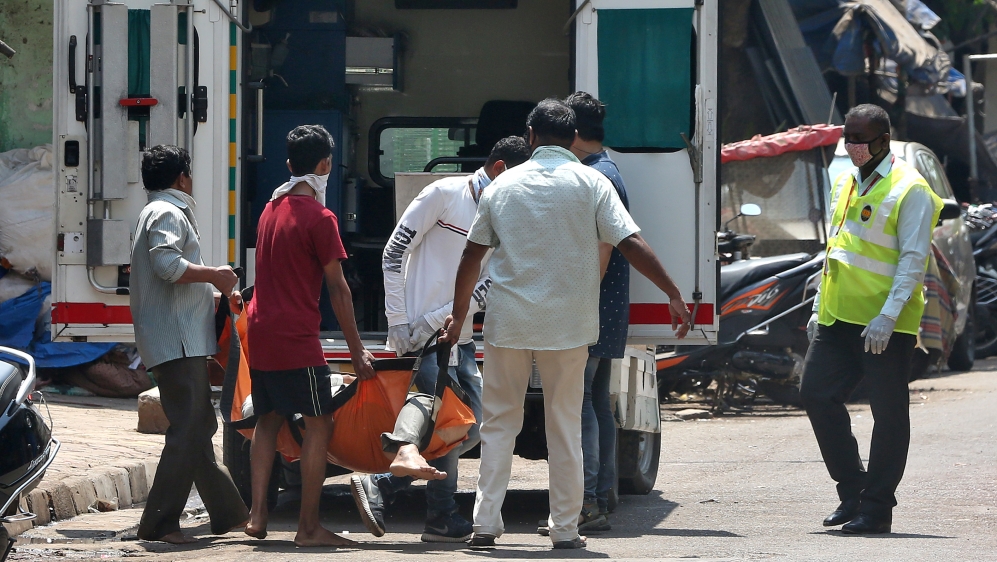
Authorities in Mumbai are concerned overthe possible spread of the new coronavirus in the densely populatedslum of Dharavi after a man with COVID-19 died and a doctor and municipalcorporation worker tested positive.
The 56-year-old man who died on Wednesday night was the first to testpositive from the sprawling shanty town in India’s financial hub.
Recommended Stories
list of 3 items- list 1 of 3COVID-19: ‘Panic’ among India health workers over PPE shortages
- list 2 of 3‘Stigmatised’: India’s coronavirus ‘heroes’ come under attack
- list 3 of 3India COVID-19 lockdown means no food or work for rural poor
An estimated 700,000 to 1 million people live crammed in Dharavi– a roughly five-square-kilometre maze of narrow lanes, ramshacklebuildings, shanties and open sewers.
The patient had no travel history and was admitted to a localhospital with a fever on Sunday and tested positive for the newcoronavirus on Wednesday, an official of the Brihanmumbai MunicipalCorporation (BMC) said.
Residents quarantined
Seven other residents of his house have been home quarantined and arebeing tested. “We will provide them food and water till their test results come back,” the official said.
Two people tested positive on Thursday – a 52-year-old BMCsanitisation worker posted in Dharavi and a 35-year-old doctor who practises near the slum, considered Asia’s biggest.
The 52-year-old man was admitted to an isolation ward. His family members andabout two dozen colleagues have been asked to home quarantine, the BMC official said.
Public health experts say it would be difficult to contain the virusif it spread in a slum like Dharavi where eight to 10 people oftenshare a room.
The population density is about 270,000 per square kilometre, makingsocial distancing almost impossible. Water sources and sanitation facilities are shared by scores of people.
The Dharavi cases have raised concern that India may be experiencingcommunity transmission of the disease despite a countrywide lockdown since March 25.
Thursday saw a jump of more than 300 cases with the total confirmed casesnow at 1,965. Fifty people have died and 151 have been cured anddischarged, according to the Health Ministry.
Meanwhile, efforts continued to trace all contacts of the estimated 2,000 peoplewho attended a March 13-15 event at the Delhi headquarters ofTablighi Jamaat, a Muslim missionary movement, HealthMinistry spokesman Lav Agarwal said.
Attendees had since moved across the country and at least 400 people hadtested positive, according to reports from various states.
Agarwal said 9,000 people – members who attended the meeting and their primarycontacts – had been traced and quarantined across the country.
Modi asks Indians to light candles
Prime Minister Narendra Modi in a video conference on Thursday withchief ministers of states stressed that this was “just the beginning of the fight against the coronavirus”.
Modi told the chief ministers that in the next few weeks“testing, isolation and quarantine” should remain priorities. He also stressed an urgent need to increase the capacity of healthcare services by involving all retired health workers and volunteersfrom non-profit groups.
Health professionals have faced extreme shortages of protective gear such as gloves, masks and coveralls called personal protective equipment (PPE) – an issue raised by chief ministers in the meeting.
India went into a 21-day national lockdown from March 25, with 1.3billion people told to stay at home in efforts to check the spread of the virus.
The move triggered the biggest exodus since the country’s partition in 1947, with hundreds of thousands of migrant workers fleeing cities for their homes.
On Friday, Prime Minister Modi urged Indians to switch off lights in their homes for nine minutes on Sunday night and light candles, lamps and even use mobile torches standing in their balconies.
In a video message, Modi said the gesture would dispel the darkness created by the coronavirus and show that people were together in their fight against the pandemic.
