Skip linksSkip to Content
play
Live
Navigation menu
  • News
    • Africa
    • Asia
    • US & Canada
    • Latin America
    • Europe
    • Asia Pacific
  • Middle East
  • Explained
  • Opinion
  • Sport
  • Video
    • Features
    • Economy
    • Human Rights
    • Climate Crisis
    • Investigations
    • Interactives
    • In Pictures
    • Science & Technology
    • Podcasts
    • Travel
play
Live

In Pictures

Gallery|Humanitarian Crises

Displaced Iraqis struggle in dusty tent city

As the summer heats up, residents at the Baharka camp in Erbil face shortages of water and electricity.
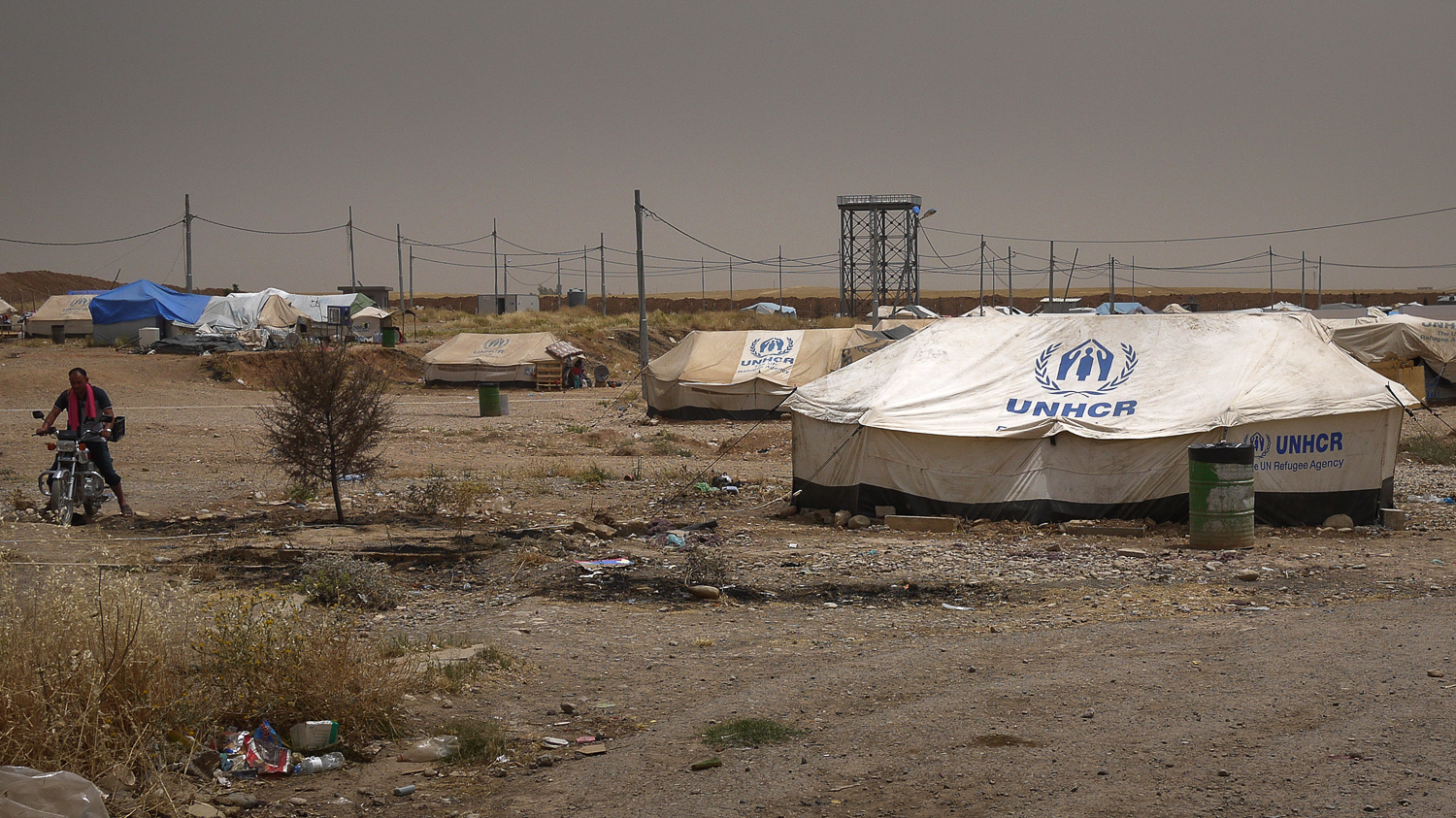

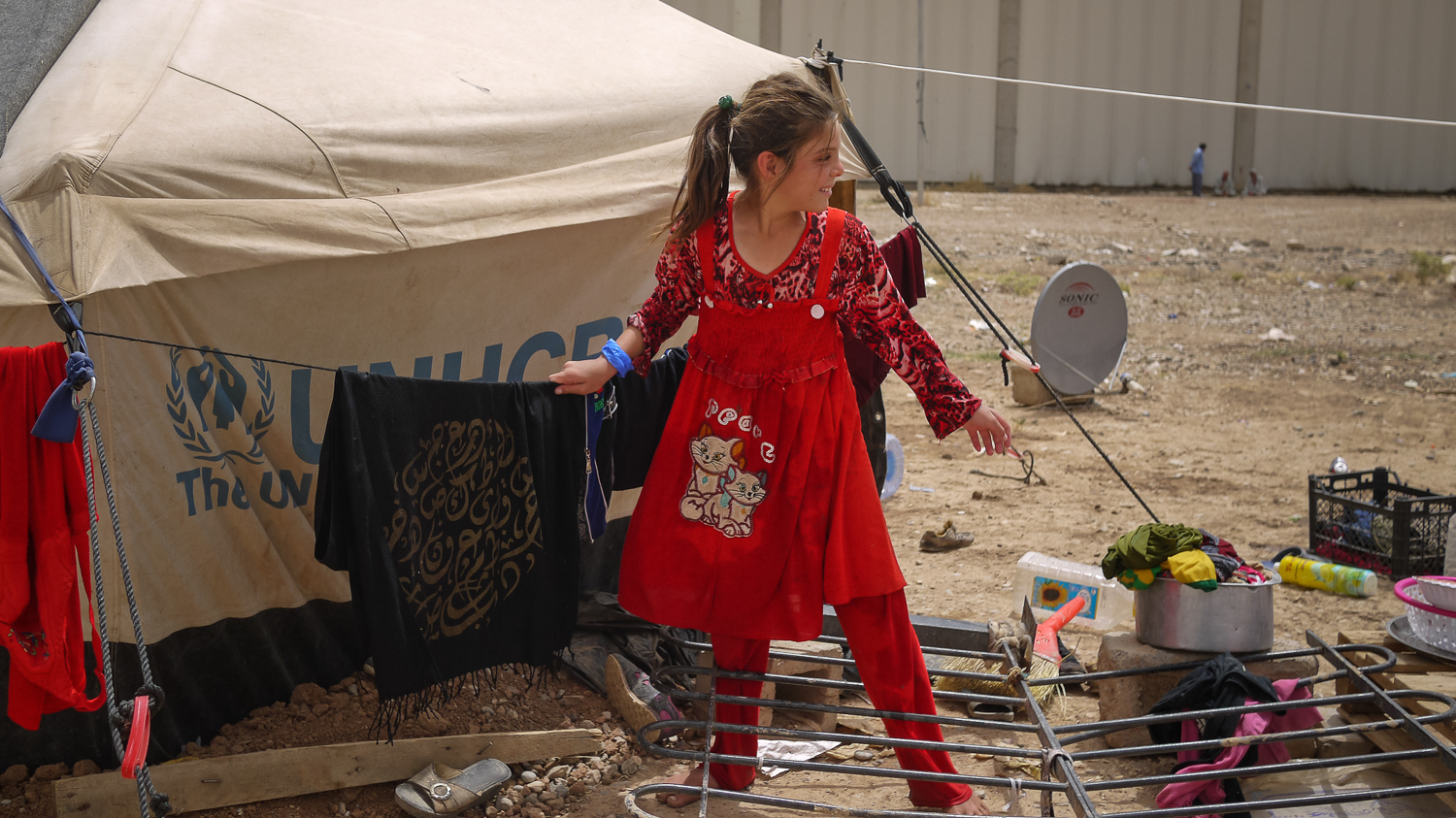
Baharka camp, Erbil, Iraq. After the Islamic State of Iraq and the Levant (ISIL) stormed the northern city of Mosul a year ago, thousands of displaced residents found shelter at the Baharka camp
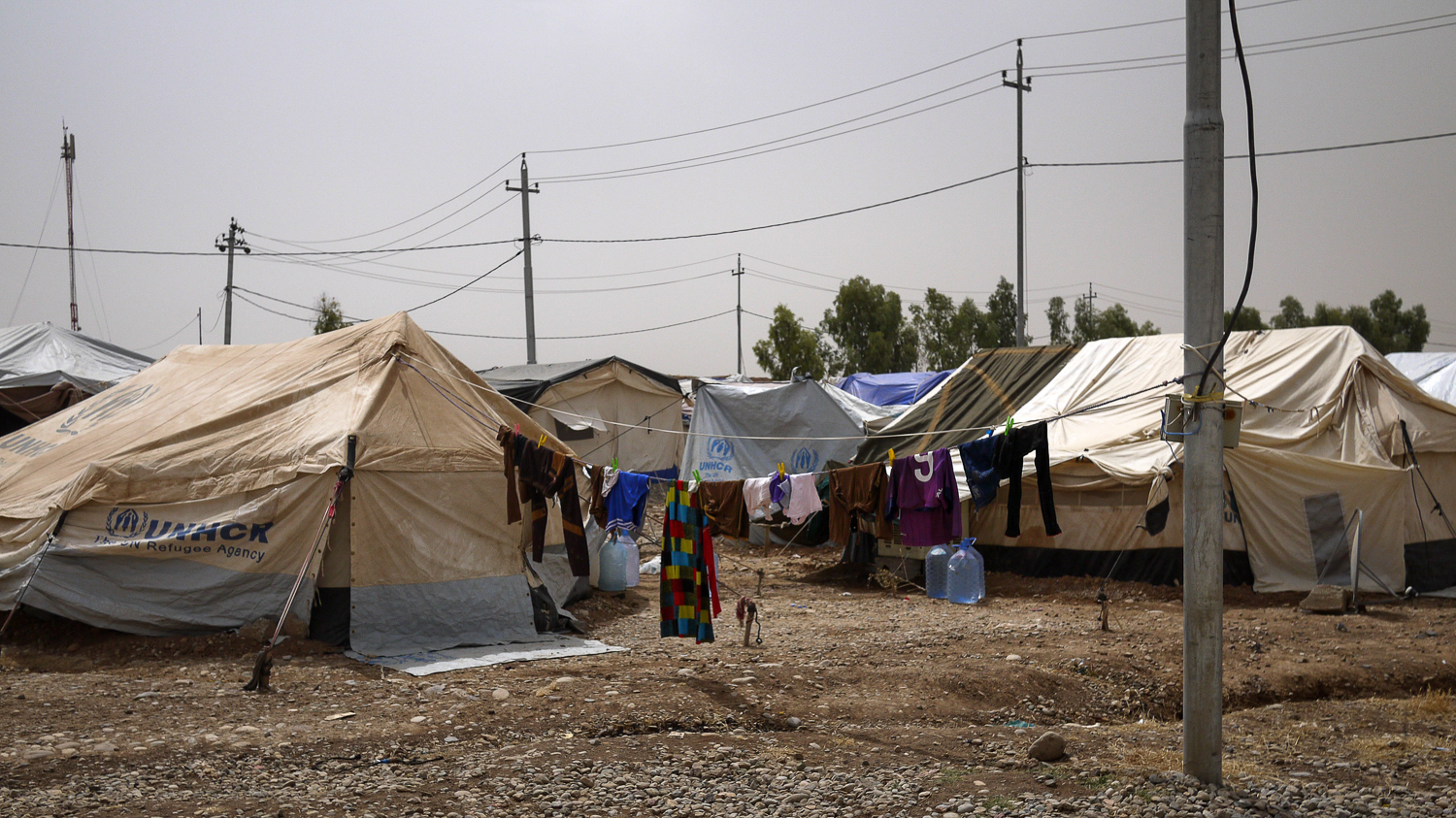
The Baharka camp is comprised of more than 1,000 tents set up over less than half a square kilometre. There are currently 725 families, or more than 3,700 people, living at the camp. [Megan O'Toole/Al Jazeera]
News image
By Megan O'Toole
Published On 13 Jun 201513 Jun 2015

Share

facebooktwitterwhatsappcopylink

Save

Baharka camp, Erbil, Iraq – After the Islamic State of Iraq and the Levant (ISIL) stormed the northern city of Mosul a year ago, thousands of displaced residents found shelter at the Baharka camp in Iraq’s Kurdish region.

Today, acting camp manager Hakair Ismail says there are more than 3,700 people living in Baharka’s dusty tent city, and more are expected to arrive in the coming months as the war against ISIL drags on. It has become a challenge for the camp’s management to provide residents with sufficient water, electricity and air coolers, and as the summer heats up, many say life in the camp has become extremely difficult.

“The situation is bad. The kids are dirty, there’s a shortage of water. My six-year-old is always scared; if there’s any sound, he runs for a hug,” Amira Ali, who lives in the camp with her husband and their five children, told Al Jazeera. “We want Iraq to be peaceful and safe again… We want to go back to our families, our homes, our lives.”

Rakan Mohammed, a former Mosul police officer, said the biggest problem for camp residents is the stifling heat inside the tents. But whatever the situation is in Baharka, he noted, it is infinitely better that what they left behind.

“Even if Mosul became free tomorrow, we wouldn’t go back, because we still don’t know what’s coming,” he told Al Jazeera. “We don’t know how the situation will change.”
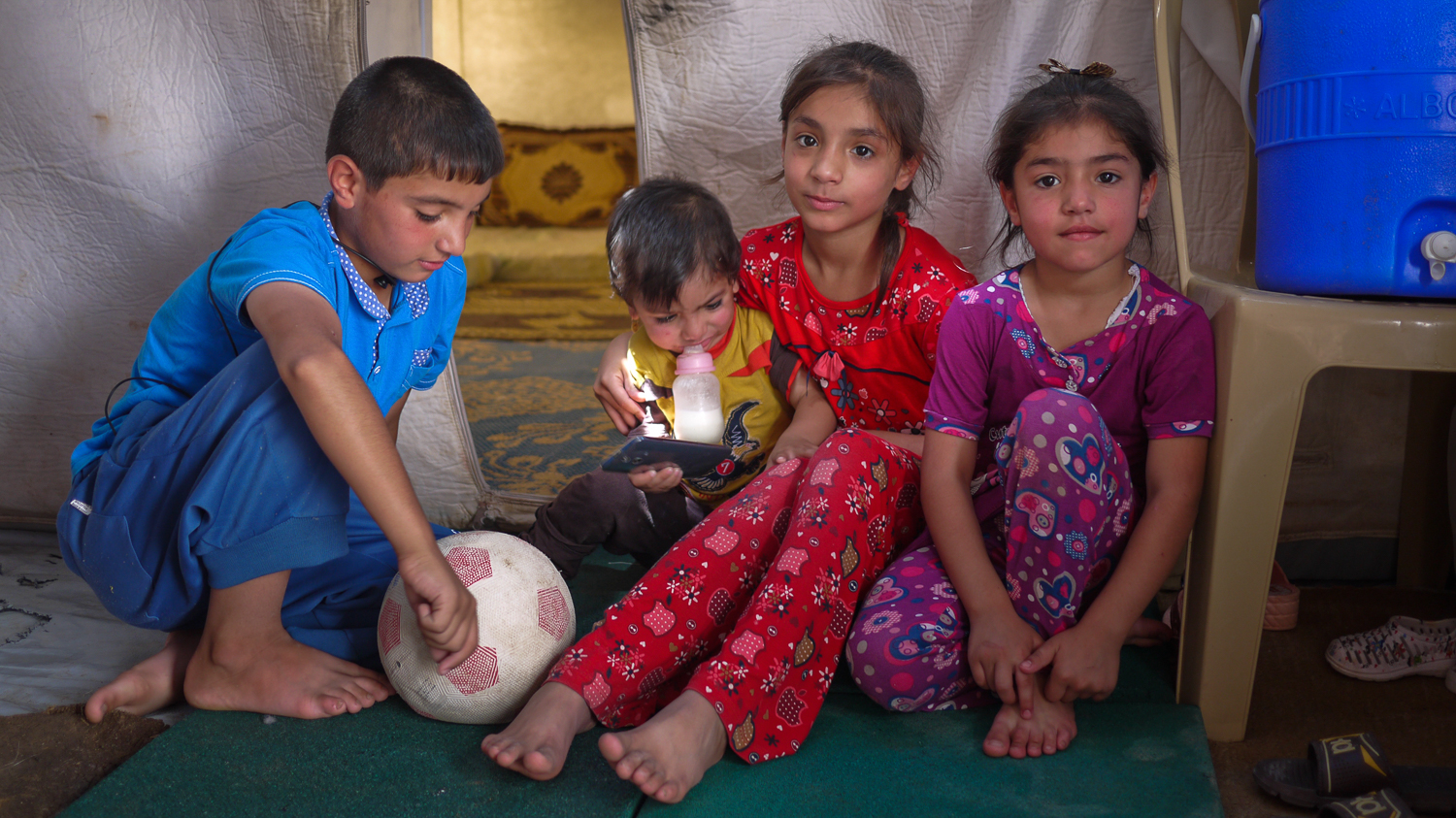
Baharka camp, Erbil, Iraq. After the Islamic State of Iraq and the Levant (ISIL) stormed the northern city of Mosul a year ago, thousands of displaced residents found shelter at the Baharka
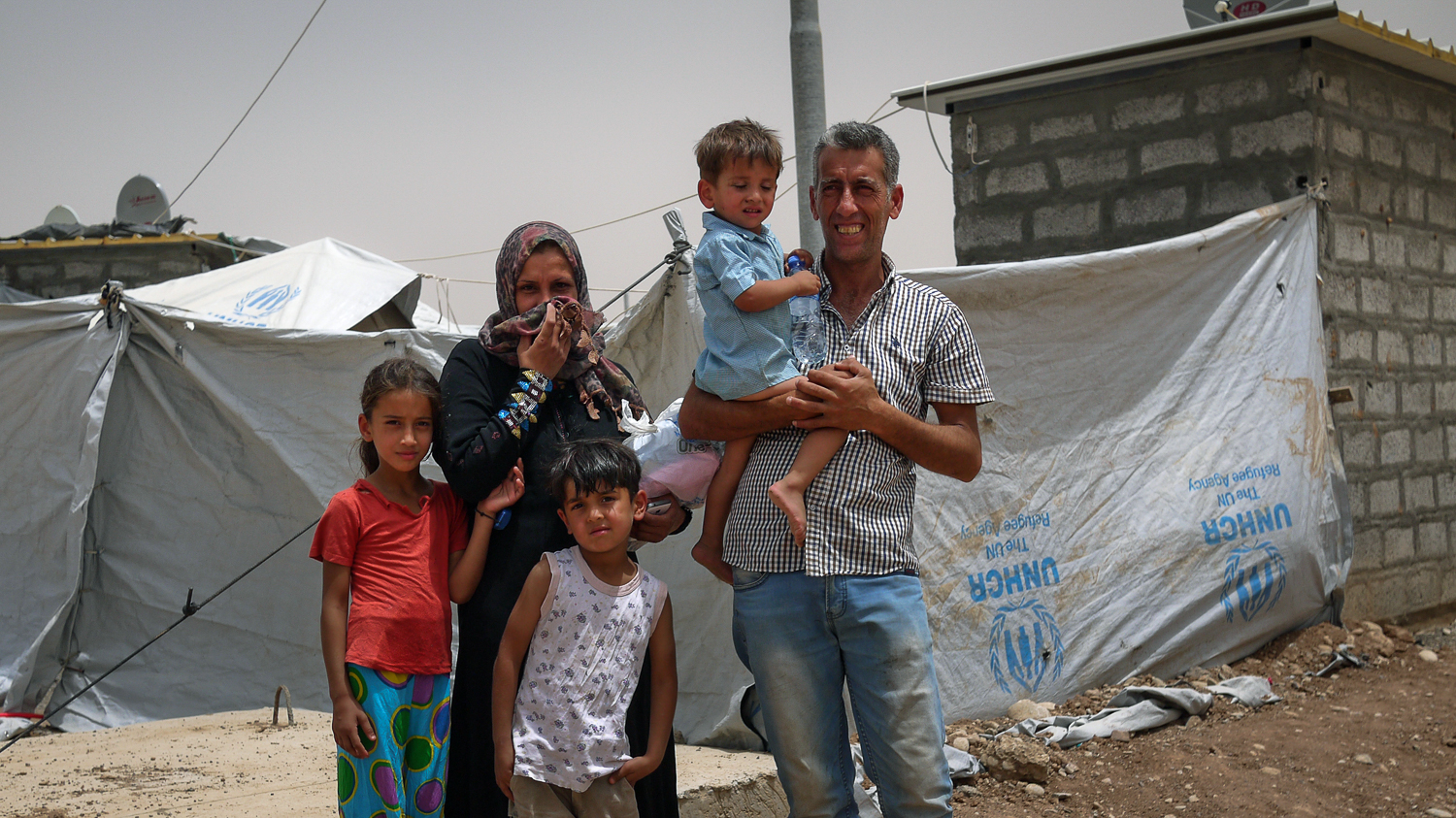
The Younis family fled Mosul after ISIL threatened the children's lives because their father was a former police officer. Although the conditions at Baharka are difficult, 'at least we can sleep here,' mother Rana Saad said. 'In Mosul, we were terrified all the time.' [Megan O'Toole/Al Jazeera]
Advertisement
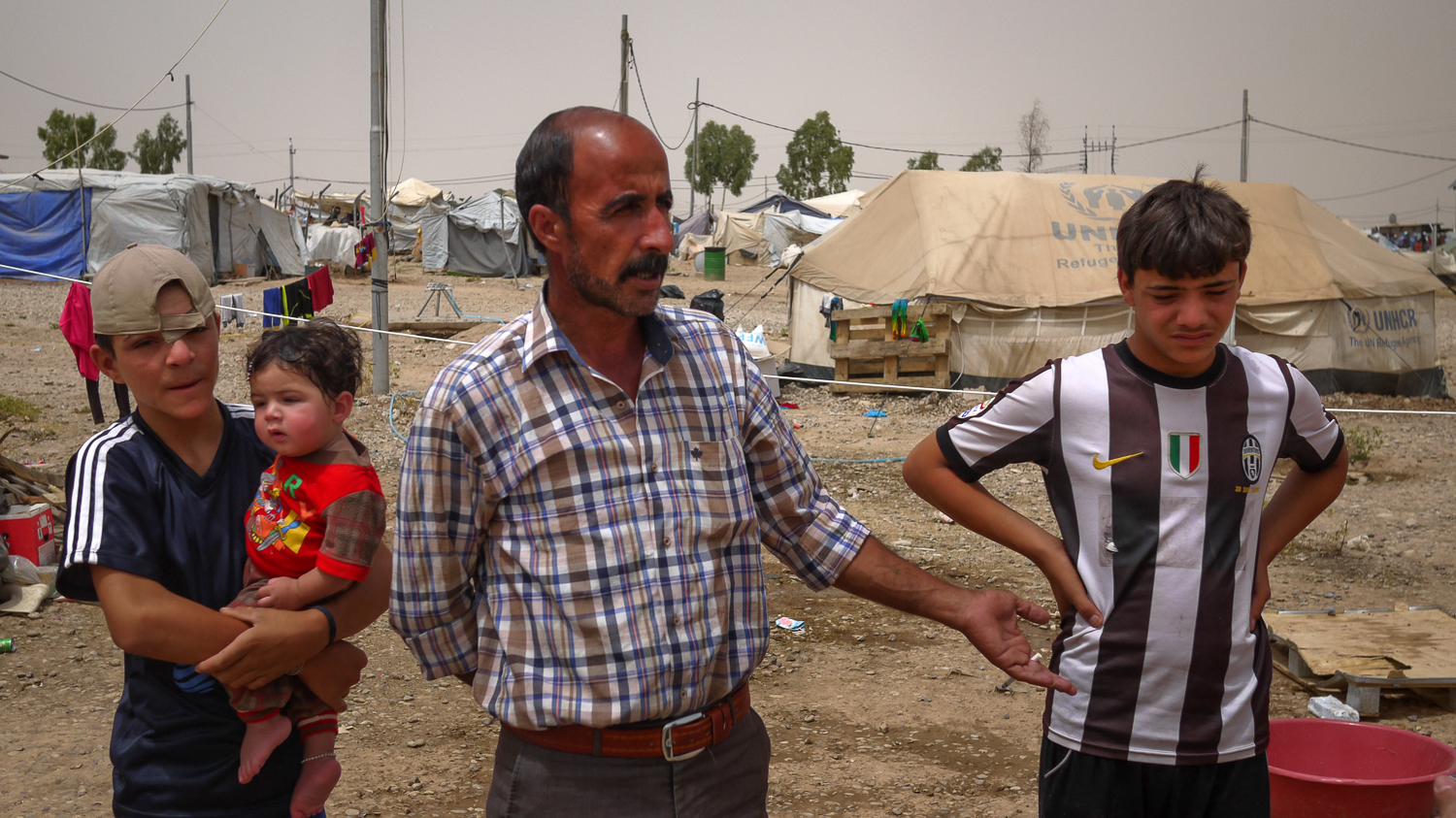
Baharka camp, Erbil, Iraq. After the Islamic State of Iraq and the Levant (ISIL) stormed the northern city of Mosul a year ago, thousands of displaced residents found shelter at the Baharka
Kahtan Akram left Mosul one year ago, immediately after the ISIL invasion. 'ISIL has been a disaster,' he said. 'They are not human. They have no mercy. They destroy everything that is good.' [Megan O'Toole/Al Jazeera]
Baharka camp, Erbil, Iraq. After the Islamic State of Iraq and the Levant (ISIL) stormed the northern city of Mosul a year ago, thousands of displaced residents found shelter at the Baharka
Akram said his family has found it challenging to adapt to the conditions at the camp. 'At home, we could clean, eat, relax. We had normal lives, jobs,' he said. Gesturing towards the family's outdoor laundry line, he added: 'What life is this? Washing outside, dust, dirt. But we have no choice.' [Megan O'Toole/Al Jazeera]
Baharka camp, Erbil, Iraq. After the Islamic State of Iraq and the Levant (ISIL) stormed the northern city of Mosul a year ago, thousands of displaced residents found shelter at the Baharka
According to the Iraqi government, there are more than two million internally displaced persons [IDPs] throughout the country. Many fled from ISIL-held territory to the Kurdish region. [Megan O'Toole/Al Jazeera]
Baharka camp, Erbil, Iraq. After the Islamic State of Iraq and the Levant (ISIL) stormed the northern city of Mosul a year ago, thousands of displaced residents found shelter at the Baharka
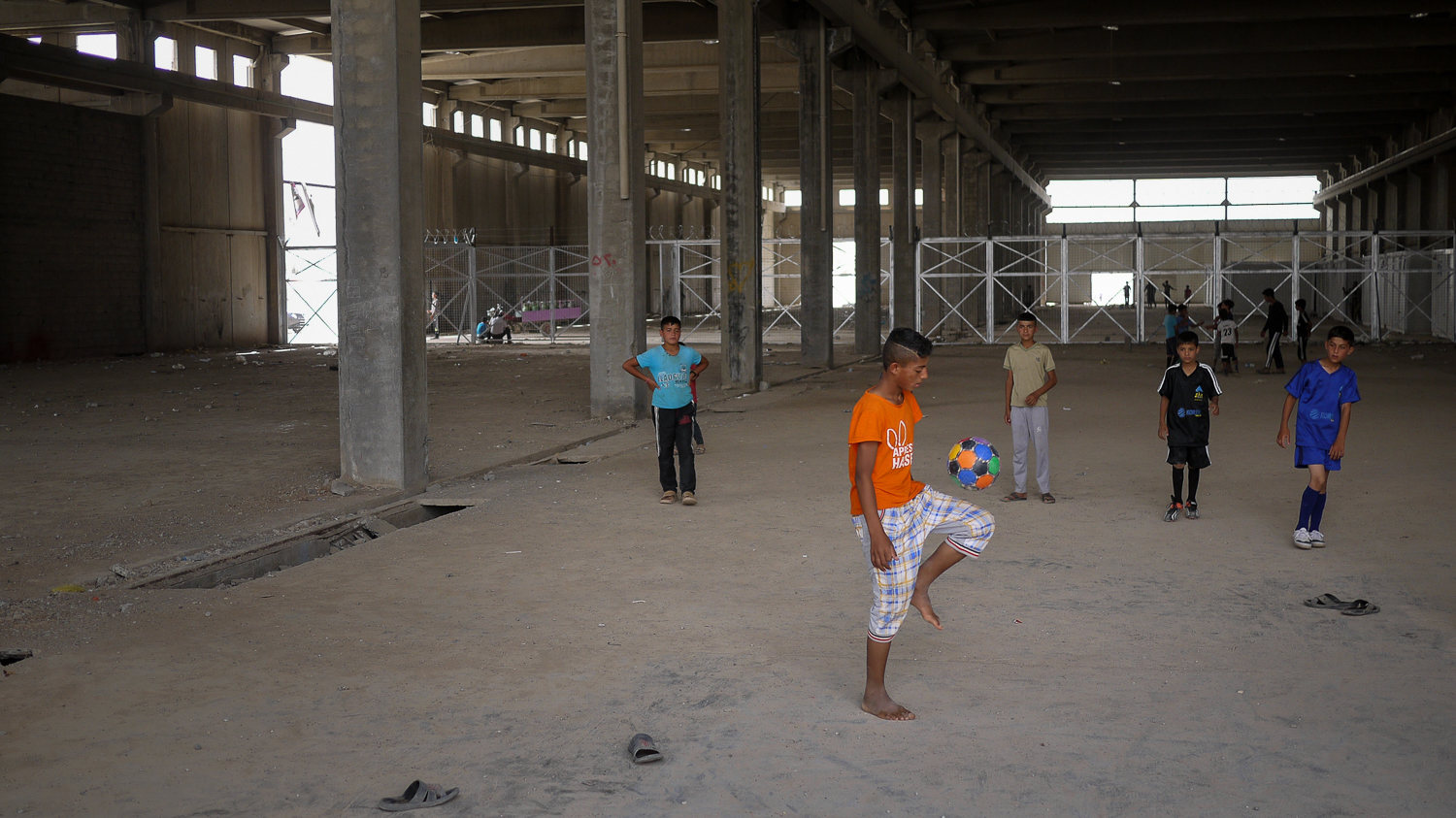
When Baharka began taking in displaced Iraqis last summer, they were initially packed into a large warehouse, but later moved into tents. Today, some of the camp's children use the warehouse as a football pitch. [Megan O'Toole/Al Jazeera]
Baharka camp, Erbil, Iraq. After the Islamic State of Iraq and the Levant (ISIL) stormed the northern city of Mosul a year ago, thousands of displaced residents found shelter at the Baharka
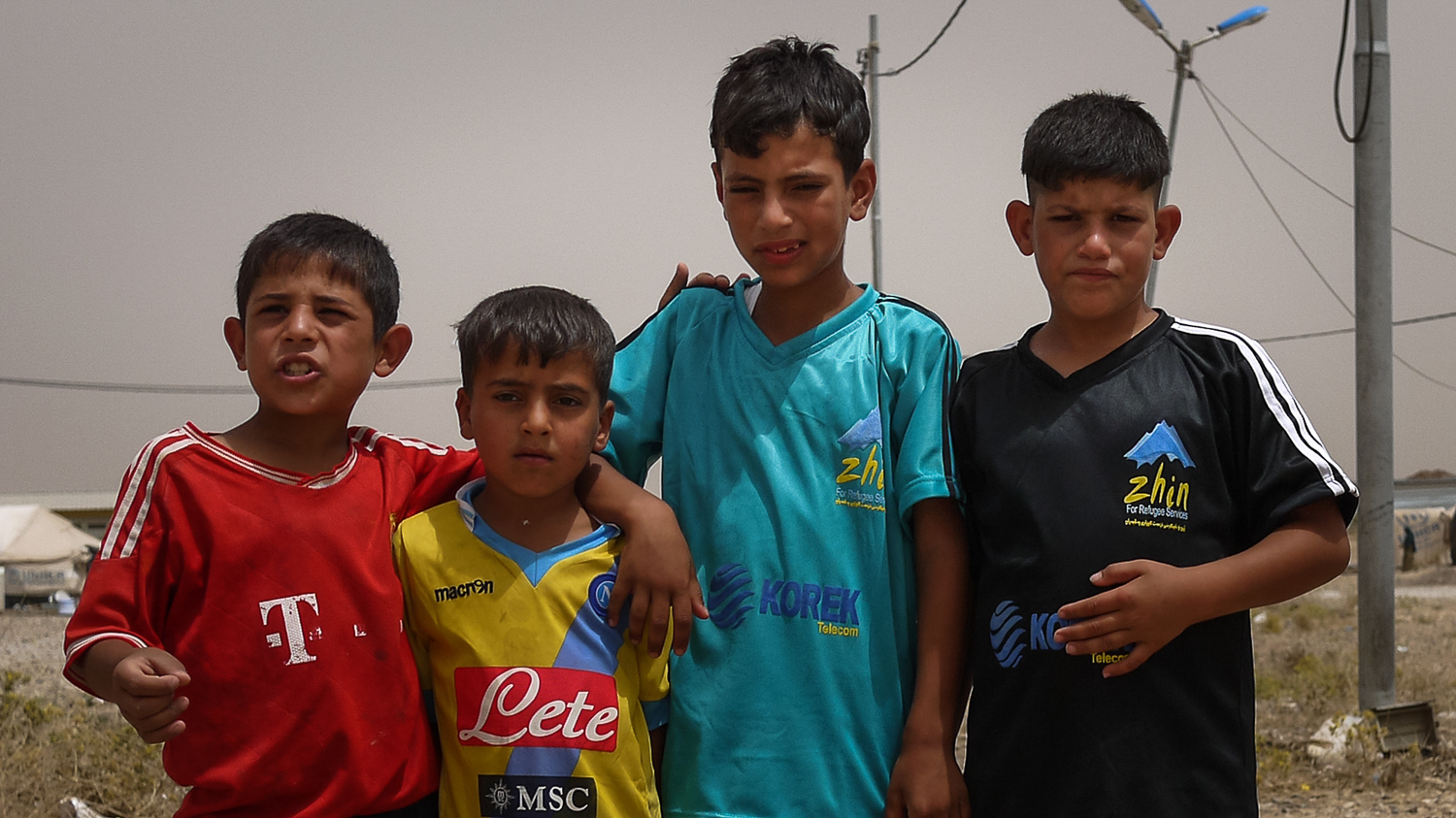
Twelve-year-old Saif Fadel and his family escaped Mosul after ISIL took over, worried that they would be targeted because his father was a police officer. 'It's boring here,' Fadel said of Baharka. 'In Mosul we had relatives and places to visit. Here, you can't go anywhere. There are snakes and flies.' [Megan O'Toole/Al Jazeera]
Advertisement
Baharka camp, Erbil, Iraq. After the Islamic State of Iraq and the Levant (ISIL) stormed the northern city of Mosul a year ago, thousands of displaced residents found shelter at the Baharka
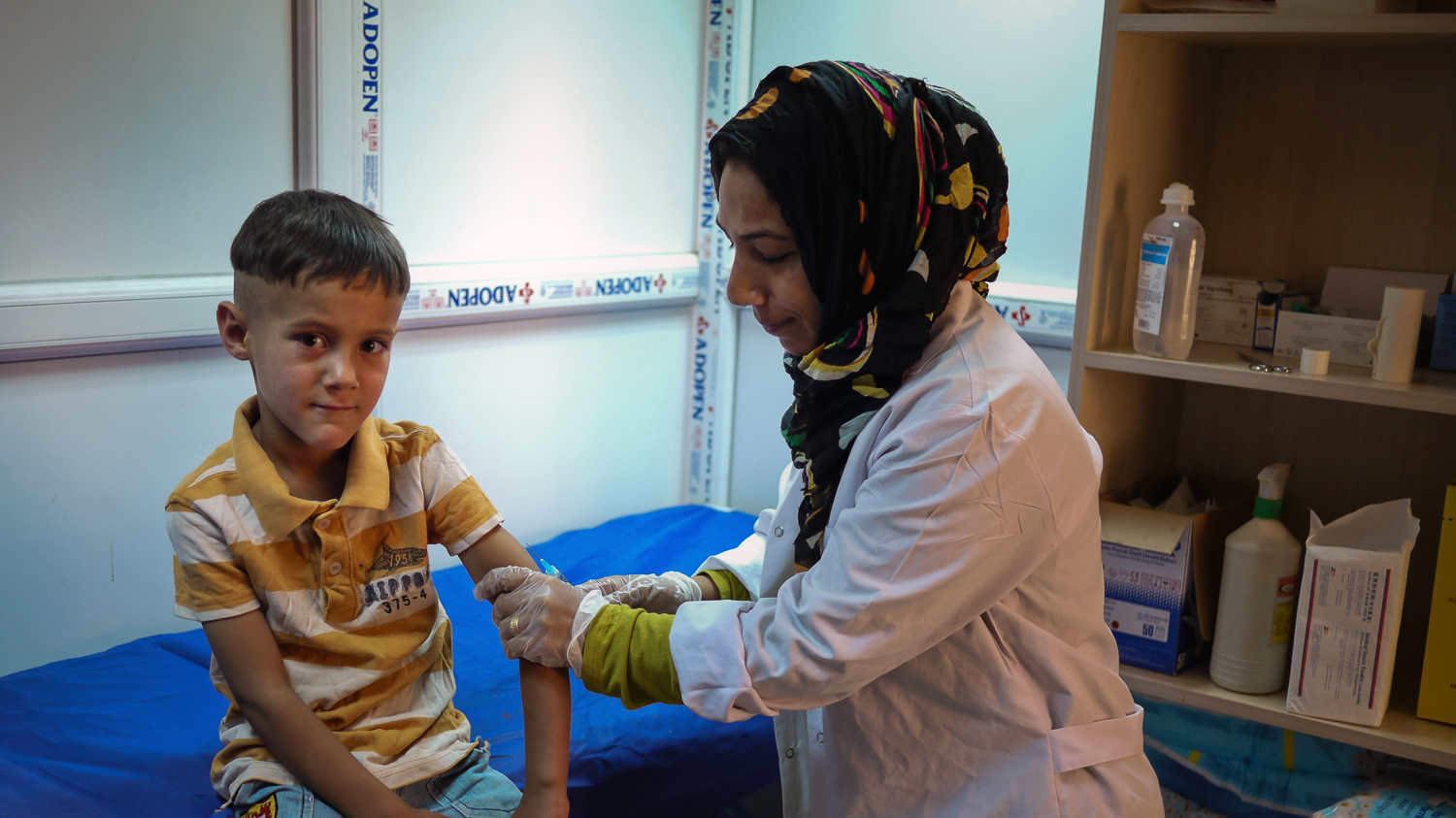
At the Baharka camp's medical centre, many residents come in suffering from skin conditions and breathing problems, nurse Awham Abdullah said. Others come for psychological counselling: 'They have hysteria, phobias, depression… Most people witnessed attacks by ISIL even as they fled their homes. Some lost their sons or had their daughters taken.' [Megan O'Toole/Al Jazeera]
Baharka camp, Erbil, Iraq. After the Islamic State of Iraq and the Levant (ISIL) stormed the northern city of Mosul a year ago, thousands of displaced residents found shelter at the Baharka
Abu Abdullah and his family left their home in central Mosul after ISIL began bombing mosques, he said. While they feel safer in the camp, he added, the lack of water and electricity are serious concerns. [Megan O'Toole/Al Jazeera]
Baharka camp, Erbil, Iraq. After the Islamic State of Iraq and the Levant (ISIL) stormed the northern city of Mosul a year ago, thousands of displaced residents found shelter at the Baharka
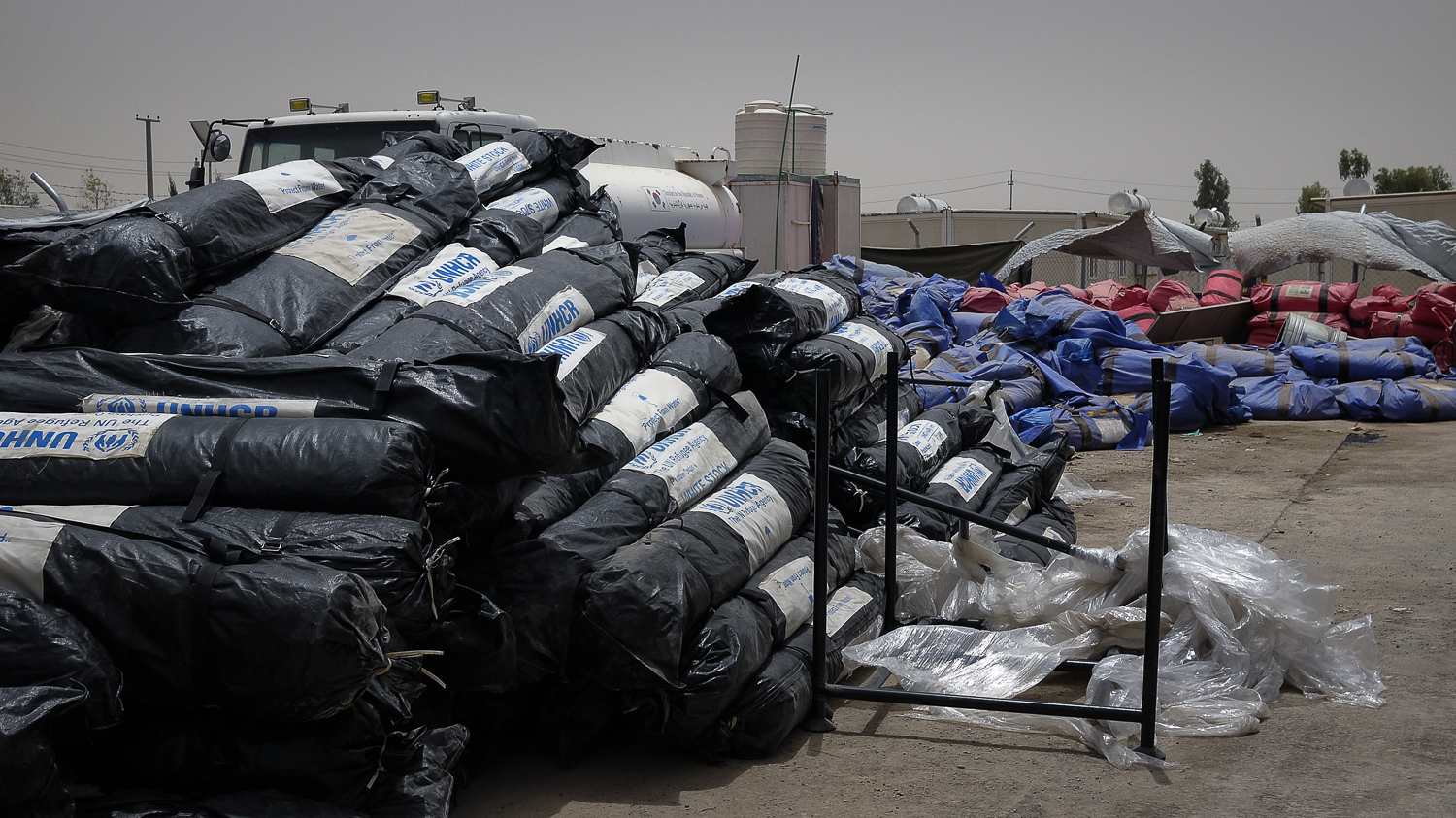
As the war against ISIL grinds on, acting camp manager Hakair Ismail says they are anticipating the number of IDPs at Baharka to rise further. Plans are under way to expand the camp, he said. [Megan O'Toole/Al Jazeera]


  • About

    • About Us
    • Code of Ethics
    • Terms and Conditions
    • EU/EEA Regulatory Notice
    • Privacy Policy
    • Cookie Policy
    • Cookie Preferences
    • Accessibility Statement
    • Sitemap
    • Work for us
  • Connect

    • Contact Us
    • User Accounts Help
    • Advertise with us
    • Stay Connected
    • Newsletters
    • Channel Finder
    • TV Schedule
    • Podcasts
    • Submit a Tip
    • Paid Partner Content
  • Our Channels

    • Al Jazeera Arabic
    • Al Jazeera English
    • Al Jazeera Investigative Unit
    • Al Jazeera Mubasher
    • Al Jazeera Documentary
    • Al Jazeera Balkans
    • AJ+
  • Our Network

    • Al Jazeera Centre for Studies
    • Al Jazeera Media Institute
    • Learn Arabic
    • Al Jazeera Centre for Public Liberties & Human Rights
    • Al Jazeera Forum
    • Al Jazeera Hotel Partners

Follow Al Jazeera English:

  • facebook
  • twitter
  • youtube
  • instagram-colored-outline
  • rss
Al Jazeera Media Network logo
© 2026 Al Jazeera Media Network

You might also like:

live israeli attacks kill 76 no aid relief yet for... | thailand readies homecoming for stolen ancient sta... | russia ukraine war list of key events day 1185... | german woman arrested after mass stabbing at hambu... | vietnam orders ban on popular messaging app... | need answers will sri lankas tamils find war closu... | live israeli attacks kill 85 in gaza as starvation... | florida court orders ex mexican security chief to ...