Skip linksSkip to Content
play
Live
Navigation menu
  • News
    • Africa
    • Asia
    • US & Canada
    • Latin America
    • Europe
    • Asia Pacific
  • Middle East
  • Explained
  • Opinion
  • Sport
  • Video
    • Features
    • Economy
    • Human Rights
    • Climate Crisis
    • Investigations
    • Interactives
    • In Pictures
    • Science & Technology
    • Podcasts
    • Travel
play
Live

In Pictures

Gallery

In Pictures: Pakistan’s education woes

Teacher shortages and low attendance mean fewer than half the students in Pakistan learn the basics.
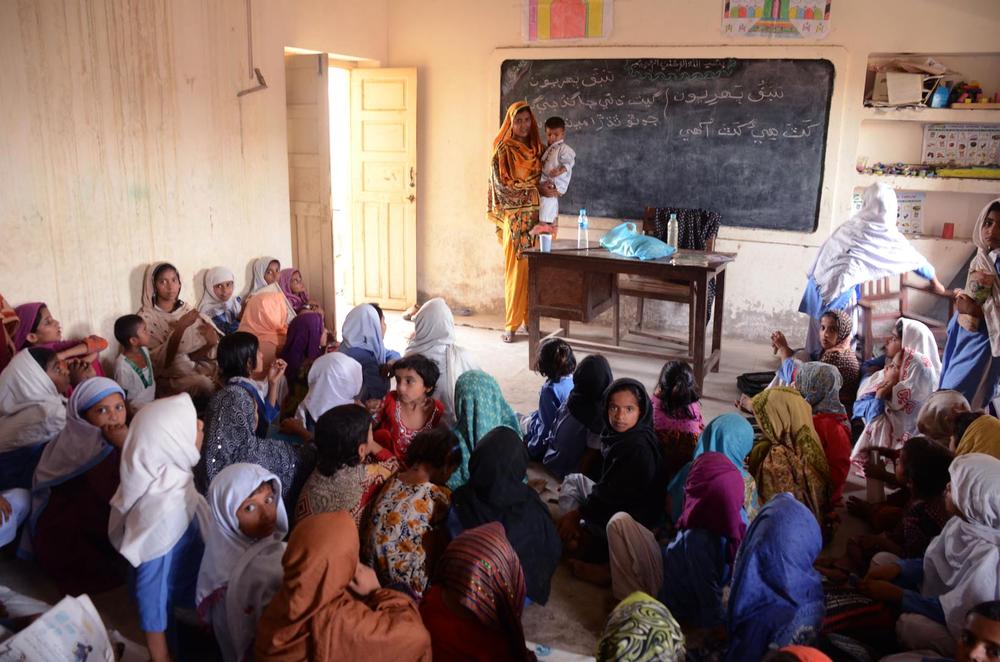
Sanober is the only teacher in her school. Sanober explains: "There are 110 girls studying in this school; we kept on adding one class per year. It started off as a one-teacher, one-grade school only. Now we have classes up to grade five. Admissions are continuing but I can(***)t manage any more students over 110 or 120."
News image
By Amima Sayeed
Published On 29 Jan 201429 Jan 2014

Share

facebooktwitterwhatsappcopylink

Save

A report released on January 29 has found that a global learning crisis costs governments $129bn a year. The 11th Education for All Global Monitoring Report, published by the United Nations Educational, Scientific and Cultural Organisation, found that 10 percent of global spending on primary education is being lost on poor-quality education that fails to ensure that children learn. 

There are at least 120 million children who don’t spend enough time in school to learn anything, and 130 million more who have spent four years in school yet remain unable to read or write. One in four young people in poor countries are unable to read a single sentence, and one-third of young women in South and West Asia are illiterate.

Pakistan is especially hard-hit: Fewer than half the children there learn the basics, whether they’ve been to school or not. This makes Pakistan one of only four countries outside of sub-Saharan Africa where this is the case.

The report projects that, if current trends continue, it will take until 2072 for all the poorest young female students in developing countries to attain literacy.

Because there are not enough teachers in Pakistan, older pupils are often asked to teach classes. In this photo, Razia, a fifth-grader, supervises a first-grade class while her teacher, Sanobar, teaches other students.
Advertisement
Many children in Pakistan never attend school. Six-year-old Rozina lives in Sindh province and is one of about 5.5 million Pakistani children out of school.
Other children leave before they have a chance to learn the basics. In Pakistan, many girls are married off at a young age or have to work. Asma, a primary school head teacher shown in this photo, said one of her young female students was married off to a 25-year-old man and stopped attending school shortly thereafter.
In rural Sindh, less than one-fifth of the girls from the poorest families can do basic calculations -compared to more than one-half of the boys from the richest families. This inequality means many youth in Pakistan remain illiterate.
Of the 10 countries needing the most additional primary teachers, Pakistan is the only one outside of sub-Saharan Africa. The EFA Global Monitoring Report predicts that Pakistan will not be able to fill its teacher gap until after 2030 if its past trends in recruiting teachers continue.
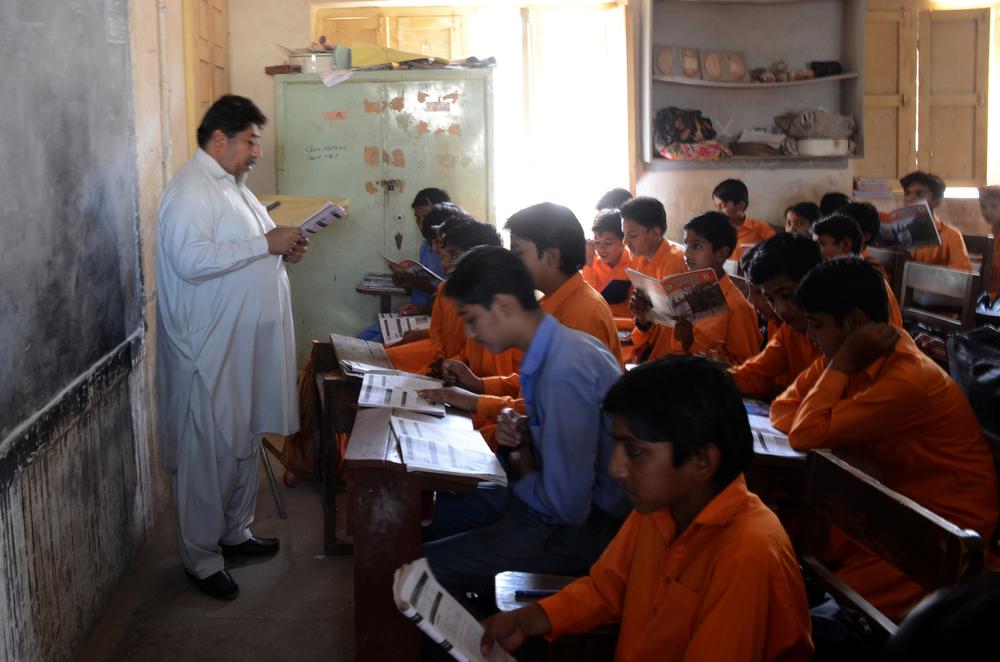
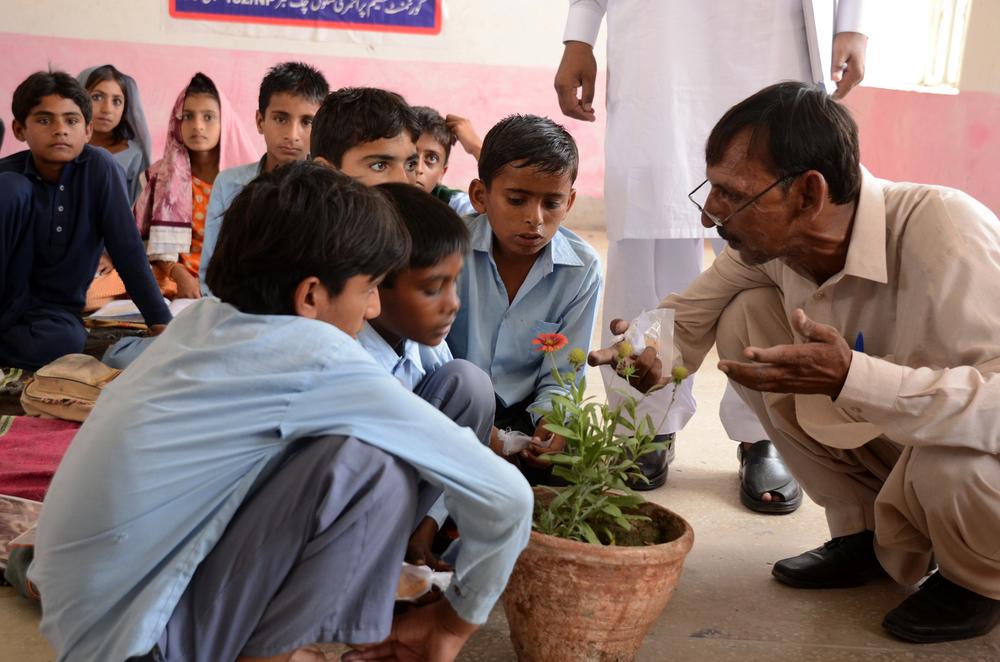
To improve the quality of teaching, Pakistan is trying to replace traditional training methods with child-centred pedagogy. Mubarak, a primary school teacher in Punjab, explains the new style: "We have started involving students in the classroom. The role of the teacher has changed into a facilitator and a guide. The rest of it is up to the children. They actively take charge of their learning."
Advertisement
Hammadur, another teacher at the same primary school, explains the importance of ongoing training. "When I was appointed last year, I attended a one-month training by the Department of Staff Development. Since then, every third month, we have refresher training... This is followed by mentoring support on a fortnightly basis. They observe our classes and then discuss with us the strengths and weaknesses of our lesson planning and teaching methodology."
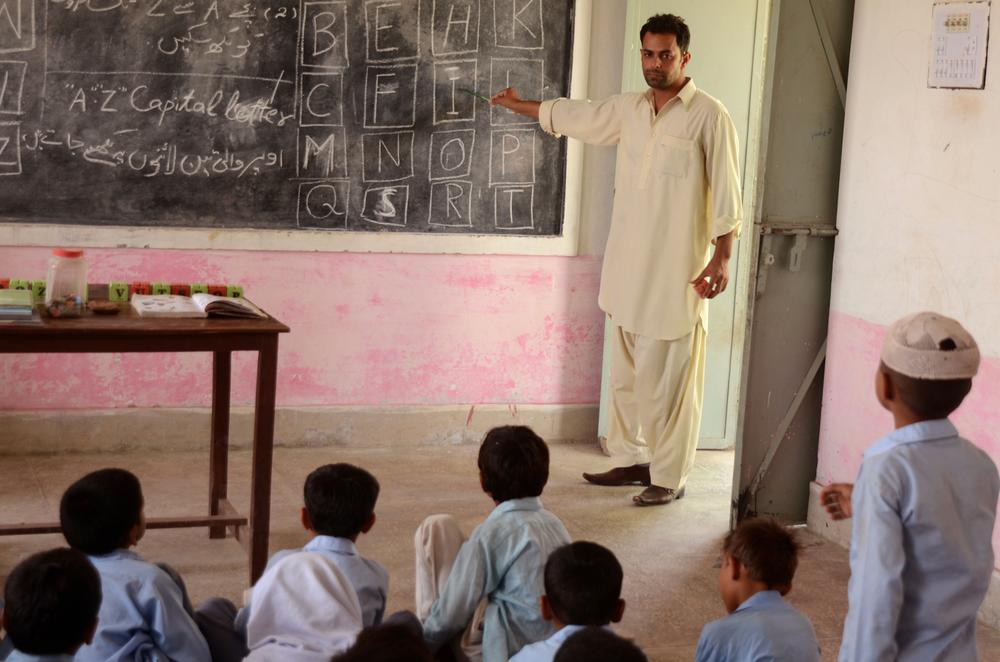
This school, in Swat, offers catch-up classes for children who have left school and need a second chance at an education.


  • About

    • About Us
    • Code of Ethics
    • Terms and Conditions
    • EU/EEA Regulatory Notice
    • Privacy Policy
    • Cookie Policy
    • Cookie Preferences
    • Accessibility Statement
    • Sitemap
    • Work for us
  • Connect

    • Contact Us
    • User Accounts Help
    • Advertise with us
    • Stay Connected
    • Newsletters
    • Channel Finder
    • TV Schedule
    • Podcasts
    • Submit a Tip
    • Paid Partner Content
  • Our Channels

    • Al Jazeera Arabic
    • Al Jazeera English
    • Al Jazeera Investigative Unit
    • Al Jazeera Mubasher
    • Al Jazeera Documentary
    • Al Jazeera Balkans
    • AJ+
  • Our Network

    • Al Jazeera Centre for Studies
    • Al Jazeera Media Institute
    • Learn Arabic
    • Al Jazeera Centre for Public Liberties & Human Rights
    • Al Jazeera Forum
    • Al Jazeera Hotel Partners

Follow Al Jazeera English:

  • facebook
  • twitter
  • youtube
  • instagram-colored-outline
  • rss
Al Jazeera Media Network logo
© 2026 Al Jazeera Media Network

You might also like:

live israeli attacks kill 76 no aid relief yet for... | thailand readies homecoming for stolen ancient sta... | russia ukraine war list of key events day 1185... | german woman arrested after mass stabbing at hambu... | vietnam orders ban on popular messaging app... | need answers will sri lankas tamils find war closu... | live israeli attacks kill 85 in gaza as starvation... | florida court orders ex mexican security chief to ...