Skip linksSkip to Content
play
Live
Navigation menu
  • News
    • Africa
    • Asia
    • US & Canada
    • Latin America
    • Europe
    • Asia Pacific
  • Middle East
  • Explained
  • Opinion
  • Sport
  • Video
    • Features
    • Economy
    • Human Rights
    • Climate Crisis
    • Investigations
    • Interactives
    • In Pictures
    • Science & Technology
    • Podcasts
    • Travel
play
Live

In Pictures

Gallery

Venezuela and the US’s ‘failed’ war on drugs

The so-called ‘war on drugs’ has been called ‘a great imperial hypocrisy’ that allows the US to pressure Latin American states.

News image
By Danylo Hawaleshka
Published On 14 Sep 202514 Sep 2025

Share

facebooktwitterwhatsappcopylink

Save

History Illustrated is a series of perspectives that puts news events and current affairs into historical context, using graphics generated with artificial intelligence.
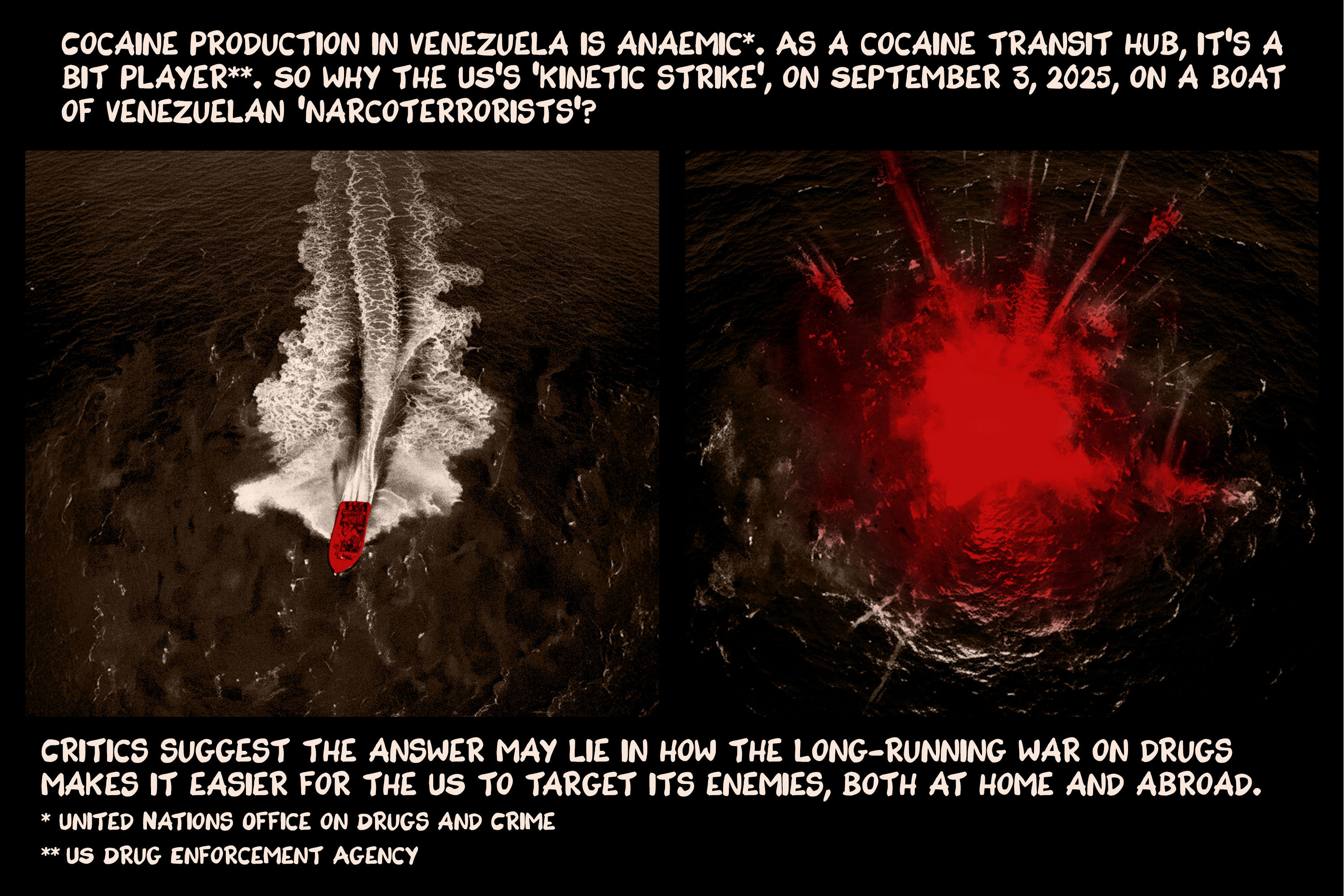
Cocaine production in Venezuela is anaemic*. As a cocaine transit hub, it’s a bit player**. So why the US’s ‘kinetic strike’, on September 3, 2025, on a boat of Venezuelan ‘narcoterrorists’? Critics suggest the answer may lie in how the long-running war on drugs makes it easier for the US to target its enemies, both at home and abroad. *United Nations Office on Drugs and Crime **US Drug Enforcement Agency
Cocaine production in Venezuela is anaemic*. As a cocaine transit hub, it’s a bit player**. So why the US’s "kinetic strike" on September 3, 2025 on a boat of Venezuelan "narcoterrorists"? Critics suggest the answer may lie in how the long-running so-called "war on drugs" makes it easier for the United States to target its enemies, both at home and abroad. *United Nations Office on Drugs and Crime **US Drug Enforcement Agency.
Advertisement
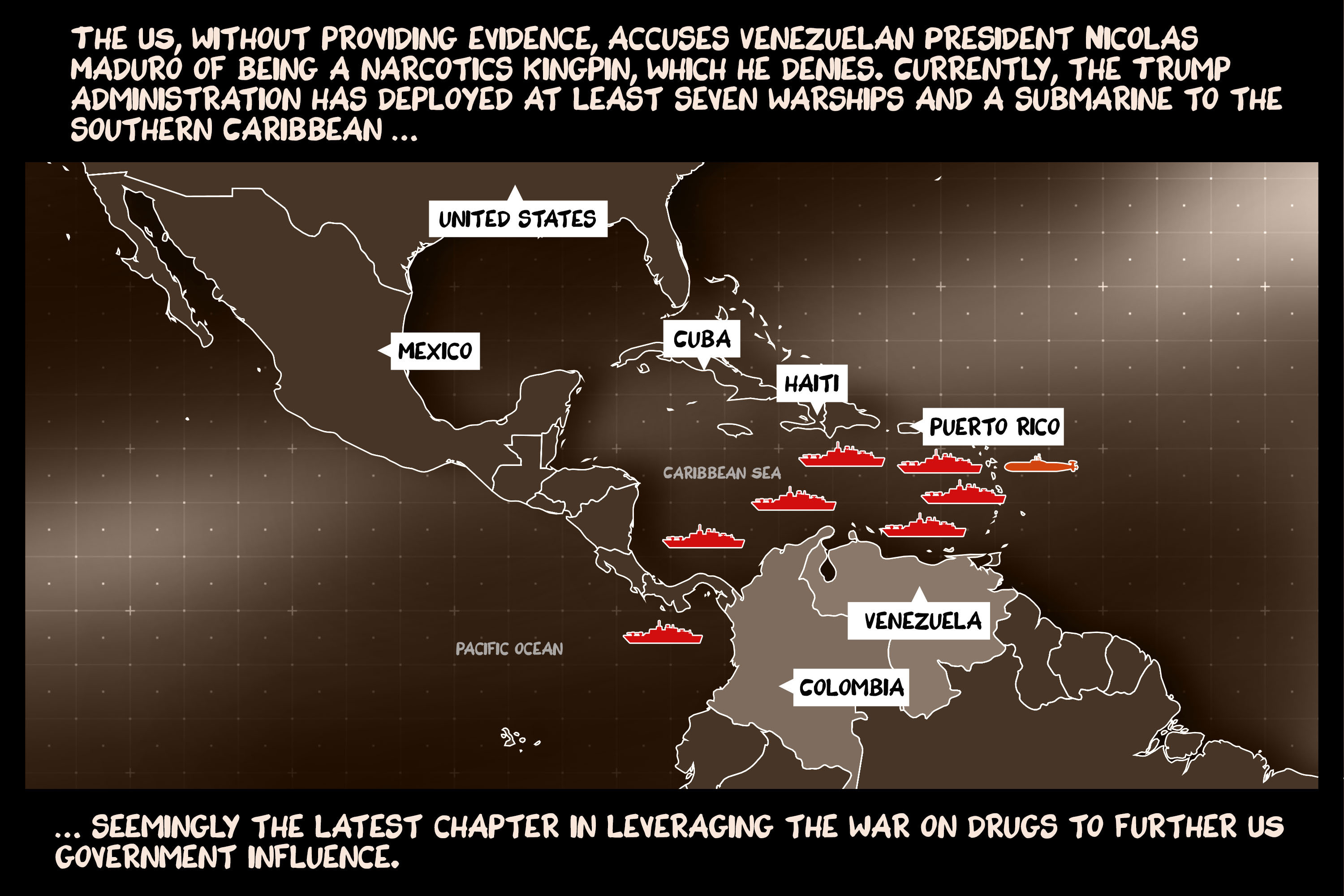
The US, without providing evidence, accuses Venezuelan President Nicolas Maduro of being a narcotics kingpin, which he denies. Currently, the Trump administration has deployed at least seven warships and a submarine to the southern Caribbean, seemingly the latest chapter in leveraging the war on drugs to further US government influence.
The US, without providing evidence, accuses Venezuelan President Nicolas Maduro of being a narcotics kingpin, which he denies. Currently, the Trump administration has deployed at least seven warships and a submarine to the southern Caribbean, seemingly the latest chapter in leveraging the "war on drugs" to further US government influence.
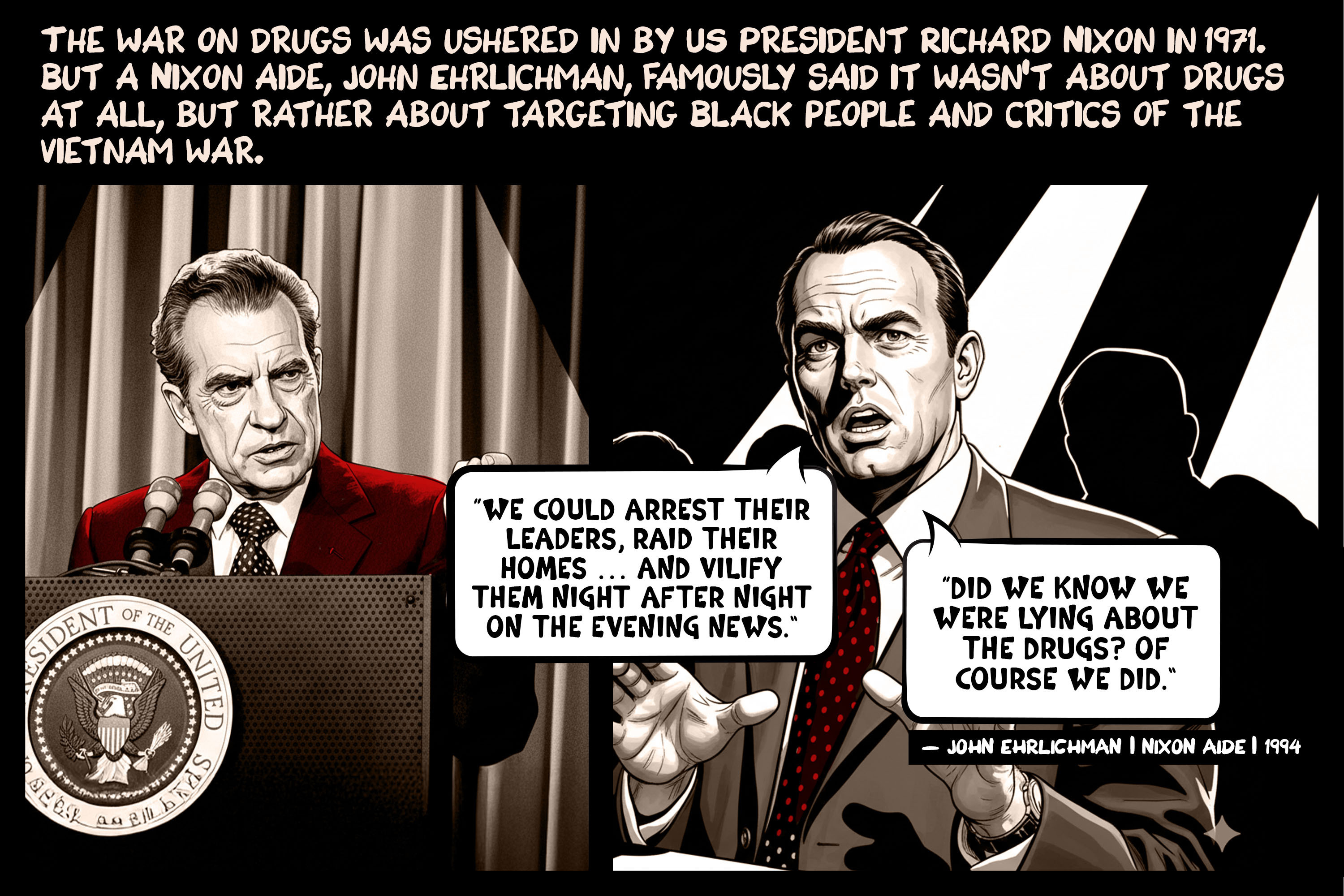
The war on drugs was ushered in by US President Richard Nixon in 1971. But a Nixon aide, John Ehrlichman, famously said it wasn’t about drugs at all, but rather about targeting Black people and critics of the Vietnam war.
The "war on drugs" was ushered in by US President Richard Nixon in 1971. But a Nixon aide, John Ehrlichman, famously said it wasn’t about drugs at all, but rather about targeting Black people and critics of the Vietnam War.
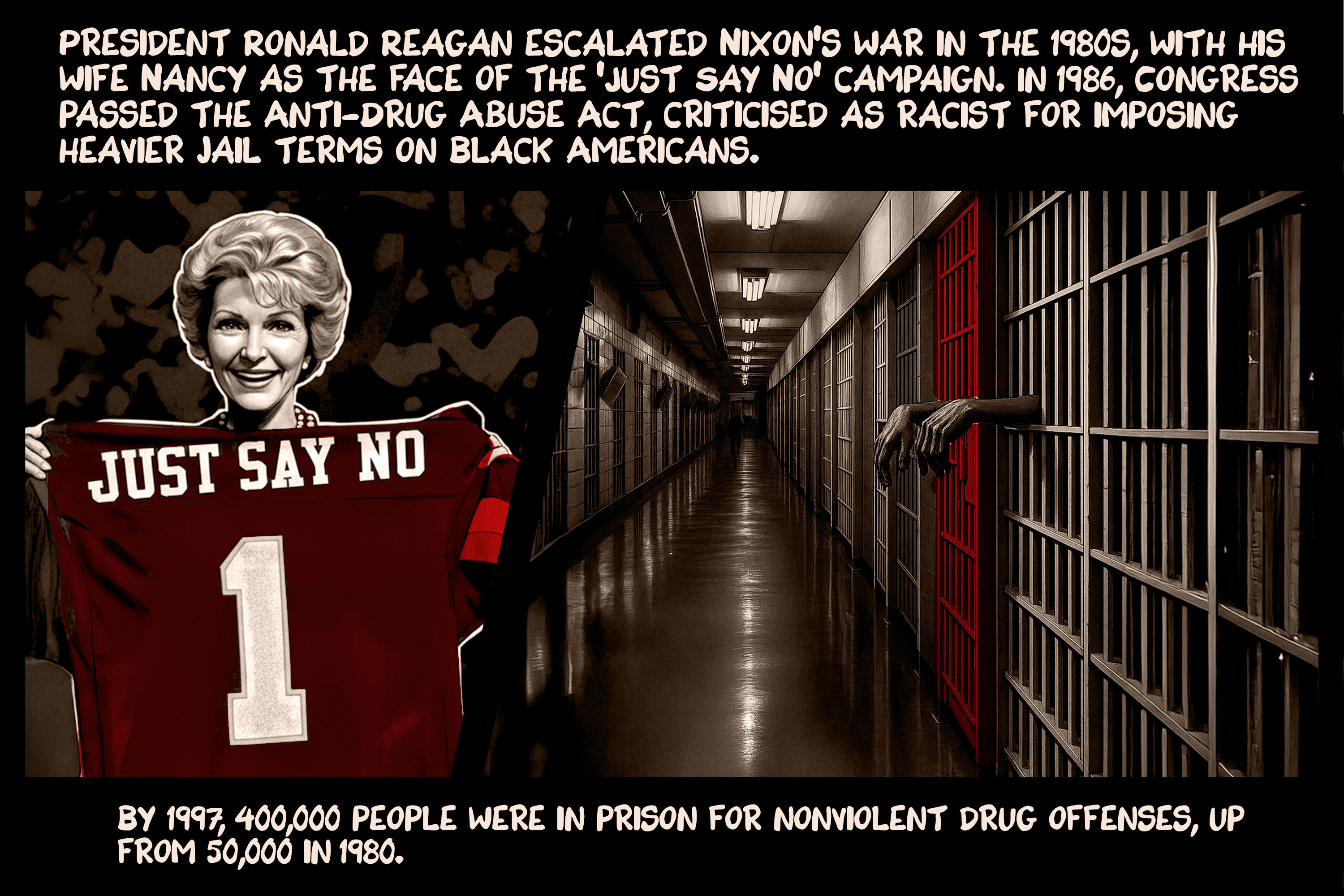
President Ronald Reagan escalated Nixon’s war in the 1980s, with his wife Nancy as the face of the ‘Just Say No’ campaign. In 1986, Congress passed the Anti-Drug Abuse Act, criticised as racist for imposing heavier jail terms on Black Americans. By 1997, 400,000 people were in prison for nonviolent drug offenses, up from 50,000 in 1980.
President Ronald Reagan escalated Nixon’s war in the 1980s, with his wife Nancy as the face of the "Just Say No" campaign. In 1986, Congress passed the Anti-Drug Abuse Act, criticised as racist for imposing heavier jail terms on Black Americans. By 1997, 400,000 people were in prison for nonviolent drug offences, up from 50,000 in 1980.
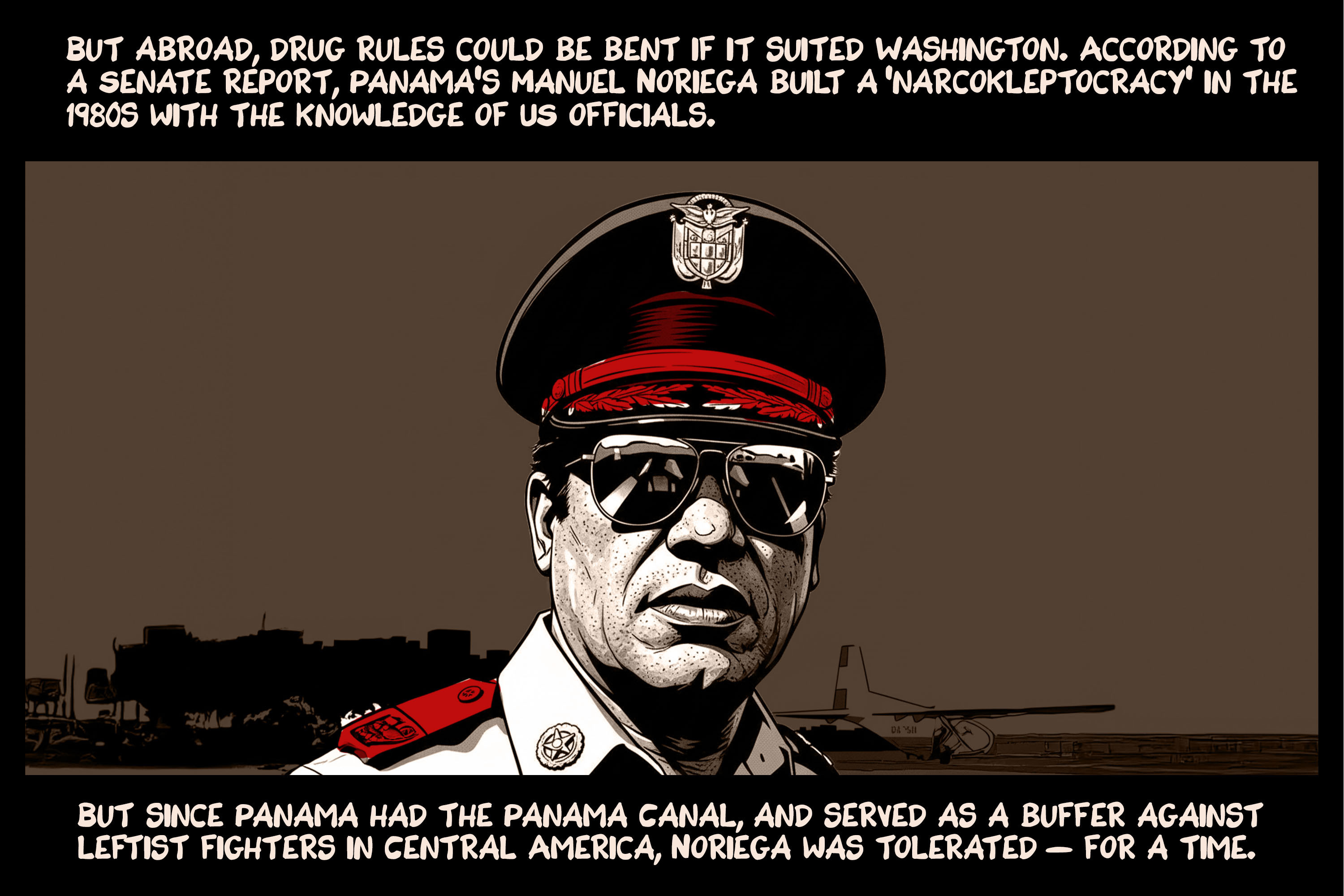
But abroad, drug rules could be bent if it suited Washington. According to a Senate report, Panama’s Manuel Noriega built a ‘narcokleptocracy’ in the 1980s with the knowledge of US officials. But since Panama had the Panama Canal, and served as a buffer against leftist fighters in Central America, Noriega was tolerated — for a time.
But abroad, drug rules could be bent if it suited Washington. According to a Senate report, Panama’s Manuel Noriega built a "narcokleptocracy" in the 1980s with the knowledge of US officials. But since Panama had the Panama Canal, it served as a buffer against leftist fighters in Central America, and Noriega was tolerated — for a time.
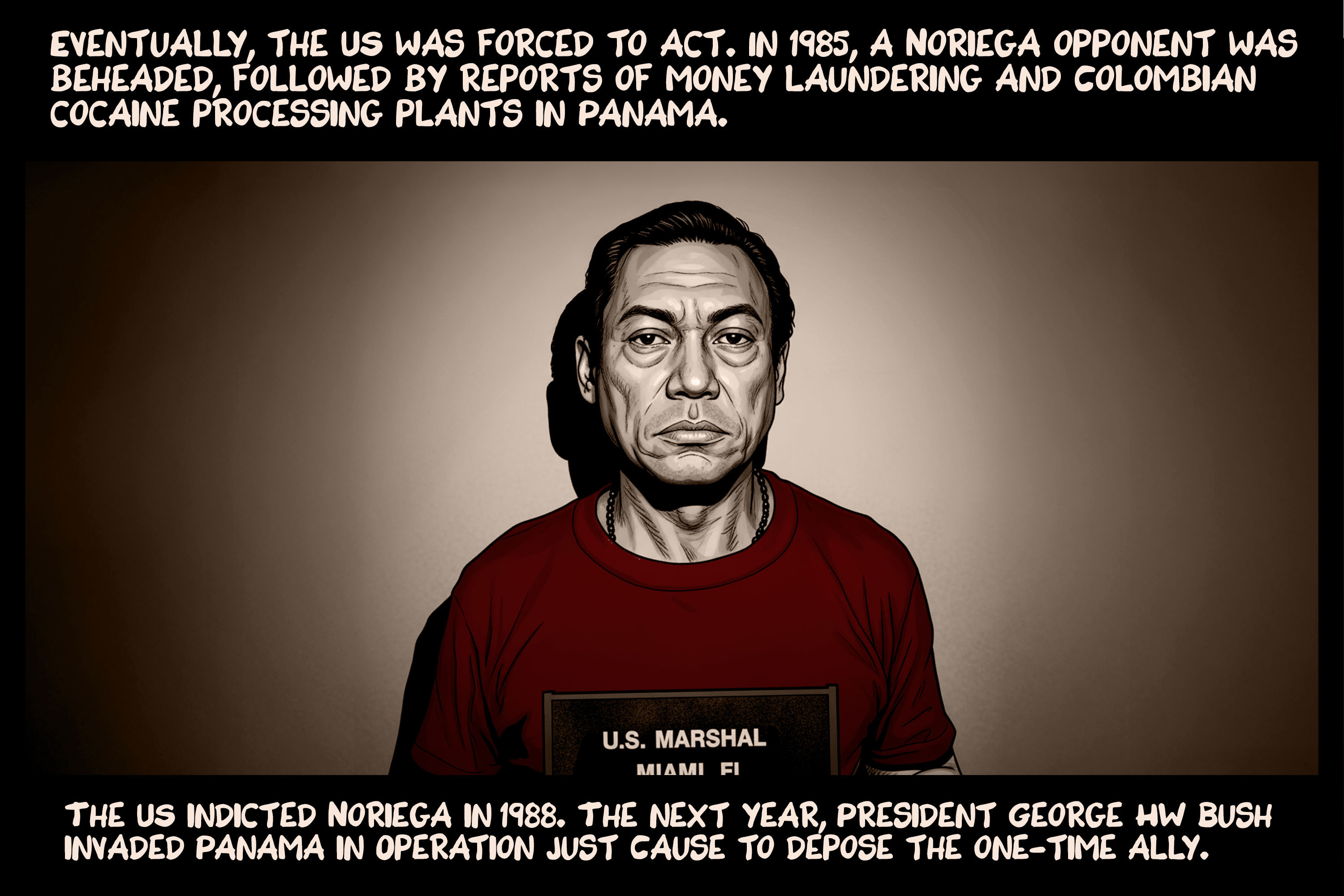
Eventually, the US was forced to act. In 1985, a Noriega opponent was beheaded, followed by reports of money laundering and Colombian cocaine processing plants in Panama. The US indicted Noriega in 1988. The next year, President George HW Bush invaded Panama in Operation Just Cause to depose the one-time ally.
Advertisement
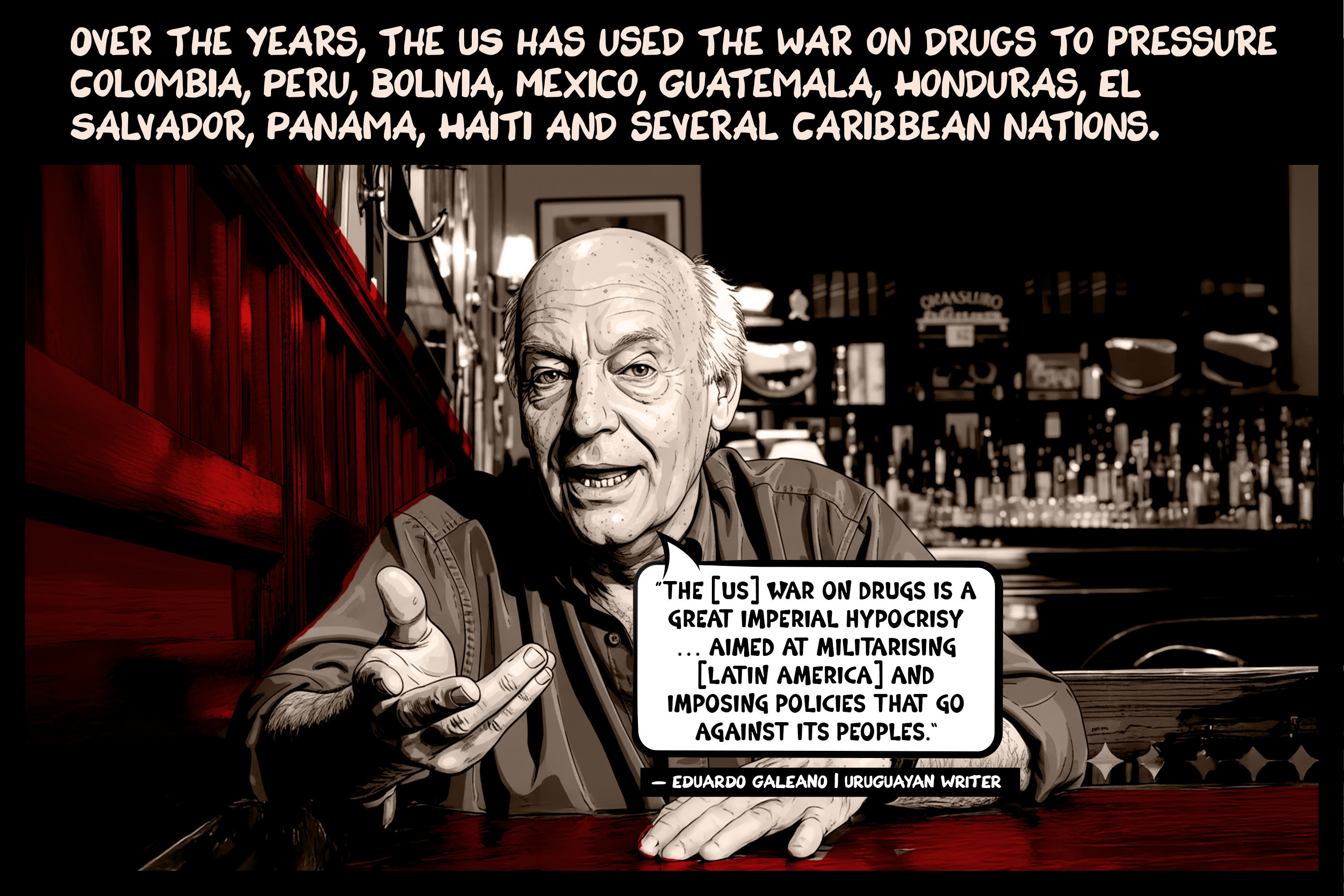
Over the years, the US has used the war on drugs to pressure Colombia, Peru, Bolivia, Mexico, Guatemala, Honduras, El Salvador, Panama, Haiti, and several Caribbean nations.
Over the years, the US has used the "war on drugs" to pressure Colombia, Peru, Bolivia, Mexico, Guatemala, Honduras, El Salvador, Panama, Haiti, and several Caribbean nations.
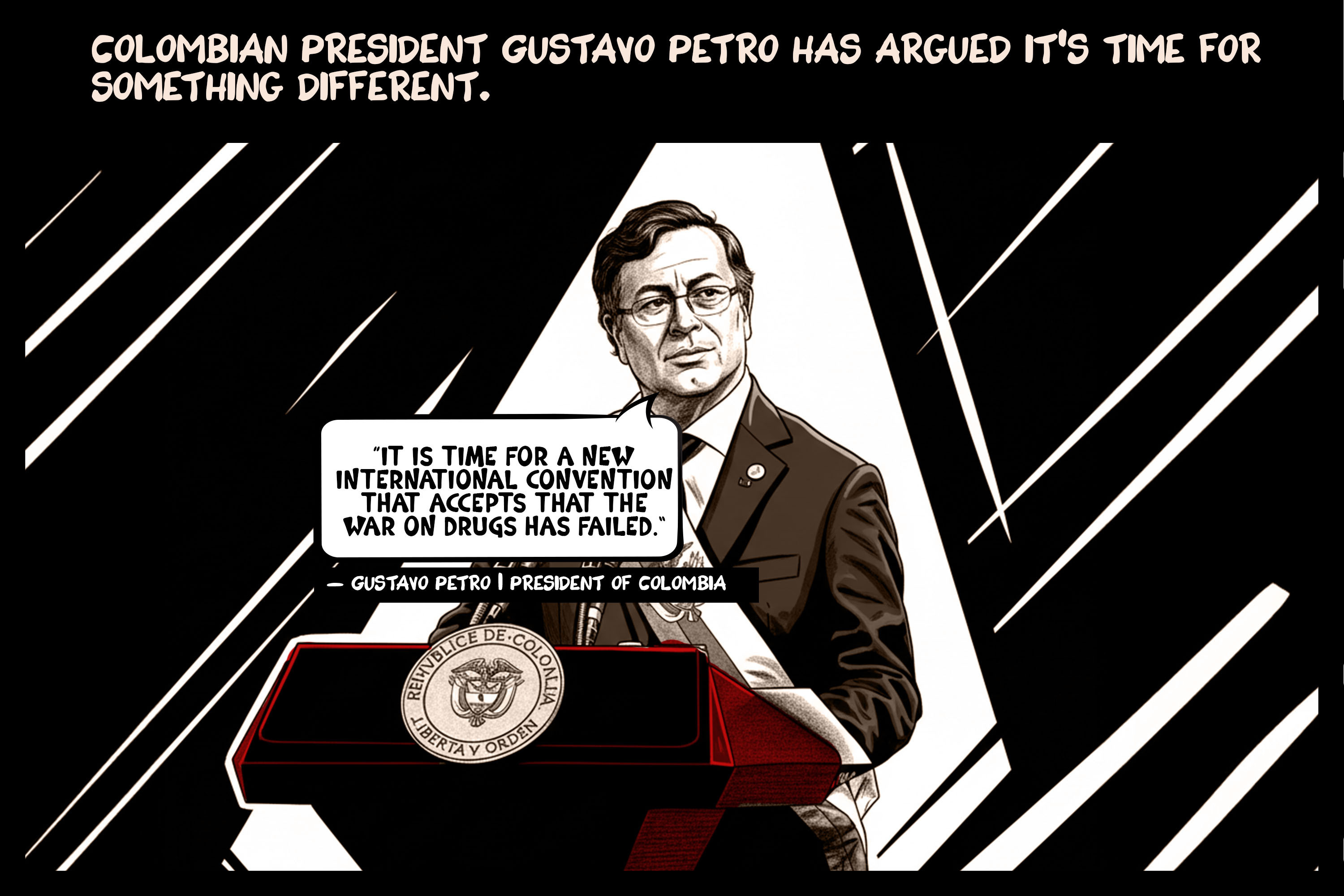
Colombian President Gustavo Petro has argued it’s time for something different.
Colombian President Gustavo Petro has argued it is time for something different.
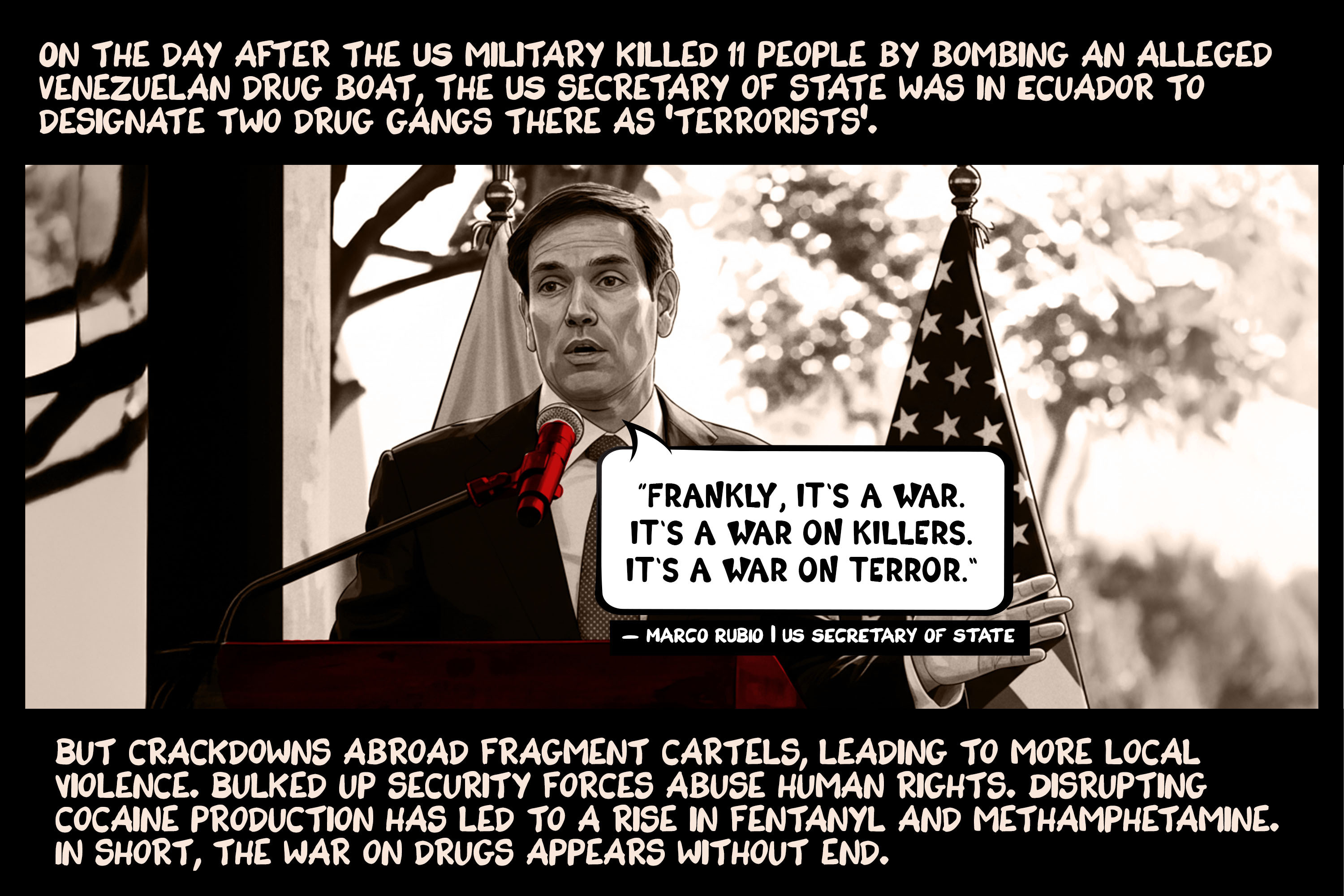
On the day after the US military killed 11 people by bombing an alleged Venezuelan drug boat, the US secretary of state was in Ecuador to designate two drug gangs there as ‘terrorists’. But crackdowns abroad fragment cartels, leading to more local violence. Bulked up security forces abuse human rights. Disrupting cocaine production has led to a rise in fentanyl and methamphetamine. In short, the war on drugs appears without end.
The day after the US military killed 11 people by bombing an alleged Venezuelan drug boat, the US secretary of state was in Ecuador to designate two drug gangs there as "terrorists". But crackdowns abroad fragment cartels, leading to more local violence. Bulked-up security forces abuse human rights. Disrupting cocaine production has led to a rise in fentanyl and methamphetamine. In short, the "war on drugs" appears without end.


  • About

    • About Us
    • Code of Ethics
    • Terms and Conditions
    • EU/EEA Regulatory Notice
    • Privacy Policy
    • Cookie Policy
    • Cookie Preferences
    • Accessibility Statement
    • Sitemap
    • Work for us
  • Connect

    • Contact Us
    • User Accounts Help
    • Advertise with us
    • Stay Connected
    • Newsletters
    • Channel Finder
    • TV Schedule
    • Podcasts
    • Submit a Tip
    • Paid Partner Content
  • Our Channels

    • Al Jazeera Arabic
    • Al Jazeera English
    • Al Jazeera Investigative Unit
    • Al Jazeera Mubasher
    • Al Jazeera Documentary
    • Al Jazeera Balkans
    • AJ+
  • Our Network

    • Al Jazeera Centre for Studies
    • Al Jazeera Media Institute
    • Learn Arabic
    • Al Jazeera Centre for Public Liberties & Human Rights
    • Al Jazeera Forum
    • Al Jazeera Hotel Partners

Follow Al Jazeera English:

  • facebook
  • twitter
  • youtube
  • instagram-colored-outline
  • rss
Al Jazeera Media Network logo
© 2026 Al Jazeera Media Network

You might also like:

live israeli attacks kill 76 no aid relief yet for... | thailand readies homecoming for stolen ancient sta... | russia ukraine war list of key events day 1185... | german woman arrested after mass stabbing at hambu... | vietnam orders ban on popular messaging app... | need answers will sri lankas tamils find war closu... | live israeli attacks kill 85 in gaza as starvation... | florida court orders ex mexican security chief to ...