Skip linksSkip to Content
play
Live
Navigation menu
  • News
    • Africa
    • Asia
    • US & Canada
    • Latin America
    • Europe
    • Asia Pacific
  • Middle East
  • Explained
  • Opinion
  • Sport
  • Video
    • Features
    • Economy
    • Human Rights
    • Climate Crisis
    • Investigations
    • Interactives
    • In Pictures
    • Science & Technology
    • Podcasts
    • Travel
play
Live

In Pictures

Gallery|Climate

Climate change threatens yaks, herding culture in India’s Ladakh

Centuries-old yak herding way of life faces extinction as climate change alters a fragile Himalayan ecosystem in Ladakh.

Woman with her baby son wrapped on her back keeps an eye on a herd of yaks in a stone-walled structure.
Tsering Dolma, with her son Tenzin Gaychet wrapped on her back, keeps an eye on a herd of yaks in a stone-walled structure, or lekha, in Korzak village, Ladakh, India [Dar Yasin/AP Photo]
By News Agencies
Published On 1 Aug 20251 Aug 2025

Share

facebooktwitterwhatsappcopylink

Save

With her one-year-old son strapped to her back, Tsering Dolma guides a dozen yaks into a stone-walled corral as dusk settles over the stark mountains of India’s isolated Ladakh region.

Across the vast, wind-swept plains where sparse grass transitions to gravelly foothills and craggy peaks, only a handful of herders tending their livestock break the solitude.

For generations, herders like Dolma have depended on mountain snowmelt to nourish the high-altitude pastures where their animals graze. But now, herders report that precipitation patterns have grown unpredictable, diminishing the grass available for their yaks.

“Earlier, it used to snow and rain, but now it has reduced a lot,” the 32-year-old says. “Even the winters are getting warmer than before.”

In Ladakh, a region near Tibet that once formed part of the ancient Silk Route, women primarily handle the herding, milking, and wool gathering – labour that remains largely manual.

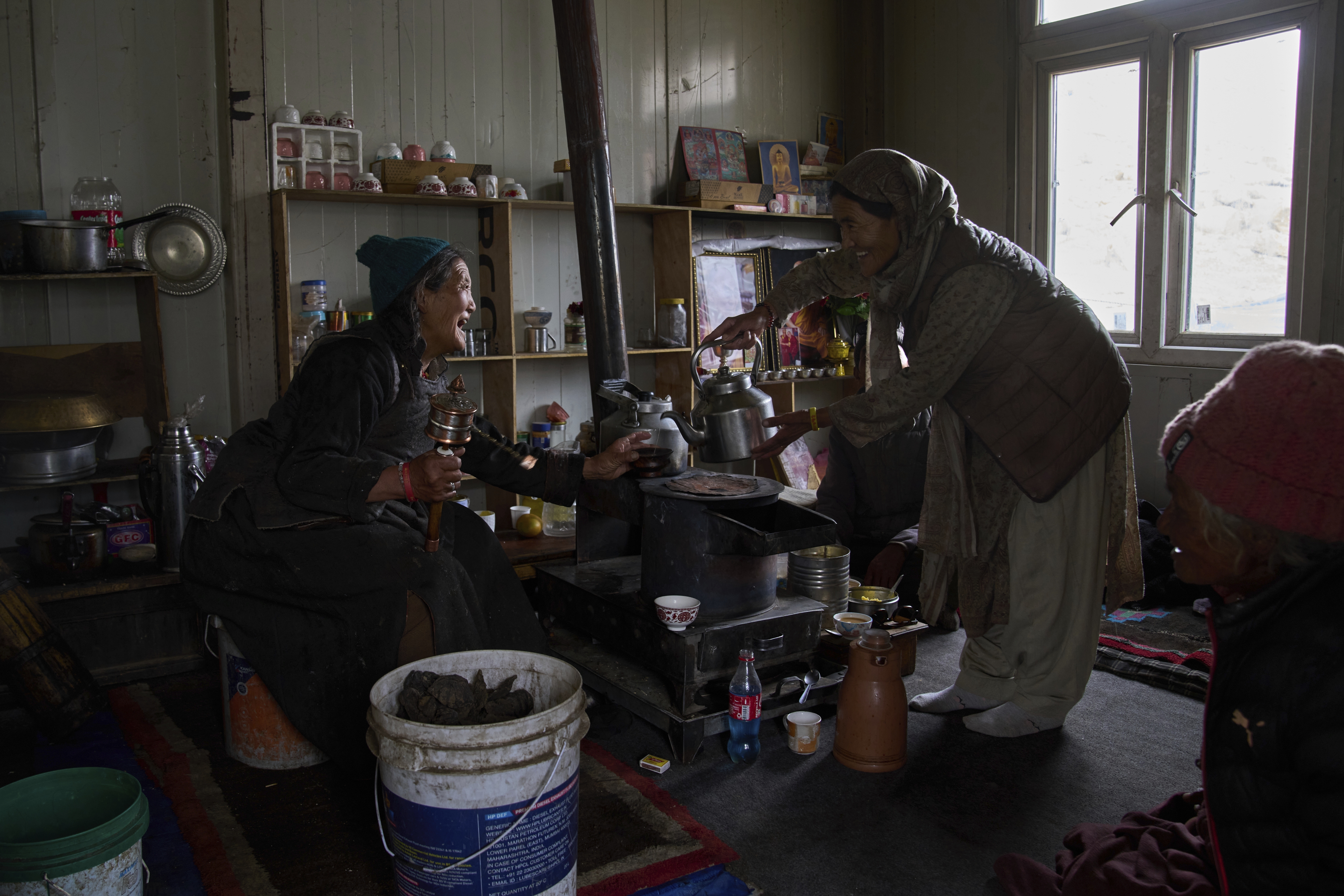
In a neighbouring valley, 73-year-old Kunzias Dolma prepares yak milk tea and inspects her yak butter while simultaneously spinning her Buddhist prayer wheel with her right hand.

Unrelated to Tsering Dolma, she has dedicated her life to working with yaks, spending countless hours creating products from their milk and crafting blankets from their wool.

“We wake up early morning, about 5am every day,” she says. “My husband and I milk the yaks and do all of the other yak-related work until about lunch. Then we take a break and get back to work in the evening. We have been doing this all our life.”

Advertisement

This traditional lifestyle now faces dual threats: Climate change making Ladakh increasingly inhospitable for yaks, and younger generations pursuing alternative livelihoods.

Rising temperatures and irregular rainfall have made nutritious vegetation scarcer while subjecting the shaggy, cold-adapted animals to greater physical stress. Research indicates the average temperature in Ladakh has risen by 3 degrees Celsius (5.4 degrees Fahrenheit) over four decades, with more extreme heatwaves and unpredictable precipitation patterns.

While precisely measuring climate change’s effect on yak populations remains challenging, scientists believe it contributes significantly to their decline. Government data show Ladakh’s yak population fell from nearly 34,000 in 2012 to fewer than 20,000 by 2019, the most recent year with available statistics.

Though millions of yaks still exist globally, scientists warn that the Himalayan ecosystem in this region is particularly vulnerable to global warming.
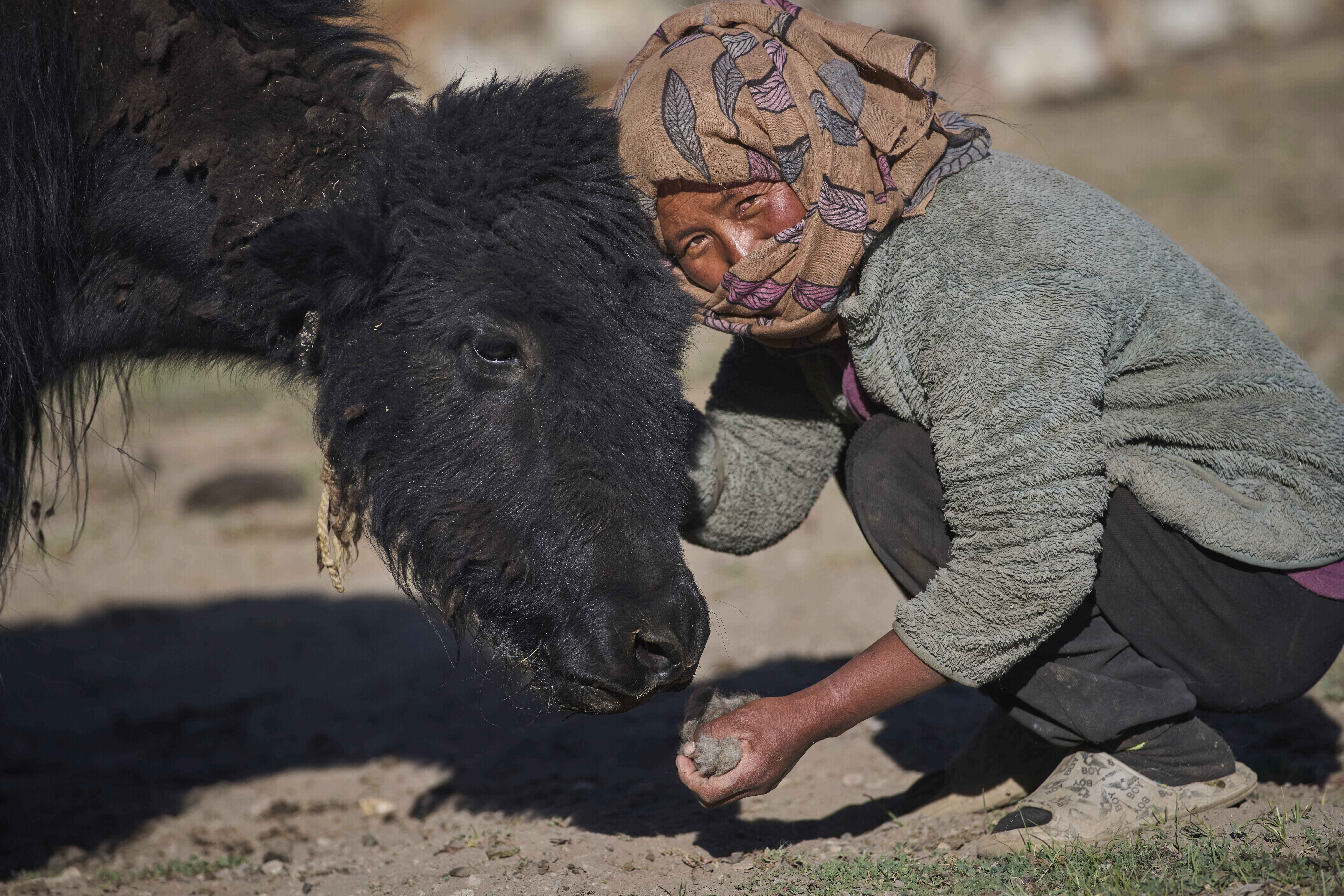
Climate change threatens yaks and the herding way of life
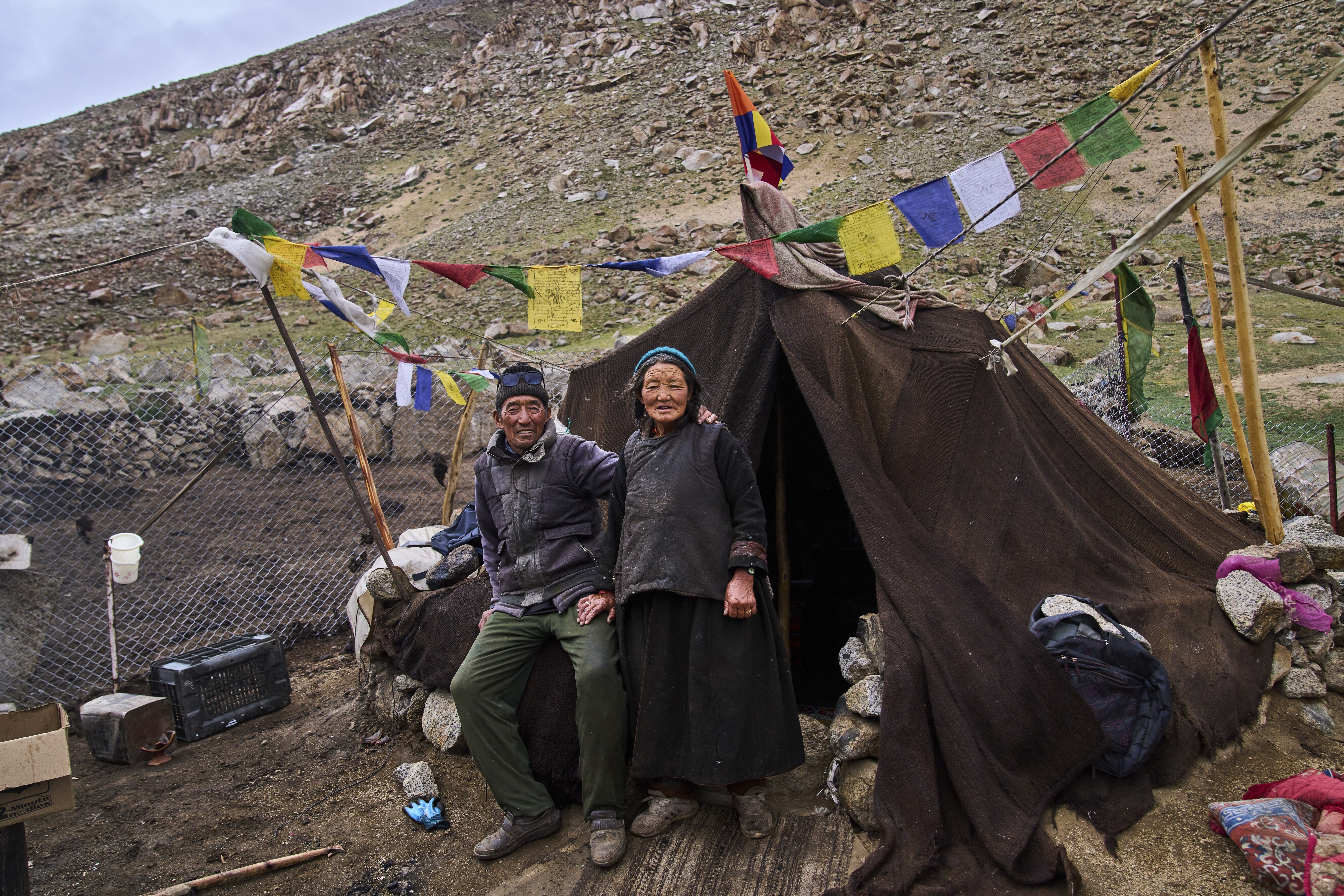
Kunzias Dolma, right, and her husband Tsering Angchok pose for a picture outside their rebo, a traditional nomadic tent made of yak wool, used by the Changpa tribe to withstand the region's harsh climate, in Tsoltak village, Ladakh. [Dar Yasin/AP Photo]
Advertisement
Climate change threatens yaks and the herding way of life
Herder Kunzang Angmo has seen the changes up close. “Earlier, there were a lot of yaks, but now there aren’t as many,” she says. “It used to snow a lot before, but now the snowfall is decreasing, and due to less water, we have less grass available.” [Dar Yasin/AP Photo]
Climate change threatens yaks and the herding way of life
Experts warn that the decline in yak herding has consequences for Ladakh and its fragile Himalayan ecosystem, because pastoralists manage grazing lands, keep invasive plants in check and help maintain the area’s biodiversity. [Dar Yasin/AP Photo]
Climate change threatens yaks and the herding way of life
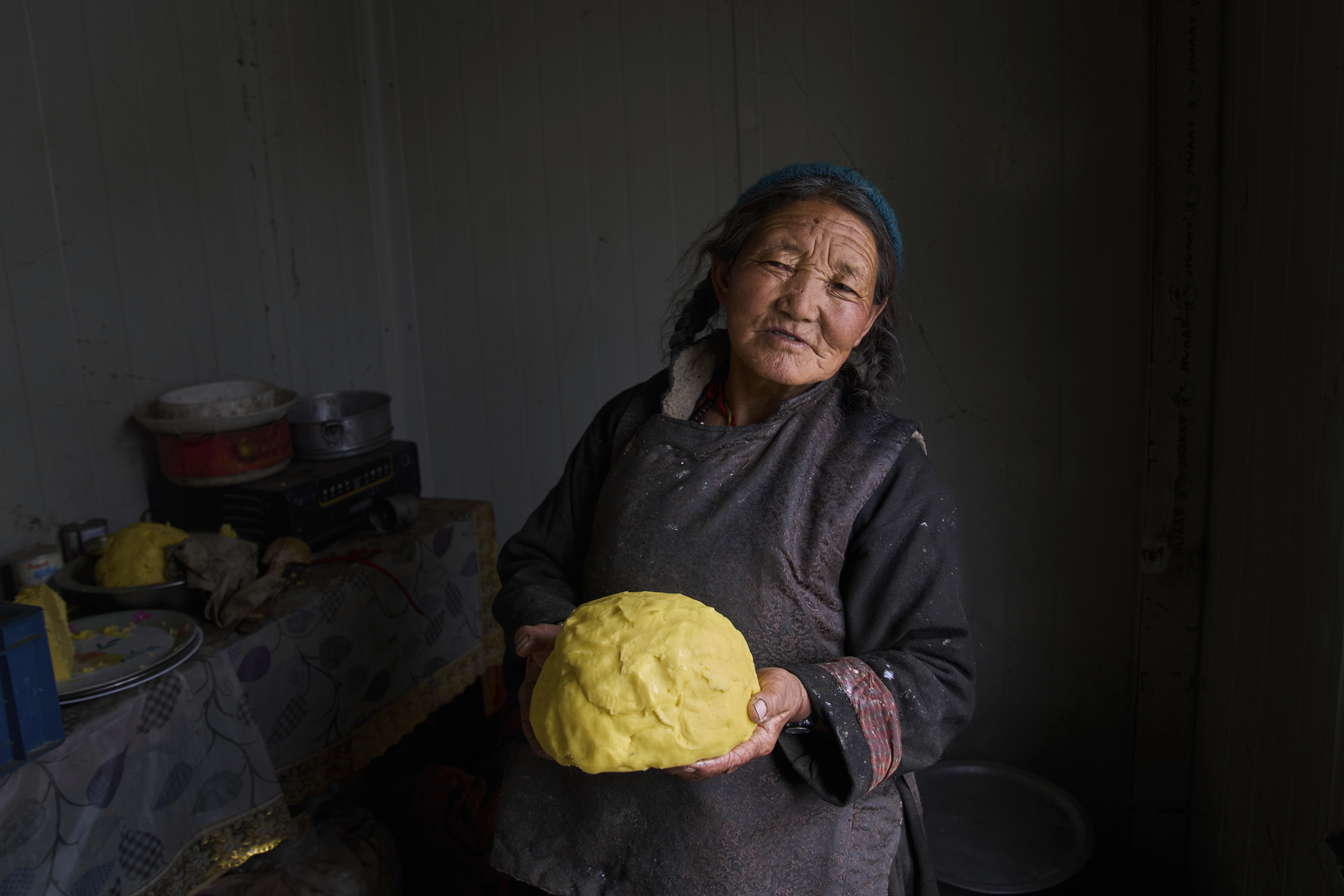
Kunzias Dolma poses for a photograph with butter made from yak milk inside a plastic shelter provided by the government in Tsoltak village, Ladakh. [Dar Yasin/AP Photo]
Climate change threatens yaks and the herding way of life
Kunzang Angmo prepares food as her son Phunsukh Chondon, right, sleeps inside a government-provided tent in Korzak village. [Dar Yasin/AP Photo]
Climate change threatens yaks and the herding way of life
The sparsely populated region, most of which is above 3,000 metres (9,900ft), is also home to wildlife including the snow leopard, red fox and blue sheep. [Dar Yasin/AP Photo]
Advertisement
Climate change threatens yaks and the herding way of life
Kaysang Gurmate keeps an eye on a flock of sheep and goats before heading high up for grazing in Tso Moriri village. [Dar Yasin/AP Photo]
Climate change threatens yaks and the herding way of life
Jobs in tourism and other industries, along with educational opportunities, also draw people away from herding. Herders say younger Ladakhis prefer less arduous work with potentially better pay than tending to yaks. Herders travel long distances over rough mountain land to find grazing areas and are constantly on the move. [Dar Yasin/AP Photo]
Climate change threatens yaks and the herding way of life
Ladakh, famous for its Buddhist monasteries and hiking trails, has experienced a significant increase in tourism in recent years as transportation infrastructure has made the area easier to reach, which has created new jobs. [Dar Yasin/AP Photo]


  • About

    • About Us
    • Code of Ethics
    • Terms and Conditions
    • EU/EEA Regulatory Notice
    • Privacy Policy
    • Cookie Policy
    • Cookie Preferences
    • Accessibility Statement
    • Sitemap
    • Work for us
  • Connect

    • Contact Us
    • User Accounts Help
    • Advertise with us
    • Stay Connected
    • Newsletters
    • Channel Finder
    • TV Schedule
    • Podcasts
    • Submit a Tip
    • Paid Partner Content
  • Our Channels

    • Al Jazeera Arabic
    • Al Jazeera English
    • Al Jazeera Investigative Unit
    • Al Jazeera Mubasher
    • Al Jazeera Documentary
    • Al Jazeera Balkans
    • AJ+
  • Our Network

    • Al Jazeera Centre for Studies
    • Al Jazeera Media Institute
    • Learn Arabic
    • Al Jazeera Centre for Public Liberties & Human Rights
    • Al Jazeera Forum
    • Al Jazeera Hotel Partners

Follow Al Jazeera English:

  • facebook
  • twitter
  • youtube
  • instagram-colored-outline
  • rss
Al Jazeera Media Network logo
© 2026 Al Jazeera Media Network

You might also like:

live israeli attacks kill 76 no aid relief yet for... | thailand readies homecoming for stolen ancient sta... | russia ukraine war list of key events day 1185... | german woman arrested after mass stabbing at hambu... | vietnam orders ban on popular messaging app... | need answers will sri lankas tamils find war closu... | live israeli attacks kill 85 in gaza as starvation... | florida court orders ex mexican security chief to ...