Skip linksSkip to Content
play
Live
Navigation menu
  • News
    • Africa
    • Asia
    • US & Canada
    • Latin America
    • Europe
    • Asia Pacific
  • Middle East
  • Explained
  • Opinion
  • Sport
  • Video
    • Features
    • Economy
    • Human Rights
    • Climate Crisis
    • Investigations
    • Interactives
    • In Pictures
    • Science & Technology
    • Podcasts
    • Travel
play
Live

In Pictures

Gallery|History

Peru reopens 3,800-year-old Penico archaeological site for visitors

The citadel of Caral civilisation – one of the world’s oldest – reopens for tourists after eight years of restoration.

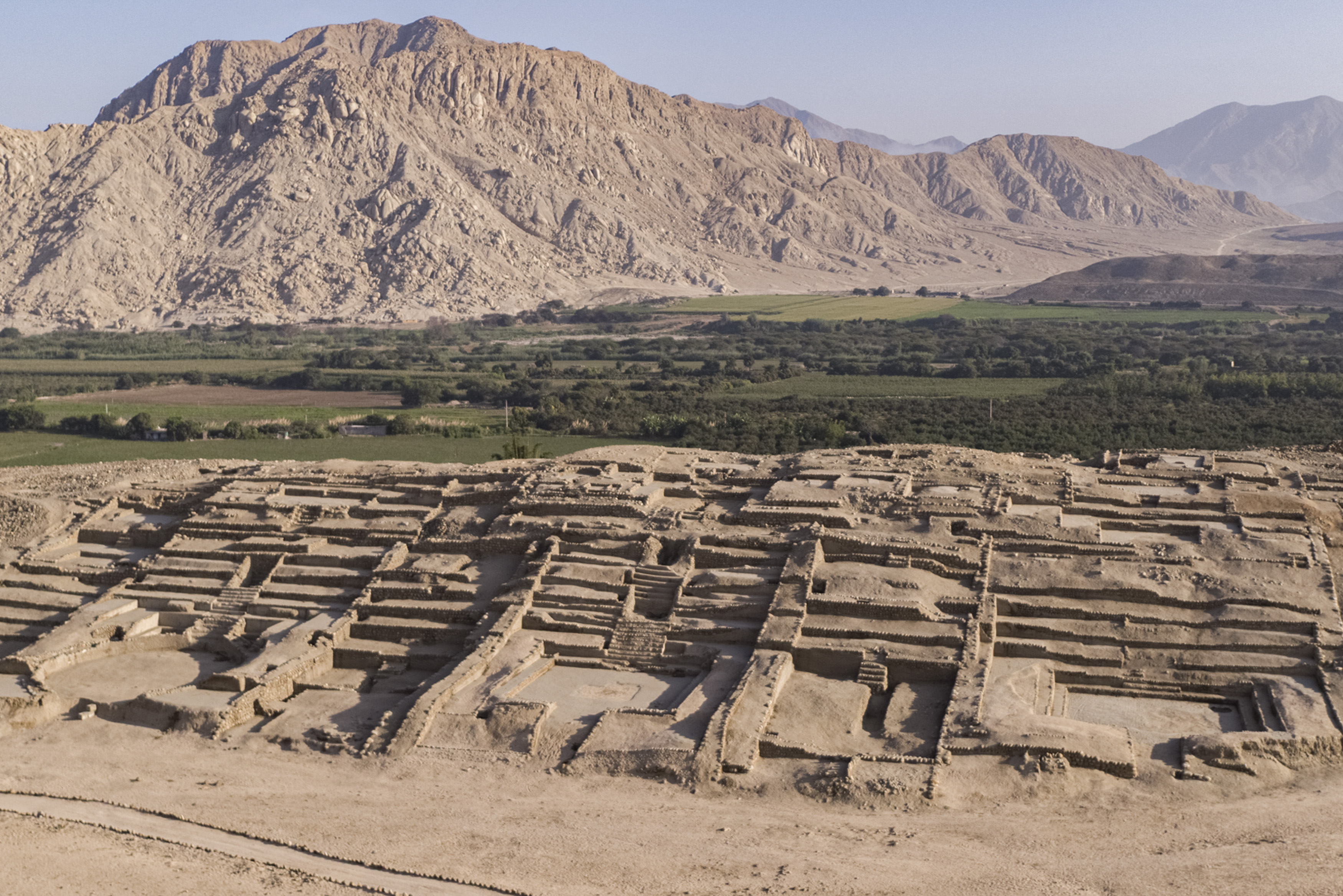
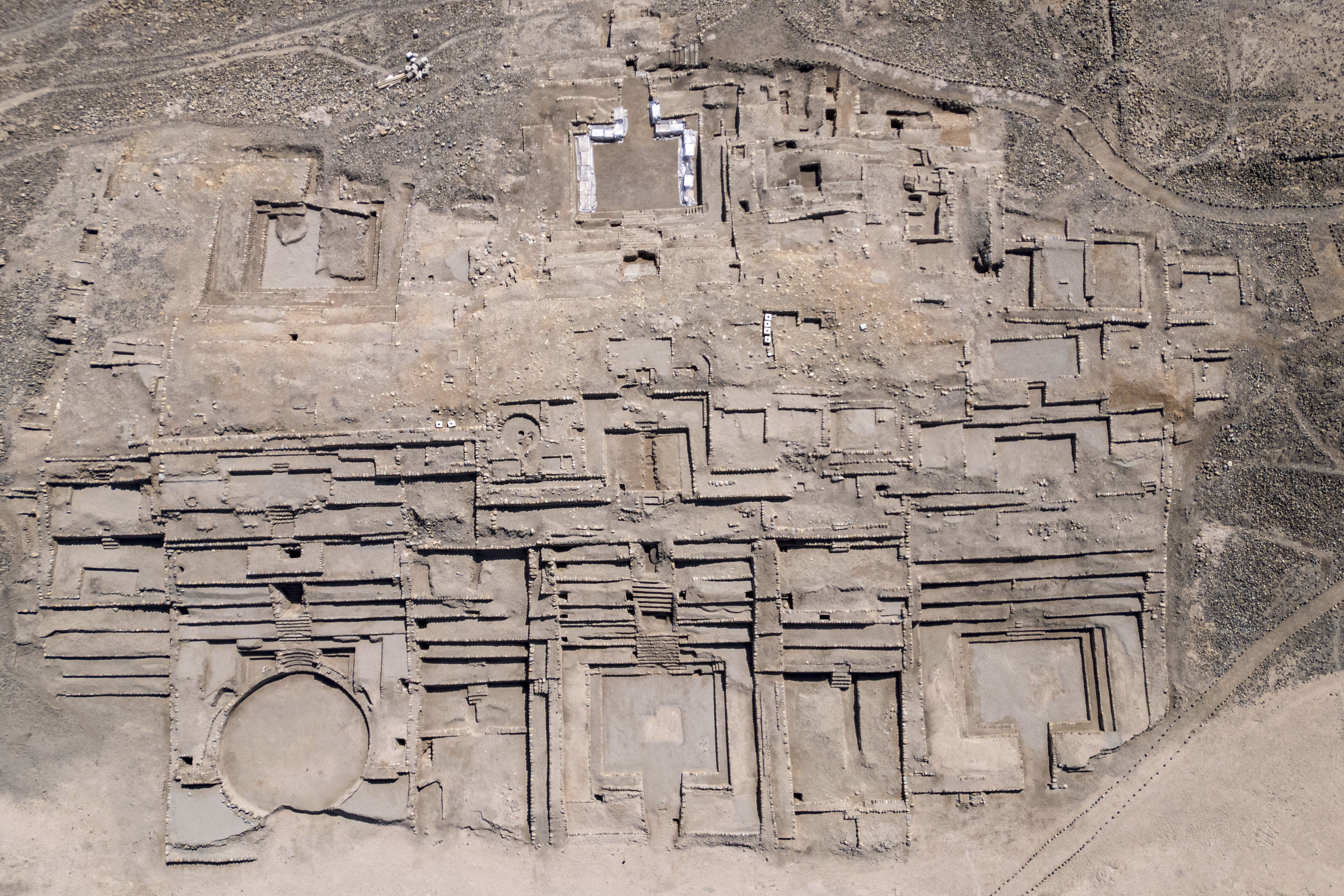
Aerial view of the citadel of Penico.
Aerial view of the citadel of Penico, located in the province of Huaura, Lima department, Peru [Ernesto Benavides/AFP]
By News Agencies
Published On 15 Jul 202515 Jul 2025

Share

facebooktwitterwhatsappcopylink

Save

A 3,800-year-old citadel of the Caral civilisation – one of the world’s oldest – has reopened for visitors in Peru after eight years of comprehensive restoration and research.

Researchers have identified the Penico archaeological site as a vital trading centre that connected early Pacific coastal communities with those in the Andes and Amazon regions.

Located in the Supe Valley, about 180km (110 miles) north of Lima and only 19km (12 miles) from the Pacific Ocean, Penico was an unremarkable hilly landscape until excavations commenced in 2017.

Archaeologists believe the site could provide crucial information about the enigmatic collapse of the Caral civilisation, which flourished between 3,000 and 1,800 BC.

The opening ceremony featured regional artists playing pututus – traditional shell trumpets – as part of an ancient ritual honouring Pachamama, Mother Earth, with ceremonial offerings of agricultural products, coca leaves, and local beverages.

“Penico was an organised urban centre devoted to agriculture and trade between the coast, the mountains and the forest,” archaeologist Ruth Shady, who leads research at the site, told the AFP news agency. She said the settlement dates to between 1,800 and 1,500 BC.

The site demonstrates sophisticated planning, strategically built on a geological terrace 600 metres (2,000ft) above sea level and parallel to a river to avoid flooding.

Research by the Peruvian Ministry of Culture has uncovered 18 distinct structures, including public buildings and residential complexes. Scholars believe Penico was built during the same period as the earliest civilisations in the Middle East and Asia.

Advertisement

According to Shady, researchers hope the site will shed light on the crisis they believe hastened the Caral civilisation’s decline. This crisis, she explained, was linked to climate change that caused droughts and disrupted agricultural activities throughout the region.

“We want to understand how the Caral civilisation formed and developed over time, and how it came to be in crisis as a result of climate change,” she said.
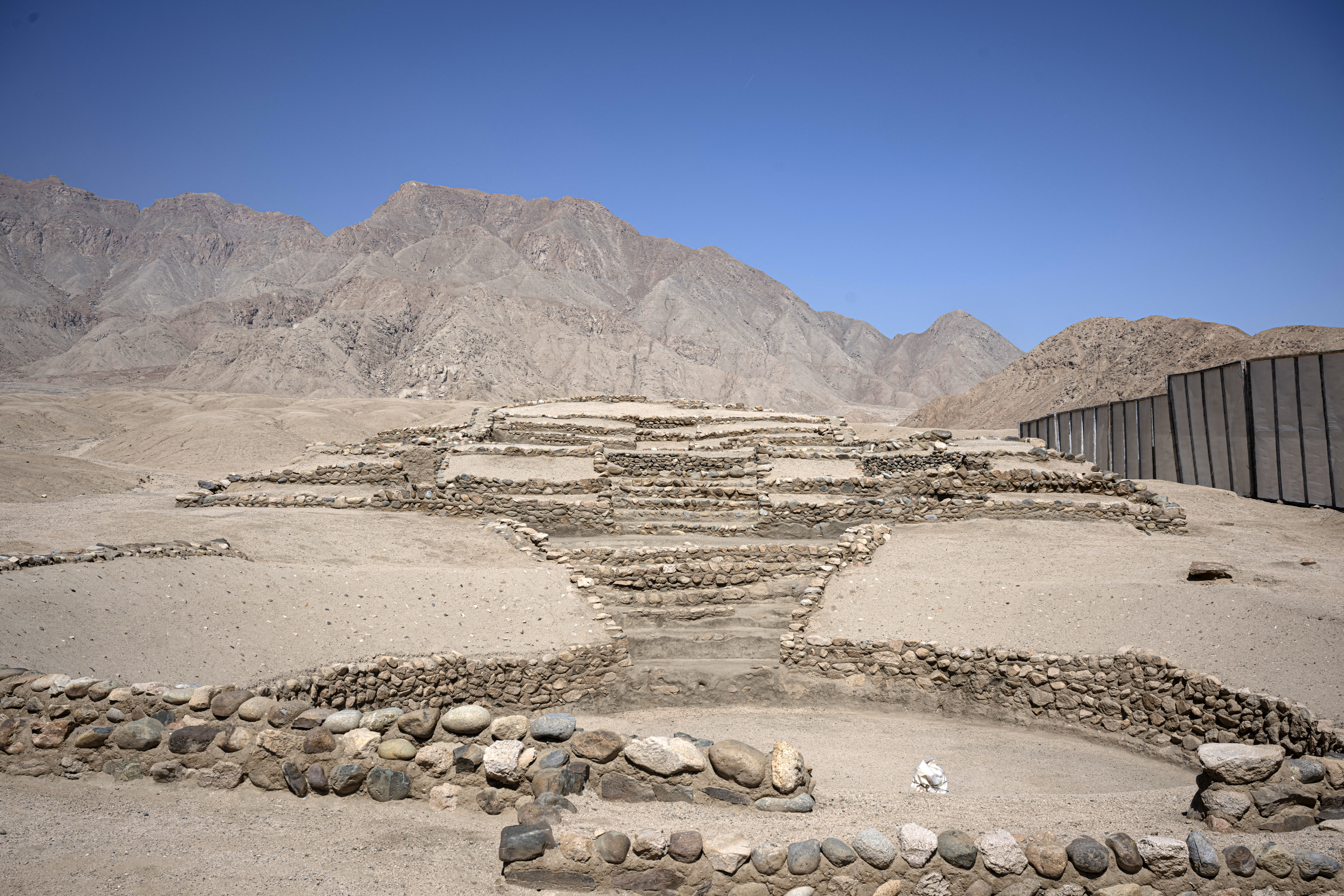
Peruvian citadel that is nearly 4,000 years old opens doors to tourists
The urban centre, named Penico, is located in the northern Barranca province and was founded between 1,800 and 1,500 BC. It is close to where the Caral civilization, the oldest in the Americas, developed 5,000 years ago. [Ernesto Benavides/AFP]
Advertisement
Peruvian citadel that is nearly 4,000 years old opens doors to tourists
Drone footage released by researchers shows the city centre is marked by a circular structure on a hillside terrace, with remains of stone and mud buildings constructed some 600 meters (2000ft) above sea level. [Ernesto Benavides/AFP]
Peruvian citadel that is nearly 4,000 years old opens doors to tourists
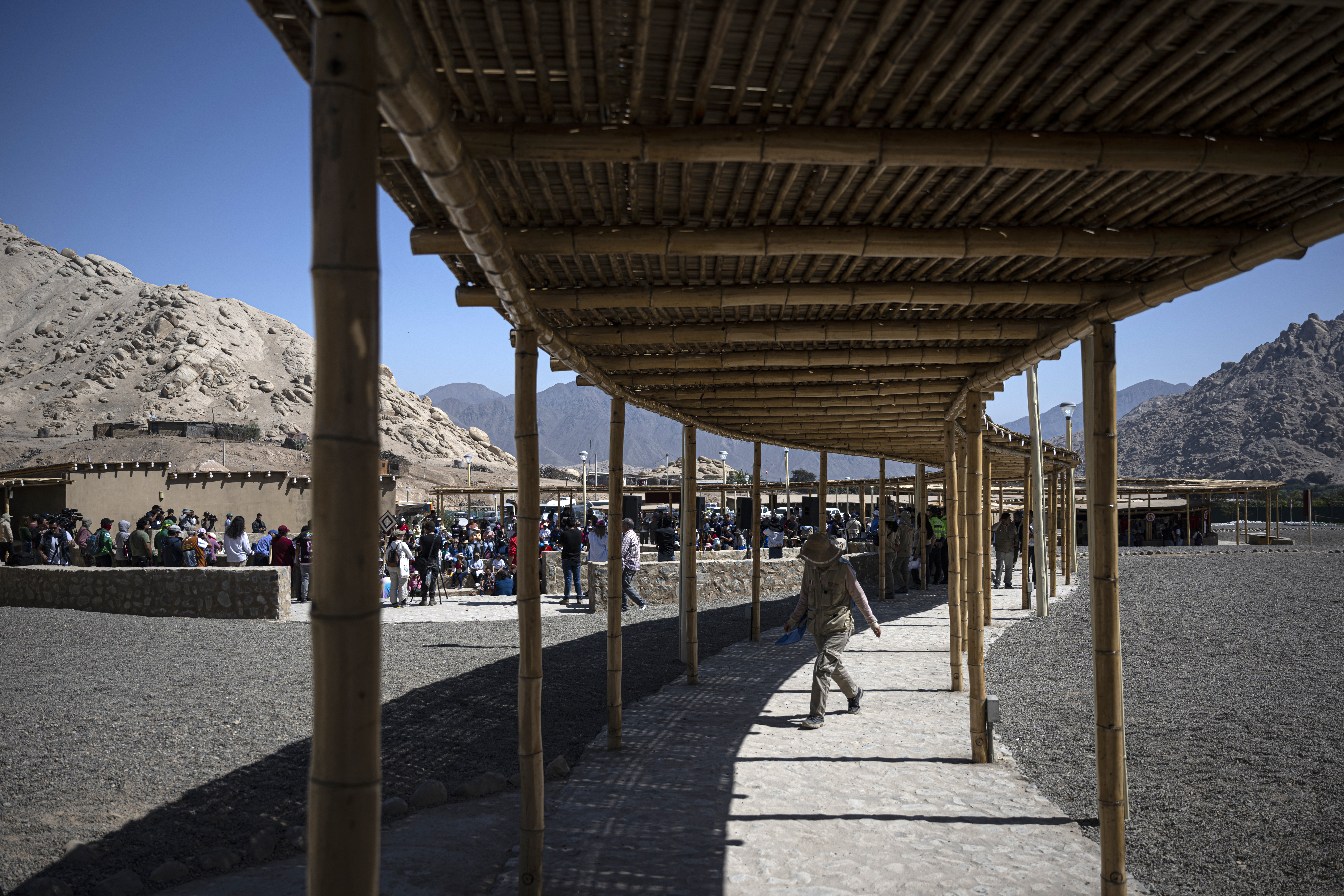
People visit the citadel of Penico. [Ernesto Benavides/AFP]
Peruvian citadel that is nearly 4,000 years old opens doors to tourists
Caral, comprised of 32 monumental structures, is considered a contemporary of civilizations in Egypt, India, Sumeria and China. However, unlike them, it developed in complete isolation, according to researchers. [Zona Arqueologica Caral/AFP]
Peruvian citadel that is nearly 4,000 years old opens doors to tourists
Archaeologist Marco Machacuay, a researcher with the Ministry of Culture, said at a news conference that Penico's importance lies in it being the continuation of the Caral society. After eight years of studies, researchers have identified up to 18 structures in Penico, including ceremonial temples and residential complexes. [Zona Arqueologica Caral/AFP]
Peruvian citadel that is nearly 4,000 years old opens doors to tourists
Ruth Shady, the archaeologist who led the research into Penico, said the newly unveiled city is key because experts believe it emerged after the Caral civilization was devastated by climate change. [Ernesto Benavides/AFP]
Advertisement
Peruvian citadel that is nearly 4,000 years old opens doors to tourists
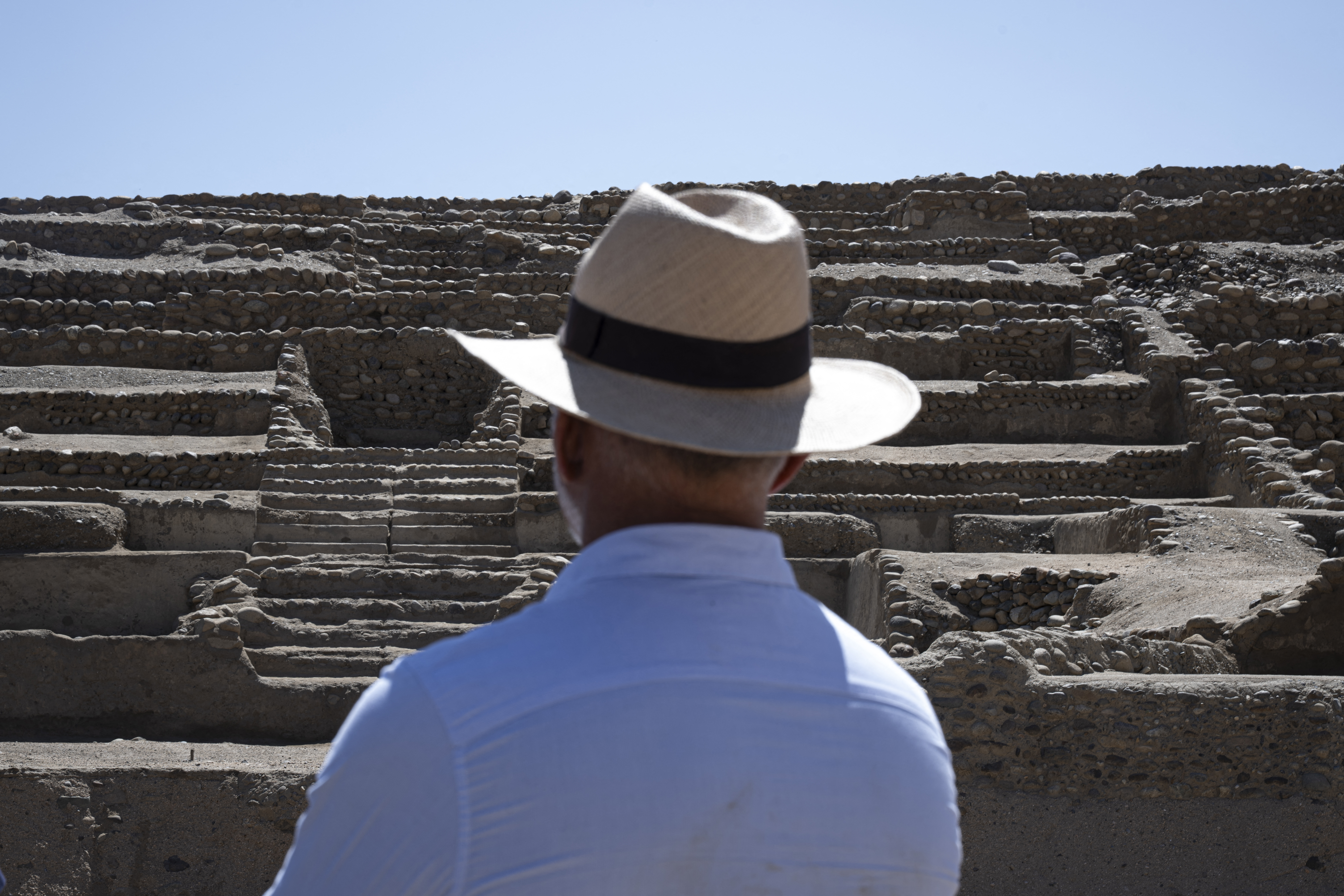
A man watches the citadel of Penico, located in the province of Huaura. [Ernesto Benavides/AFP]
Peruvian citadel that is nearly 4,000 years old opens doors to tourists
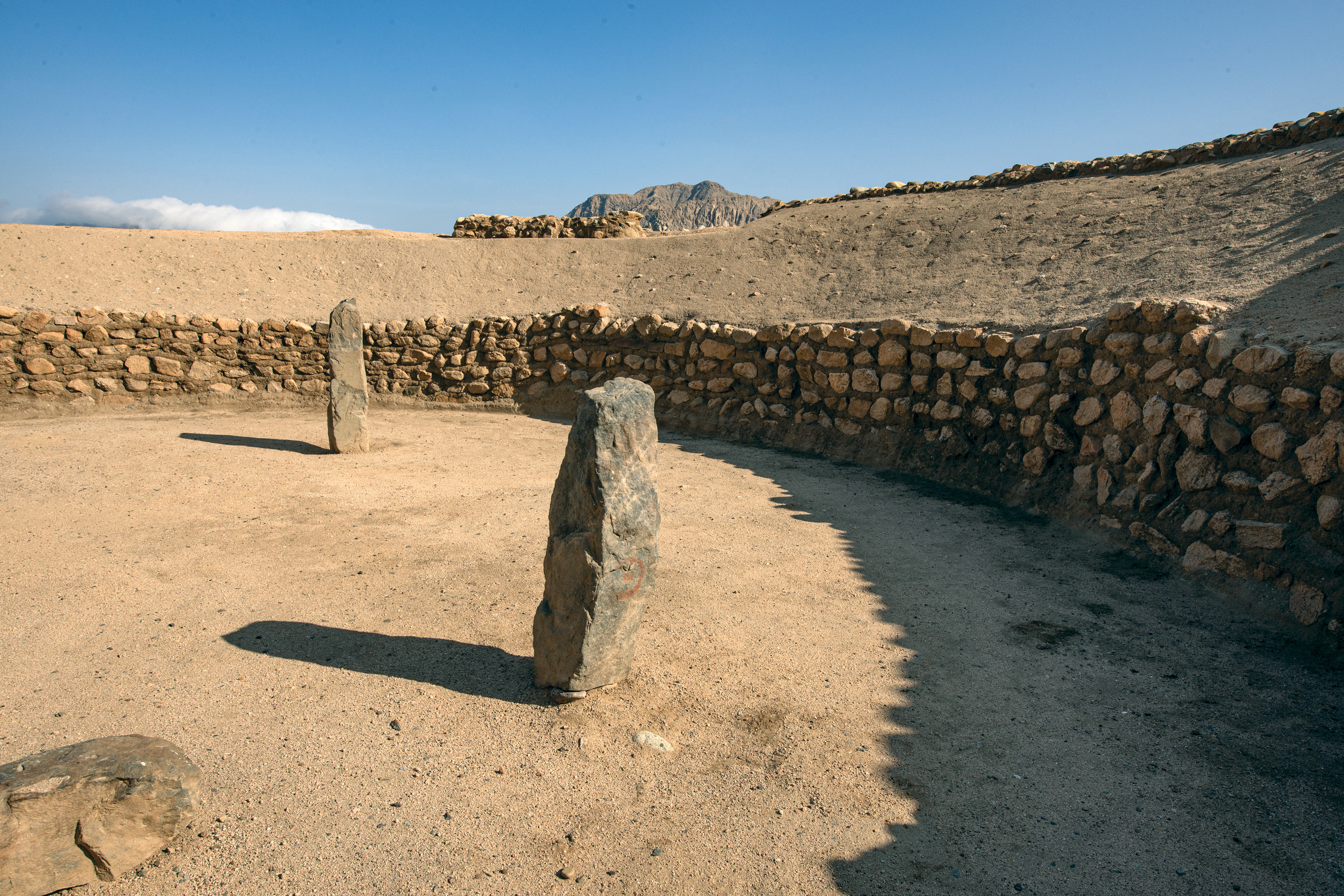
The walls of a central plaza stand out for their sculptural reliefs and depictions of the pututu, a conch shell trumpet whose sound carries over long distances. [Ernesto Benavides/AFP]
Peruvian citadel that is nearly 4,000 years old opens doors to tourists
In other buildings, researchers found clay sculptures of human and animal figures, ceremonial objects and necklaces made from beads and seashells, they added. Peru is a center of ancient cultures and home to archaeological sites such as the Inca ruins of Machu Picchu in Cusco and the mysterious Nazca lines located in the desert region along the country's central coast. [Ernesto Benavides/AFP]


  • About

    • About Us
    • Code of Ethics
    • Terms and Conditions
    • EU/EEA Regulatory Notice
    • Privacy Policy
    • Cookie Policy
    • Cookie Preferences
    • Accessibility Statement
    • Sitemap
    • Work for us
  • Connect

    • Contact Us
    • User Accounts Help
    • Advertise with us
    • Stay Connected
    • Newsletters
    • Channel Finder
    • TV Schedule
    • Podcasts
    • Submit a Tip
    • Paid Partner Content
  • Our Channels

    • Al Jazeera Arabic
    • Al Jazeera English
    • Al Jazeera Investigative Unit
    • Al Jazeera Mubasher
    • Al Jazeera Documentary
    • Al Jazeera Balkans
    • AJ+
  • Our Network

    • Al Jazeera Centre for Studies
    • Al Jazeera Media Institute
    • Learn Arabic
    • Al Jazeera Centre for Public Liberties & Human Rights
    • Al Jazeera Forum
    • Al Jazeera Hotel Partners

Follow Al Jazeera English:

  • facebook
  • twitter
  • youtube
  • instagram-colored-outline
  • rss
Al Jazeera Media Network logo
© 2026 Al Jazeera Media Network

You might also like:

live israeli attacks kill 76 no aid relief yet for... | thailand readies homecoming for stolen ancient sta... | russia ukraine war list of key events day 1185... | german woman arrested after mass stabbing at hambu... | vietnam orders ban on popular messaging app... | need answers will sri lankas tamils find war closu... | live israeli attacks kill 85 in gaza as starvation... | florida court orders ex mexican security chief to ...