Skip linksSkip to Content
play
Live
Navigation menu
  • News
    • Africa
    • Asia
    • US & Canada
    • Latin America
    • Europe
    • Asia Pacific
  • Middle East
  • Explained
  • Opinion
  • Sport
  • Video
    • Features
    • Economy
    • Human Rights
    • Climate Crisis
    • Investigations
    • Interactives
    • In Pictures
    • Science & Technology
    • Podcasts
    • Travel
play
Live
Navigation menu
  • Israel-Palestine conflict
  • How much is US support for Israel costing Trump?
  • What is a Palestinian without olives?
  • Photos: Heavy rains flood Gaza
  • Why are Gaza’s homes collapsing in winter?
  • Bethlehem marks Christmas under shadow of war

In Pictures

Gallery|Israel-Palestine conflict

West Bank family sees no hope of justice in settler killings

A study of settler violence cases between 2005 and 2021 showed 92 percent were dismissed by the Israeli authorities.
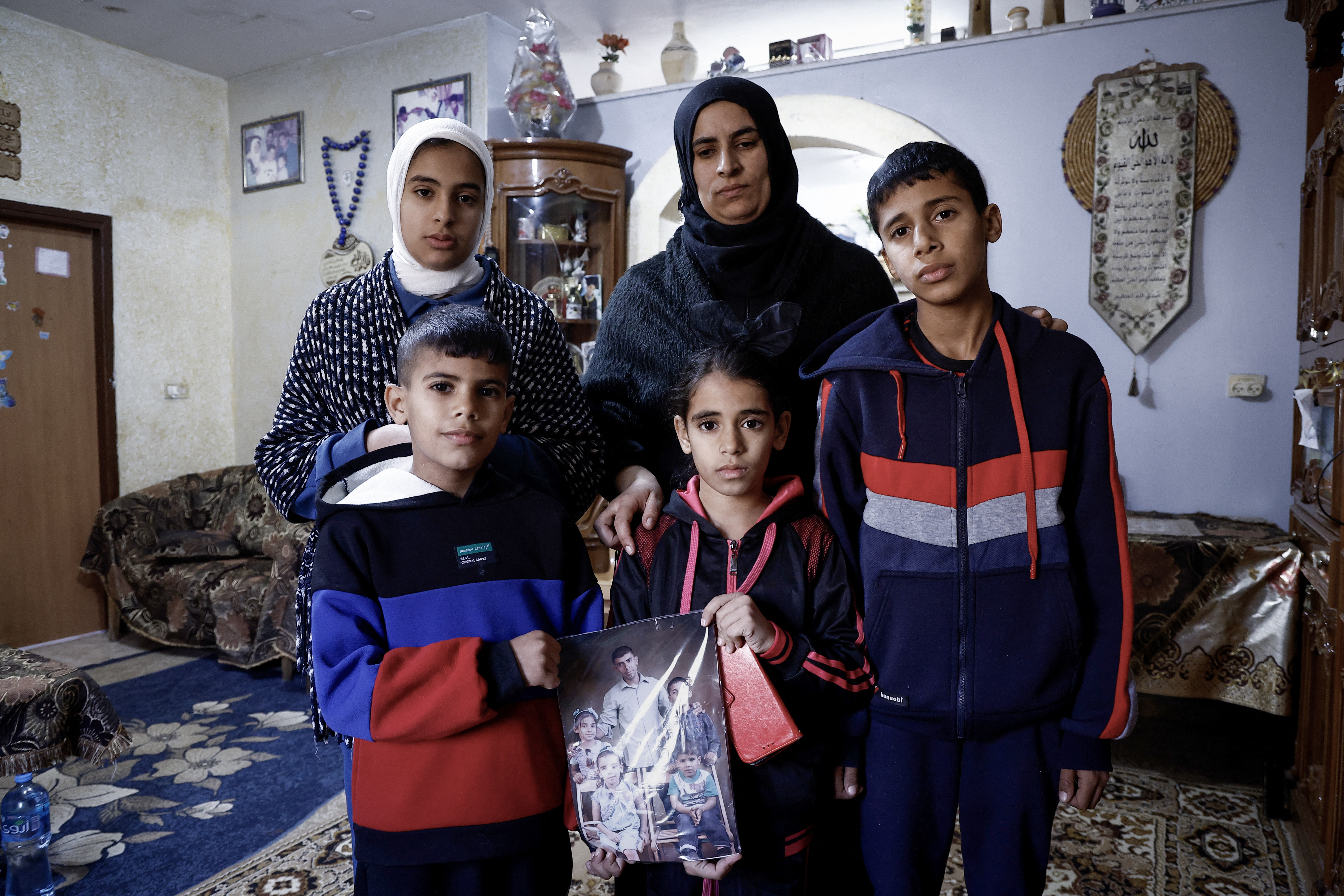
Ikhlas, the widow of Palestinian Bilal Saleh, poses with her children as they hold a picture of their late father at the village of As-Sawiyah, south of Nablus in the occupied West Bank.
Ikhlas, the widow of Bilal Saleh, poses with her children as they hold a picture of their late father at the village of al-Issawiya, south of Nablus in the occupied West Bank. [Kenzo Tribouillard/AFP]
By AFP
Published On 6 Dec 20236 Dec 2023

Share

facebooktwitterwhatsappcopylink

Save

Moussa is eight years old and really likes marbles. But for the past month, this Palestinian boy, living in the occupied West Bank, has a new game: “Pretend daddy isn’t dead.”

He calls his dad, imagines what he did with his day, and acts like he is suddenly going to run into him.

But his father, Bilal Saleh, was killed on October 28.

The 40-year-old was shot in the chest while picking olives with his family near his home in the village of al-Issawiya.

Saleh is one of more than 250 Palestinians killed by Israeli soldiers and settlers in the West Bank, according to a Palestinian government tally, since Hamas’s attack on October 7 sparked a new war with Israel.

“He was a simple man, attached to his land,” says his widow, Ikhlas, showing images on her phone of Saleh in the fields, reciting the Quran with Moussa and at a wedding.

She struggles to even look at them, let alone tell the story of what happened.

The children pressed around her to fill in the details.

Videos from the scene show four men wearing the knitted yarmulkes that are popular among Israeli settlers, shouting towards the family as they are harvesting.

One is armed with an automatic rifle.

The family flees, but Saleh has forgotten his phone and runs back to fetch it.

A few minutes later, a gunshot rings out.

The family rushes back to find Saleh bleeding from the chest.

He was taken to a hospital about 10km (6 miles) away but declared dead soon after.

The family says Ikhlas’s brother and father saw on social media that a man had been arrested for the shooting but released a few hours later.

Advertisement

The police and COGAT, an Israeli defence ministry body overseeing civilian activities in the Palestinian territories, did not respond to multiple requests for comment.
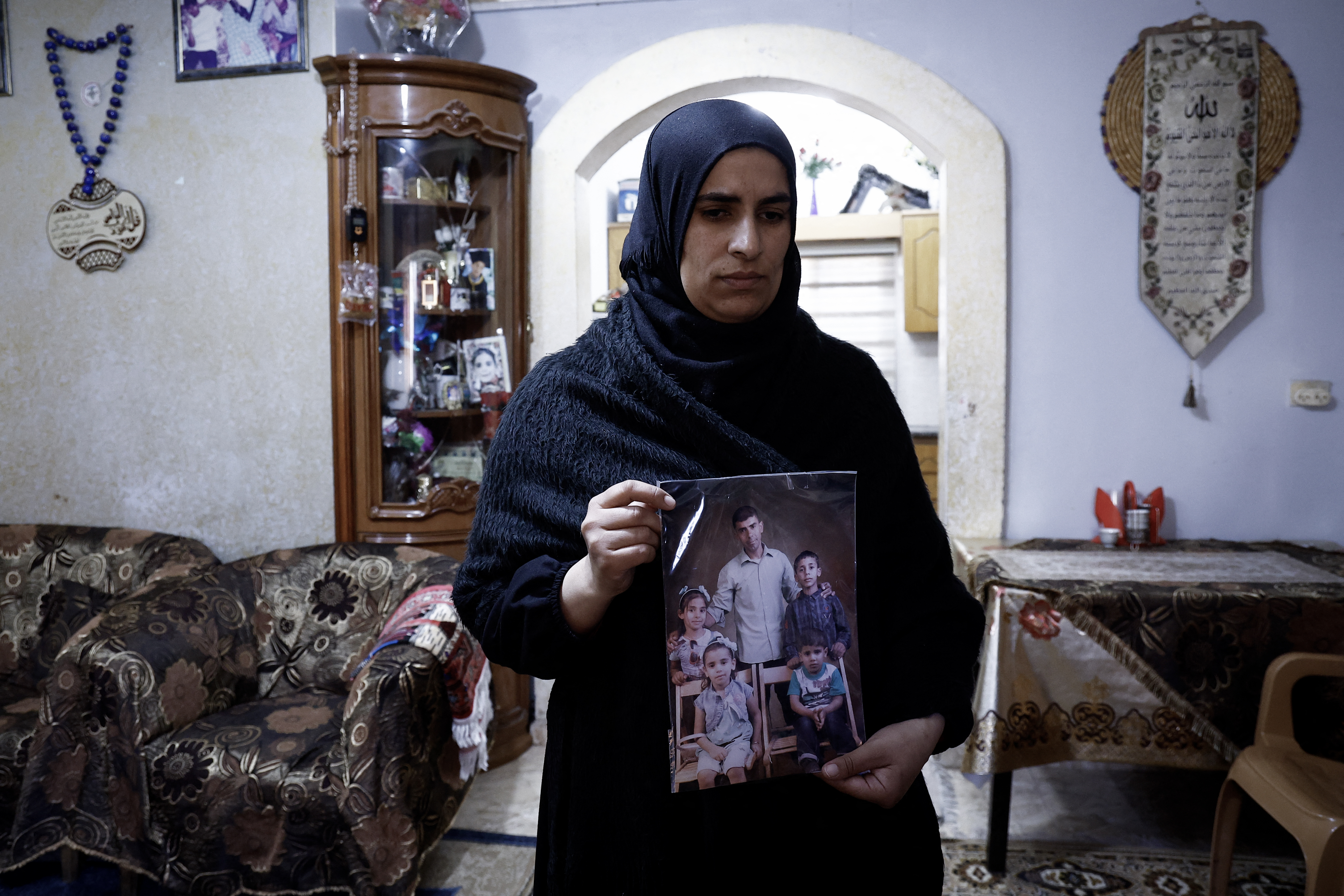
The wife of Palestinian Bilal Saleh shows a picture her late husband at the village of As-Sawiyah, south of Nablus in the occupied West Bank.
A few days after her husband was killed, Ikhlas was called to a police station in Ariel, a neighbouring Israeli settlement, where police asked her to explain what she saw. [Kenzo Tribouillard/AFP]
Advertisement
Ikhlas, the widow of Palestinian Bilal Saleh, sits with her children in the village of As-Sawiyah, south of Nablus in the occupied West Bank.
'At the entrance, while a guard was checking my identity papers, a settler drove by. He saw that I was veiled and he rolled down his window to spit on me,' she said. 'After that, I don't see what kind of justice they could give us,' she added. [Kenzo Tribouillard/AFP]
The wife of Bilal Saleh shows a picture her late husband at the village of As-Sawiyah, south of Nablus in the occupied West Bank.
Israeli human rights group Yesh Din convinced her to file a complaint, though it says a study of settler violence cases between 2005 and 2021 showed 92 percent were dismissed by the Israeli authorities. [Kenzo Tribouillard/AFP]
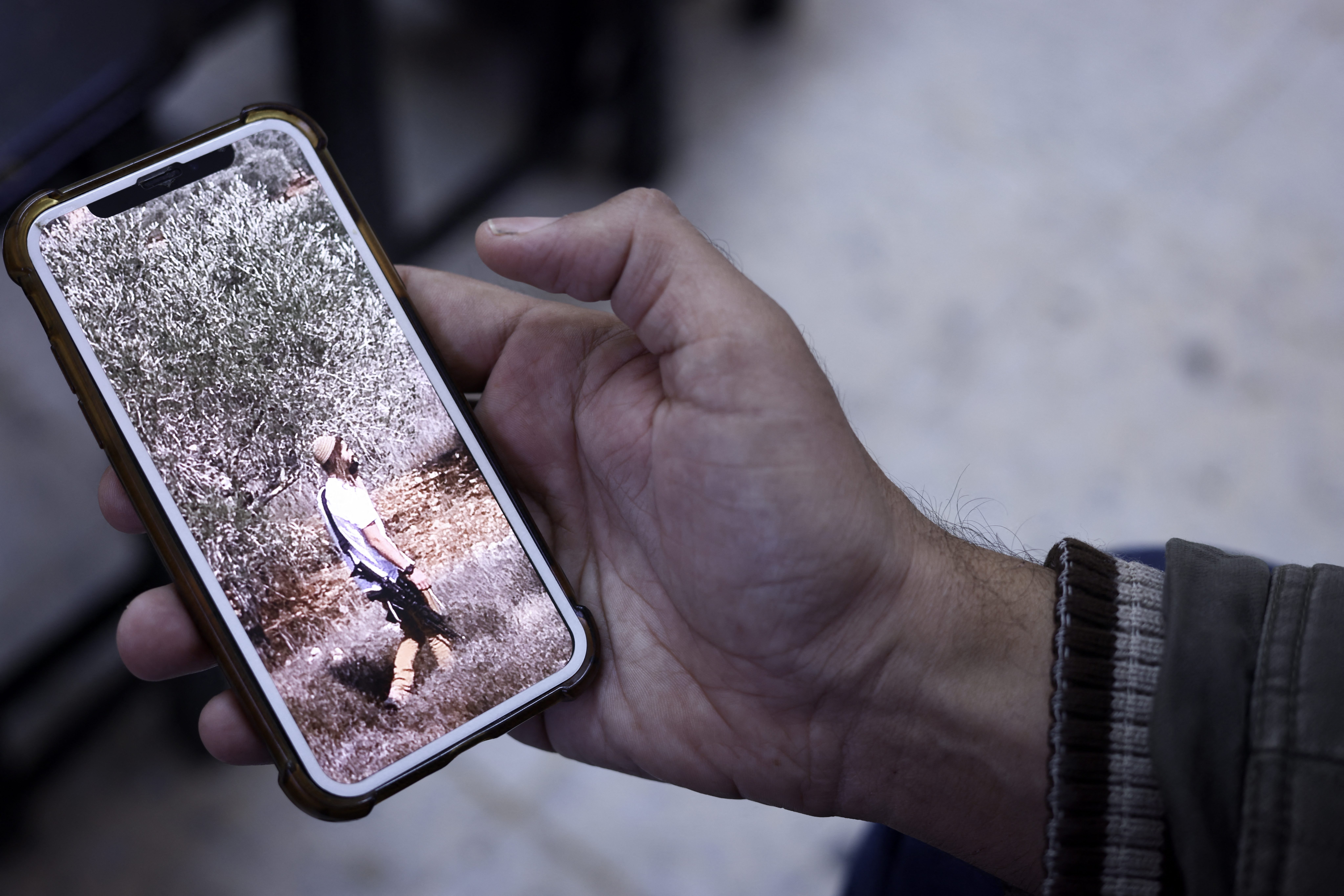
A relative of late Palestinian Bilal Saleh, shows a picture of an armed Israeli settler, at the village of As-Sawiyah, south of Nablus in the occupied West Bank.
A relative of the late Bilal Saleh shows a picture of an armed Israeli settler in the village of al-Issawiya. Israel has relaxed laws on access to weapons, promising to arm Israeli civilians in at least 1,000 localities, including settlements in the occupied West Bank. [Kenzo Tribouillard/AFP]
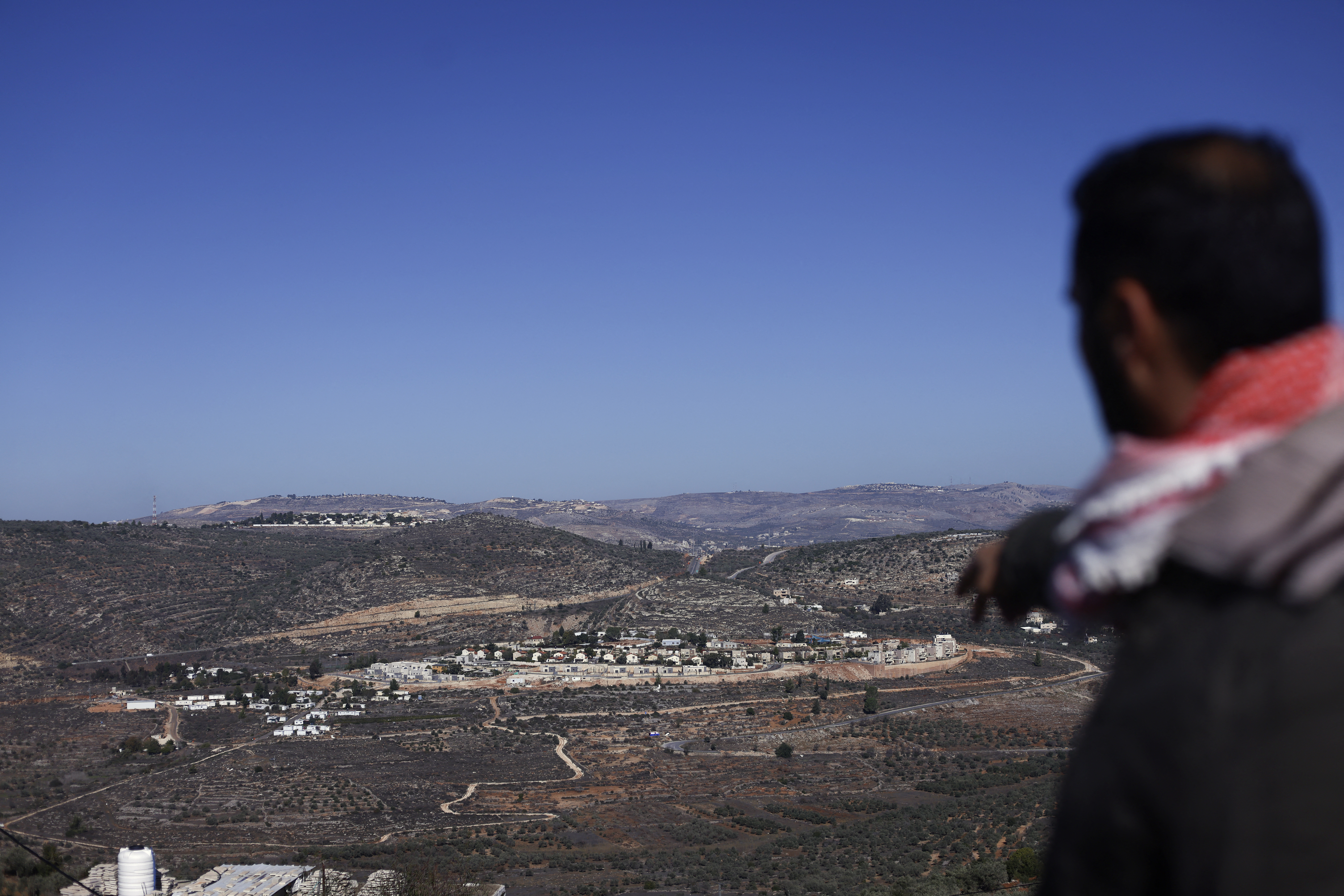
A relative of Palestinian Bilal Saleh points at an Israeli settlement near the village of As-Sawiyah, south of Nablus in the occupied West Bank.
A relative of Bilal Saleh points at an Israeli settlement near the village of al-Issawiya, south of Nablus in the occupied West Bank. Nearly three million Palestinians live in the West Bank, which has been occupied by Israel since 1967. Nearly half a million Israelis also live there in settlements considered illegal by the United Nations. [Kenzo Tribouillard/AFP]
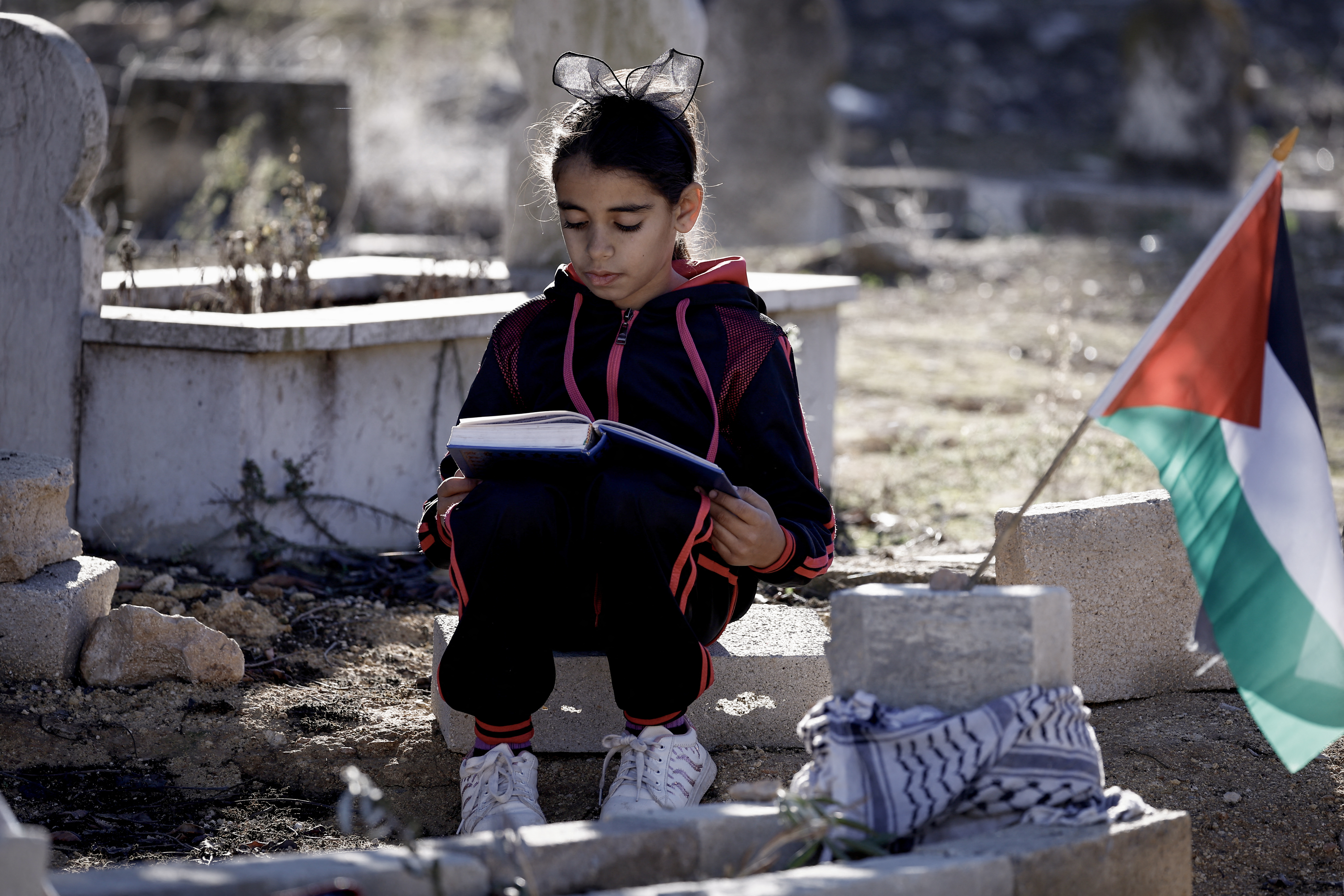
The daughter of Palestinian Bilal Saleh prays near the grave of her late father, at a cemetary in the village of As-Sawiyah, south of Nablus in the occupied West Bank.
The daughter of Bilal Saleh prays near the grave of her late father at a cemetery in the village of al-Issawiya. [Kenzo Tribouillard/AFP]
Advertisement
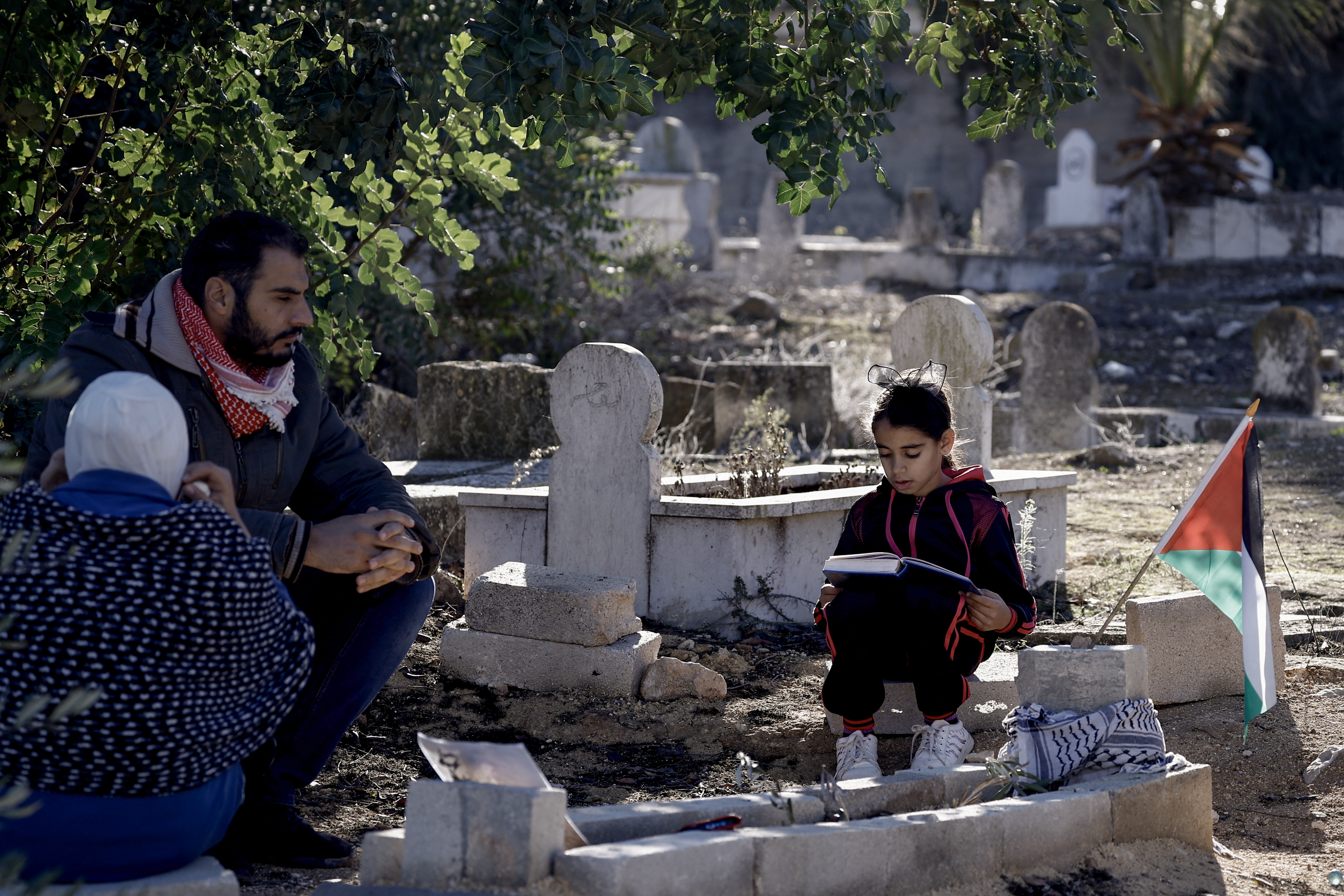
Relatives of late Palestinian Bilal Saleh pray at his grave in a cemetary in the village of As-Sawiyah, south of Nablus in the occupied West Bank.
'For the past 10 years, it has been getting more and more serious,' said Hazem Saleh, Bilal's brother-in-law. 'We are being attacked, our land is being taken from us, settlements are being built. They have the power, they can do what they want.' [Kenzo Tribouillard/AFP]
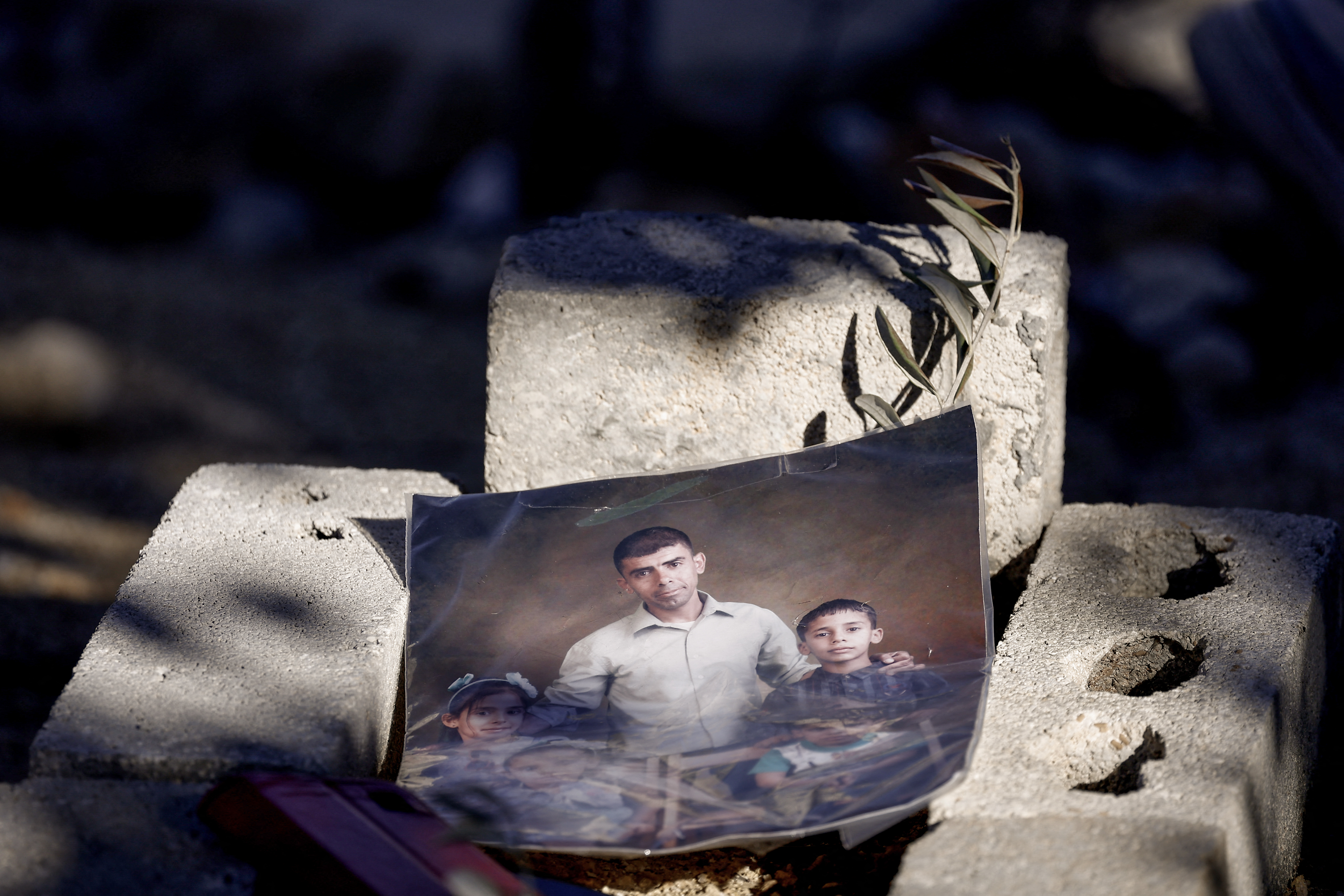
A photograph of Bilal Saleh sits a his grave in a cemetary in the village of As-Sawiyah, south of Nablus in the occupied West Bank.
But it has been 'even worse', he continued, since the Israeli-Hamas war erupted on October 7. [Kenzo Tribouillard/AFP]
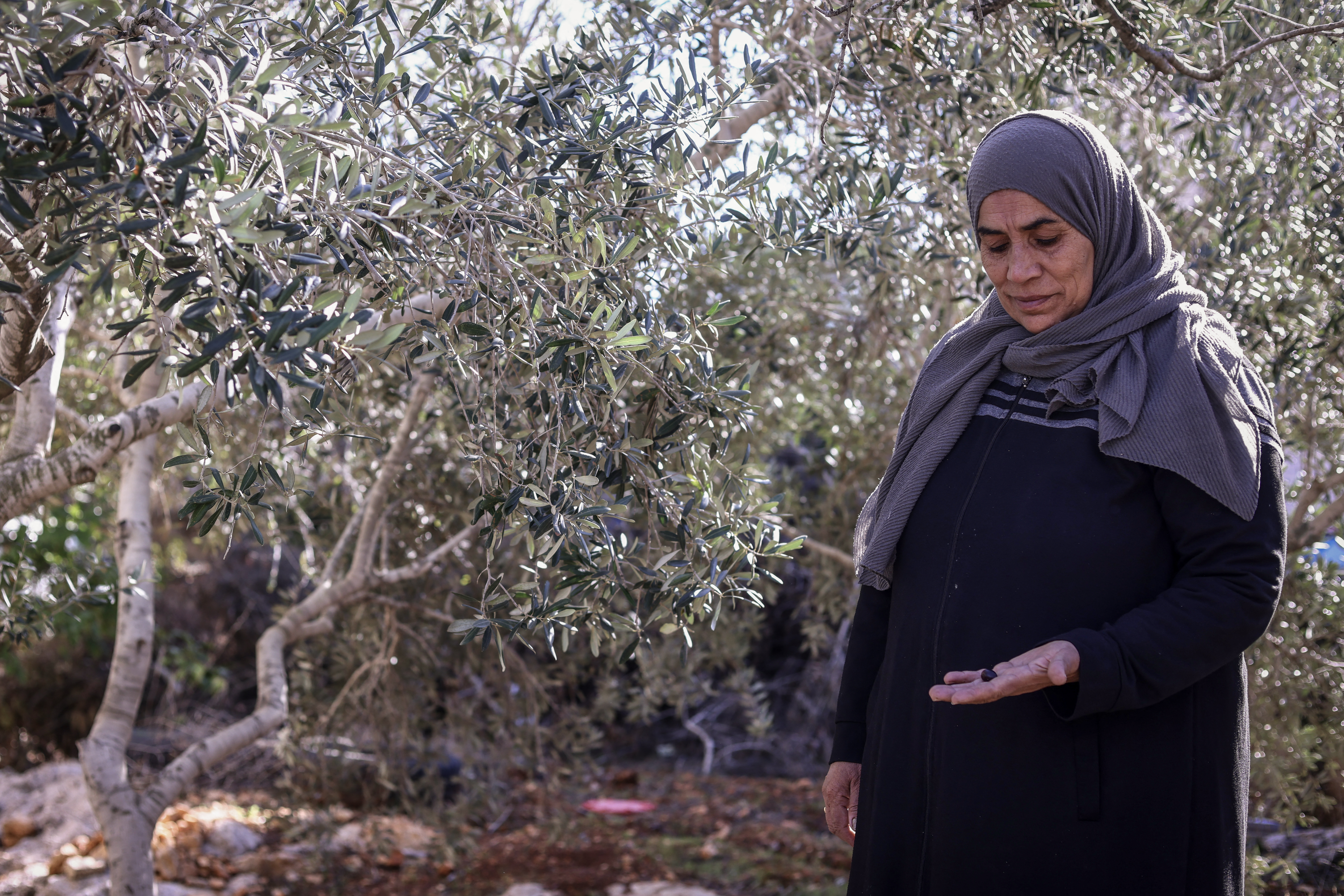
A relative of Palestinian Bilal Saleh, stands near olive trees in the village of As-Sawiyah, south of Nablus in the occupied West Bank.
Mouna Saleh, 56, Bilal's mother-in-law, fears for the children, especially Moussa and Mayce 'who are so small ... what can we explain to them?' she said. 'How can you kill a man in a few seconds in front of children? What is this world?'


  • About

    • About Us
    • Code of Ethics
    • Terms and Conditions
    • EU/EEA Regulatory Notice
    • Privacy Policy
    • Cookie Policy
    • Cookie Preferences
    • Accessibility Statement
    • Sitemap
    • Work for us
  • Connect

    • Contact Us
    • User Accounts Help
    • Advertise with us
    • Stay Connected
    • Newsletters
    • Channel Finder
    • TV Schedule
    • Podcasts
    • Submit a Tip
    • Paid Partner Content
  • Our Channels

    • Al Jazeera Arabic
    • Al Jazeera English
    • Al Jazeera Investigative Unit
    • Al Jazeera Mubasher
    • Al Jazeera Documentary
    • Al Jazeera Balkans
    • AJ+
  • Our Network

    • Al Jazeera Centre for Studies
    • Al Jazeera Media Institute
    • Learn Arabic
    • Al Jazeera Centre for Public Liberties & Human Rights
    • Al Jazeera Forum
    • Al Jazeera Hotel Partners

Follow Al Jazeera English:

  • facebook
  • twitter
  • youtube
  • instagram-colored-outline
  • rss
Al Jazeera Media Network logo
© 2026 Al Jazeera Media Network

You might also like:

live israeli attacks kill 76 no aid relief yet for... | thailand readies homecoming for stolen ancient sta... | russia ukraine war list of key events day 1185... | german woman arrested after mass stabbing at hambu... | vietnam orders ban on popular messaging app... | need answers will sri lankas tamils find war closu... | live israeli attacks kill 85 in gaza as starvation... | florida court orders ex mexican security chief to ...