Skip linksSkip to Content
play
Live
Navigation menu
  • News
    • Africa
    • Asia
    • US & Canada
    • Latin America
    • Europe
    • Asia Pacific
  • Middle East
  • Explained
  • Opinion
  • Sport
  • Video
    • Features
    • Economy
    • Human Rights
    • Climate Crisis
    • Investigations
    • Interactives
    • In Pictures
    • Science & Technology
    • Podcasts
    • Travel
play
Live

In Pictures

Gallery|Environment

‘Out of control’ fires endanger wildlife in Brazil’s Pantanal wetlands

The area famed as a paradise of biodiversity sees 2,387 fires in the first 13 days of November alone.
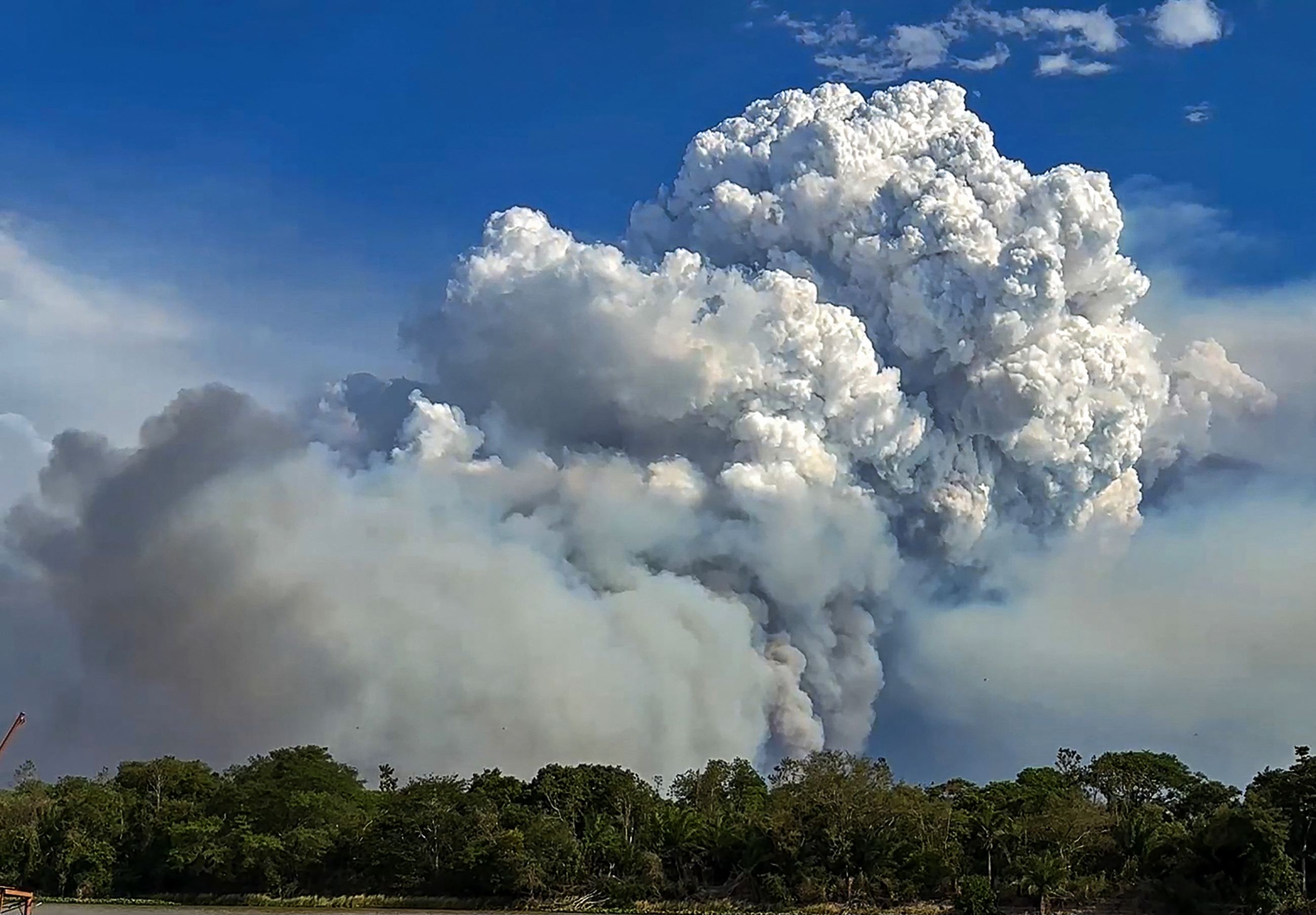
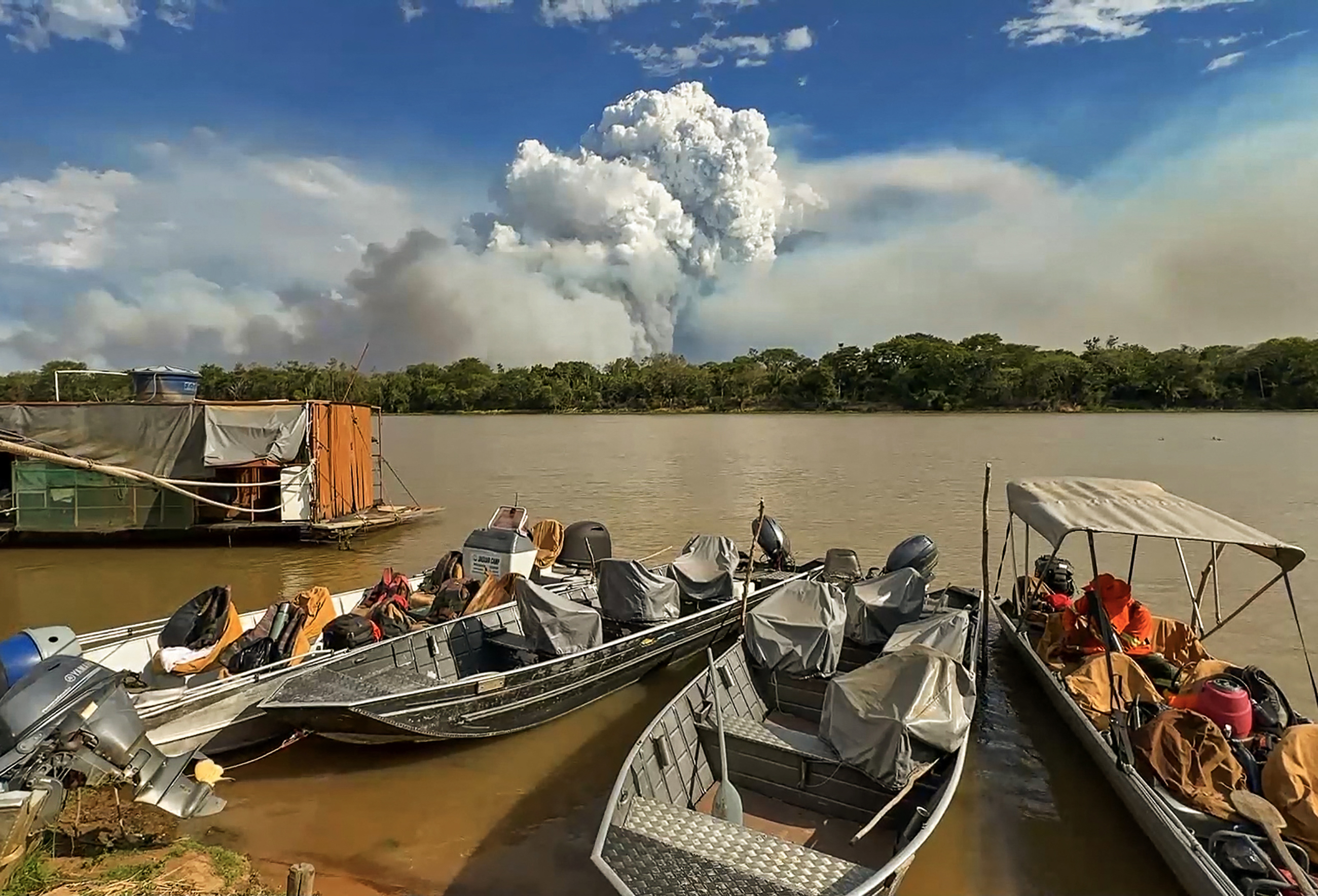
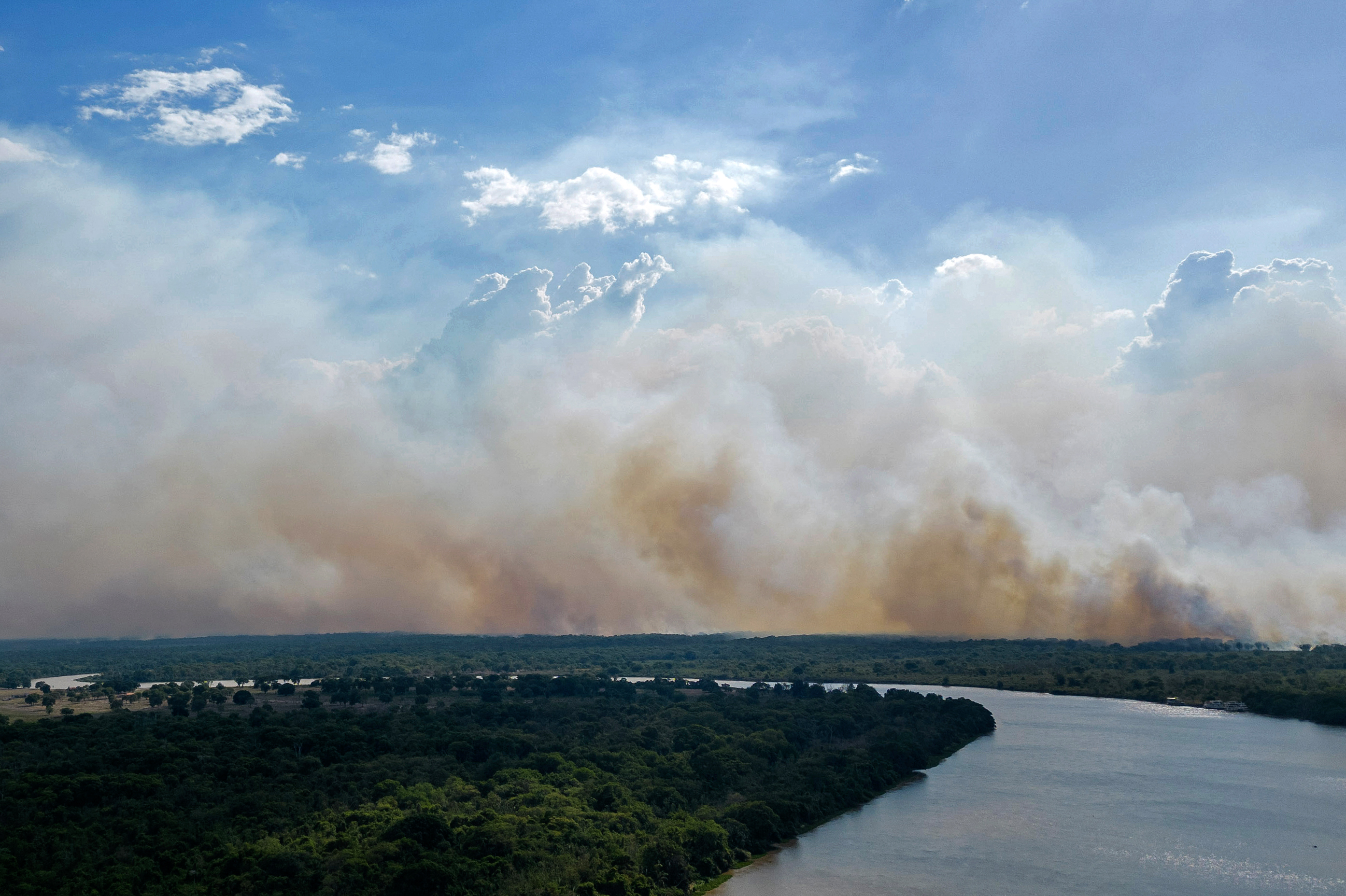
Clouds of smoke billow from forest fires in the Pantanal wetland in Porto Jofre, Mato Grosso State, Brazil.
Clouds of smoke billow from forest fires in the Pantanal wetland in Porto Jofre, Mato Grosso state, Brazil. [Rogerio Florentino/AFP]
By AFP
Published On 20 Nov 202320 Nov 2023

Share

facebooktwitterwhatsappcopylink

Save

The Pantanal wetlands in western Brazil – famed as a paradise of biodiversity – have enormous clouds of smoke billowing over them since the beginning of November as raging wildfires are reducing vast expanses to scorched earth.

Known for its lush landscapes and vibrant wildlife, including jaguars, caimans, macaws and monkeys, the Pantanal is home to the world’s biggest tropical wetlands and, in normal times, a thriving eco-tourism industry.

But in recent weeks, it has been ravaged by fires that are threatening its iconic wildlife as Brazil suffers through a Southern Hemisphere spring of droughts and record heat.

There were 2,387 fires in the Pantanal in the first 13 days of November, an increase of more than 1,000 percent from the entire month of November last year, according to satellite monitoring by Brazilian space research agency INPE.

“The situation is completely out of control. And between the heatwave and the wind, it’s only going to get worse,” says biologist Gustavo Figueiroa, 31, head of the environmental group SOS Pantanal.

“The Pantanal is a region that’s used to fires. Normally, it regenerates naturally. But this many fires isn’t normal.”

It has been hit hard by drought this year, with normally flooded areas reduced to shrivelled ponds.

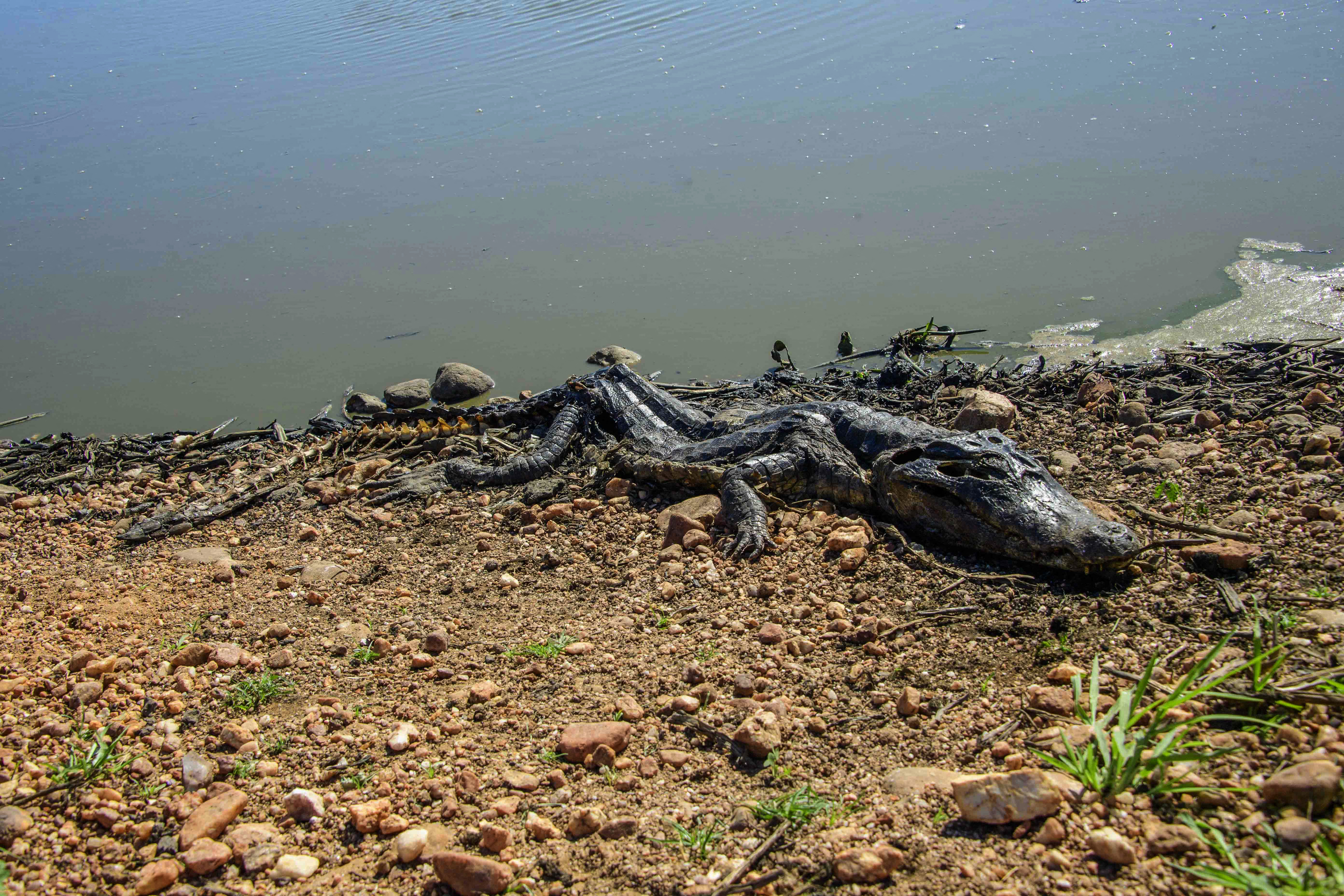
At one such spot along the dirt highway across the region, the 150km (93-mile) Transpantaneira, a small group of caimans can be seen trying to swim in the shallow water.

Nearby, the corpse of another sits rotting on the bank.

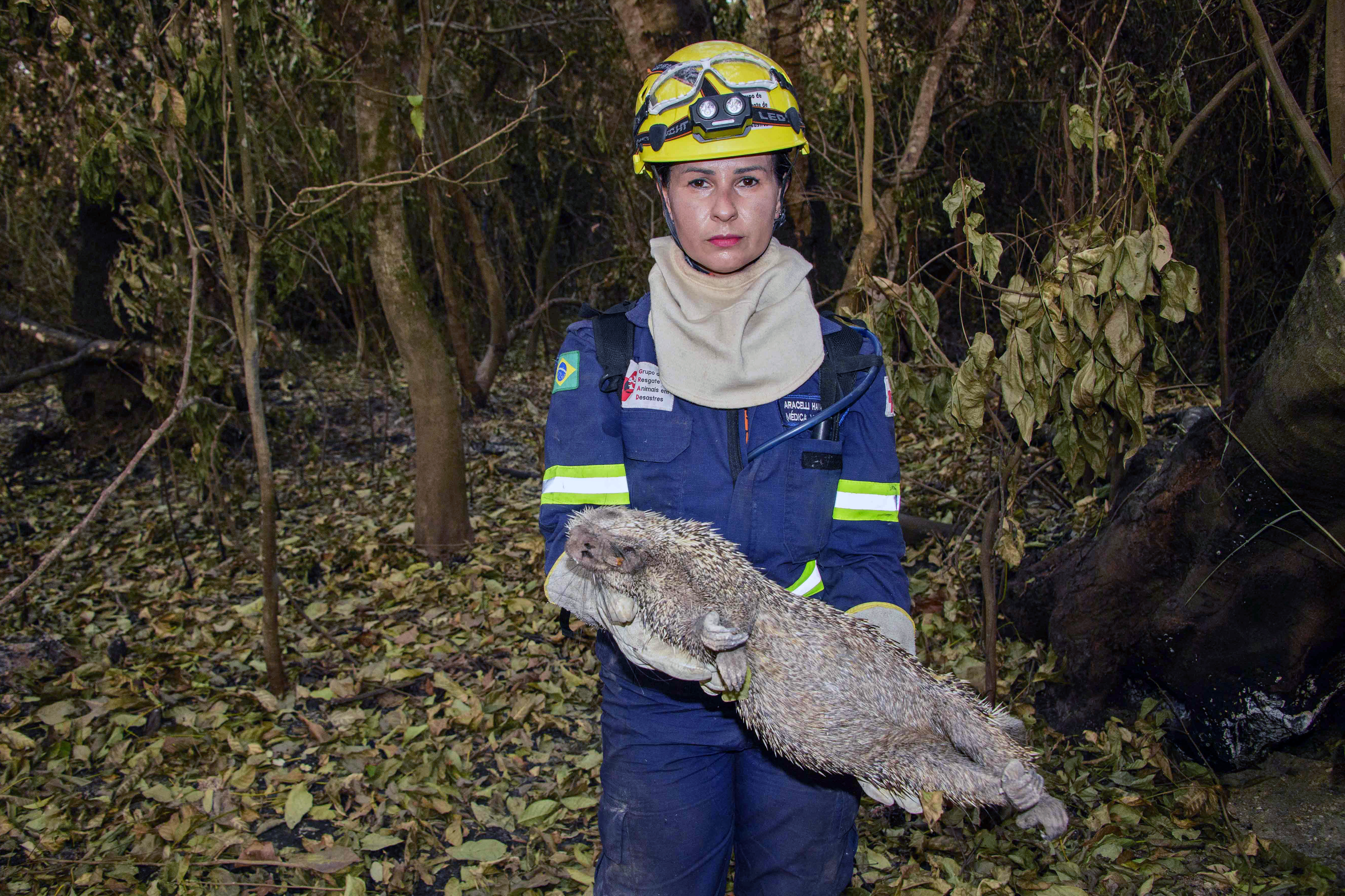
Elsewhere, a dead porcupine lays on a carpet of ash in the charred remains of what was once a forest.

Advertisement

“It probably died of smoke inhalation,” says veterinarian Aracelli Hammann, who is volunteering with a wildlife rescue group.

They made the grim find in the Encontro das Aguas park, home to the world’s largest jaguar population.

Nearly one-third of the park has been hit by fires in the past month, according to environmental group ICV.
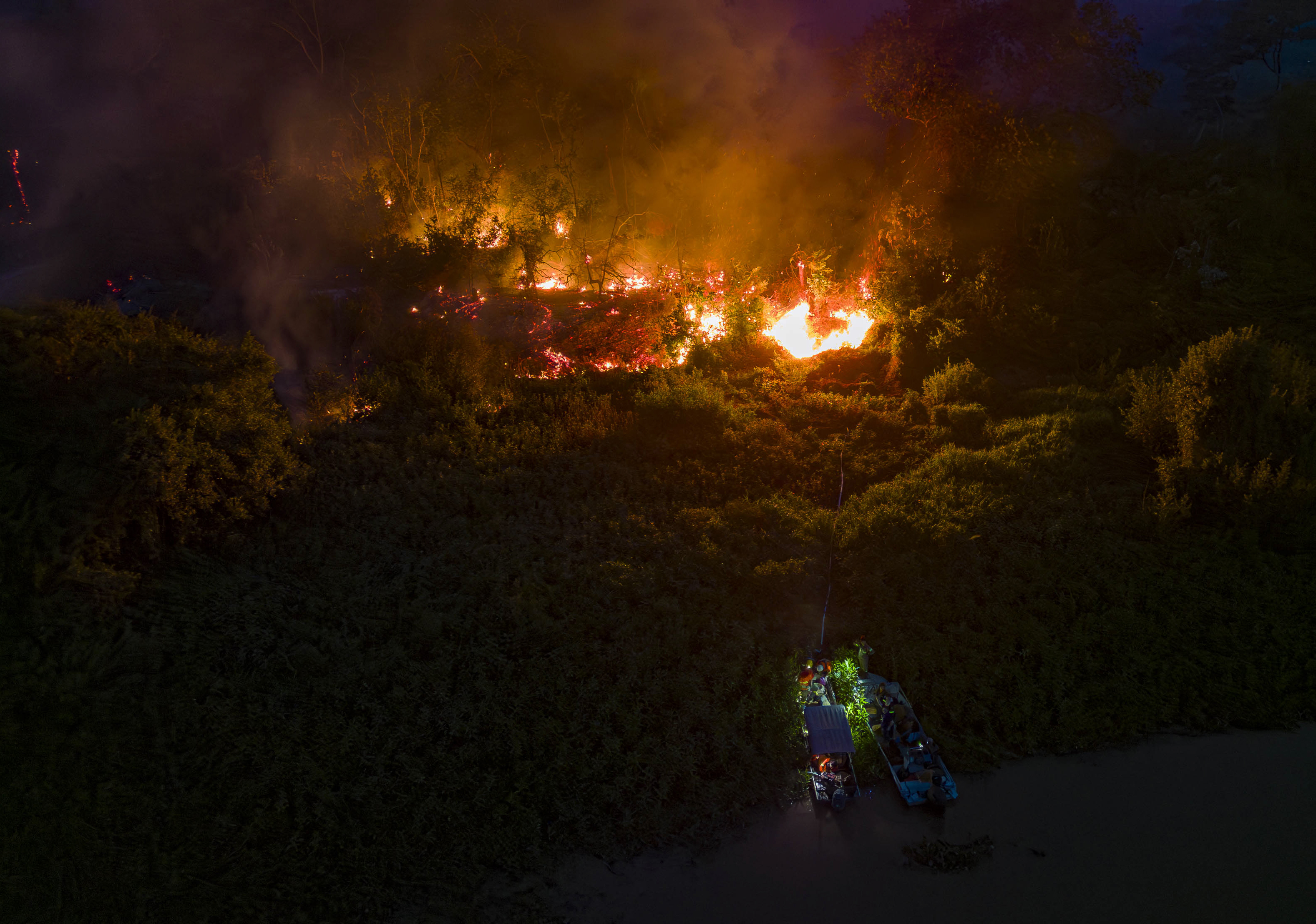
Aerial view showing a forest fire raging at the Encontro das Aguas Park by the Sao Lourenco River in the Pantanal wetland, near Pocone, Mato Grosso State, Brazil.
According to the specialists, the recent fires are primarily caused by human action, in particular the use of slash-and-burn techniques for agricultural expansion, and the situation at the end of the year has been exacerbated by an exceptional drought. [Rogerio Florentino/AFP]
Advertisement
Aerial view showing smoke billowing from forest fires in the Pantanal wetland in Porto Jofre, Mato Grosso State, Brazil.
The Pantanal sits at the southern edge of the Amazon rainforest, stretching from Brazil into Bolivia and Paraguay across more than 170,000 square kilometres (66,000 square miles) of land. [Rogerio Florentino/AFP]
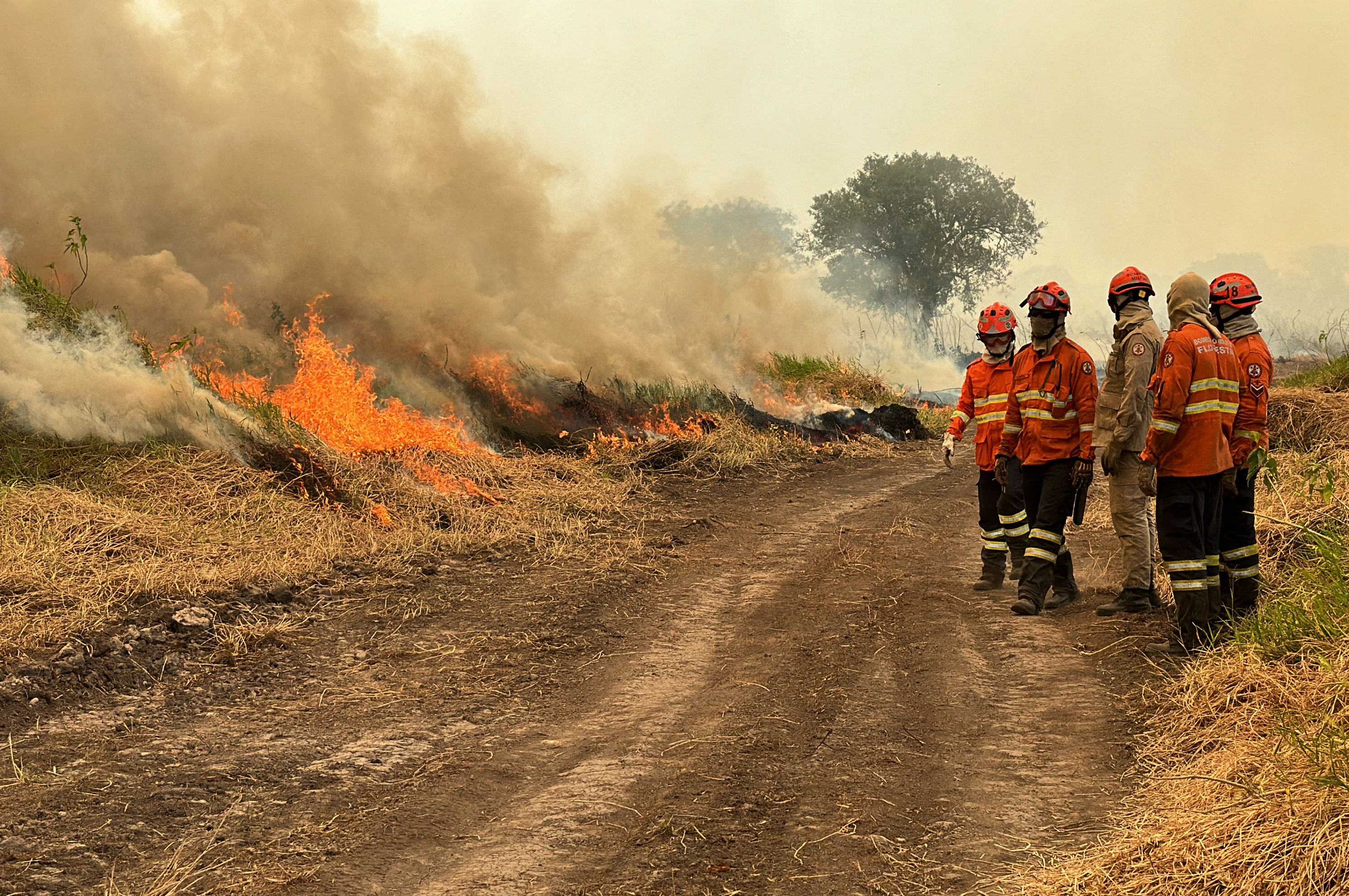
A firefighter extinguishes a fire in the Pantanal wetland in Porto Jofre, Mato Grosso State, Brazil.
The other main front that firefighters are battling is in the Pantanal National Park to the southwest, where fires have burned 24 percent of the surface area. [Rogerio Florentino/AFP]
Firefighters tackle forest fires in the Pantanal wetland near Porto Jofre, Mato Grosso State, Brazil.
Biologist Gustavo Figueiroa warns the two fire fronts 'are about to merge'. Firefighters face huge logistical battles given that many hard-hit areas are only reachable by boat. [Rogerio Florentino/AFP]
Veterinarian Aracelli Hammann, member of the Group for Animal Rescue in Disasters (GRAD), holds a Brazilian porcupine (Coendou prehensilis) killed by forest fires in the Pantanal wetland in Porto Jofre, Mato Grosso State, Brazil.
Veterinarian Aracelli Hammann, member of the Group for Animal Rescue in Disasters (GRAD), holds a Brazilian porcupine (Coendou prehensilis) killed by forest fires in the Pantanal wetland. [Rogerio Florentino/AFP]
A dead crocodile is seen as forest fires rage in the Pantanal wetland in Porto Jofre, Mato Grosso State, Brazil.
Experts say when animals survive the flames, they risk starvation. 'We've seen a range of dead animals, including insects, reptiles, amphibians, small mammals, which are unable to flee,' says Figueiroa. [Rogerio Florentino/AFP]
Advertisement
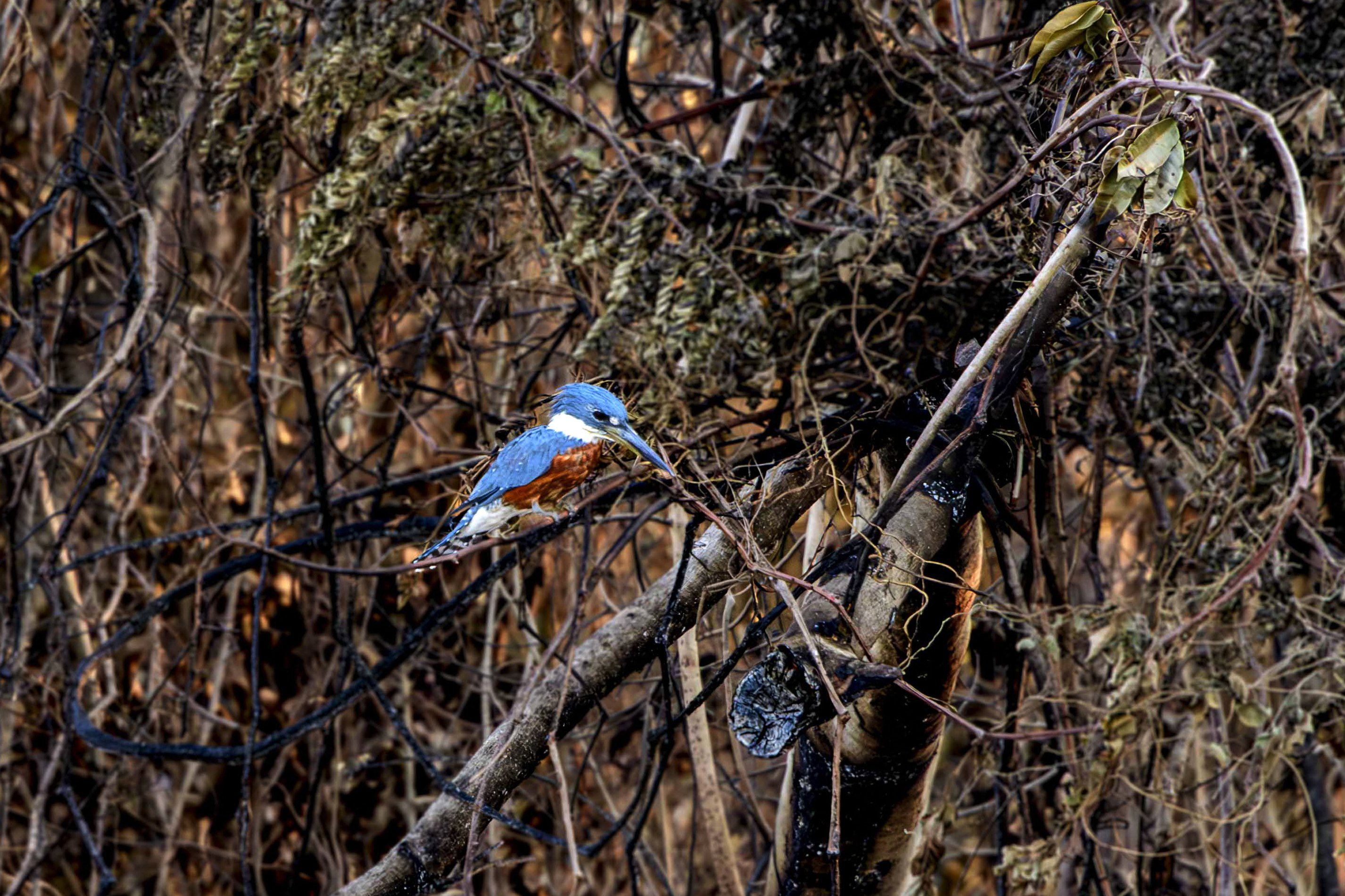
A kingfisher sits on a tree burnt by a forest fire in the Pantanal wetland in Porto Jofre, Mato Grosso State, Brazil.
'They're part of an invisible food chain, and each death has a domino effect, reaching all the way up to the apex predator, the jaguar,' says Figueiroa. [Rogerio Florentino/AFP]
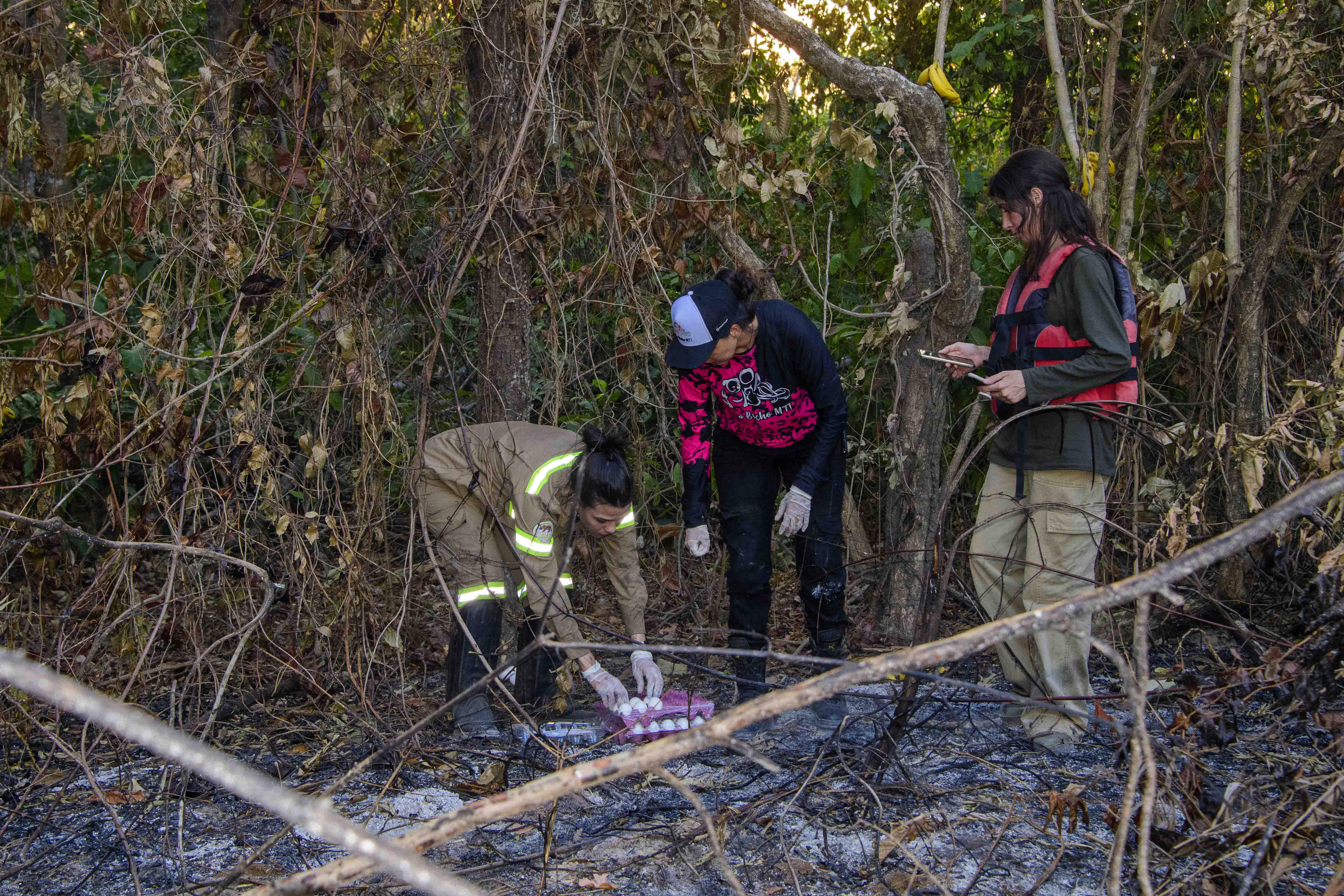
Members of the Group for Animal Rescue in Disasters (GRAD), place eggs as food for animals affected by forest fires in the Pantanal wetland in Porto Jofre, Mato Grosso State, Brazil.
Members of the Group for Animal Rescue in Disasters (GRAD), place eggs as food for animals affected by forest fires in the Pantanal wetland. [Rogerio Florentino/AFP]
The scene of forest fires in the Pantanal wetland in Porto Jofre, Mato Grosso State, Brazil.
'We call it grey hunger - when fire reduces all the vegetation to ashes and there are no natural food sources left in the area for animals that survive the flames,' says Jennifer Larreia, 33, head of animal rescue group E o Bicho. [Rogerio Florentino/AFP]
Clouds of smoke billow from forest fires in the Pantanal wetland in Porto Jofre, Mato Grosso State, Brazil.
In 2020, when wildfires also devastated the region, animal rescue group E o Bicho provided 300 tonnes of fruit for animals in five months. [Rogerio Florentino/AFP]


  • About

    • About Us
    • Code of Ethics
    • Terms and Conditions
    • EU/EEA Regulatory Notice
    • Privacy Policy
    • Cookie Policy
    • Cookie Preferences
    • Accessibility Statement
    • Sitemap
    • Work for us
  • Connect

    • Contact Us
    • User Accounts Help
    • Advertise with us
    • Stay Connected
    • Newsletters
    • Channel Finder
    • TV Schedule
    • Podcasts
    • Submit a Tip
    • Paid Partner Content
  • Our Channels

    • Al Jazeera Arabic
    • Al Jazeera English
    • Al Jazeera Investigative Unit
    • Al Jazeera Mubasher
    • Al Jazeera Documentary
    • Al Jazeera Balkans
    • AJ+
  • Our Network

    • Al Jazeera Centre for Studies
    • Al Jazeera Media Institute
    • Learn Arabic
    • Al Jazeera Centre for Public Liberties & Human Rights
    • Al Jazeera Forum
    • Al Jazeera Hotel Partners

Follow Al Jazeera English:

  • facebook
  • twitter
  • youtube
  • instagram-colored-outline
  • rss
Al Jazeera Media Network logo
© 2026 Al Jazeera Media Network

You might also like:

live israeli attacks kill 76 no aid relief yet for... | thailand readies homecoming for stolen ancient sta... | russia ukraine war list of key events day 1185... | german woman arrested after mass stabbing at hambu... | vietnam orders ban on popular messaging app... | need answers will sri lankas tamils find war closu... | live israeli attacks kill 85 in gaza as starvation... | florida court orders ex mexican security chief to ...