Skip linksSkip to Content
play
Live
Navigation menu
  • News
    • Africa
    • Asia
    • US & Canada
    • Latin America
    • Europe
    • Asia Pacific
  • Middle East
  • Explained
  • Opinion
  • Sport
  • Video
    • Features
    • Economy
    • Human Rights
    • Climate Crisis
    • Investigations
    • Interactives
    • In Pictures
    • Science & Technology
    • Podcasts
    • Travel
play
Live

In Pictures

Gallery|Arts and Culture

Egypt’s papyrus makers keep tradition alive despite tourism slump

Al-Qaramus village, about 80km (50 miles) northeast of Cairo, is Egypt’s largest hub of papyrus production.
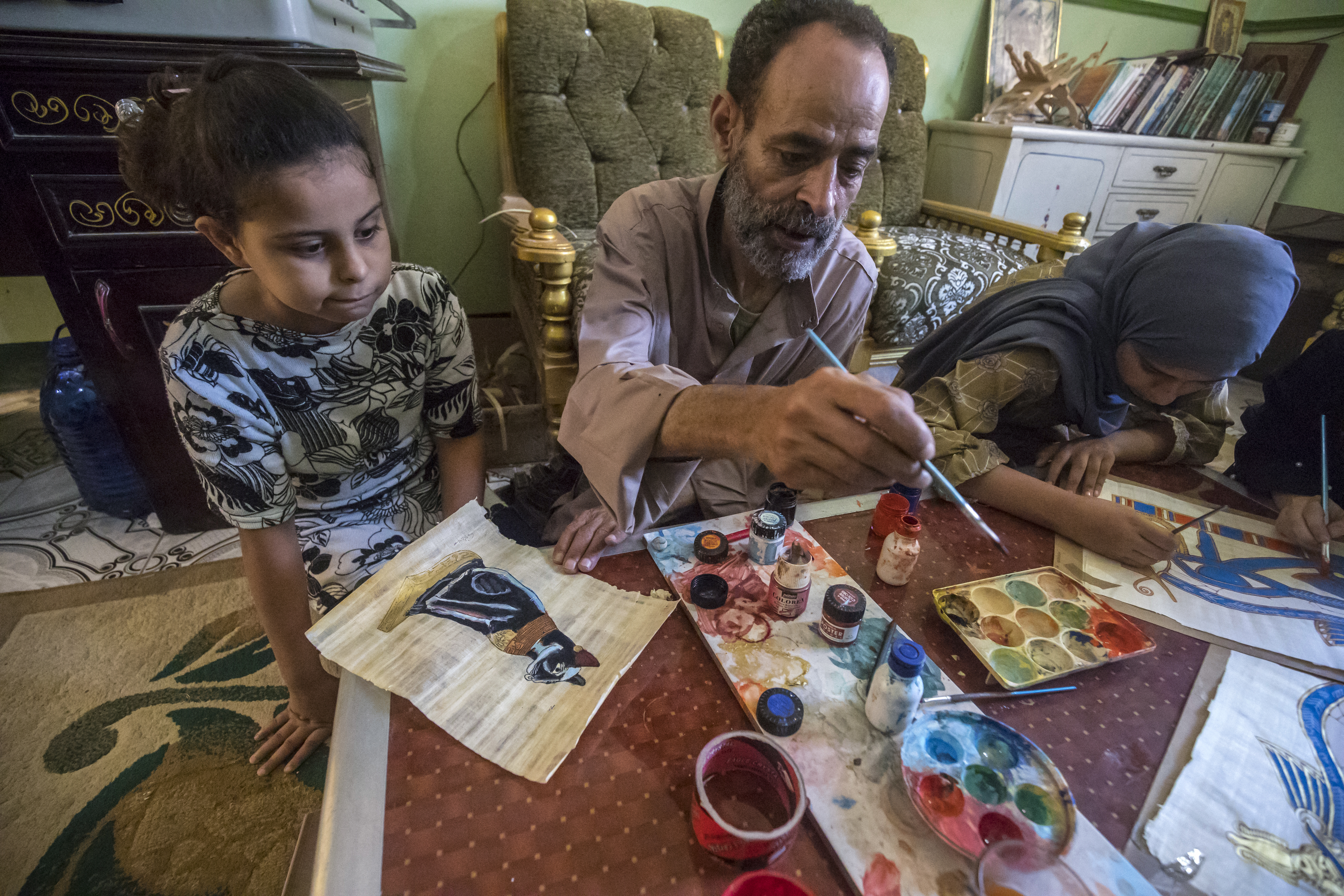
Farmer and painter Said Tarakhan, 60, draws on papyrus at his home in the village of al-Qaramous in Sharqiyah province, in Egypt's fertile Nile Delta region. [Khaled Desouki/AFP]
By AFP
Published On 10 Aug 202110 Aug 2021

Share

facebooktwitterwhatsappcopylink

Save

In the lush green fields of Egypt’s fertile Delta Valley, farmers and artisans struggle to make a living as they keep alive the Pharaonic tradition of making papyrus.

In the 1970s, an art teacher in the village of al-Qaramus taught farmers the millennia-old techniques for transforming the plant into sought-after paper decorated with ornate drawings and text.

The village and its surrounds, located about 80km (50 miles) northeast of the capital Cairo, now make up the largest papyrus production hub in the country, experts in the sector say.

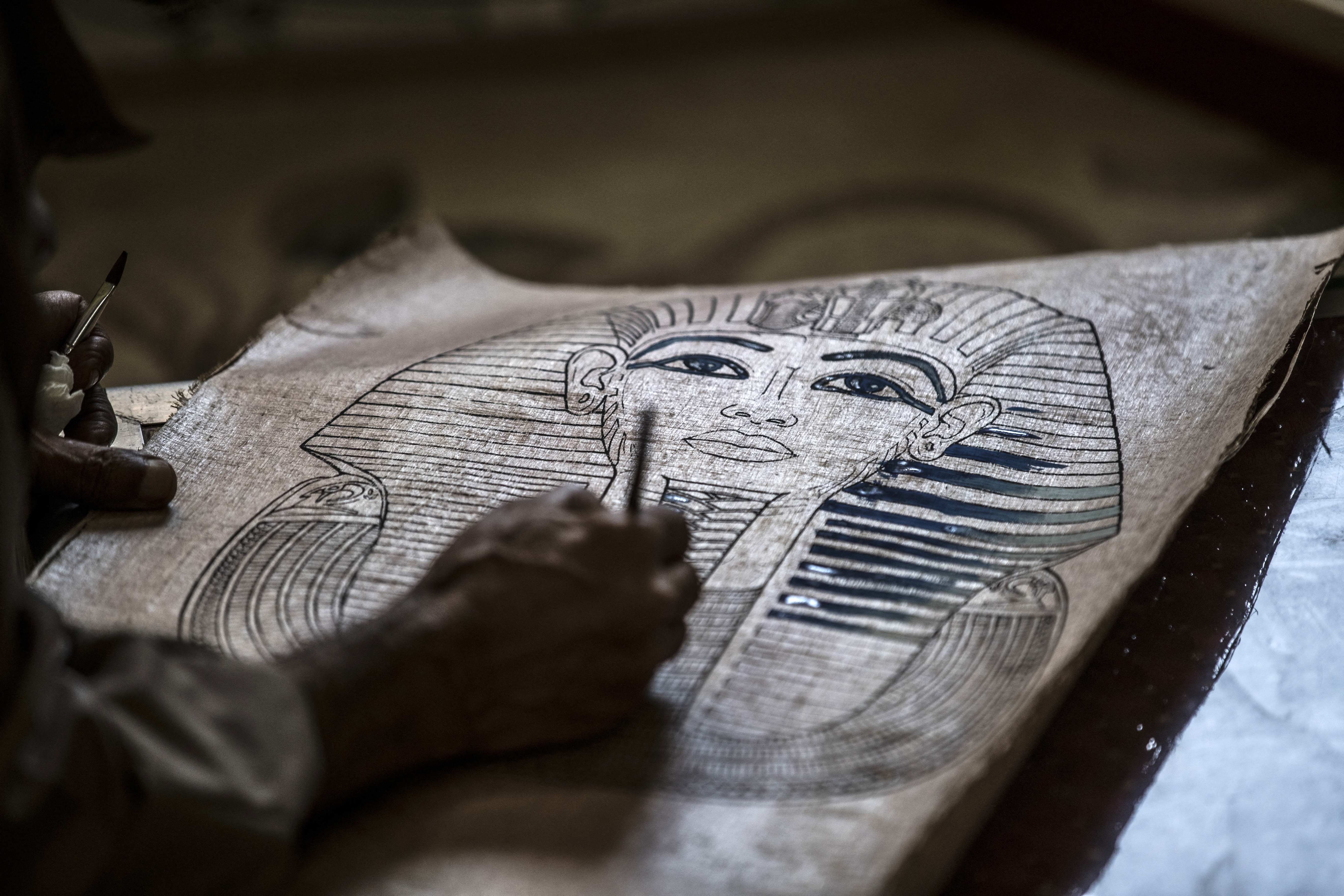
Once used by ancient Egyptians as writing paper, papyrus is now decorated by local artists with hieroglyphics, Arabic calligraphy and representations from antiquity and nature to create souvenirs for eager visitors.

But tourism in the North African country has been battered since its 2011 revolution and after a Russian airliner was downed by the ISIL (ISIS) group in 2015.

The COVID-19 pandemic has further debilitated the sector: Egypt earned just $4bn in tourist revenues last year, a quarter of what it had anticipated before the global health crisis.

Today, al-Qaramus has 25 farms trying to make ends meet by selling papyrus, compared with about 500 prior to the revolution, according to farmer and artist Said Tarakhan.

“I lost about 80 percent of my total income – I used to earn nearly $1,000 a month and now it’s almost zero,” the 60-year-old told the AFP news agency as he showed off his Tutankhamun paintings.

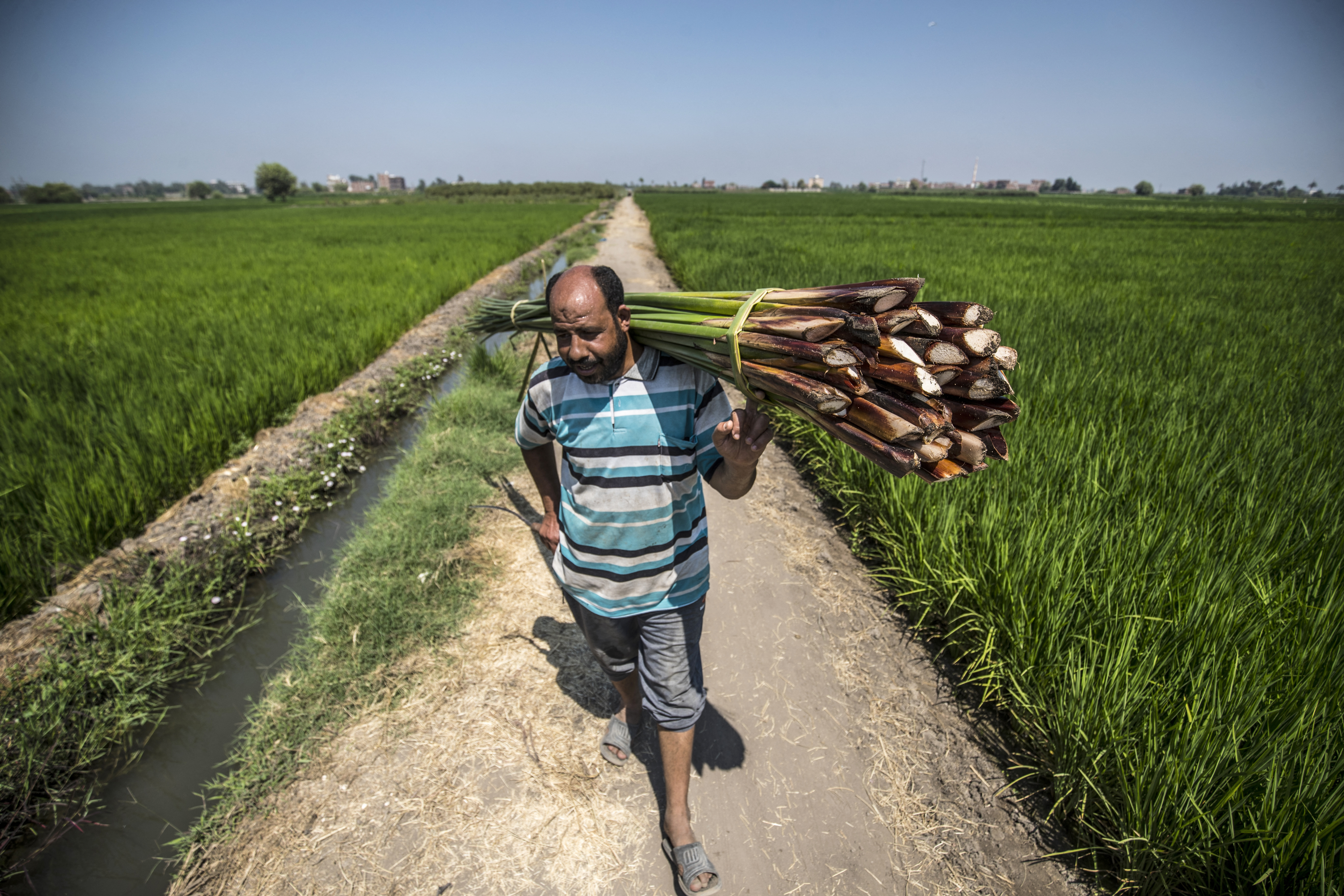
The papyrus plant, with its fan-shaped foliage, grows in water and can reach four metres (13 feet) in height. Its form inspired the decoration of the columns of ancient Egyptian temples.

Advertisement

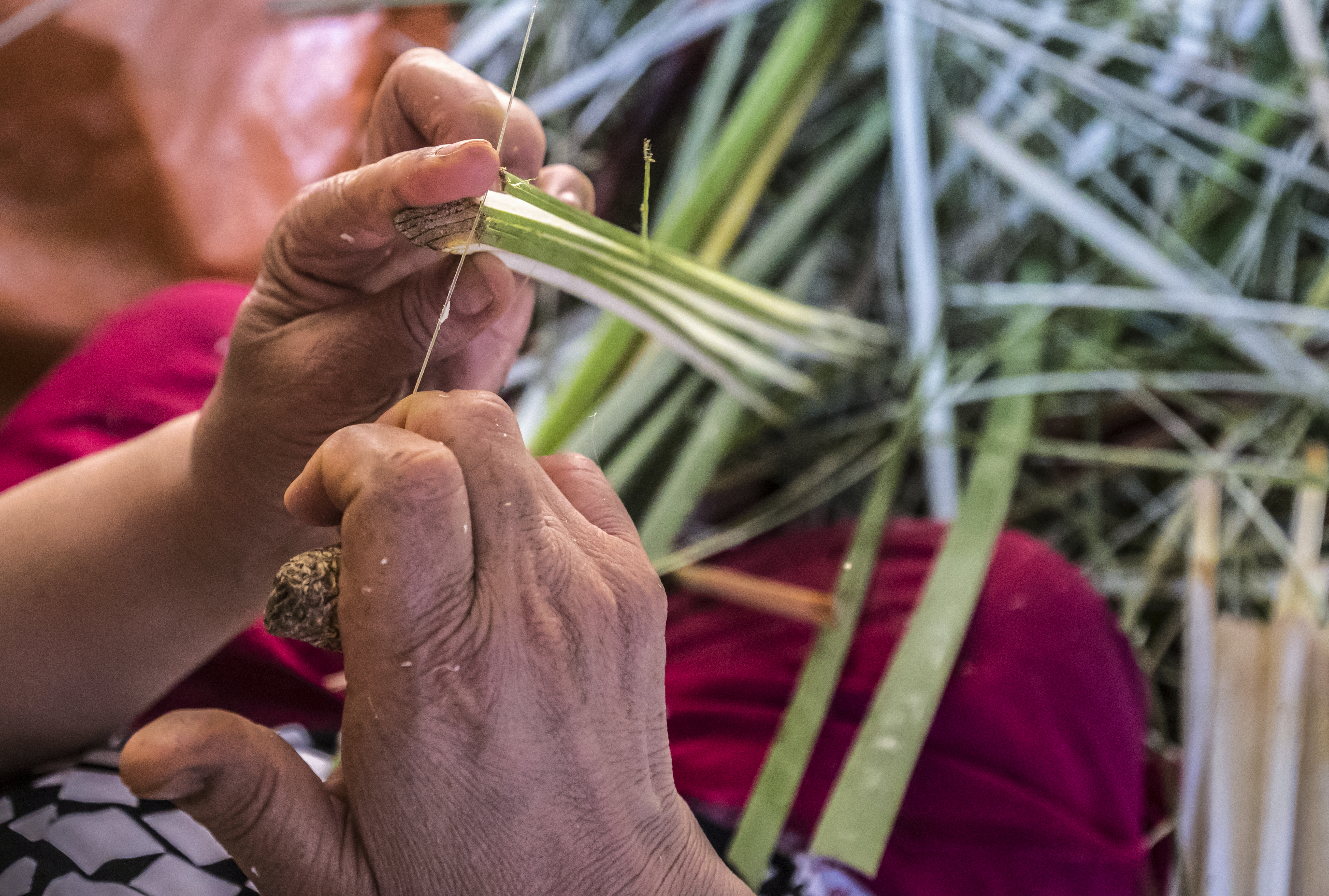
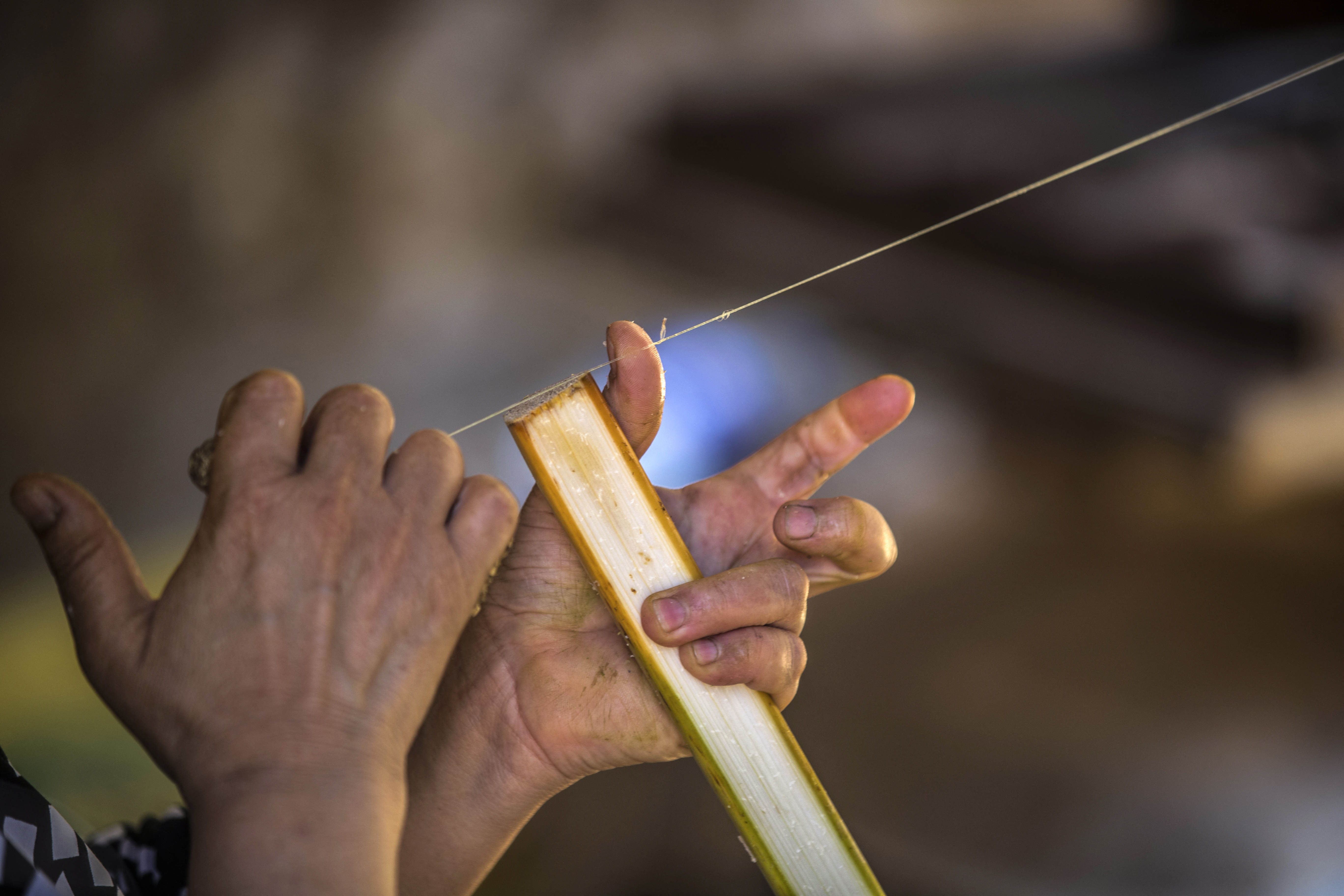
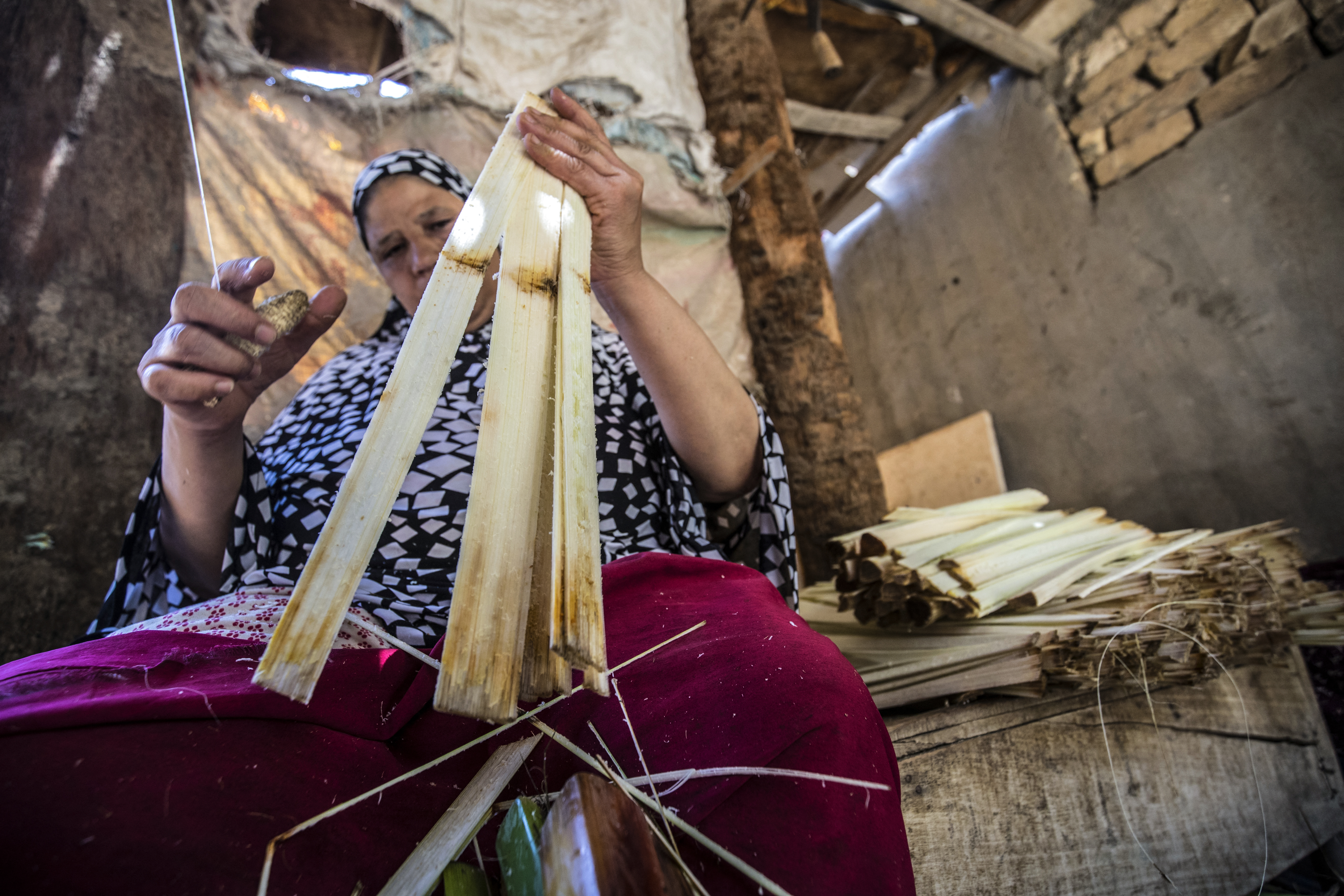
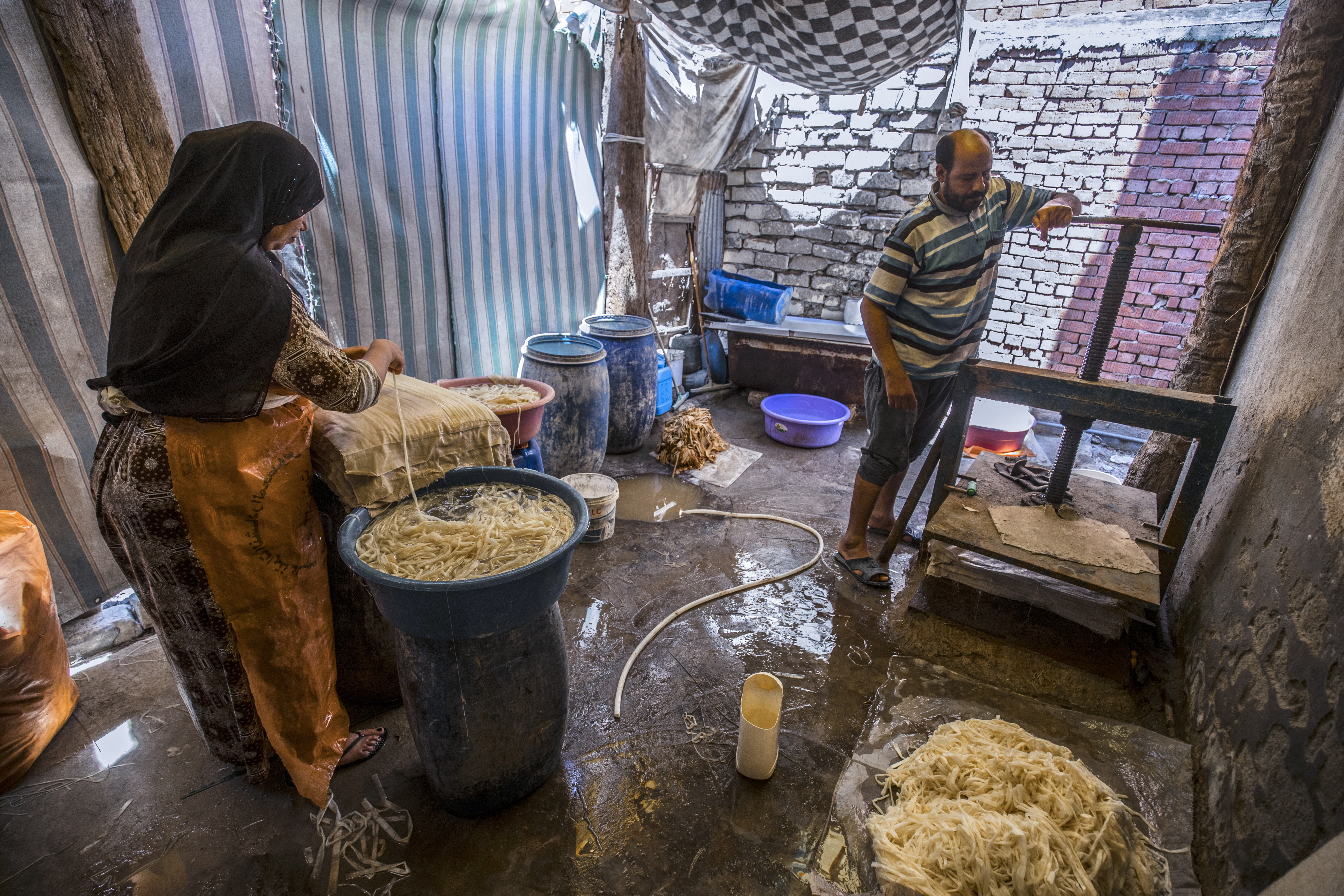
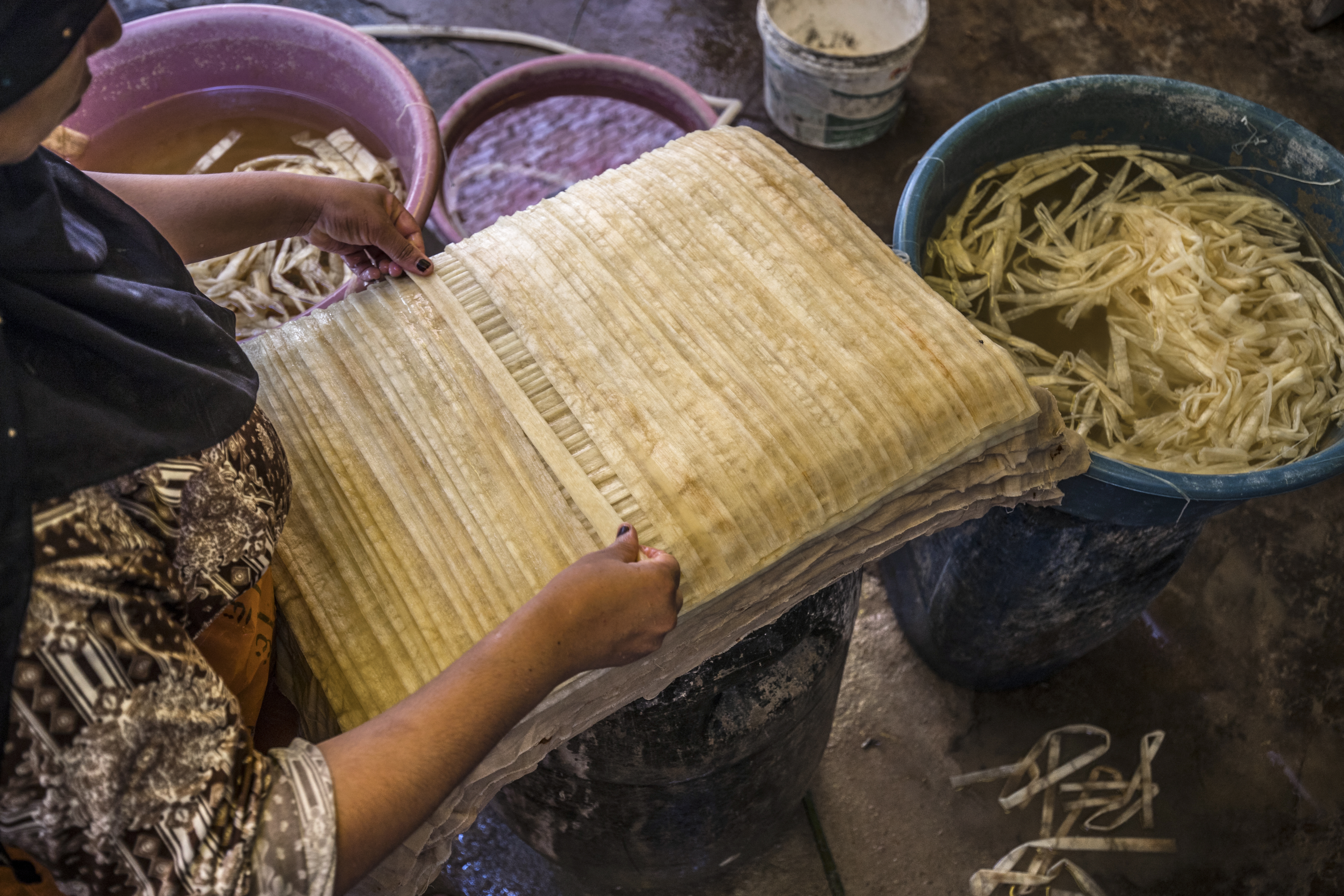
To make paper, workers use wire to cut the stems into thin strips, which are immersed in water and then layered on top of each other to create sheets.

The sheets are placed into a compressor to compact them, and the resulting paper is left to dry in the sun before being used.

Papyrus workshop owner Abdel Mobdi Mussalam, 48, said his staff has dwindled from eight a decade ago to just two.

“Papyrus is our only source of income. It’s what feeds me and my children.”

Tarakhan said he was trying to branch out into other papyrus products such as notebooks and sketchbooks.

A few months ago, his son Mohammed launched an online store to sell their new range.

“At first, we were just selling locally to those who came to us, but after COVID, we thought that we could reach more people, and even foreigners, through the internet,” the 30-year-old said.

“We are trying to think differently so that we can carry on,” said the elder Tarakhan, who in 2014 founded a local association for papyrus craftspeople.

“I thank COVID-19 for locking us in our homes and forcing us to improve our business model.”

Near the famous Giza Pyramids approximately 100km (62 miles) away, Ashraf al-Sarawi displays papyrus paintings in his large shop, devoid of tourists.

He said he lost most of his income last year due to the pandemic, but expressed hope that tourism would pick up soon.

“Tourism never dies,” the 48-year-old said. “It may get sick for a while, but it will return.”
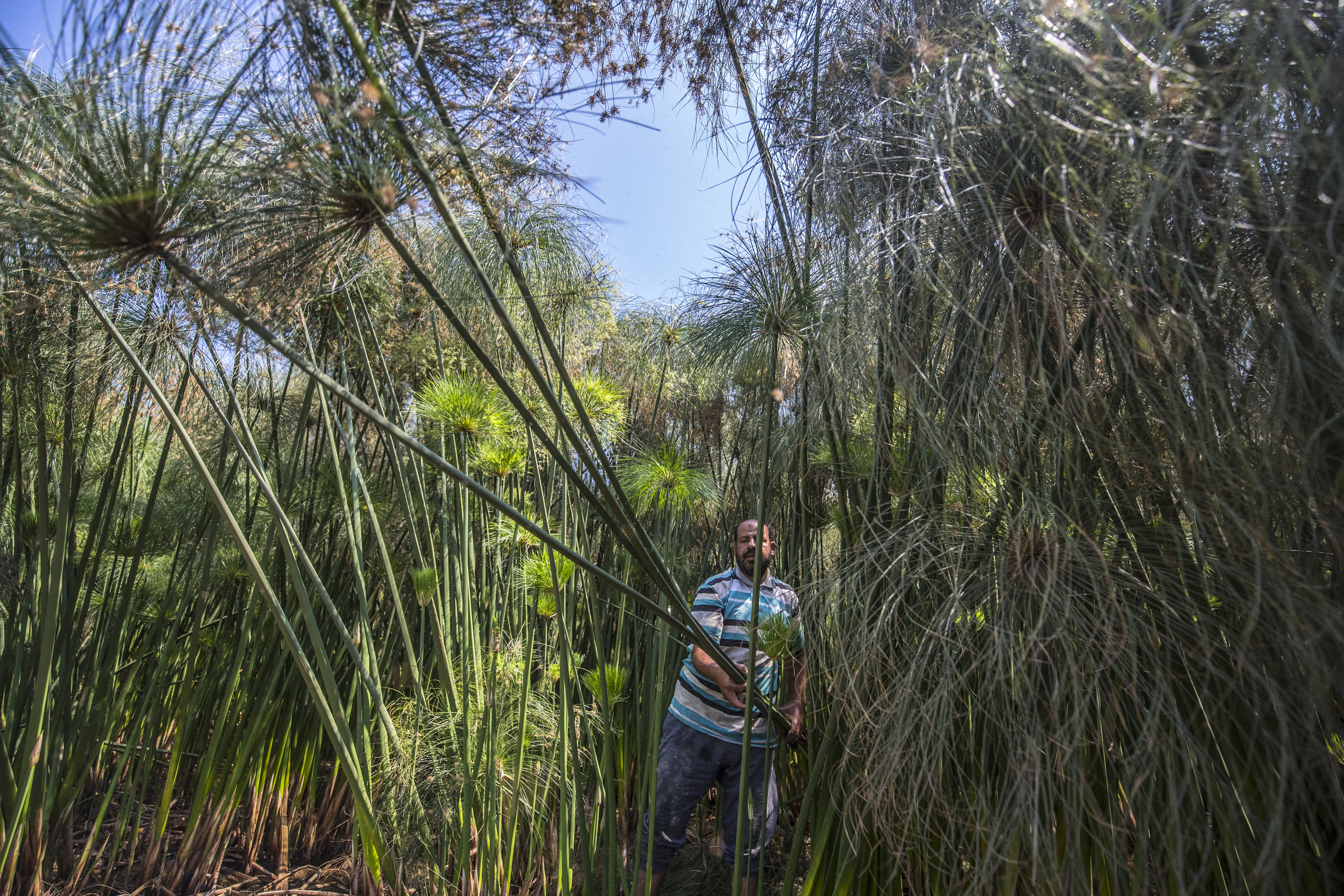
Abdel Mobdi Moussalam, 48, cuts papyrus reeds from his land in the village of al-Qaramous in Sharqiyah province. [Khaled Desouki/AFP]
Advertisement
Abdel Mobdi Moussalam, 48, carries papyrus reeds collected on his land in the village of al-Qaramous. The papyrus plant, with its fan-shaped foliage, grows in water and can reach four metres (13 feet) in height. [Khaled Desouki/AFP]
A woman slices papyrus into thin strips at the workshop in the village of al-Qaramous. [Khaled Desouki/AFP]
To make paper, workers use wire to cut the stems into thin strips, which are immersed in water and then layered on top of each other to create sheets. [Khaled Desouki/AFP]
A woman cuts papyrus with a wire at the workshop in the village of al-Qaramous. "Papyrus is our only source of income. It's what feeds me and my children," said workshop owner Abdel Mobdi Mussalam. [Khaled Desouki/AFP]
Abdel Mobdi Moussalam, 48, right, and an assistant prepare soaked papyrus strips before compression and drying. [Khaled Desouki/AFP]
Advertisement
A woman lays out strips of soaked papyrus to form a sheet, before compression and drying at the workshop in the village of al-Qaramous. The village and its surroundings, located about 80km (50 miles) northeast of Cairo, now make up the largest papyrus production hub in the country, experts in the sector say. [Khaled Desouki/AFP]
Farmer and painter Said Tarakhan, 60, draws on papyrus sheets at his home. Once used by ancient Egyptians as writing paper, papyrus is now decorated by local artists with hieroglyphics, Arabic calligraphy and representations from antiquity and nature to create souvenirs for eager visitors. [Khaled Desouki/AFP]


  • About

    • About Us
    • Code of Ethics
    • Terms and Conditions
    • EU/EEA Regulatory Notice
    • Privacy Policy
    • Cookie Policy
    • Cookie Preferences
    • Accessibility Statement
    • Sitemap
    • Work for us
  • Connect

    • Contact Us
    • User Accounts Help
    • Advertise with us
    • Stay Connected
    • Newsletters
    • Channel Finder
    • TV Schedule
    • Podcasts
    • Submit a Tip
    • Paid Partner Content
  • Our Channels

    • Al Jazeera Arabic
    • Al Jazeera English
    • Al Jazeera Investigative Unit
    • Al Jazeera Mubasher
    • Al Jazeera Documentary
    • Al Jazeera Balkans
    • AJ+
  • Our Network

    • Al Jazeera Centre for Studies
    • Al Jazeera Media Institute
    • Learn Arabic
    • Al Jazeera Centre for Public Liberties & Human Rights
    • Al Jazeera Forum
    • Al Jazeera Hotel Partners

Follow Al Jazeera English:

  • facebook
  • twitter
  • youtube
  • instagram-colored-outline
  • rss
Al Jazeera Media Network logo
© 2026 Al Jazeera Media Network

You might also like:

live israeli attacks kill 76 no aid relief yet for... | thailand readies homecoming for stolen ancient sta... | russia ukraine war list of key events day 1185... | german woman arrested after mass stabbing at hambu... | vietnam orders ban on popular messaging app... | need answers will sri lankas tamils find war closu... | live israeli attacks kill 85 in gaza as starvation... | florida court orders ex mexican security chief to ...