Skip linksSkip to Content
play
Live
Navigation menu
  • News
    • Africa
    • Asia
    • US & Canada
    • Latin America
    • Europe
    • Asia Pacific
  • Middle East
  • Explained
  • Opinion
  • Sport
  • Video
    • Features
    • Economy
    • Human Rights
    • Climate Crisis
    • Investigations
    • Interactives
    • In Pictures
    • Science & Technology
    • Podcasts
    • Travel
play
Live

In Pictures

Gallery|ISIL/ISIS

Mobile courts give hope to displaced Iraqis

The courts offer assistance in obtaining essential civil identification documents for families who have fled ISIL.
Mobile courts Mosul/ Please Do Not Use
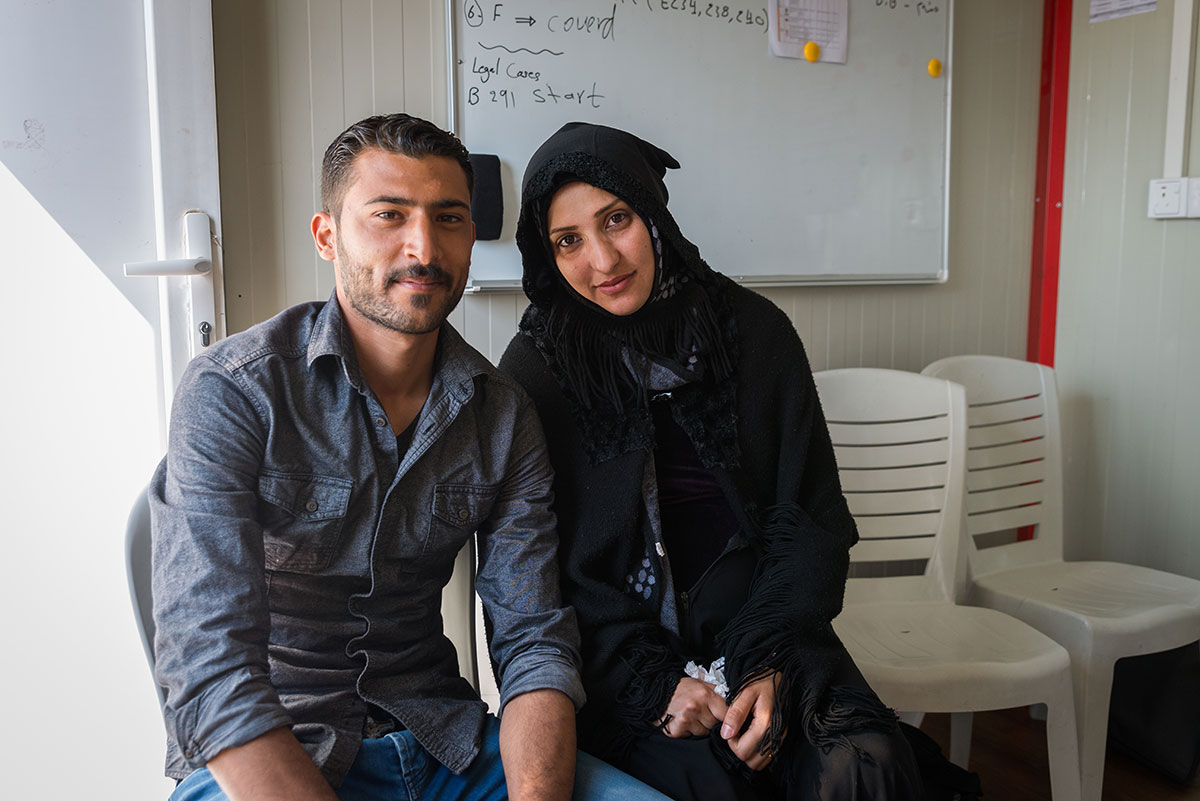
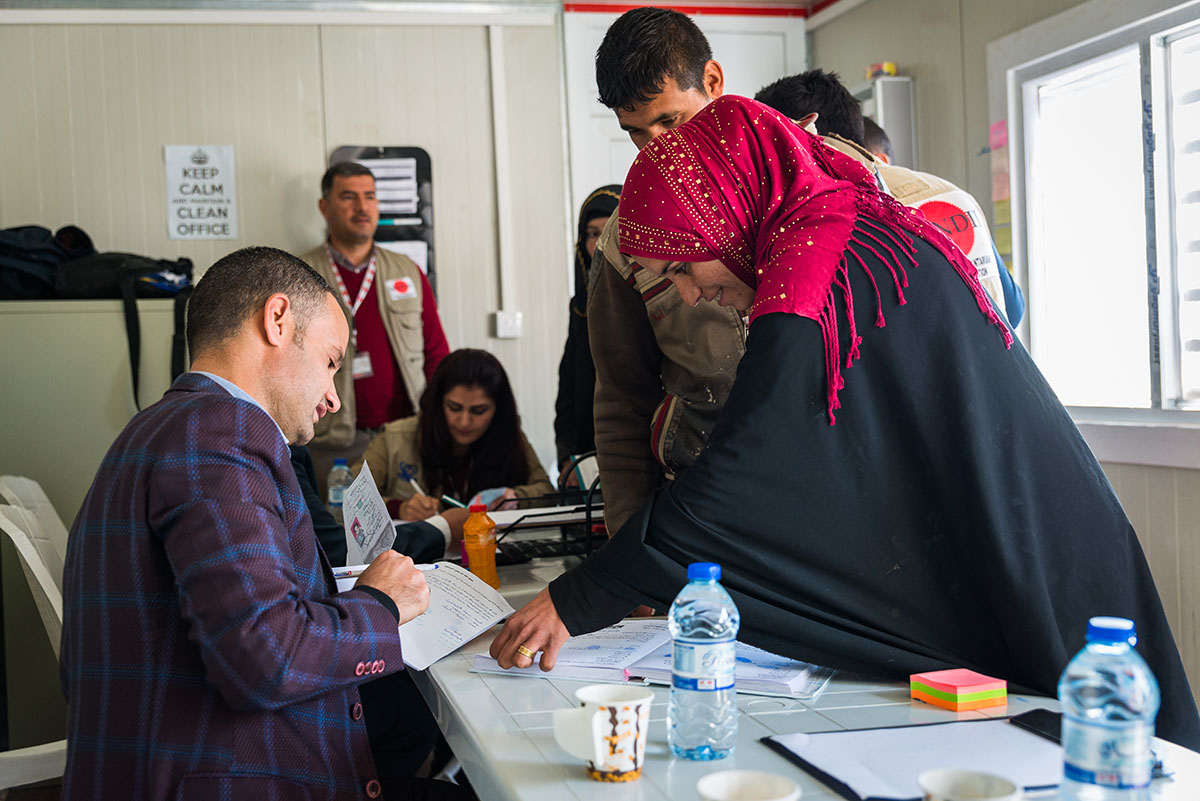
A young couple registers their marriage at a mobile court in Hasansham camp. The majority of cases dealt with in the courts are related to registering and issuing new marriage certificates and birth certificates. [Claire Thomas/Al Jazeera]
News image
By Claire Thomas
Published On 12 Mar 201712 Mar 2017

Share

facebooktwitterwhatsappcopylink

Save

Judges in Iraq have been holding court sessions inside camps for internally displaced people (IDPs), in an effort to help families to rebuild their lives.

People who have fled Mosul now face bureaucratic battles to be freed from the residual effects of living under the Islamic State of Iraq and the Levant group (ISIL, also known as ISIS). Mobile courts began visiting IDP camps in December to provide much-needed services for families and individuals seeking to obtain essential civil identification documents.

The courts operate with the support and cooperation of QANDIL, a Swedish humanitarian aid organisation that works in partnership with the United Nations refugee agency. QANDIL provides legal assistance to IDPs to facilitate the issuance of documents related to births, deaths, marriages and divorces.

As IDPs are restricted from leaving the camps, the mobile courts serve as an important conduit to the court system.

“In the beginning, it was kind of strange to open a court inside the camp,” Aram Abdulkareem, a legal team leader in QANDIL’s Khabat office, told Al Jazeera. “We suggested it, and at first they didn’t take it seriously. But one of the judges said it was a great idea, and the whole thing started from there.”

With the approval of the Nineveh Appeal Court, the courts began operating in the government-run Khazer M1 camp in December. After approximately a month based there, the Iraqi government suggested that the courts be transferred to al-Hamdaniya district. Mobile teams have now been assembled to visit three IDP camps once a week.

Advertisement
Mobile courts Mosul/ Please Do Not Use
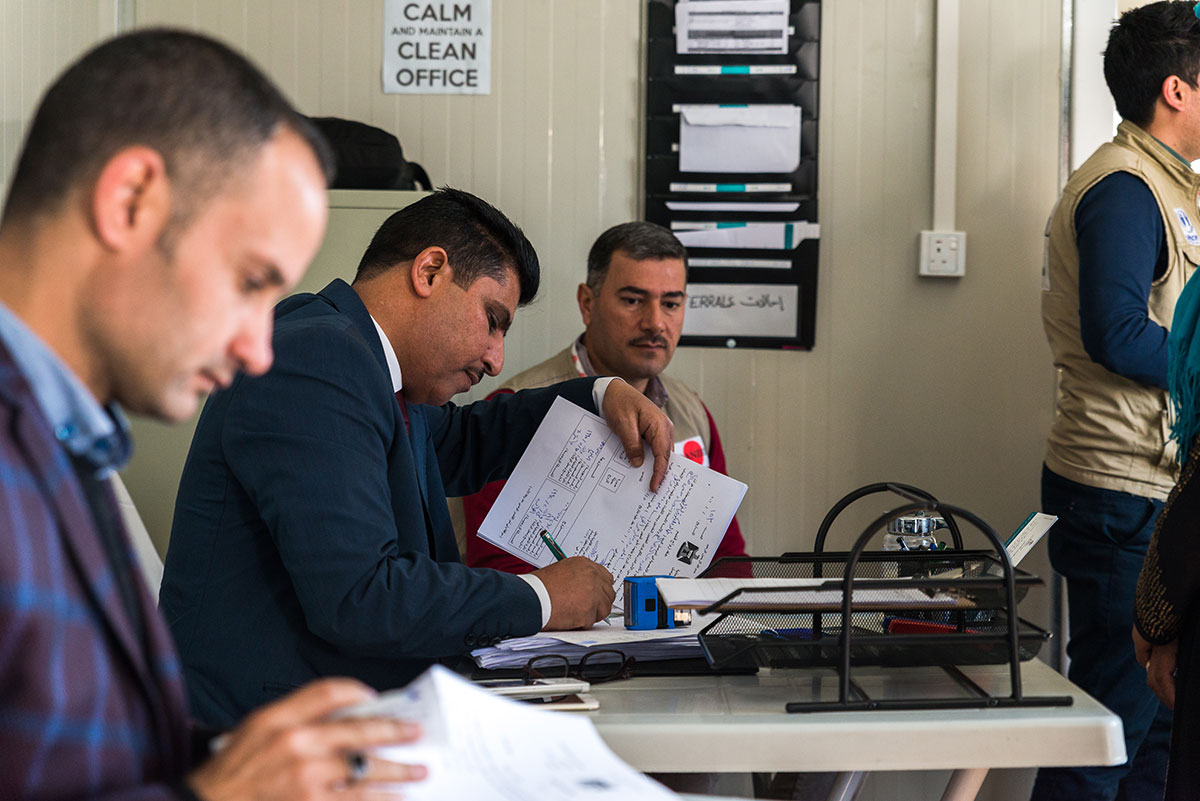
A judge from Mosul holds a court session in Hasansham camp. Since the beginning, the judges have been very supportive of the people, QANDIL team leader Aram Abdulkareem said. 'We couldn't believe that there is a court in the camp and it's working. People were flooding to the court and every single day we were facing about 200 cases.' [Claire Thomas/Al Jazeera]
Advertisement
Mobile courts Mosul/ Please Do Not Use
QANDIL provided this caravan to be used as a courtroom inside Hasansham camp. Since the beginning of the Mosul offensive in October, QANDIL lawyers have provided legal assistance to more than 5,500 individuals. [Claire Thomas/Al Jazeera]
Mobile courts Mosul/ Please Do Not Use
Sabrine, 27, and her husband wait to register their marriage at the mobile court in Hasansham camp. The couple got married in Mosul. They fled their homes three months ago, despite Sabrine being heavily pregnant. 'We came from Mosul by foot while bombs were falling around us,' she said. [Claire Thomas/Al Jazeera]
Mobile courts Mosul/ Please Do Not Use
Many babies who were born in Mosul while under ISIL control were issued with ISIL-stamped birth certificates. 'In those cases, we take it to court where they invalidate it, and then issue a new legal birth certificate for that child,' Abdulkareem said. [Claire Thomas/Al Jazeera]
Mobile courts Mosul/ Please Do Not Use
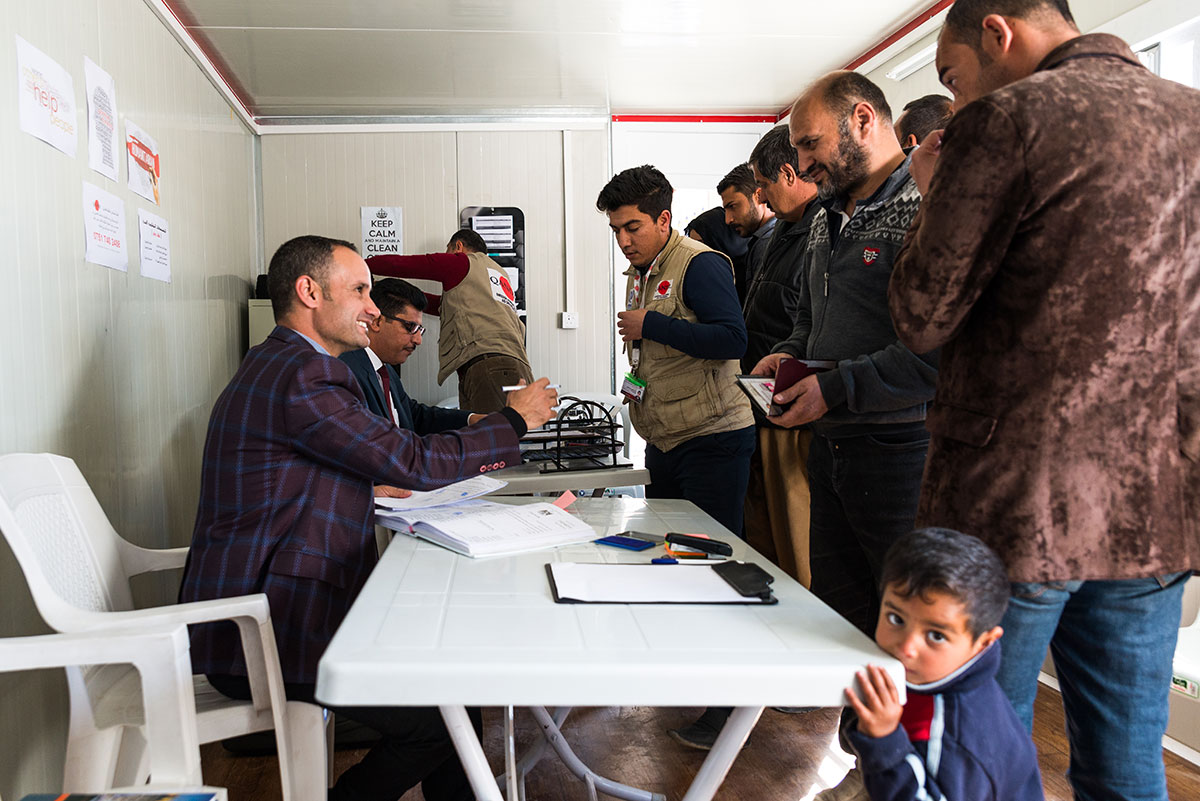
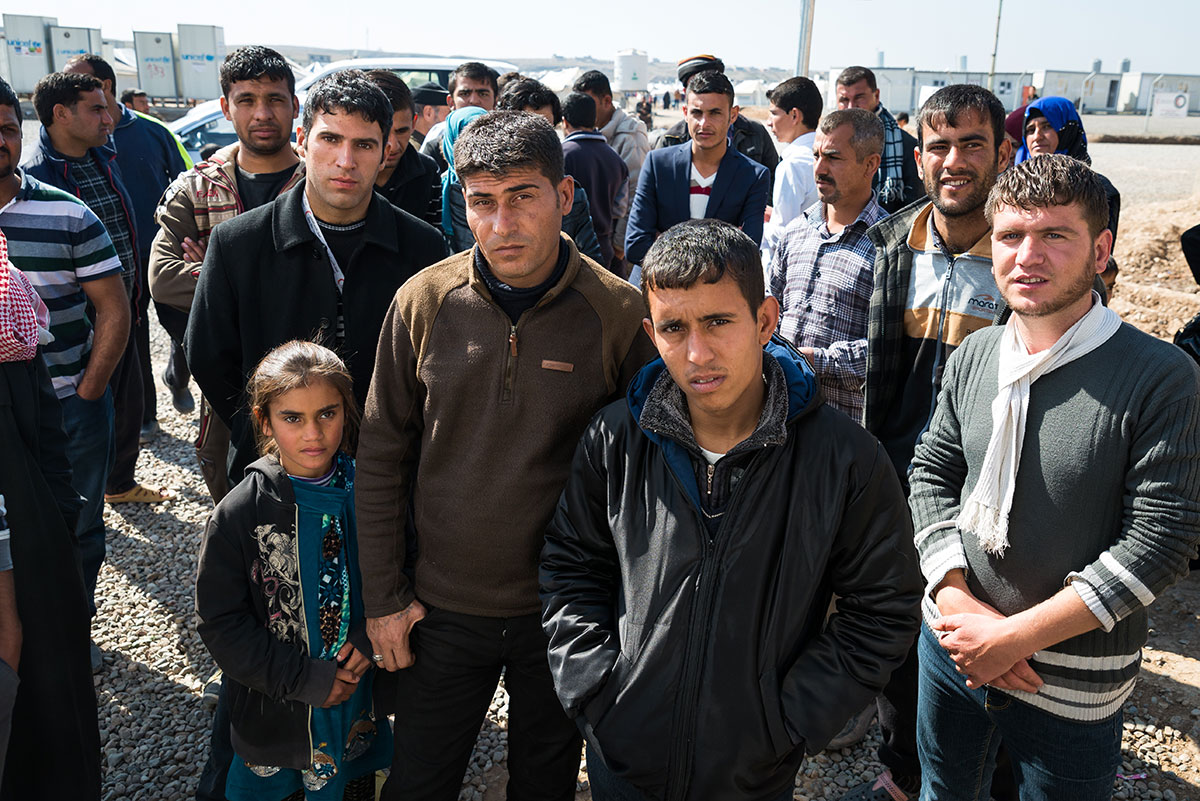
Women and children who have fled Mosul wait in line to register at the Hasansham camp. According to the UN, more than 200,000 people have fled the conflict since October, with approximately 160,000 still displaced. Others have returned to their homes in areas recently retaken from ISIL. [Claire Thomas/Al Jazeera]
Mobile courts Mosul/ Please Do Not Use
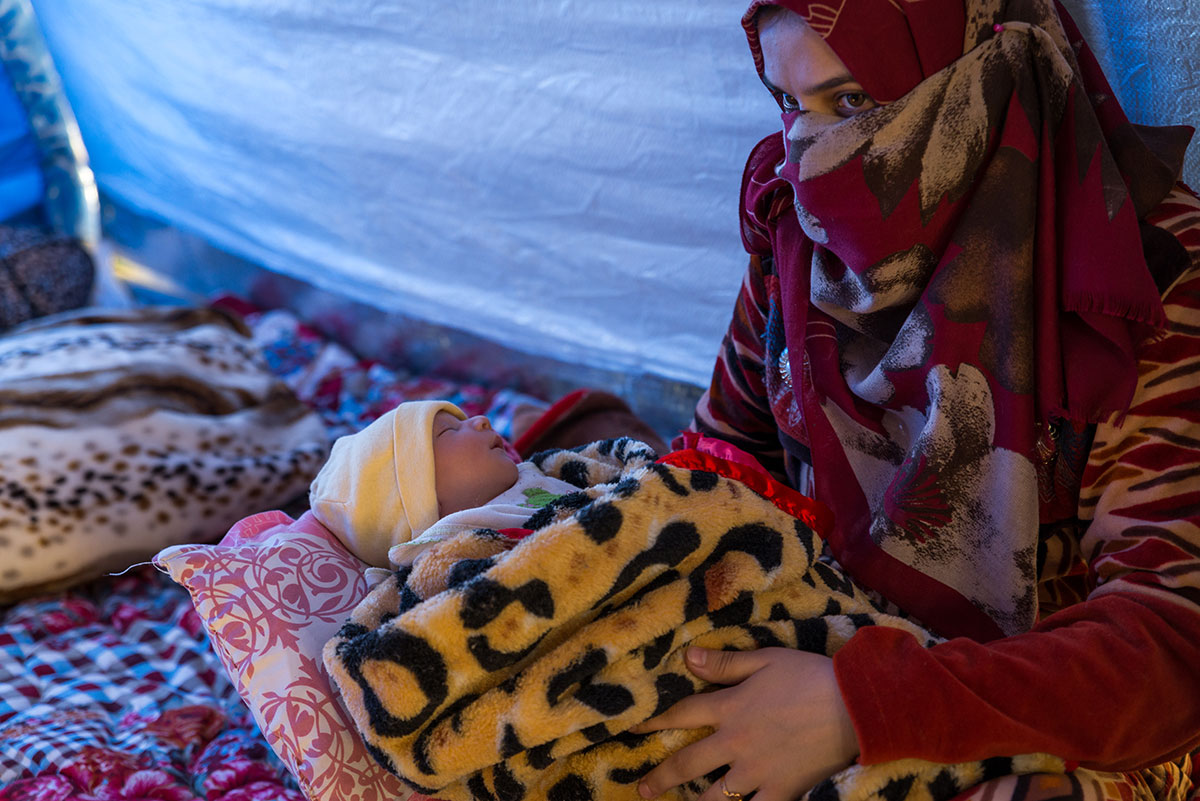
Marwa Hussein, 22, holds her three-day-old baby inside a tent in Khazer camp, located approximately 40km west of the Kurdish city of Erbil. She and her husband fled their home in Mosul to reach a hospital before the baby was born. Marwa was nine months pregnant when they fled. [Claire Thomas/Al Jazeera]
Advertisement
Mobile courts Mosul/ Please Do Not Use
As many as 49 percent of displaced Iraqis interviewed by the UN refugee agency's protection partners were found to need help in getting new civil documentation. Civil ID cards are essential in allowing Iraqi citizens to pass through checkpoints, as well as to access public services, including healthcare, education, and food and housing assistance. [Claire Thomas/Al Jazeera]
Mobile courts Mosul/ Please Do Not Use
A notary visits the camps alongside the judge, in order to issue power of attorney, allowing the lawyers to act on behalf of the IDPs. [Claire Thomas/Al Jazeera]
Mobile courts Mosul/ Please Do Not Use
People gather outside the QANDIL caravan, which is being used as a mobile courtroom in Hasansham camp, waiting to register their marriages. [Claire Thomas/Al Jazeera]
Mobile courts Mosul/ Please Do Not Use
Without registering with the court, babies born with ISIL birth certificates would remain stateless. 'The children wouldn't be able to go to school or access any other legal procedures,' Abdulkareem said. [Claire Thomas/Al Jazeera]
Mobile courts Mosul/ Please Do Not Use
Peshmerga soldiers stand guard at the entrance to the Hasansham camp. Movement restrictions for IDPs prevent individuals from leaving the camps and accessing normal bureaucratic procedures. [Claire Thomas/Al Jazeera]
Mobile courts Mosul/ Please Do Not Use
The Hasansham camp east of Mosul is named after the village of Hasansham, which lies in ruins after being retaken from ISIL. [Claire Thomas/Al Jazeera]
Mobile courts Mosul/ Please Do Not Use
When new birth certificates are issued in the court, QANDIL lawyers then follow up to issue a civil ID for the child as well, Abdulkareem said. [Claire Thomas/Al Jazeera]


  • About

    • About Us
    • Code of Ethics
    • Terms and Conditions
    • EU/EEA Regulatory Notice
    • Privacy Policy
    • Cookie Policy
    • Cookie Preferences
    • Accessibility Statement
    • Sitemap
    • Work for us
  • Connect

    • Contact Us
    • User Accounts Help
    • Advertise with us
    • Stay Connected
    • Newsletters
    • Channel Finder
    • TV Schedule
    • Podcasts
    • Submit a Tip
    • Paid Partner Content
  • Our Channels

    • Al Jazeera Arabic
    • Al Jazeera English
    • Al Jazeera Investigative Unit
    • Al Jazeera Mubasher
    • Al Jazeera Documentary
    • Al Jazeera Balkans
    • AJ+
  • Our Network

    • Al Jazeera Centre for Studies
    • Al Jazeera Media Institute
    • Learn Arabic
    • Al Jazeera Centre for Public Liberties & Human Rights
    • Al Jazeera Forum
    • Al Jazeera Hotel Partners

Follow Al Jazeera English:

  • facebook
  • twitter
  • youtube
  • instagram-colored-outline
  • rss
Al Jazeera Media Network logo
© 2026 Al Jazeera Media Network

You might also like:

live israeli attacks kill 76 no aid relief yet for... | thailand readies homecoming for stolen ancient sta... | russia ukraine war list of key events day 1185... | german woman arrested after mass stabbing at hambu... | vietnam orders ban on popular messaging app... | need answers will sri lankas tamils find war closu... | live israeli attacks kill 85 in gaza as starvation... | florida court orders ex mexican security chief to ...