Skip linksSkip to Content
play
Live
Navigation menu
  • News
    • Africa
    • Asia
    • US & Canada
    • Latin America
    • Europe
    • Asia Pacific
  • Middle East
  • Explained
  • Opinion
  • Sport
  • Video
    • Features
    • Economy
    • Human Rights
    • Climate Crisis
    • Investigations
    • Interactives
    • In Pictures
    • Science & Technology
    • Podcasts
    • Travel
play
Live

In Pictures

Gallery|Human Rights

Earning a living on border of Morocco’s Spanish enclave

For Moroccan porters, smuggling goods through the border of Melilla exacts heavy toll and brings a meagre income.
With life in tow/ Please Do Not Use
A 6m-high, triple-layered barbed-wire fences surrounds Melilla, a 'European fortress'. [Jose Colon/MeMo/Al Jazeera]
News image
By Jose Colon
Published On 16 Feb 201616 Feb 2016

Share

facebooktwitterwhatsappcopylink

Save

Melilla, Spain – At 6:30am, the sun has not made its appearance yet and the border of Melilla’s Chinatown quarter is illuminated by the orange glow of street lamps.

The border crossing is a maze of wires and winches that convey a sense of unease and fear.

The six metre-high border fence across the road, contributes to the feeling of a hostile environment that surrounds Melilla, the tiny Spanish enclave in the northeast of Morocco. Ahead, on the Moroccan side, the murmur of distant shouts and blows can be heard.

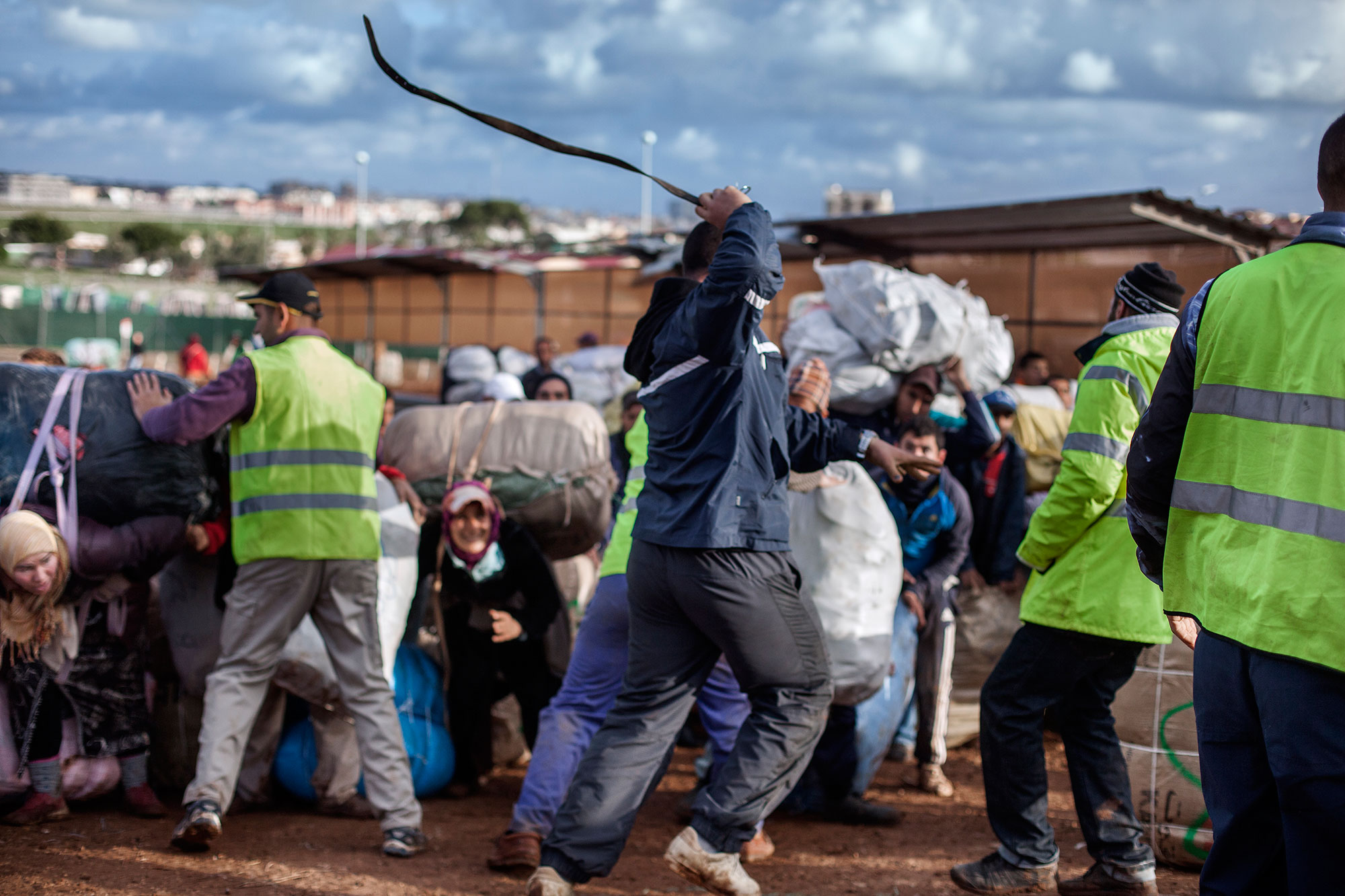
At 6:45am the sound increases and moving silhouettes of nervous police officers can be seen on the metal structures. A large crowd gathers at the gates waiting to pass to the Spanish side. Moroccan guards shout and beat the people back from the entrance with wooden sticks. With every passing minute the blows and screams combine in a crescendo, like a symphony of noises and yowls. 

On the Spanish side, a 100 metres from the border, dozens of lorries jostle for a good parking spot. They spit out mountains of bundles, some weighing up to 80 kilos. 

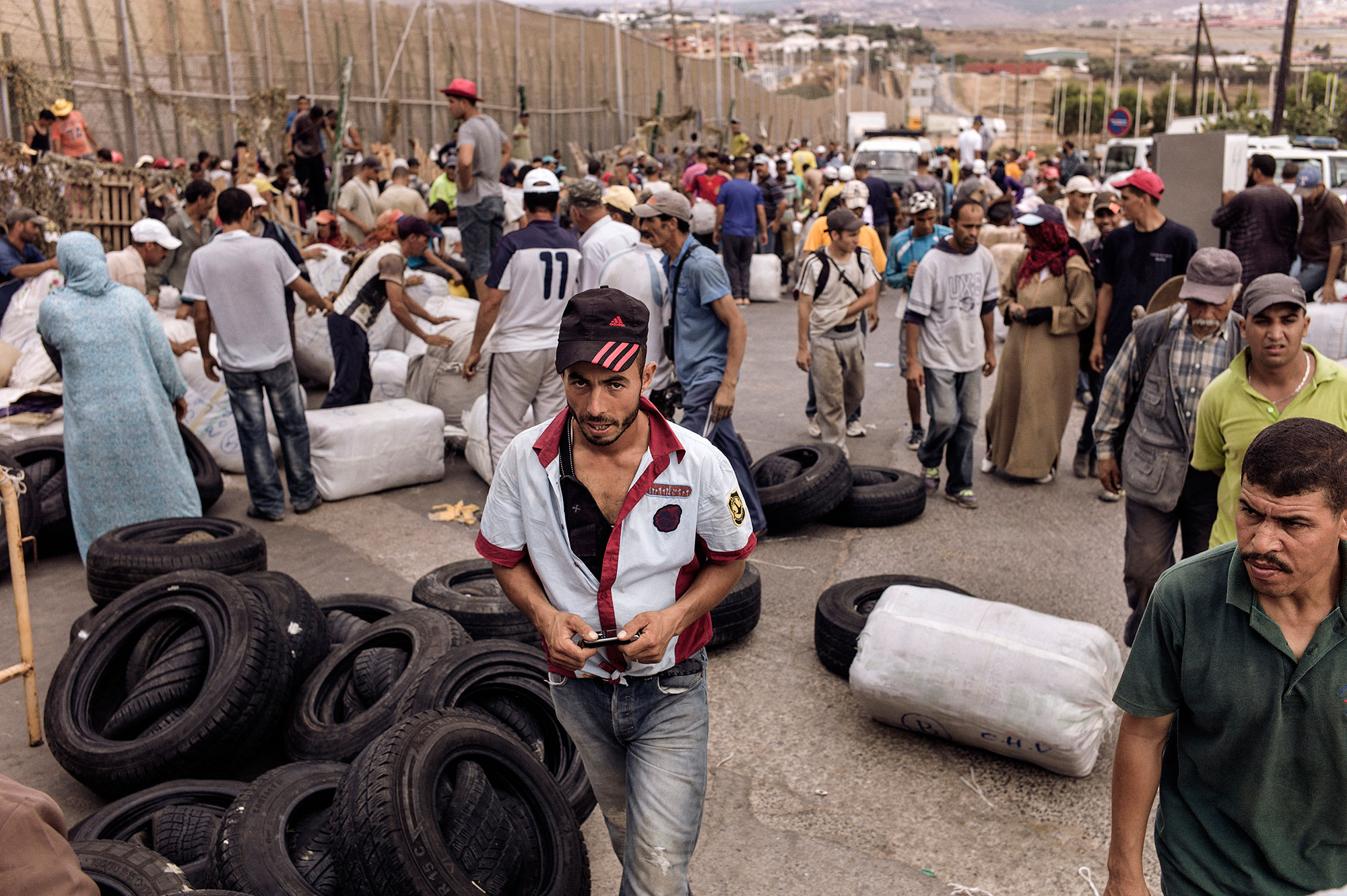
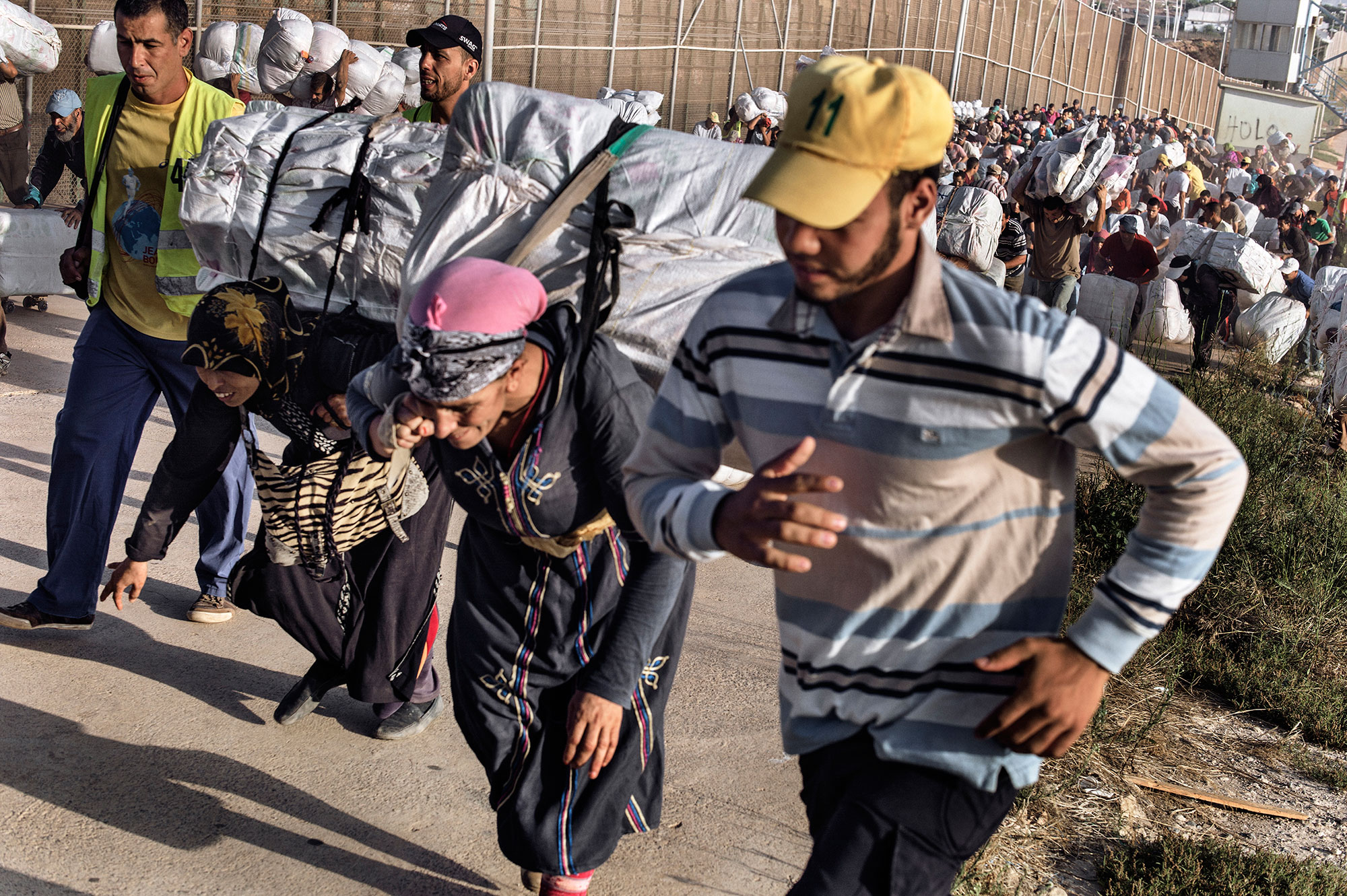
At 7am, the border gates open. Once past the border, dozens of Moroccan women and men run to the piles of packages. Their goal is to take one and pass it to Morocco as soon as possible to return and catch another and, if possible, yet another. 

Organisations on either side of the fence run what has become to be known as “atypical trade” an illicit smuggling business that at an average of $5.6 per bundle, brings very little income to the load-carriers themselves.


RELATED GALLERY: Refugees at the Melilla border

With life in tow/ Please Do Not Use
Moroccan men and women cross the border at Melilla. Moroccan citizens from the Beni Enzar and Nador have a special visa allowing them to enter Melilla freely during the day. [Jose Colon/MeMo/Al Jazeera]
Advertisement
With life in tow/ Please Do Not Use
Carriers are paid a little over $5 per package they deliver across the border. [Jose Colon/MeMo/Al Jazeera]
With life in tow/ Please Do Not Use
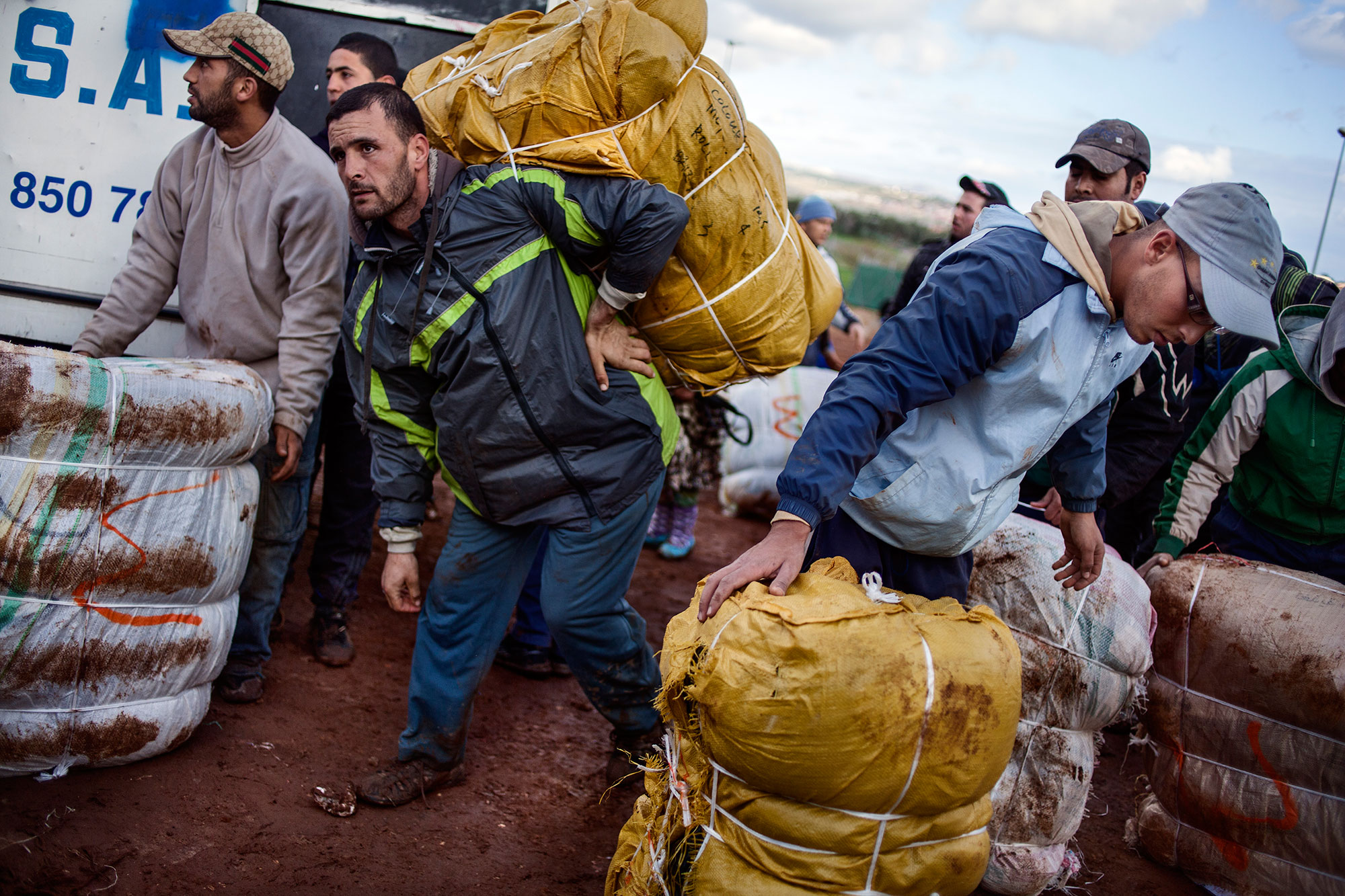
As long as the porters can physically carry their load, it is classified as personal luggage, and can enter Morocco duty-free. [Jose Colon/MeMo/Al Jazeera]
With life in tow/ Please Do Not Use
With packages weighing up to 80kg, the porters try to repeat the journey at least three times a day . [Jose Colon/MeMo/Al Jazeera]
With life in tow/ Please Do Not Use
An increasing number of unemployed Moroccan men have started carrying bales, forcing some of the local women out of work. [Jose Colon/MeMo/Al Jazeera]
With life in tow/ Please Do Not Use
A man with a whip strikes at the load carriers. It is believed that local authorities hire Moroccan enforcers to keep order. [Jose Colon/MeMo/Al Jazeera]
Advertisement
With life in tow/ Please Do Not Use
The work is dangerous and several women have been killed in stampedes to get through the border before it closes. [Jose Colon/MeMo/Al Jazeera]
With life in tow/ Please Do Not Use
Because the work is illicit, the carriers receive no benefits and they are not protected by any health regulations, although the activity is estimated to bring in millions in profits [Jose Colon/MeMo/Al Jazeera]
With life in tow/ Please Do Not Use
A man at the border pushes back some women trying to cross with packages on their backs. [Jose Colon/MeMo/Al Jazeera]
With life in tow/ Please Do Not Use
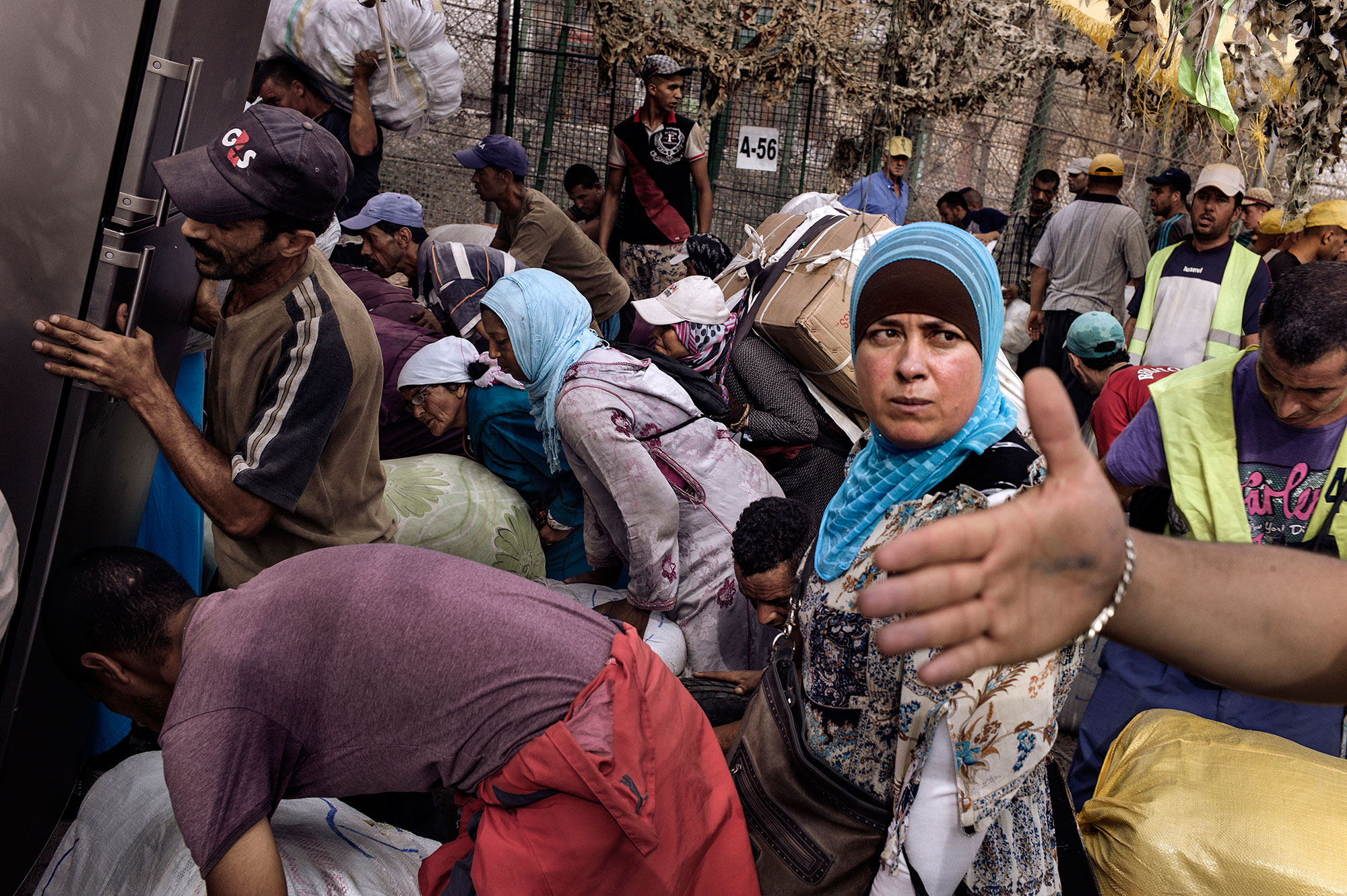
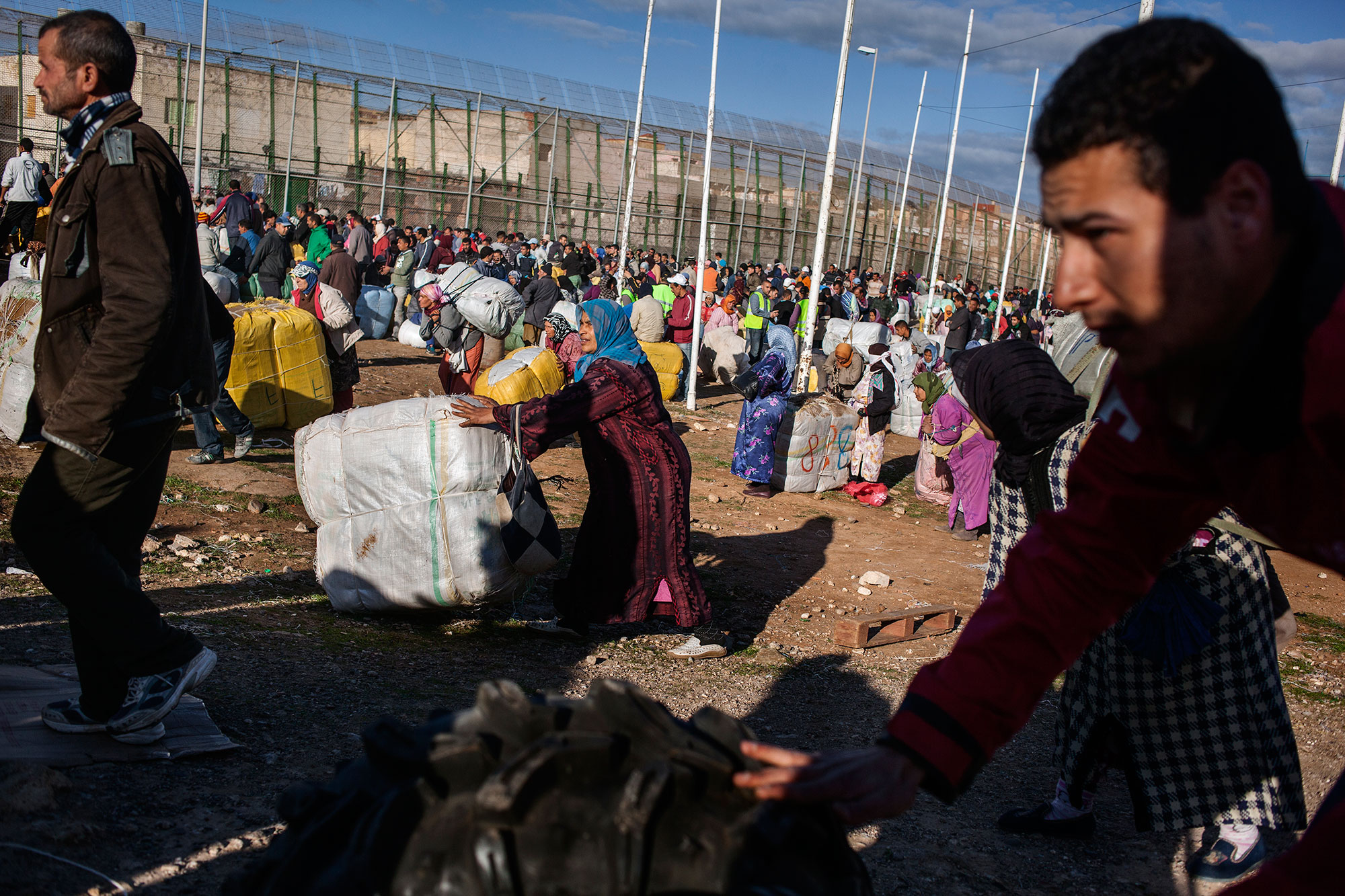
A Moroccan woman watches a man shouting and pushing into the queue at the Melilla border. Many of the porters are women hoping to make enough money to feed their children and pay for school fees.[Jose Colon/MeMo/Al Jazeera]
With life in tow/ Please Do Not Use
A woman is prevented from crossing the border to Morocco. Unemployment and the arrival of young men has made it harder for women to work as porters. [Jose Colon/MeMo/Al Jazeera]
With life in tow/ Please Do Not Use
A young man at the border shouts and shoves over a woman with packages on her back. [Jose Colon/MeMo/Al Jazeera]
With life in tow/ Please Do Not Use
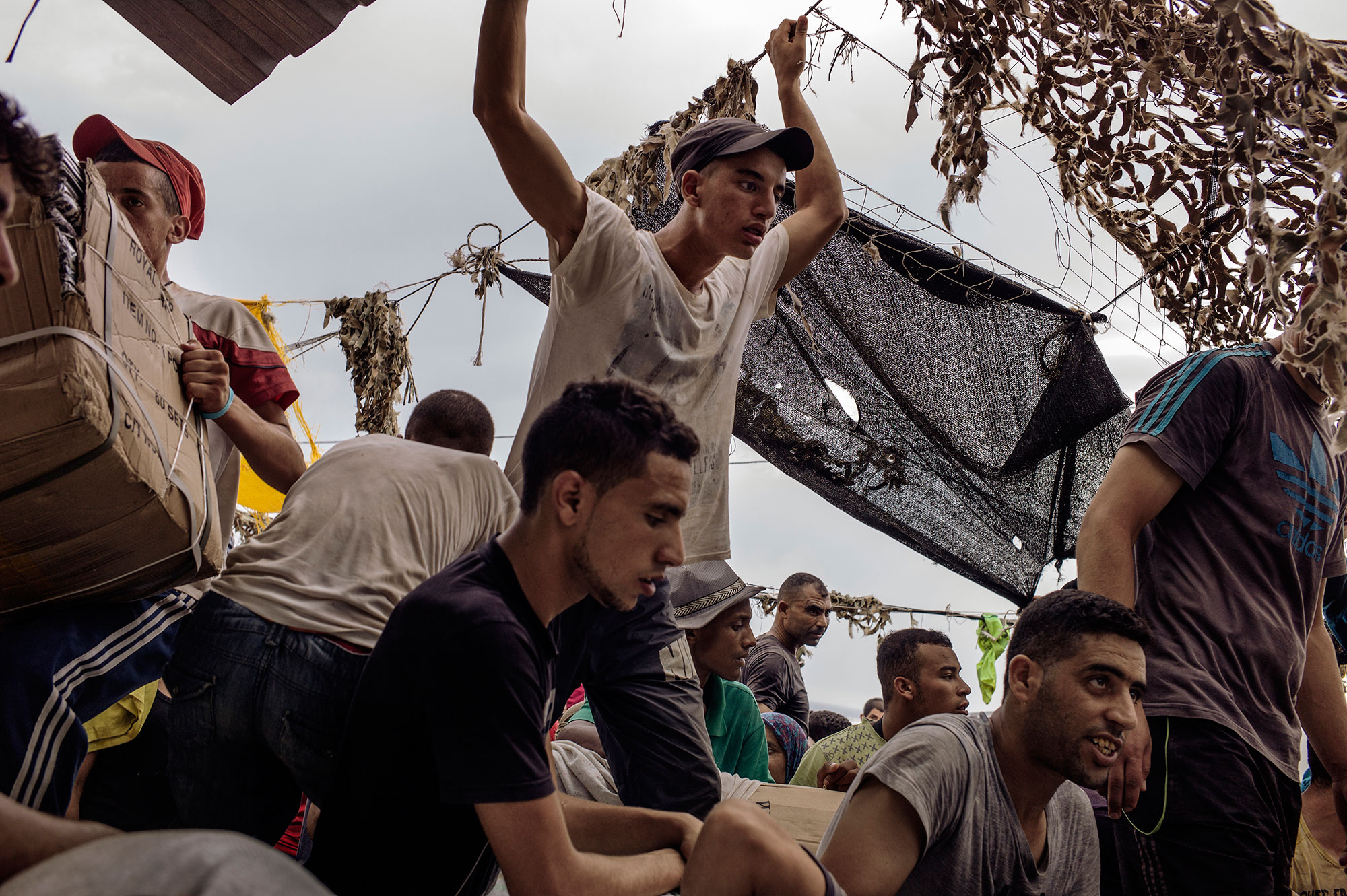
A group of young men wait to cross the border separating Morocco from the Spanish enclave of Melilla. [Jose Colon/MeMo/Al Jazeera]
With life in tow/ Please Do Not Use
Crossing the border is often dangerous and some women have been crushed to death. [Jose Colon/MeMo/Al Jazeera]
With life in tow/ Please Do Not Use
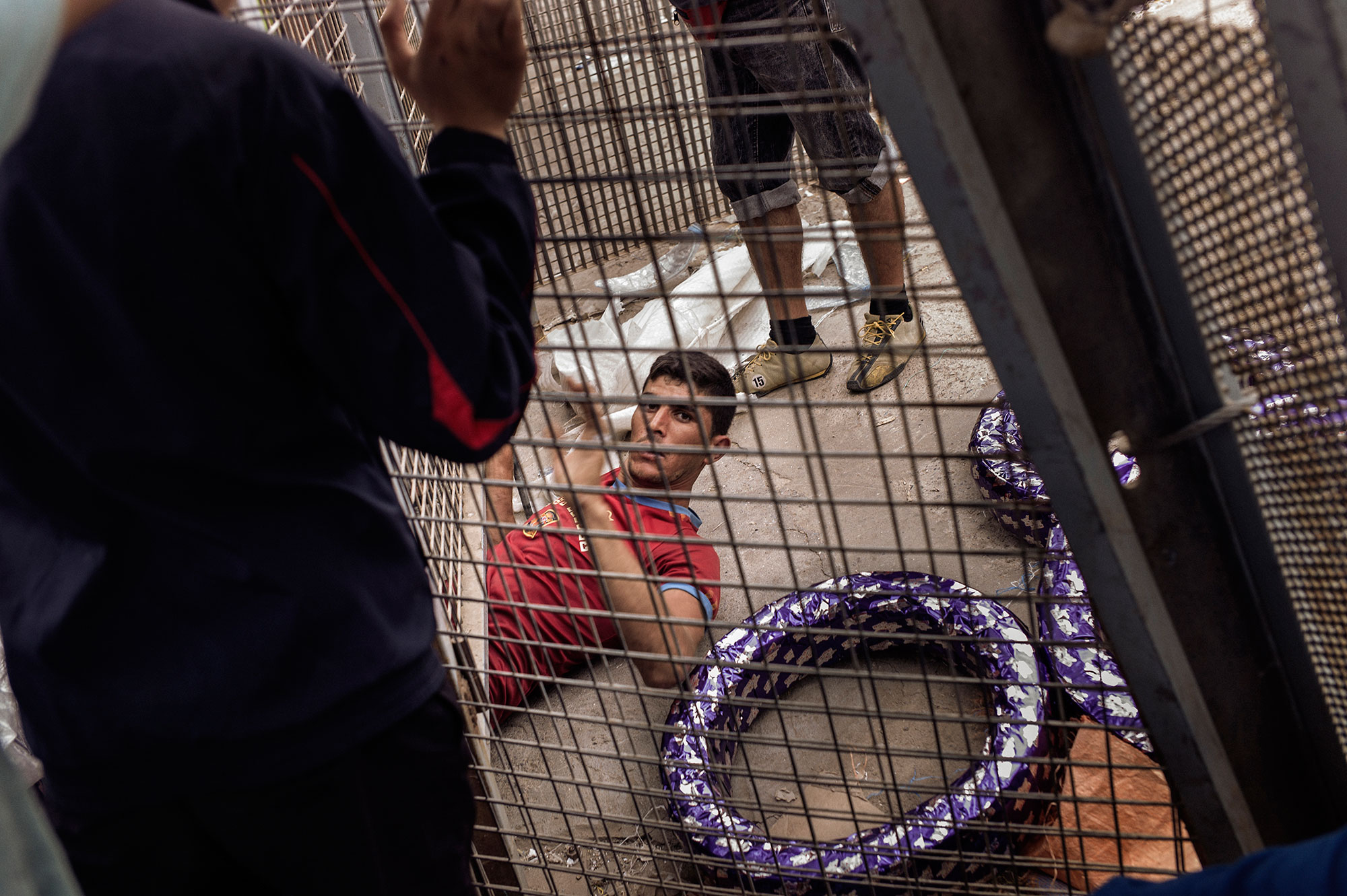
One Moroccan man tries to pass under the gate at the border crossing. [Jose Colon/MeMo/Al Jazeera]
With life in tow/ Please Do Not Use
Moroccan men with large packages cross the border at Melilla. [Jose Colon/MeMo/Al Jazeera]


  • About

    • About Us
    • Code of Ethics
    • Terms and Conditions
    • EU/EEA Regulatory Notice
    • Privacy Policy
    • Cookie Policy
    • Cookie Preferences
    • Accessibility Statement
    • Sitemap
    • Work for us
  • Connect

    • Contact Us
    • User Accounts Help
    • Advertise with us
    • Stay Connected
    • Newsletters
    • Channel Finder
    • TV Schedule
    • Podcasts
    • Submit a Tip
    • Paid Partner Content
  • Our Channels

    • Al Jazeera Arabic
    • Al Jazeera English
    • Al Jazeera Investigative Unit
    • Al Jazeera Mubasher
    • Al Jazeera Documentary
    • Al Jazeera Balkans
    • AJ+
  • Our Network

    • Al Jazeera Centre for Studies
    • Al Jazeera Media Institute
    • Learn Arabic
    • Al Jazeera Centre for Public Liberties & Human Rights
    • Al Jazeera Forum
    • Al Jazeera Hotel Partners

Follow Al Jazeera English:

  • facebook
  • twitter
  • youtube
  • instagram-colored-outline
  • rss
Al Jazeera Media Network logo
© 2026 Al Jazeera Media Network

You might also like:

live israeli attacks kill 76 no aid relief yet for... | thailand readies homecoming for stolen ancient sta... | russia ukraine war list of key events day 1185... | german woman arrested after mass stabbing at hambu... | vietnam orders ban on popular messaging app... | need answers will sri lankas tamils find war closu... | live israeli attacks kill 85 in gaza as starvation... | florida court orders ex mexican security chief to ...