Skip linksSkip to Content
play
Live
Navigation menu
  • News
    • Africa
    • Asia
    • US & Canada
    • Latin America
    • Europe
    • Asia Pacific
  • Middle East
  • Explained
  • Opinion
  • Sport
  • Video
    • Features
    • Economy
    • Human Rights
    • Climate Crisis
    • Investigations
    • Interactives
    • In Pictures
    • Science & Technology
    • Podcasts
    • Travel
play
Live

In Pictures

Gallery|Courts

Living illegally in the West Bank

‘We trust the universe, we trust the earth, we trust God, that whoever needs to be here will be here,’ resident says.
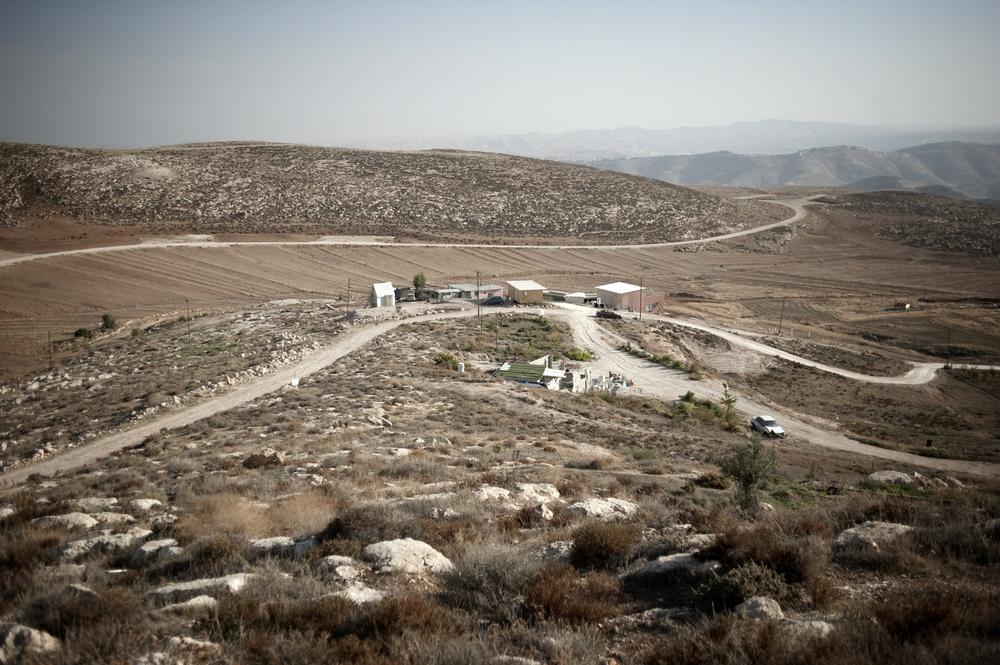
Residents of Neve Erez do not carry automatic weapons. No private security firm oversees its entrance, and there is no fence enclosing its perimeter. Cofounder Tahilla Cohen tells Al Jazeera: (***)There have been several very violent incidents at heavily secured settlements near Neve Erez, which goes to show that having a fence doesn(***)t help. If you feel you need a fence, you are constantly in a state of defence ... all your actions become motivated by fear.(***)
News image
News image
By Jonathan Brown and Marco Bottelli
Published On 10 Jan 201510 Jan 2015

Share

facebooktwitterwhatsappcopylink

Save

Neve Erez, occupied West Bank – Yael and Chanoch Horn-Danino had not planned to move to Neve Erez for weeks. Then, one day last month, a neighbour phoned Chanoch at work: “There’s a government bulldozer outside your house here; it doesn’t look good. Do you want to me get anything from inside before they bulldoze it?”

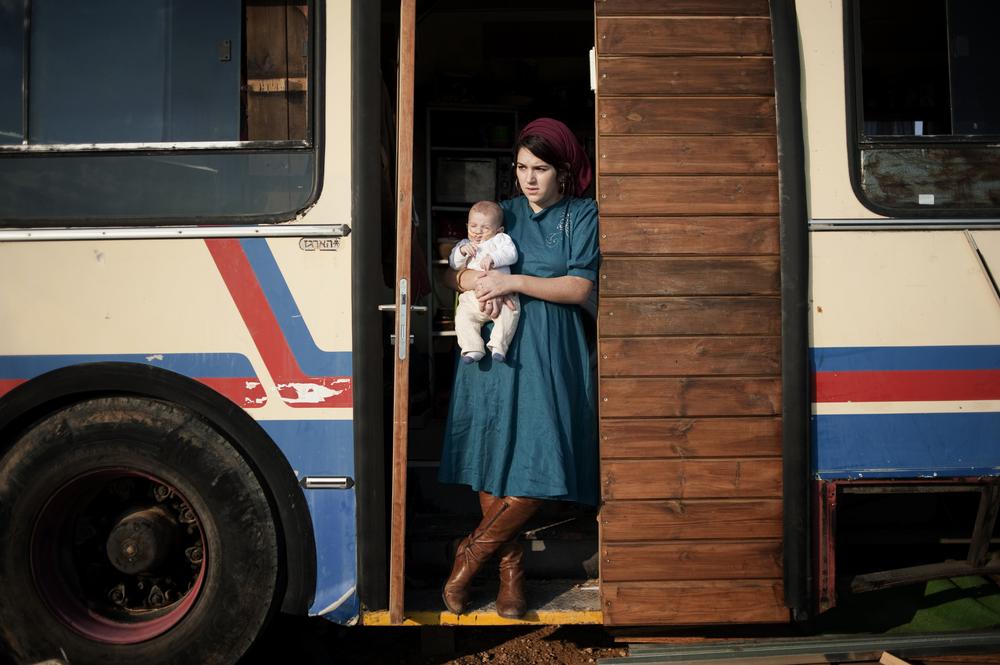
The young couple got lucky. The bulldozer rolled passed their home, a defunct Tel Aviv bus they had cleared land for and converted by adding a kitchen and bathroom. Fearing their government was more likely to destroy an unoccupied house, they hastily moved into their unfinished bus ahead of schedule.

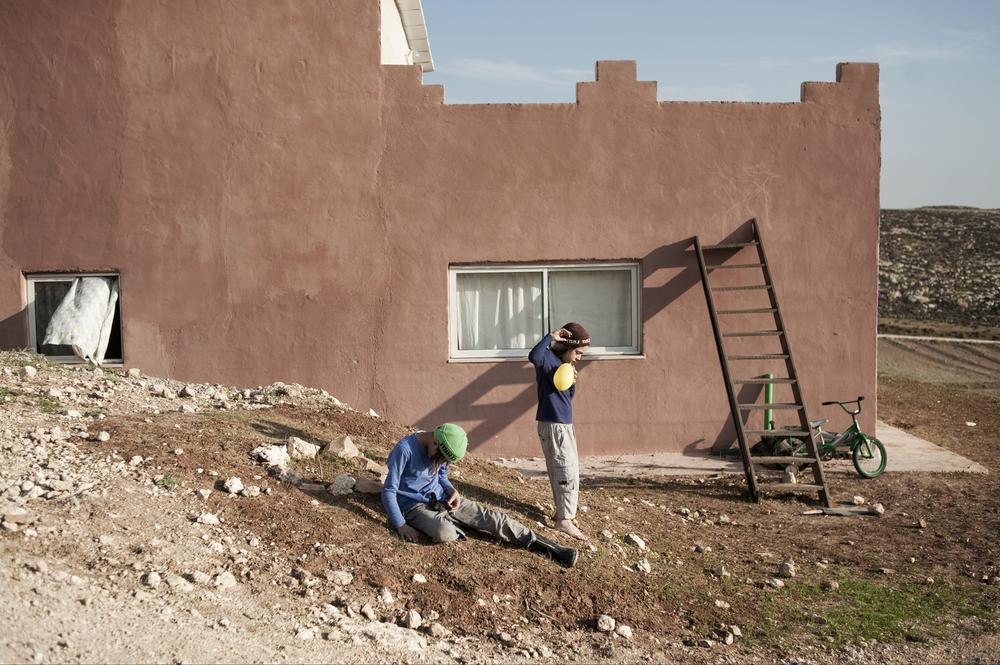
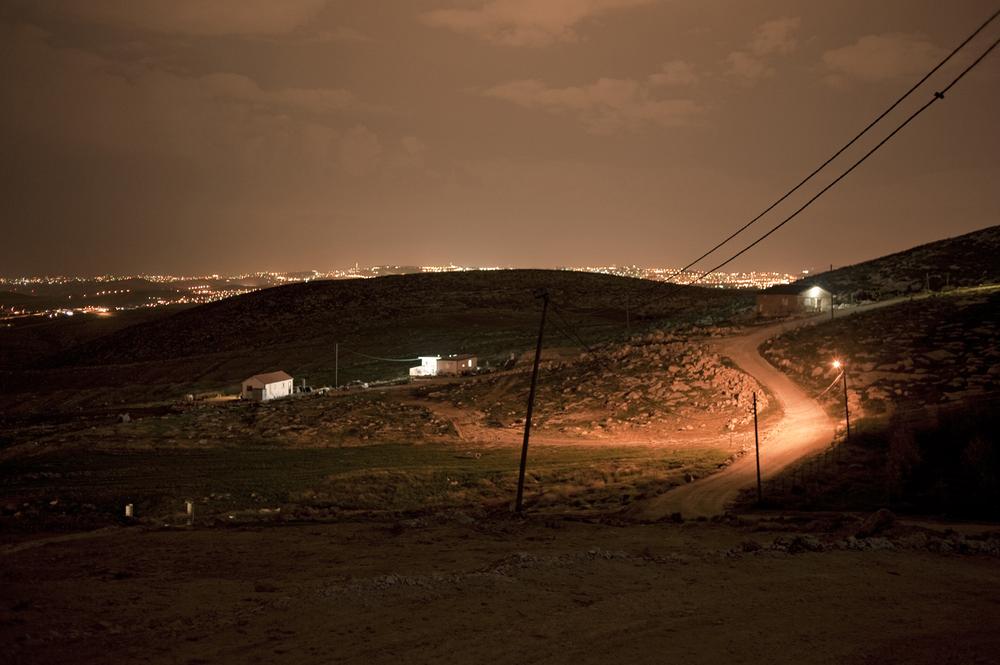
Home for Yael and Chanoch is now Neve Erez, an illegal Israeli settlement or “outpost” in the occupied West Bank. The arid hilltop is on the cusp of the desert, a site originally meant as a cemetery for the nearby Maale Michmash settlement. On a clear day, the Dead Sea is visible from Neve Erez’s pre-fab synagogue.

Since settling on the barren hilltop near Jerusalem in 1999, Neve Erez has been under perpetual legal arbitration: Only eight months after the settlement was founded, Israeli authorities ordered it to be evicted, ruling the homes had been built without authorisation and on privately owned Palestinian land. But after a year, assuming the government had forgotten them, residents returned. Cofounder of Neve Erez, Tahilla Cohen, remembers this as the 16-month “exile”.

In daylight hours, gunfire rattles from border police training grounds nearby, while in the mornings and evenings, residents say they hear bells from the Bedouin herds that graze over an abandoned military base on an adjacent hilltop. Though a main road winds around Neve Erez, cars pass infrequently. 

Despite being illegal according to Israeli and international law, Neve Erez has continued to expand since the “exile”, albeit gradually. Yael and Chanoch only gained permission to live in Neve Erez after being interviewed by each community member individually. “We trust the universe, we trust the earth, we trust God, that whoever needs to be here will be here,” Cohen said.
Advertisement

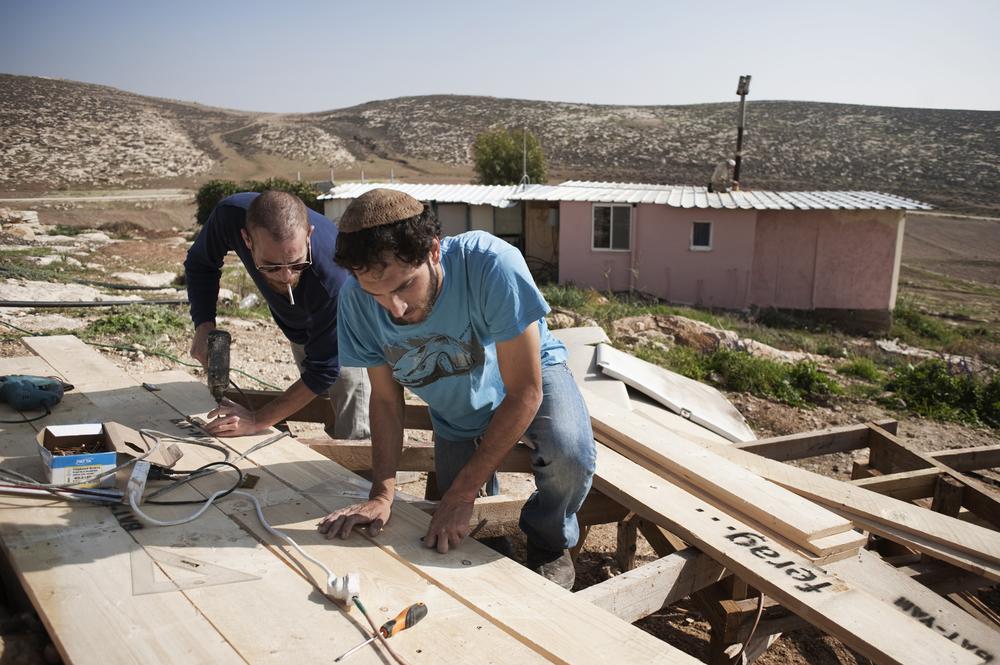
Unfazed by the prospect of eviction, new residents such as Yael and Chanoch Horn-Danino have been steadily moving to Neve Erez, while current residents plan and build extensions to their homes. After nearly 16 years of unauthorised living, Noam Cohen is no longer concerned for the future of his home: (***)The government is hugely supportive of us. By now, everyone in Israel knows the settlements are unofficial policy.(***)
Advertisement
Tahilla Cohen grew up with (***)relatively secular, left-wing parents in Jerusalem(***) and says her father refused to buy or rent housing in Jerusalem annexed by Israel in 1967. (***)I always knew I would live close to the land, but I imagined I would live in the desert. I never thought I would live in the occupied territories.(***)
Yael(***)s four-month-old son, Amotz, was born with a cleft lip. He wears a corrective brace and requires weekly medical attention. For Yael, who brings Amotz to a doctor in Jerusalem, access to medical services is essential. Her husband Chanoch, who works and studies in Jerusalem, says Neve Erez is the perfect balance between isolation and convenience. (***)Jerusalem is only 20 minutes away. I(***)m there every day. I have a motorcycle, Yael has a car, we have a shop five minutes from here.(***)
In March this year, the Israeli government bulldozed the dome-roofed home Eitan Kessler designed and built on Neve Erez(***)s outskirts. He had built illegally on Israeli (***)state land(***). (***)I would love to have legal building rights, are you kidding? It gives you freedom... And nowhere is small enough to be overlooked by the government, not even Neve Erez.(***)
Tahilla Cohen cannot envisage a day when non-Jews would live at Neve Erez. By living in the West Bank, she believes she is fulfilling the promise of the nation of Israel and God. (***)The notion that all is one is something that we live by and teach our children. The way we see it, it goes in circles and gets bigger and bigger: one person is one, the couple is one, the family, the village, the people, and then eventually the whole world. Eventually, we’ll all feel one, and we(***)ll all know there(***)s one God above.(***)
After Chanoch and Yael saw another young couple living in a converted bus, they knew immediately they wanted the same. Chanoch is more resigned than concerned that Israeli authorities could demolish their bus. (***)Worried? No. It(***)s in the ground. I can(***)t take it up. Either it will be destroyed or it will stay; it(***)s not possible to relocate my house. It(***)s God will.(***)
Advertisement
Neve Erez is among the West Bank(***)s more secular settlements, even though Jewish traditions are among the community(***)s founding principles. (***)We founded Neve Erez to be a little village,(***) Tahilla Cohen says. (***)We wanted between 20 and 25 families. The idea was that it would still be small, but large enough for the kids to have friends and enough men for the synagogue on holidays. To have a proper Shabbat in the synagogue, you need 10 men.(***)
Even though swaths of the settlement are illegally built on private Palestinian land, one resident says Palestinians have been building Israeli settler homes at Neve Erez almost daily for the past three months. In the West Bank, where unemployment is close to 15 percent, Israeli settlers, including those at Neve Erez, routinely hire Palestinians who are willing work for a fraction of the cost of Israeli contractors. 
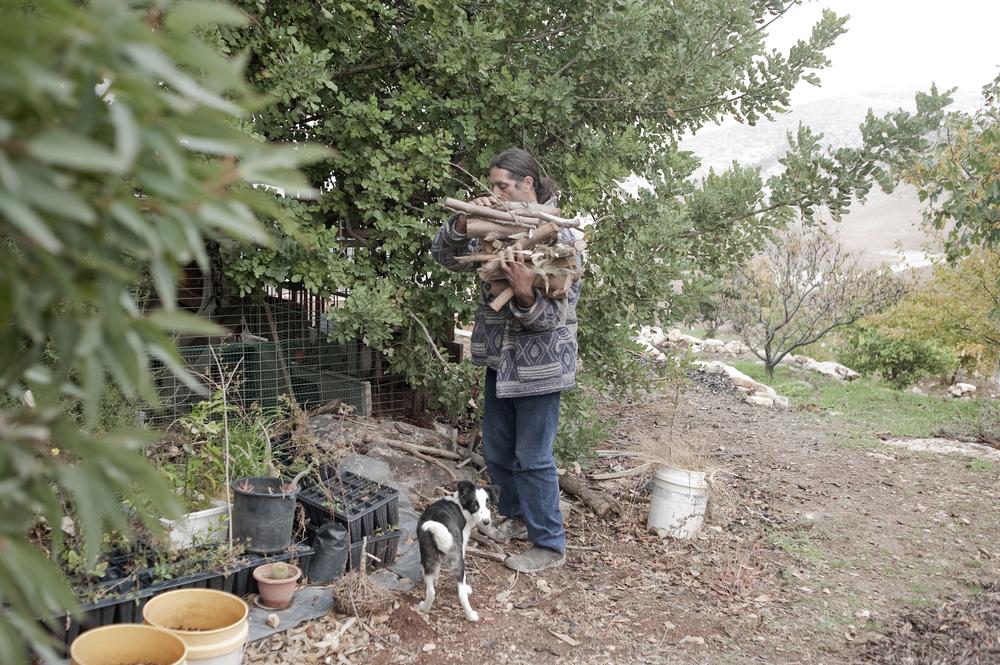
Erez Maman, who lives alone in another of Neve Erez(***)s converted buses, swims in a British Mandate-era spring when the weather is warm enough. Erez wonders whether he is naive to feel safe living in the West Bank. (***)I don(***)t feel fear living in Neve Erez, but that feeling of security, it doesn(***)t come from a place of strength - it comes from seeing Palestinians as people, from being able to look them in the eyes. Maybe that(***)s ignorant of me.(***)
Although there is no rule prohibiting guns at Neve Erez, Tahilla Cohen says the people attracted to the ethos of the place are not likely to want to carry weapons. (***)We don(***)t need guns here. We live in peace,(***) Yael says. (***)It’s one of the reasons Chanoch and I came to live in Neve Erez... We decided that we would never raise children in a closed-in place around guns.(***)
Kessler, who saw some of the fiercest street fighting of the second Intifada, describes himself as a (***)lefty(***). For Kessler, living in Neve Erez, only 10km from Jerusalem, is less controversial than living in a settlement further inside in the West Bank: (***)With a lot of wishful thinking, the border could be two metres beyond my house. I would never live farther inside in the West Bank because it(***)s never going to be part of Israel, and if it is, then it(***)s going to be a racist country.(***)
Noam and Tahilla Cohen woke up one morning this spring to find their dogs poisoned and their goats missing. Noam, whose parents emigrated from Iraq and who speaks Arabic fluently, says he suspects the neighbouring Bedouin community but characterises Neve Erez(***)s relationship with them as (***)mutually respectful(***). Even after he recently drove an ailing Bedouin boy and his family to a local hospital, he says: (***)They respect me, but they don(***)t love me, and that(***)s a crucial distinction.(***)
Yael is not confident Neve Erez will ever become legal. Though she is comforted remembering that many larger settlements have been successful in recent years. (***)The government doesn(***)t want people to live where or how they like.(***) Moreover, she does not believe the Israeli government can withstand mounting condemnation of settlement expansion from the international community. 
In the evening, crickets rattle and the call to prayer reverberates off hillsides from Palestinian villages nearby. Chanoch says he is concerned about what will happen to the land he describes as his if Neve Erez ever becomes legal. (***)We hope Neve Erez doesn(***)t become much bigger, but it’s hard to look ahead 10 years from now. It all depends on the paperwork. If Neve Erez becomes legal, it will be bigger, even though the community doesn’t want it. My land will have five houses on it.(***)


  • About

    • About Us
    • Code of Ethics
    • Terms and Conditions
    • EU/EEA Regulatory Notice
    • Privacy Policy
    • Cookie Policy
    • Cookie Preferences
    • Accessibility Statement
    • Sitemap
    • Work for us
  • Connect

    • Contact Us
    • User Accounts Help
    • Advertise with us
    • Stay Connected
    • Newsletters
    • Channel Finder
    • TV Schedule
    • Podcasts
    • Submit a Tip
    • Paid Partner Content
  • Our Channels

    • Al Jazeera Arabic
    • Al Jazeera English
    • Al Jazeera Investigative Unit
    • Al Jazeera Mubasher
    • Al Jazeera Documentary
    • Al Jazeera Balkans
    • AJ+
  • Our Network

    • Al Jazeera Centre for Studies
    • Al Jazeera Media Institute
    • Learn Arabic
    • Al Jazeera Centre for Public Liberties & Human Rights
    • Al Jazeera Forum
    • Al Jazeera Hotel Partners

Follow Al Jazeera English:

  • facebook
  • twitter
  • youtube
  • instagram-colored-outline
  • rss
Al Jazeera Media Network logo
© 2026 Al Jazeera Media Network

You might also like:

live israeli attacks kill 76 no aid relief yet for... | thailand readies homecoming for stolen ancient sta... | russia ukraine war list of key events day 1185... | german woman arrested after mass stabbing at hambu... | vietnam orders ban on popular messaging app... | need answers will sri lankas tamils find war closu... | live israeli attacks kill 85 in gaza as starvation... | florida court orders ex mexican security chief to ...