As hate spirals in India, Hindu extremists turn to Christian targets
Anti-Muslim violence has soared for more than a decade under Indian PM Modi’s government. Now, Christians face the brunt of Hindu majoritarianism, too.
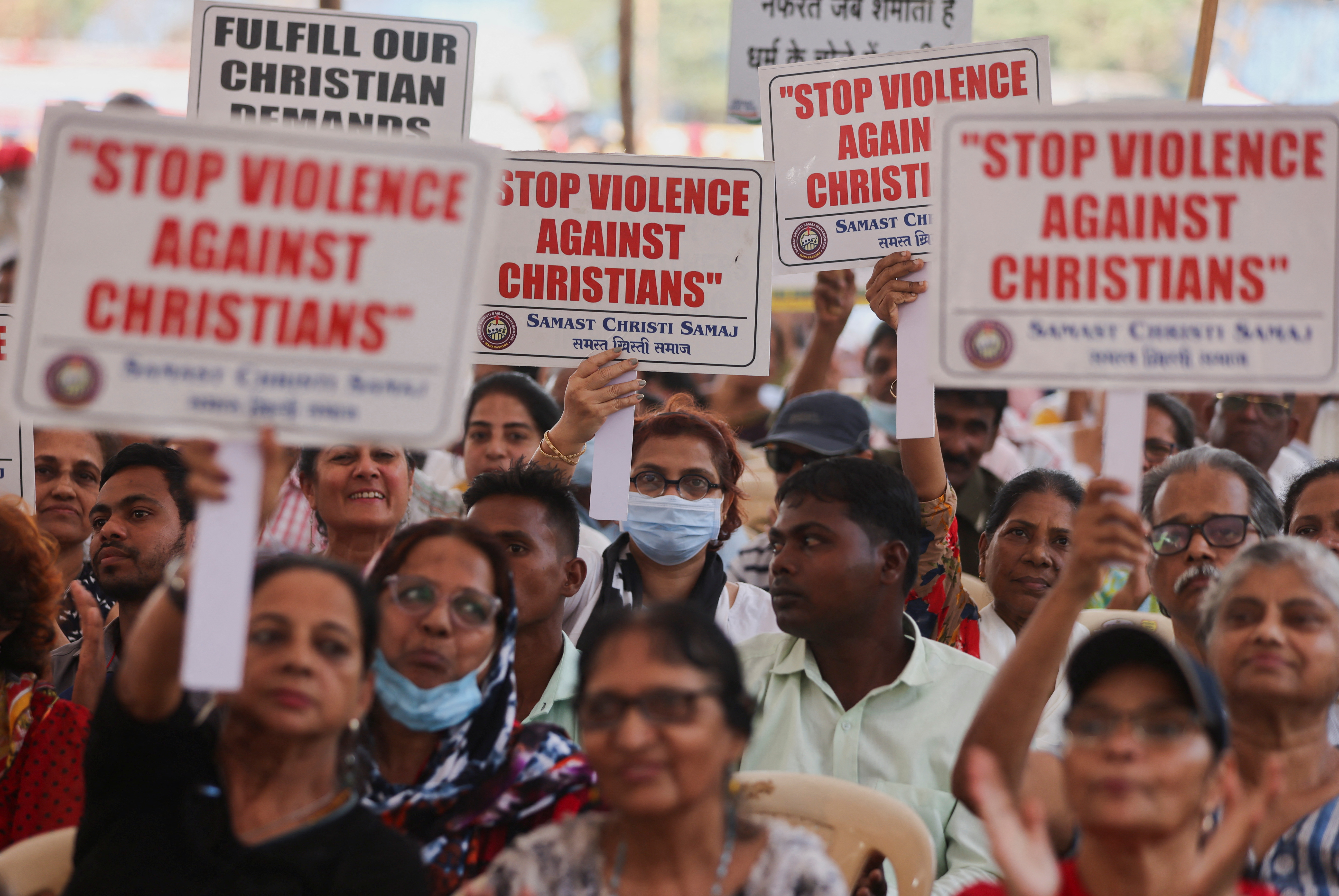
On Christmas Eve, Hindu hardline groups affiliated with Indian Prime Minister Narendra Modi’s Bharatiya Janata Party (BJP) announced a shutdown in the central Indian city of Raipur. The protest was called over allegations of “forced” religious conversions by Christians, a claim frequently levelled against the Christian community despite scant evidence.
That same day, groups of men armed with wooden sticks stormed a shopping mall in Raipur, vandalising Christmas decorations and disrupting celebrations. Police filed a case against 30 to 40 unidentified attackers, but arrested only six. They were released on bail within days and, upon their release, were greeted with public processions, garlands, and chants outside the jail, videos of which circulated widely on social media.
On Christmas morning, Modi visited a Catholic church in New Delhi to celebrate the occasion, but did not condemn the violence.
This incident was not the only one. According to a new report, religious hate speech and violence in India are escalating, with the country’s small Christian minority emerging as an increasingly visible target, alongside Muslims, in a climate of intensifying Hindu majoritarian rhetoric.
The research by India Hate Lab, a project of the Washington, DC-based Center for the Study of Organized Hate (CSOH), has found that the country recorded a total of 1,318 hate speech events in 2025, an average of more than three per day.
These events, organised and led largely by Hindu majoritarian groups as well as the governing BJP, targeted Muslims and Christians, marking a 97 percent increase in hate speech since 2023, and a 13 percent rise over 2024. While Muslims remained a primary target, the report found a sharp rise in anti-Christian rhetoric. Hate speech events targeting Christians rose from 115 in 2024 to 162 in 2025, a 41 percent increase.

This was borne out in the violence and intimidation unleashed by Hindu supremacists on Christmas celebrations last month. Instances were recorded across India, in the capital state of Delhi, as well as the states of Madhya Pradesh, Assam, Kerala, Uttar Pradesh, Telangana and Chhattisgarh. Raipur, where the mob ravaged the mall, is the capital of Chhattisgarh.
In Madhya Pradesh, a leader from Modi’s BJP led a mob that disrupted and attacked a Christmas lunch for visually impaired children. In Delhi, women wearing Santa caps were intimidated by Hindu supremacists. In Kerala, some schools reportedly received threats from officials belonging to the Rashtriya Swayamsevak Sangh (RSS) – the parent organisation of the BJP and many other Hindu majoritarian groups – warning against holding Christmas celebrations, prompting the local government to announce a probe into the matter. This came after an RSS worker attacked teenage carollers in the same state.
Christians account for only 2.3 percent of India’s population, while Muslims account for 14.2 percent. The Hindu community makes up 80 percent.
Hindu supremacists have fuelled suspicion, anger and hate against religious minorities, based on conspiracy theories and other incorrect claims.
An escalation
However, the latest figures mark a new escalation in the religious hate that India’s religious minorities have had to combat ever since the BJP came to power in 2014, said experts.
The BJP’s ideological mentor, the RSS, founded in 1925, believes that India must be a “Hindu nation”, an idea that runs counter to the constitutionally enshrined value of secularism. Historical Hindu nationalist ideologues – like Vinayak Savarkar and MS Golwalkar, who Modi has publicly honoured – insisted that religious minorities like Muslims and Christians were “unwanted” and “internal enemies” of India, and called for a “permanent war” against them.
Raqib Naik, the CSOH’s said the instances of hate speech recorded in the recent report mirror this rhetoric. They present Muslims and Christians as “dual threats”, which are “foreign, demonic forces” that want to harm Hindus.
“Central to this is the ‘forced conversion’ narrative, which portrays every act of Christian charity, education, or healthcare as a deceptive tool for converting Hindus to Christianity,” Naik said. “The most pervasive theme across [the] 2025 incidents is the allegation that Christian missionaries are converting Hindus through inducement.”
This is despite the fact that between 1951 and the last national census in 2011, the Christian community in India has never exceeded 3 percent of the total population, according to data from the Pew Research Center.
Within the country’s Christian community, the hate incidents have led to fear and a deep unease, said John Dayal, the former president of the All India Catholic Union and a former member of the National Integration Council, an Indian government advisory body on matters of religious harmony. The fear of vandalism by Hindu supremacists has led to many taking unusual and extreme steps, Dayal said.
“In Raipur, the archbishop was forced to advise all churches and Christian institutions to seek police protection during Christmas,” Dayal said. “I couldn’t believe that such a letter had to be written.”
Attacks on Muslims rise
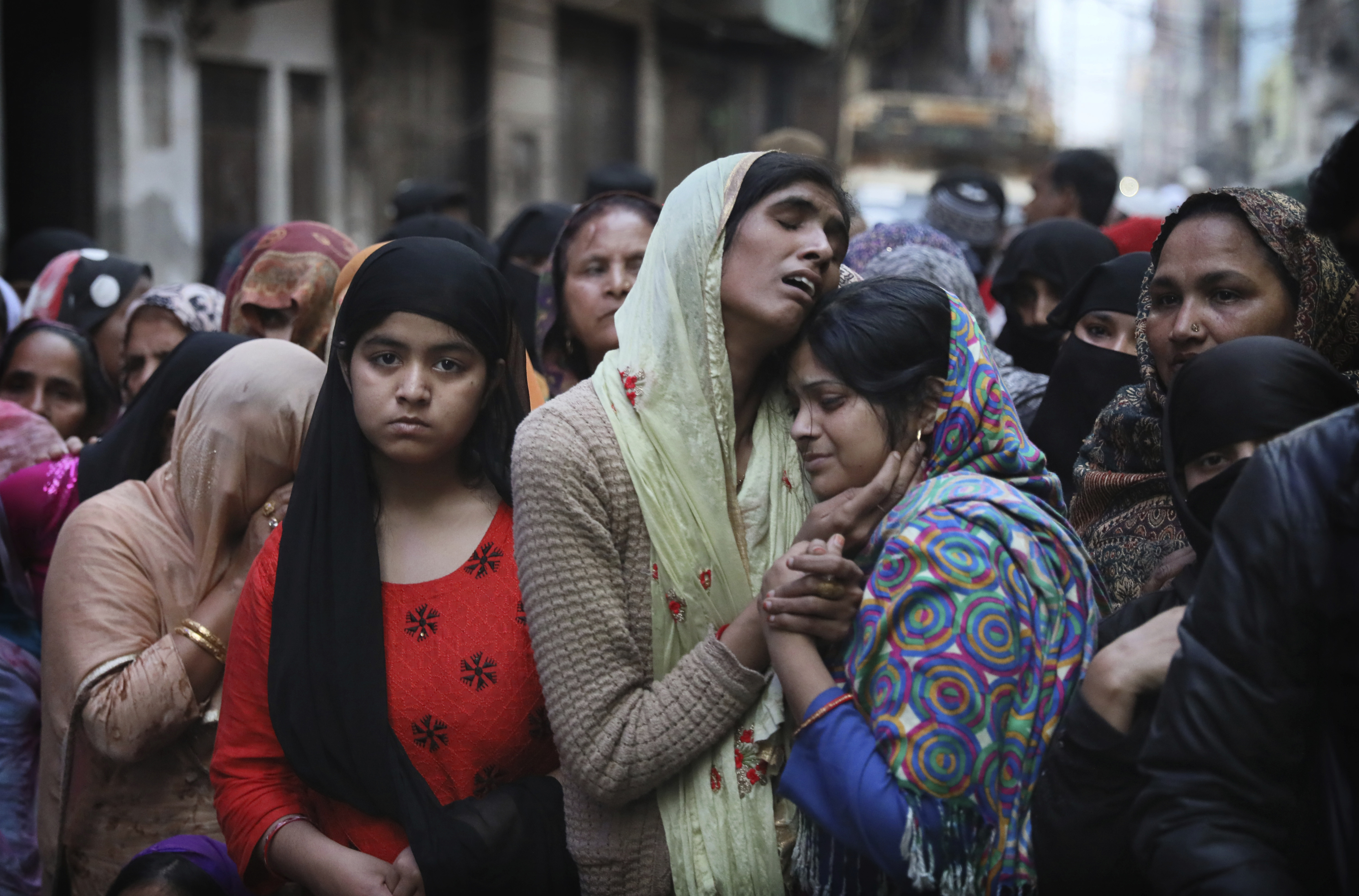
Beyond this rising anti-Christian rhetoric, hate speech against Muslims has also shot up, according to the report. The CSOH recorded that 1,289 of the total 1,318 hate speech events had hateful, violent references to Muslims.
In 2024, this figure was 1,147, while in 2023, it was 668. This shows a 93 percent increase in anti-Muslim hate speech between 2023 and 2025.
In these hate events, speakers – often from the BJP or affiliated Hindu supremacist groups – invoked conspiracy theories against Muslims: from claiming that Muslims were capturing Hindu land (“land jihad”), to Muslims strategically outnumbering Hindus (“population jihad”), to Muslim men seeking to lure Hindu women in a bid to convert them into Islam (“love jihad”).
Using such conspiracy theories, a vast majority of these events ended with calls to violence against the Muslim community, the report found. The calls ranged from boycotting Muslims to destroying their places of worship, to picking up arms and violently attacking them.
“These narratives were designed to paint minorities as organised aggressors, intent on eviscerating Hindu culture, demographic dominance and wealth,” said Naik from the CSOH.
“The large-scale dissemination of these conspiracies is a deliberate strategy to manufacture an environment of perpetual Hindu victimhood, and to enable the passage of anti-minority laws to ostensibly address these imagined threats,” he added.
Since the BJP came to power, several Indian states have introduced laws that criminalise coercive religious conversions, but critics have said these laws are veiled attempts to prevent interfaith marriages. Several ministers in these states have publicly called the laws attempts to curb “love jihad”.
In November 2025, the United States Commission on International Religious Freedom, in its annual report, highlighted what it called “several discriminatory pieces of legislation” in India, including on citizenship and religious conversion.
A BJP link
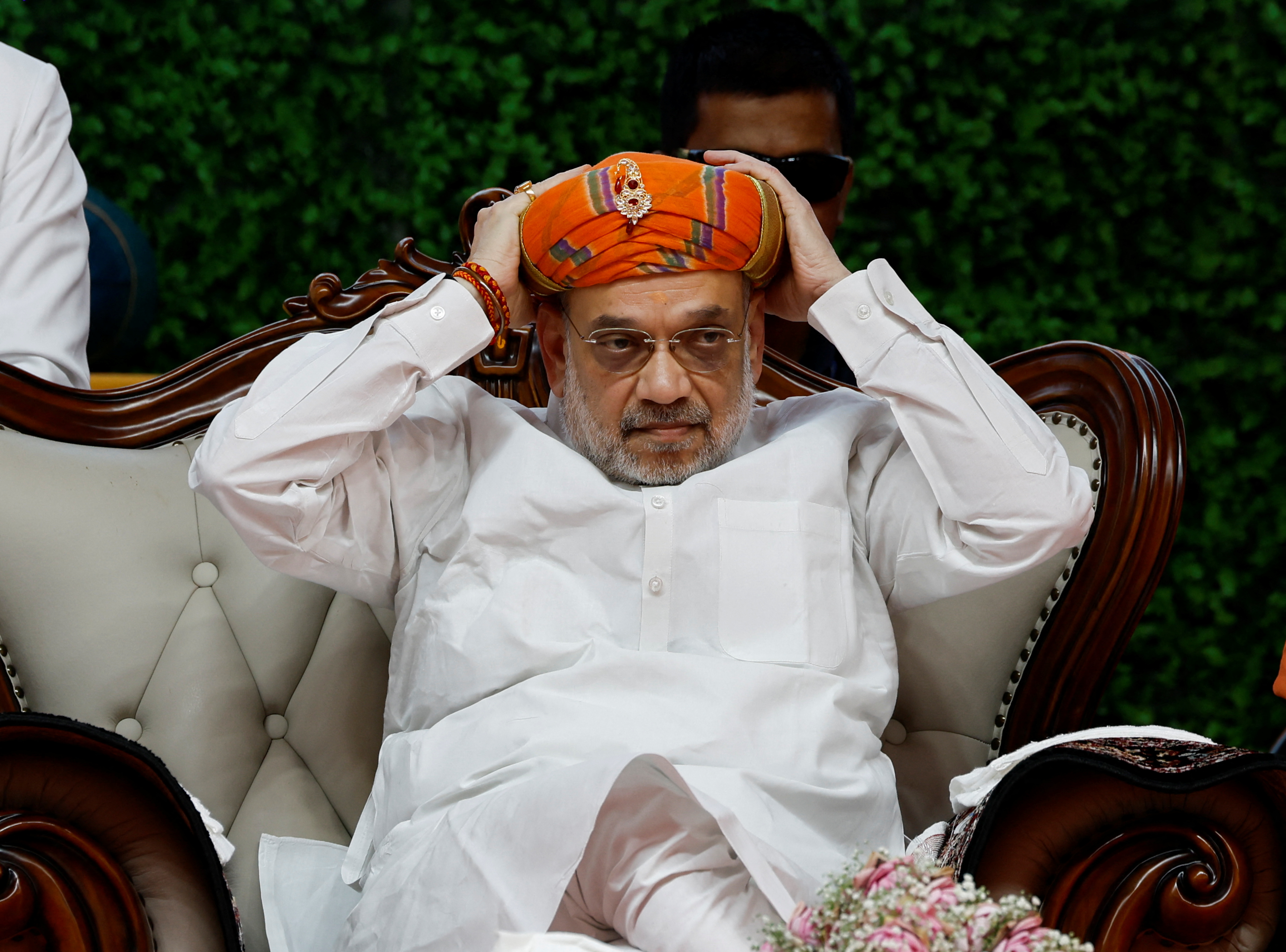
Much of this hate has a link to the BJP, the report found. Almost nine out of 10 hate speech events, 88 percent in all, took place in states governed by the BJP or it allies. Among the top 10 actors involved in the most hate speech, the report found five to be associated with the BJP, including Minister of Home Affairs Amit Shah, widely viewed as India’s second-most powerful person after Modi.
The chief minister of Uttar Pradesh, Yogi Adityanath, as well as of Uttarakhand, Pushkar Singh Dhami, are others named in the report as perpetrators of hate speech. In fact, Dhami topped the list of hate speech actors, with a total of 71 hate speech instances.
Al Jazeera has reached out to the BJP’s chief spokesperson, Anil Baluni, over text and email, as well as to the Ministry of Home Affairs, for comment. Neither has responded.
Ram Puniyani, an author and the president of the Centre for the Study of Society and Secularism (CSSS), a research body that works on promoting religious harmony, said the rise in hate is directly linked to the BJP’s electoral fortunes. The 2024 general elections delivered an electoral setback to Modi, whose BJP lost its parliamentary majority but returned to power with allies.
“The Hindutva foot soldiers have become more and more emboldened by the party’s return to power, and hence, attacks on religious minorities are on the rise,” Puniyani said. Hindutva is the Hindu majoritarian political movement advocated by the RSS.
Pointing to the attacks on Christian missionaries, Puniyani said it was an attempt to consolidate the BJP’s base among tribal and Dalit communities, where Christian missionaries predominantly work. Dalits, historically viewed as the community least privileged under Hinduism’s complex caste system, have faced systematic discrimination for centuries.
“All this is very dangerous”, Puniyani said, “because hate speech eventually leads to violence”.
