US weekly jobless claims hit 52-year low
Some 184,000 Americans filed initial jobless claims last week, the US Bureau of Labor Statistics said on Thursday.
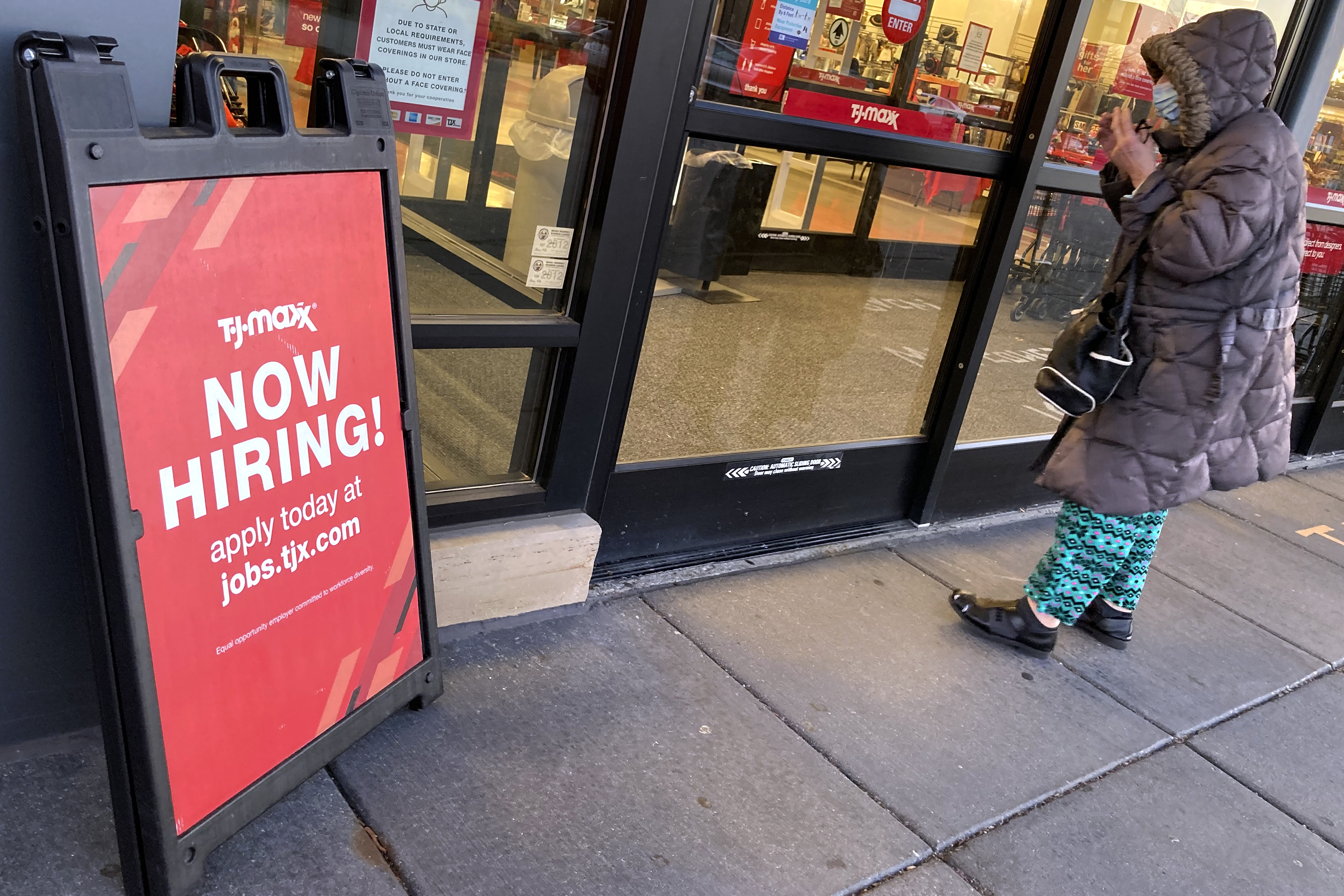

In yet another sign of renewed strength in the United States jobs market, applications for unemployment benefits in the country dropped to their lowest level in more than half a century last week.
Some 184,000 Americans filed initial jobless claims last week, the US Bureau of Labor Statistics said on Thursday. That is 43,000 fewer than the previous week’s revised number and marks the lowest level for initial unemployment claims since September 6, 1969.
The extreme low hit last week brings the four-week moving average for weekly jobless claims – which are a proxy for layoffs – down to 218,750. That is the lowest level since March 7, 2020.
While the jobless claims numbers offer further evidence that the US labour market is experiencing a robust recovery, analysts caution that seasonal factors stemming from the holidays are injecting a lot of volatility into the numbers.
“Seasonal adjustment factors continue to wreak havoc with the data, and the claims figures may remain volatile through the holiday season,” said Nancy Vanden Houten, lead economist at Oxford Economics. “Looking past the noise, we think claims will eventually hover more consistently around pre-pandemic levels of 220k, assuming the Omicron variant of the coronavirus has only a moderate negative impact on the economy.”
The number of Americans currently receiving unemployment benefits – a metric known as “continuing claims” – rose by nearly 400,000 to just shy of 2 million for the week ending November 27.
“Continued claims should gradually migrate toward their pre-pandemic level of 1.7mn as more individuals return to the labour market and as their benefits expire,” said Vanden Houten.
Weekly jobless claims have been falling steadily this year as the jobs market not only regains its footing but baffles economists.
Though the economy is still roughly 4 million jobs shy of recovering its pre-pandemic level from February 2020, it is awash in job openings that have given US workers the upper hand for the first time in decades, fuelling fatter paycheques and better benefits.
In October, a near-record 11 million jobs went begging in the US, while 4.2 million Americans felt so confident about their employment prospects that they quit their jobs.
But the financial cushion from federal coronavirus pandemic aid that allowed workers to be more choosy about what position they take is dwindling after federal unemployment benefits expired in September.
While the US created a disappointing 210,000 jobs last month, the number of people either working or actively looking for a job edged up to 61.8 percent.
And though average hourly earnings continued to increase last month, wages are not rising fast enough to keep up with inflation.
A number of factors are believed to be contributing to the current shortfall in available workers, from fear of contracting COVID-19, to older workers opting to take early retirement, to Americans simply deciding to stop working for someone else and opening their own businesses instead.
