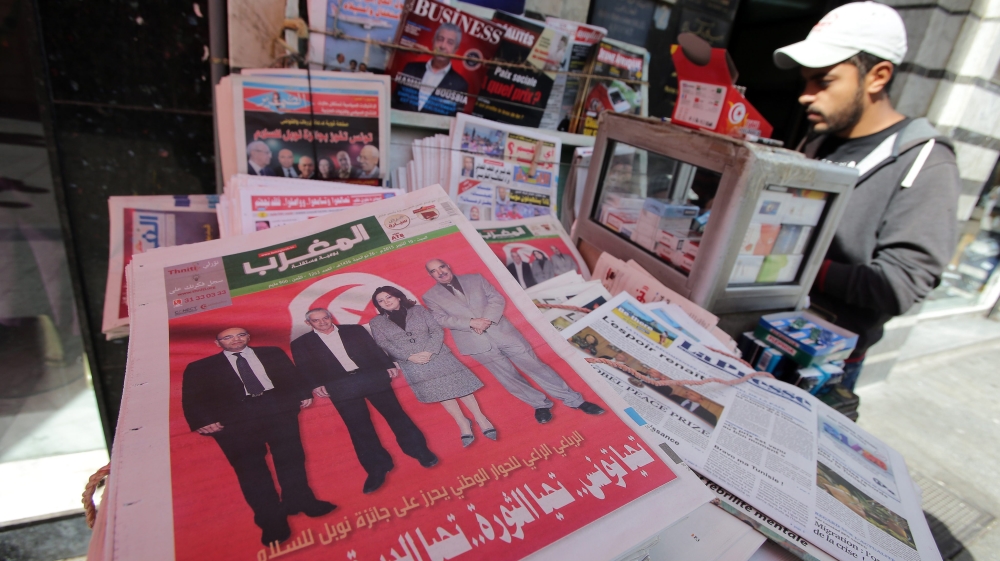
Public-service failures and uncertainty over Kais Saied’s health are deepening the country’s political malaise.
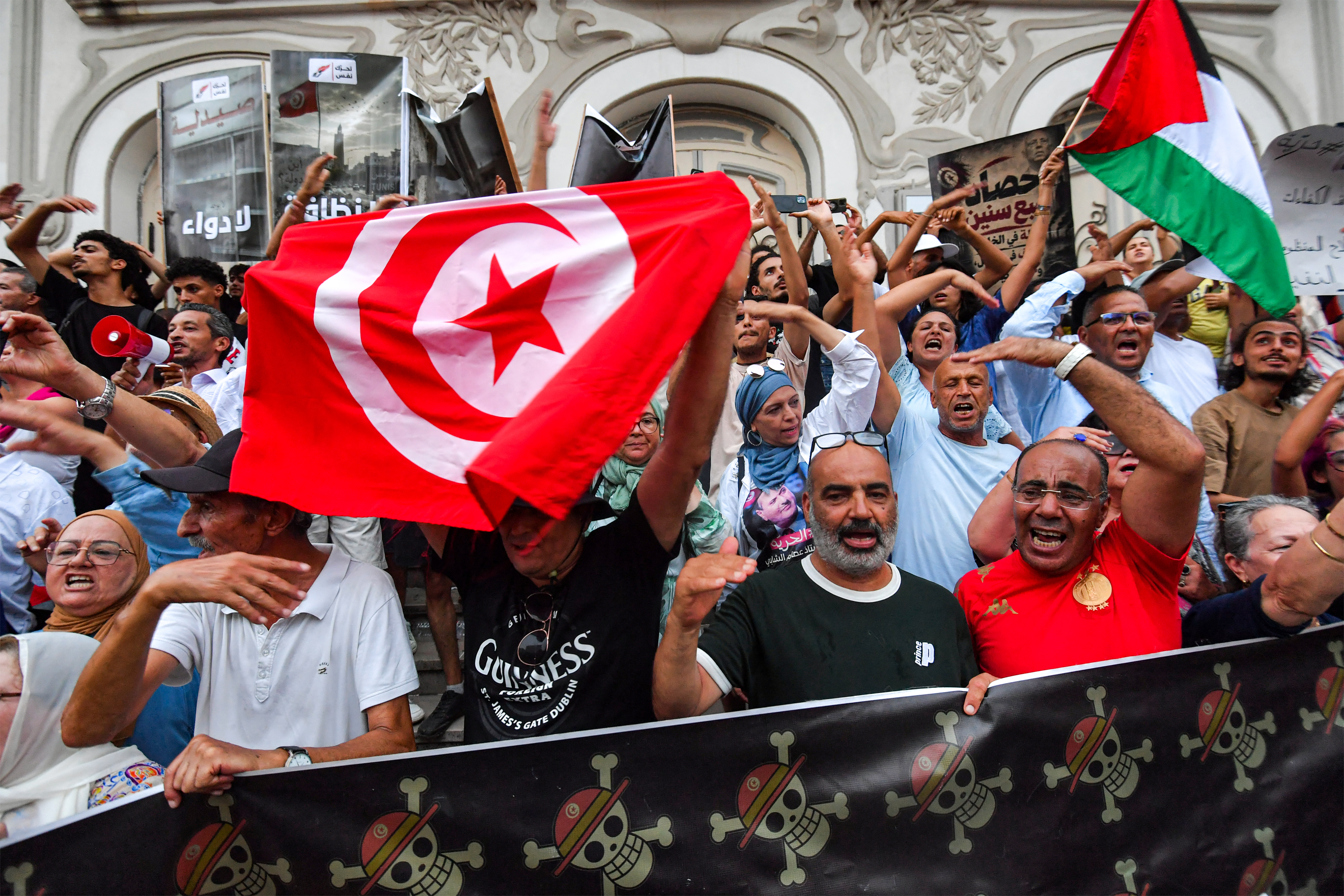
Public-service failures and uncertainty over Kais Saied’s health are deepening the country’s political malaise.
The uprisings did not collapse into irrelevance. They transformed how millions understood citizenship and dignity.
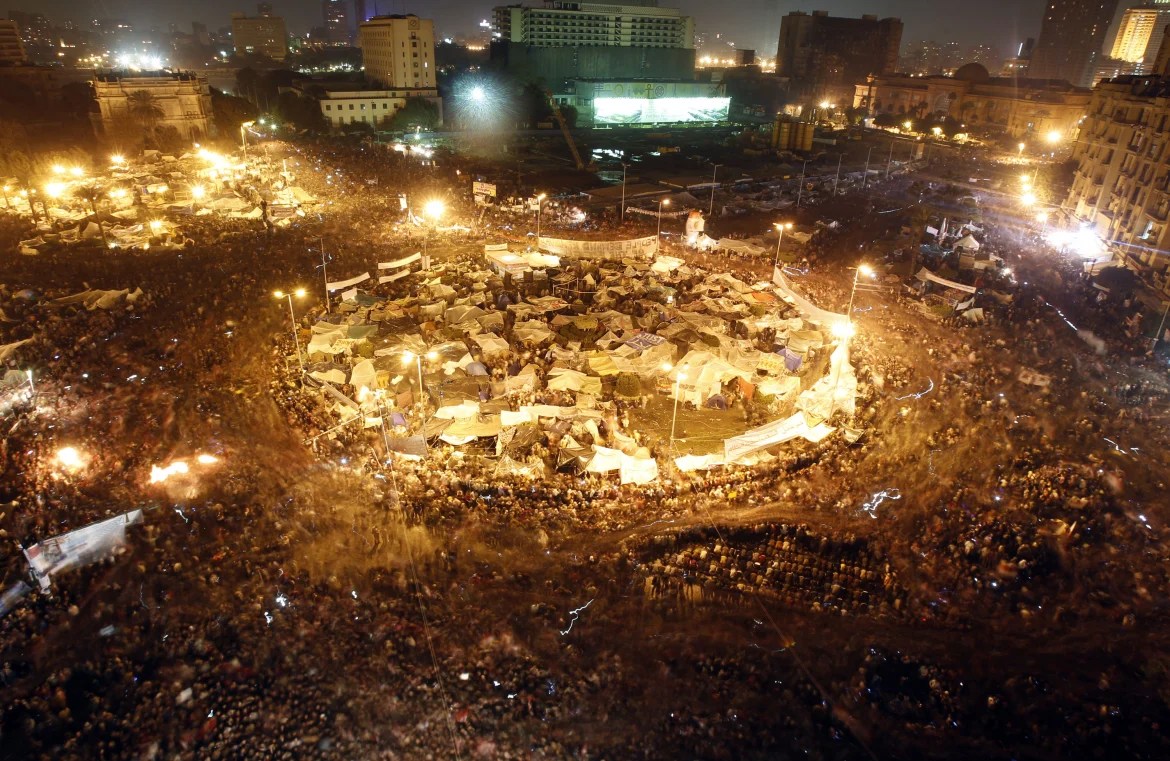
The Arab Spring did not bring democracy to the region, but it remains a beacon of hope for struggling Arabs.
![Protesters demonstrate against Tunisian President Zine al-Abidine Ben Ali and celebrate his departure from the country in Tunis January 14, 2011 [Zohra Bensemra/Reuters]](/wp-content/uploads/2021/01/RTXWKHS.jpg?resize=270%2C180&quality=80)
Instead of mimicking ex-colonial powers, the event can help decolonise biased thinking about Arab and Muslim cultures.
![FIFA World Cup Qatar 2022 mural at Katara Cultural Village in Doha, Qatar, Nov 13, 2022 [Sorin Furcoi/Al Jazeera]](/wp-content/uploads/2022/11/SOR02406.jpg?resize=270%2C180&quality=80)
For Ennahdha, in national politics – as well as party politics – important challenges loom on the horizon.
![Supporters of Tunisia's biggest political party, Ennahda, take cover from stones thrown at them by supporters of President Kais Saied, outside the parliament building in Tunis, Tunisia July 26, 2021. [Zoubeir Souissi/Reuters]](/wp-content/uploads/2021/07/2021-07-26T133408Z_365193935_RC28SO9OMY56_RTRMADP_3_TUNISIA-POLITICS.jpg?resize=270%2C180&quality=80)
Is President Kais Saied trying to bite off more than he can chew?
![Tunisian President Kais Saied takes the oath of office in Tunis, Tunisia, in this file photo from October 23, 2019. [Zoubeir Souissi/Reuters]](/wp-content/uploads/2021/07/2021-07-26T010355Z_1569270173_RC21SO9FAUX4_RTRMADP_3_TUNISIA-POLITICS-PRESIDENT-PROFILE-1.jpg?resize=270%2C180&quality=80)
What happened on July 25 in Tunisia is the country’s newest political “enigma”.
![Crowds gather on the street after Tunisia's president suspended Parliament, in La Marsa, near Tunis, Tunisia, July 26, 2021, in this still image obtained from a social media video. [Layli Foroudi/Reuters]](/wp-content/uploads/2021/07/2021-07-26T015652Z_1715111068_RC21SO9GEW8K_RTRMADP_3_TUNISIA-POLITICS.jpg?resize=270%2C180&quality=80)
Several months of internal debates have come to full fruition for the reformists within the party.
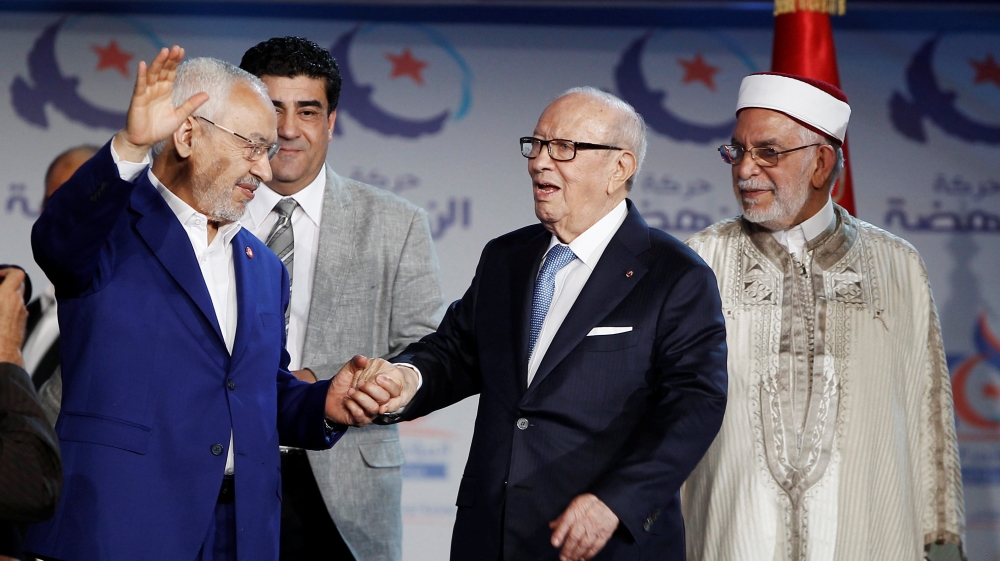
Addressing the socio-economic question is crucial to Tunisia’s long and arduous battle against ISIL terrorism.
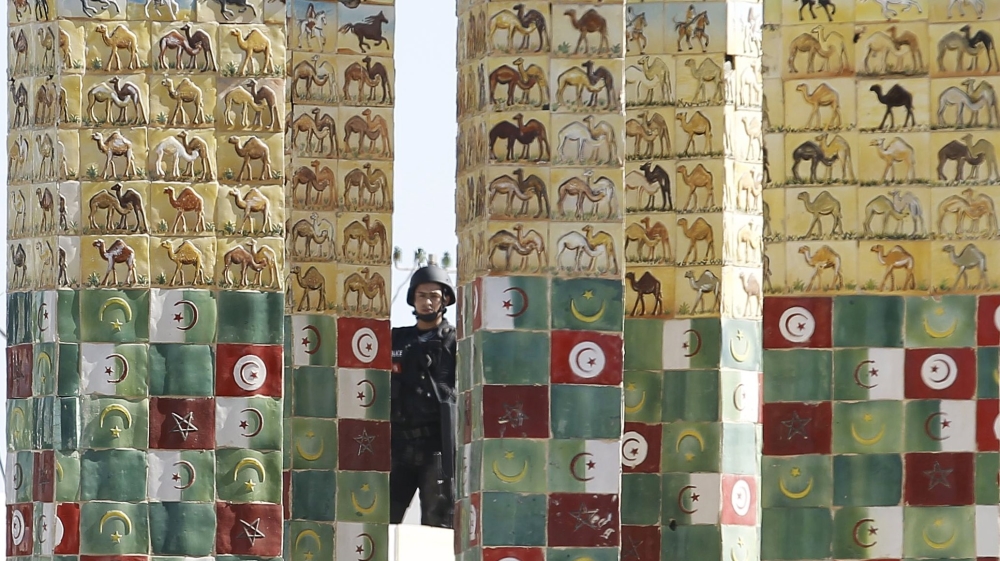
The example set by Tunisia’s National Dialogue Quartet could benefit Egypt, Iraq, Lebanon, Libya, Yemen, and Syria.